
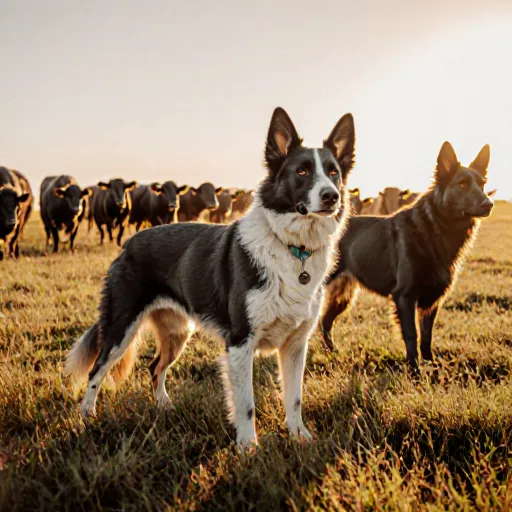
Unleash intuition on the field
“Echoes of the Field: Train Dogs for Intuitive Herding”
Table of Contents
- Introduction to Herding Dogs
- Historical Origins of Herding Breeds
- Common Herder Characteristics
- Physical Traits and Health Considerations
- Behavioral Traits: Intelligence, Work Ethic, & Instincts
- Choosing the Right Herding Dog for Your Lifestyle
- Basic Obedience Training Foundations
- Advanced Herding Techniques and Commands
- Socialization with Livestock and Other Dogs
- Common Training Challenges & How to Overcome Them
- Exercise, Mental Stimulation, and Daily Routines
- Health Maintenance: Nutrition, Vaccinations, & Grooming
- Legal and Ethical Considerations for Herding Dogs
- Conclusion
- FAQ
Introduction to Herding Dogs
Herding dogs are more than just animals that help farmers move livestock; they are highly intelligent companions whose instincts have been honed over thousands of years. From the agile Border Collie to the robust Australian Cattle Dog, each breed brings a unique blend of speed, stamina, and problem‑solving skills to the pasture. Understanding their roles and training requirements is essential for anyone looking to harness these natural talents—whether you’re a seasoned rancher or a hobbyist with a flock.
Historical Roles
- Livestock Management: Traditional herding breeds such as the German Shepherd, Australian Kelpie, and Corgi were developed to move sheep, cattle, and even goats efficiently across varied terrain.
- Guardians: Some herders also served as protectors against predators. The Border Collie’s quick reflexes made it an excellent sentinel on open fields.
- Companions in Rural Life: Beyond work, many breeds have become beloved family pets, bringing their intelligence and loyalty into the home setting.
Modern Applications
Today’s herding dogs are employed in a range of settings:
- Pastoral Work: Commercial farms use herders to reduce labor costs and improve animal welfare.
- Sporting Disciplines: Herding trials, agility courses, and obedience competitions test their natural instincts in controlled environments.
- Therapeutic Roles: Some breeds are trained for therapy work with livestock handlers, providing emotional support during long hours on the job.
Key Traits of Successful Herding Dogs
| Trait | Description | Practical Example |
|---|---|---|
| Intelligence & Problem Solving | Ability to adapt to new herd patterns and obstacles. | A Border Collie learns to navigate a maze of hay bales while guiding sheep around them. |
| Stamina & Endurance | Can work for hours without fatigue. | An Australian Cattle Dog herds cattle over 10 miles in a single day. |
| Responsiveness to Commands | Sensitivity to verbal and hand signals. | A Kelpie quickly stops moving when the handler raises a whistle. |
| Focus & Attention Span | Stays on task despite distractions. | A German Shepherd remains focused while herding a flock near a busy road. |
Training Foundations
Training a herding dog starts with establishing trust and basic obedience. The following steps provide a roadmap:
- Socialization: Expose the puppy to various environments, people, and other animals by age 8–12 weeks.
- Basic Obedience: Teach sit, stay, come, heel, and recall. Use positive reinforcement (treats, praise) consistently.
- Impulse Control: Work on “leave it” and “watch me” commands to help the dog manage strong herding urges before formal training.
- Herding Specific Drills:
- “Push” drill: Guide a dummy or actual animal in a straight line, encouraging the dog to move it forward.
- “Pull” drill: Teach the dog to pull livestock toward the handler on cue.
- “Corner” drill: Use a small enclosure to train the dog to herd animals into a confined space.
Common Training Pitfalls & How to Avoid Them
- Over‑Excitement: If the dog becomes too enthusiastic, pause the session and reward calm behavior.
- Inconsistent Signals: Use the same hand gesture or verbal cue every time; mixed signals confuse the dog.
- Neglecting Rest: Herding dogs need rest periods. Overworking can lead to fatigue and loss of focus.
Practical Advice for New Handlers
- Start Small: Begin with a single animal or even a dummy before moving on to larger herds.
- Use Visual Signals: Combine hand signals with verbal cues; this dual modality speeds learning.
- Gradual Increase in Complexity: Add obstacles, other animals, and varied terrain as confidence grows.
- Keep Training Sessions Short: 15–20 minutes per session is optimal for puppies; older dogs can handle longer periods if divided into smaller bursts.
- Celebrate Successes: Offer a treat or affection after each successful drill to reinforce positive behavior.
By understanding the historical context, essential traits, and step‑by‑step training methods, you can unlock the full potential of your herding dog. Whether guiding cattle across vast ranches or competing in herding trials, these intelligent companions thrive when given clear direction, consistent practice, and plenty of rewards.
Historical Origins of Herding Breeds
The lineage of modern herding dogs stretches back thousands of years to early agricultural societies across Eurasia and North Africa. As human communities transitioned from nomadic hunting to settled farming, the need for reliable animal guardians became paramount. These early shepherds sought dogs that could keep livestock together, guard against predators, and help with daily tasks such as moving sheep to pasture or retrieving lost animals.
Key Milestones in the Development of Herding Dogs
- Early Domestication (c. 10 000–8 000 BCE): The first domesticated wolves, likely ancestors of all dogs, began to exhibit herding behaviors when they were brought into close proximity with livestock.
- Medieval Europe (5th–15th centuries): Breeds such as the German Shepherd and the Border Collie were refined through selective breeding for size, stamina, and intelligence. In England, drovers used herding dogs to move sheep over long distances.
- 19th Century Industrial Revolution: The rise of commercial farming led to a demand for specialized breeds capable of handling larger flocks efficiently. Breeders began documenting pedigrees, leading to the formal recognition of many herding breeds by kennel clubs.
- 20th Century Sports and Competitions: Dog agility trials, sheepdog trials, and field tests emerged, pushing breeding programs toward heightened obedience, problem‑solving skills, and refined instincts.
Traits That Evolved Through Selective Breeding
Over centuries of human intervention, herding dogs have honed a set of core traits that make them indispensable on the farm:
- Intelligence & Trainability: Ability to learn complex commands and adapt to changing environments.
- Instinctual Drive: Natural inclination to gather, separate, or drive livestock without excessive human direction.
- Stamina & Agility: Capacity for long working hours across varied terrain.
- Communication Skills: Use of body language and vocal cues to coordinate with humans and herd members.
Practical Advice for Breeders and Owners
- Early Socialization: Expose puppies to livestock, other dogs, and diverse environments before they are fully weaned. This helps prevent fear-based reactions later in life.
- Positive Reinforcement Training: Use treats, praise, and play rather than punishment. Consistency is key—every handler should use the same cues.
- Structured Work Sessions: Begin with short sessions (5–10 min) focusing on basic commands like “sit,” “stay,” and “come.” Gradually introduce herd‑specific tasks such as “push” or “pull.”
- Physical Conditioning: Incorporate endurance training—long walks, obstacle courses, and controlled runs—to build the dog's stamina.
- Health Screening: Regular veterinary checkups, genetic testing for common herding‑breed issues (e.g., hip dysplasia), and a balanced diet tailored to high energy demands.
Case Study: The Border Collie’s Evolution in Modern Agriculture
The Border Collie originated in the Anglo-Scottish border region, where drovers needed dogs that could work both sheep and cattle. By selectively breeding for an exceptional “eye” (the ability to focus on livestock), breeders produced a breed capable of moving large flocks with minimal effort. Today, Border Collies are used not only on farms but also in competitive herding trials worldwide.
Understanding these historical foundations equips breeders, trainers, and owners with the context needed to nurture the next generation of exemplary herding dogs—dogs that honor centuries of partnership between humans and livestock while adapting to contemporary agricultural challenges.
Common Herder Characteristics
The success of a herding dog hinges on a blend of instinctual drive, mental agility, and temperament. Below are the key traits that breed and individual dogs typically exhibit, along with practical tips for nurturing each characteristic during training.
1. Strong Herding Instinct
- What it looks like: A natural tendency to gather, corral, or move other animals (or even humans) without being prompted.
- Why it matters: This instinct is the foundation of any herding task; a dog that doesn’t feel compelled to herd will struggle with basic commands like “move” and “round up.”
- Practical advice:
- Start with low‑stakes scenarios: use a ball or toy as the target animal in an open yard.
- Gradually introduce real livestock once the dog shows consistent interest and control.
- Reward any movement toward the target with high‑value treats to reinforce the instinct.
2. Quick Decision Making
- What it looks like: The dog can assess a situation and choose the correct movement within seconds.
- Why it matters: Herding involves split‑second choices—whether to push, pull, or hold back. A slow response can lead to livestock getting stuck or injured.
- Practical advice:
- Use “choice” drills: present the dog with two different herding options and reward the correct choice.
- Incorporate obstacle courses that require the dog to decide between multiple paths.
- Keep training sessions short (10–15 minutes) to maintain focus and prevent fatigue.
3. High Energy & Stamina
- What it looks like: The dog can sustain vigorous activity for extended periods without losing enthusiasm.
- Why it matters: Herding often demands long hours in the field, especially during spring and fall seasons when livestock are moving between pastures.
- Practical advice:
- Build endurance through gradual increases in running distance and time.
- Include high‑intensity interval training (HIIT) sessions to mimic the bursts of activity a herder needs.
- Provide ample hydration and nutrition tailored for working dogs, such as protein‑rich diets and electrolyte supplements during long days.
4. Strong Focus & Concentration
- What it looks like: The dog can ignore distractions (other animals, people, noises) and stay engaged with the task at hand.
- Why it matters: In a pasture full of stimuli, a distracted dog may miss cues or fail to maintain control over livestock.
- Practical advice:
- Begin training in quiet environments and progressively add distractions (e.g., other dogs, children).
- Use the “focus” command (“watch me”) paired with a high‑value treat to anchor attention.
- Practice “hand signals” for silent communication during noisy workdays.
5. Obedience & Trainability
- What it looks like: The dog responds promptly to verbal and visual cues, even in complex situations.
- Why it matters: Herding requires a balance of instinct and obedience. A well‑trained dog can execute commands without compromising herding instincts.
- Practical advice:
- Employ positive reinforcement consistently: treat, praise, or play after correct actions.
- Use clicker training to create a clear association between the cue and reward.
- Include “negative” cues (e.g., pause, stop) early on to establish boundaries.
6. Temperament & Socialization
- What it looks like: The dog is calm around unfamiliar animals and people, yet confident enough to lead a flock.
- Why it matters: A nervous or overly aggressive dog can cause chaos on the pasture or harm livestock.
- Practical advice:
- Expose the dog early to a variety of animals—sheep, goats, cattle—to build comfort.
- Schedule regular socialization sessions with other dogs and handlers.
- Use “hand-over” exercises to teach the dog how to accept treats or commands from different people.
7. Problem‑Solving Skills
- What it looks like: The dog can navigate obstacles, adapt to changing herd patterns, and find the most efficient route.
- Why it matters: Livestock behavior is unpredictable; a good herder must quickly adjust tactics.
- Practical advice:
- Introduce “choice” puzzles that require the dog to figure out how to get to a reward.
- Practice with moving
Physical Traits and Health Considerations
When selecting a herding dog, it’s essential to understand the physical attributes that enable them to perform their job efficiently and safely. Below is an overview of key traits, common health issues, and practical tips for maintaining your herder’s well‑being.
1. Body Structure & Size
- Medium to Large Build: Most herding breeds (e.g., Border Collie, Australian Shepherd, German Shorthaired Pointer) fall between 20–30 kg (45–65 lb). A sturdy frame supports endurance and agility.
- Balanced Proportions: A well‑proportioned body with a strong back, moderate neck, and deep chest allows for efficient movement over varied terrain.
- Long Legs & Musculature: Enables quick directional changes; especially important when chasing or guiding livestock.
2. Coat Characteristics
- Double Coats: Many herding dogs have a dense undercoat with a weather‑resistant top coat, protecting them from wind and rain.
- Low Shedding Options: Breeds like the Australian Shepherd may shed moderately; consider grooming routines if you live in an allergy‑prone household.
3. Sensory Acuity
- Excellent Vision: A wide field of view (≈300°) helps spot movement and changes in herd patterns.
- Sensitive Nose & Hearing: Critical for detecting subtle shifts in livestock behavior and responding to verbal cues or whistles.
4. Common Health Concerns
Because herding dogs are highly active, certain conditions may arise more frequently. Regular vet visits and preventive care can mitigate risks.
| Condition | Symptoms | Prevention/Treatment |
|---|---|---|
| Hip Dysplasia | Limping, difficulty rising, reluctance to jump. | Maintain healthy weight, joint supplements (glucosamine), controlled exercise. |
| Progressive Retinal Atrophy (PRA) | Night blindness, loss of peripheral vision. | Genetic testing before breeding; no cure but early detection helps manage lighting conditions. |
| Heart Murmurs | Excessive panting, fatigue during play. | Regular cardiology checks, moderate activity levels. |
| Allergies (skin & food) | Itching, ear infections, gastrointestinal upset. | Identify allergens via diet trials, hypoallergenic grooming products. |
5. Nutrition & Exercise Guidelines
- Balanced Diet: High‑quality protein (≥30 %) with complex carbs for sustained energy. Consider feeding a diet formulated for active dogs.
- Portion Control: Adjust based on activity level; overfeeding can exacerbate hip issues.
- Daily Exercise: Minimum of 60–90 minutes of vigorous activity (e.g., running, agility drills). Herding dogs thrive on mental stimulation as well—include training sessions or scent games.
6. Grooming & Care Routines
- Brushing: Twice weekly to remove loose hair and prevent matting.
- Ear Cleaning: Once a month; herders can develop ear infections due to moisture in fields.
- Foot Care: Check for calluses or cracks after long walks on rough terrain.
7. Practical Tips for Breeders & Handlers
- Schedule a pre‑breeding health screen to ensure genetic soundness.
- Use whistle training to maintain control over long distances—this is vital for field herding.
- Implement a structured conditioning program (e.g., treadmill, obstacle courses) to build stamina and prevent injury.
- Keep detailed health records; track any hereditary conditions in the lineage.
Remember: A healthy herding dog is not only a capable worker but also a lifelong companion. By understanding their physical traits and proactively addressing health concerns, you can ensure they perform at peak levels for years to come.
Behavioral Traits: Intelligence, Work Ethic, & Instincts
Herding dogs are renowned for their exceptional intelligence and strong work ethic. These traits stem from a deep evolutionary history of cooperating with humans to manage livestock. Understanding how these qualities manifest can help owners train more effective, balanced companions.
1. Cognitive Abilities
- Problem‑solving skills: Breeds such as Border Collies and Australian Shepherds can learn to navigate complex obstacle courses in fewer than 10 trials, often outperforming larger breeds that require more repetition.
- Memory retention: Herding dogs can recall commands given during a single training session for months, allowing them to be taught new tasks without re‑introducing basic cues.
- Adaptability: When faced with unexpected changes—like a sudden shift in pasture layout—they adjust their strategy within seconds, demonstrating flexible thinking rather than rigid routine.
Practical tip: Use “clicker” or “marker” training to reinforce problem‑solving. Offer puzzle toys that require the dog to manipulate objects (e.g., retrieving a treat from a rotating tube) to keep their minds sharp between formal sessions.
2. Drive and Endurance
- High stamina: Herding breeds can work for 90–120 minutes on a single day, especially when their physical fitness is maintained through regular runs or jogs.
- Intrinsic motivation: They often initiate tasks themselves—e.g., pulling at the rope to “start” a chase—even without an explicit command. This self‑driven behavior reduces the need for constant human prompting.
- Focus under distraction: In open fields, their attention remains on the herd despite wind, other animals, or people. Trainers can replicate this by gradually increasing environmental distractions during practice.
Practical tip: Build a “work ladder”—begin with short, 5‑minute sessions and incrementally add time as stamina improves. Pair work sessions with rest periods to avoid burnout, just like athletes do with interval training.
3. Natural Herding Instincts
- Canine instinct: Most herding breeds possess a built‑in “push” or “pull” tendency—Border Collies often “push” livestock to one side, while German Shepherds may “pull” them toward the handler.
- Eye contact and body language: Dogs use direct eye contact, tail wagging, and posture shifts to communicate with both humans and herd members. Recognizing these signals is essential for effective command delivery.
- Risk assessment: Herding dogs instinctively gauge distances; they will not attempt a jump or turn that would risk injury to themselves or the livestock. This cautiousness can be harnessed in training by rewarding safe decision‑making.
Practical tip: Conduct “instinct trials” where you let your dog lead a small group of sheep or goats across a marked area. Observe how they use body language to keep the herd together, and reward them for maintaining calm, controlled movements.
4. Combining Intelligence, Work Ethic, and Instincts
Effective training blends cognitive challenges with physical tasks that align with natural instincts:
- Start with basic obedience: Teach “sit,” “stay,” and “come” to establish a communication foundation.
- Add herding cues: Introduce “push,” “pull,” or “stop” commands while the dog watches a moving target (e.g., a ball).
- Progress to live livestock: Once comfortable, transition from a toy to real animals, gradually increasing herd size.
- Maintain mental stimulation: Rotate tasks (e.g., scent work, agility circuits) to keep the dog’s intelligence engaged without overloading their instinctual drive.
Remember: patience and consistency are key. A herding dog’s high intelligence means they can learn quickly, but their strong instincts may also cause them to act impulsively if not properly guided.
Choosing the Right Herding Dog for Your Lifestyle
If you’re looking to add a herding dog to your family, it’s essential to align the breed’s natural tendencies with your daily routine, living space, and experience level. Below are practical guidelines, real‑world examples, and training tips drawn from Herding Dogs: Roles and Training to help you make an informed decision.
1. Assess Your Living Situation
- House vs. Apartment: Larger herding breeds (e.g., Border Collie, Australian Cattle Dog) thrive in spacious homes with a yard where they can run and channel their energy. Smaller varieties like the Miniature Australian Shepherd or Shetland Sheepdog adapt well to apartment life but still need daily walks.
- Neighborhood: If you live near farms or livestock, consider breeds that have been bred for specific tasks (e.g., Collie for sheep vs. German Shorthaired Pointer for cattle). A breed’s instinct will be stronger if it matches the local environment.
2. Match Energy Levels to Your Activity Level
Herding Dogs: Roles and Training notes that herding breeds are “highly energetic” by default. Pair this with your own activity:
- Highly active families: Border Collies, Australian Shepherds, or German Pinschers will enjoy long runs, agility courses, and interactive games.
- Moderately active households: Shetland Sheepdogs or Miniature Collies can be satisfied with brisk walks and puzzle toys.
- Low‑energy owners: Consider breeds that have been bred for calmness, such as the Old English Sheepdog or a well-trained Bearded Collie. Even then, they still require daily stimulation.
3. Evaluate Training Experience and Commitment
Herding dogs are intelligent but can be stubborn if not properly guided. The book emphasizes early socialization and consistent training:
- First‑time dog owners: Opt for breeds known for easier trainability, like the Shetland Sheepdog or Miniature Australian Shepherd.
- Experienced handlers: Border Collies, Australian Cattle Dogs, and German Pinschers thrive when given structured tasks such as obedience classes, agility, or herding simulations.
4. Consider Health and Lifespan
Breed‑specific health issues can impact your decision:
- Border Collie: Prone to hip dysplasia and eye disorders—regular vet checkups are essential.
- Shetland Sheepdog: May develop epilepsy; ensure you’re prepared for potential medical costs.
- Australian Cattle Dog: Generally robust but watch for early onset of arthritis if they live in confined spaces.
5. Test the “Herding Instinct” in Real Life
Before adopting, observe how a dog reacts to moving objects or livestock (if available). A strong herding instinct means:
- The dog will try to direct small children or pets—good for families with kids but may need redirection.
- A tendency to chase cars or bikes—requires secure fencing and training.
6. Practical Training Tips from the Book
- Start Early: Begin obedience training within the first week of arrival.
- Use Positive Reinforcement: Treats, praise, and play are more effective than punishment for redirecting herding behaviors.
- Create Structured Work: Even if you’re not a farmer, give your dog “tasks” such as fetching items or navigating obstacle courses to satisfy their need to herd.
- Socialize Widely: Introduce them to varied environments—parks, neighborhoods, and other animals—to reduce over‑reactive herding in unfamiliar settings.
7. Real‑World Example: The Brown Family’s Journey with a Border Collie
The Browns live on a 1‑acre farm with two kids. They chose a Border Collie named “Scout” after reading Herding Dogs: Roles and Training. By integrating daily herding drills into their routine—guiding Scout to gather hay bales—they kept his energy in check, improved family bonding, and even saw increased efficiency on the farm.
Takeaway: Your lifestyle is a blueprint. Align your living situation, activity level, training commitment, health considerations, and the dog’s natural instincts for a harmonious partnership with your chosen herding breed.
Basic Obedience Training Foundations
Before you can teach a herding dog advanced commands like “cut,” “drive,” or “hold,” you must first establish a solid foundation of basic obedience. This not only keeps your dog safe and predictable in everyday situations but also builds the trust and communication necessary for successful herding work.
Why Basic Obedience Matters for Herding Dogs
- Safety: A well‑trained dog is less likely to bolt into traffic or chase stray animals.
- Control: Herding requires precise direction; a dog that reliably responds to “sit” and “stay” can be guided without shouting.
- Focus: Basic commands create a mental framework for the dog, making it easier to learn complex herding cues later.
Core Commands Every Herding Dog Should Master
- “Sit” and “Stay” – Start with a clear hand signal. Reward immediately; then increase the duration of the stay gradually from 5 to 30 seconds.
- “Come” (Recall) – Use high‑value treats or a favorite toy. Practice in low‑distraction areas first, then move to parks, fields, and eventually crowded herding sessions.
- “Heel” (Walk beside you) – Keep the leash short but loose; reward every time the dog walks within one foot of your side.
- “Leave It” / “Drop It” – Essential for preventing a dog from grabbing livestock or dangerous objects. Use a two‑step cue: “leave it” then “drop it.”
- “Quiet” (Shush) – Herding dogs often bark at sheep; teach them to stop barking on command using a gentle “quiet” cue and reward the silence.
Practical Training Tips for Herding Breeds
- Use Positive Reinforcement: Herding breeds thrive on mental stimulation. Pair treats with verbal praise, but also incorporate puzzle toys or scent games to keep training engaging.
- Short, Frequent Sessions: A 10–15 minute session twice a day is more effective than one long hour, especially for high‑energy herders.
- Incorporate Distractions Early: Once your dog reliably follows basic commands in a quiet room, add mild distractions—another dog in the yard or a moving object—to simulate field conditions.
- Consistent Cue Words: Use the same word for each command across all trainers and environments. Herding dogs learn through repetition; inconsistent cues can confuse them.
- Use a Long Line in Open Spaces: When working near livestock, a 30–50 foot line gives you control while allowing your dog to experience freedom similar to real herding situations.
Common Pitfalls and How to Avoid Them
- Over‑reliance on Treats: Gradually phase treats out by replacing them with verbal praise or a favorite toy. Herding dogs need to respond regardless of food.
- Neglecting the “Leave It” Cue: A herding dog that can’t ignore livestock or stray objects poses a risk. Practice this command daily until it becomes second nature.
- Inconsistent Reinforcement: If you reward only sometimes, your dog will be unsure of what behavior is desired. Keep rewards consistent during the learning phase.
Transitioning to Herding-Specific Commands
Once basic obedience is solid, begin layering herding cues on top. For example:
- “Cut” (Stop moving) – Teach this by first having the dog “stand still,” then add a hand signal that mimics a shepherd’s cut.
- “Drive” (Move forward) – Combine a directional cue with a short leash pull to show the dog how to move toward a target.
- “Hold” (Stay in place while you approach) – Use the “stay” command, then have the dog look at you and stay until you give a release cue.
By mastering these foundational skills first, your herding dog will be better equipped to learn advanced techniques and perform reliably on the field. Remember: patience, consistency, and positive reinforcement are the keys to unlocking a herding dog's full potential.
Advanced Herding Techniques and Commands
The foundation of any herding dog’s training is built on basic obedience, but true mastery comes from refining advanced commands that allow the animal to work independently, respond to subtle cues, and adapt to complex environments. Below are key techniques, practical examples, and step‑by‑step guidance for trainers and owners looking to elevate their herding dogs’ skill set.
1. The “Hold” (or “Stand”) Command
Purpose: Keeps the dog in a controlled position while you direct the herd.
- Start Position: Dog sits or lies beside you.
- Command Delivery: Say “Hold” (or “Stand”) with a firm, neutral tone.
- Physical Cue: Gently hold the dog’s collar or leash to reinforce the position.
- Reward: Offer a treat or verbal praise once the dog remains still for at least 5 seconds.
Use this command during grazing sessions to give yourself time to observe herd movement or to reposition animals without pulling them away from their current spot.
2. The “Sweep” Command (Horizontal Herding)
Purpose: Directs the dog to move in a horizontal arc, sweeping livestock across a boundary.
- Signal: Hold your hand out horizontally and say “Sweep.”
- Movement Pattern: The dog should walk side‑to‑side behind you, pushing the herd in the desired direction.
- Intensity Control: Adjust leash tension to either encourage gentle nudging or firm pressure based on livestock responsiveness.
Example: Herding sheep from a pasture into a fenced pen by sweeping them along the perimeter.
3. The “Push” Command (Vertical Herding)
Purpose: Drives the dog to move directly forward, often used when moving livestock across uneven terrain or past obstacles.
- Signal: Point straight ahead and say “Push.”
- Leash Technique: Use a short leash to maintain proximity; the dog should follow you without pulling hard.
- Safety Check: Ensure no obstacles in front of the herd that could cause injury.
Example: Directing cattle from one side of a hill to another, ensuring they stay in line and do not scatter.
4. “Recall” with Distance Management
Purpose: Brings the dog back to you regardless of distance, crucial when the herd is spread out.
- Command Delivery: Use a clear, excited tone: “Come!” or “Back.”
- Leash Management: Let the leash slacken as the dog returns; do not yank.
- Reward System: Offer high‑value treats and enthusiastic praise upon return.
Practical tip: Practice recall in varied environments (open field, wooded area) to build reliability under distraction.
5. “Drop” and “Hold” for Livestock Management
Drop: The dog releases the animal’s neck or head after a push.
- Signal with a short, firm tug on the leash while saying “Drop.”
- Reward immediately to reinforce the release action.
Hold: The dog maintains its position holding an animal in place.
- Use a calm voice: “Hold” while keeping gentle pressure on the leash.
- Release after a brief period, rewarding compliance.
6. Working with Obstacles and Boundaries
- Obstacle Identification: Mark trees, fences, or low walls with bright tape so the dog can see them.
- Command Integration: Combine “Sweep” or “Push” with a directional cue (“Left,” “Right”) to navigate around obstacles.
- Reinforcement: Use treats placed at the target location to reinforce correct navigation.
7. Advanced Techniques: “Split” and “Cross‑Over” Commands
Split: Directs the dog to divide a herd into two groups, useful during rotational grazing or pasture management.
- Signal with a hand gesture indicating division.
- Reward both the dog and livestock for maintaining separation without aggression.
Cross‑Over: Guides the dog to lead one side of the herd over an obstacle onto another pasture.
- Use a combination of “Push” and a verbal cue (“Across”).
- Monitor livestock movement closely; adjust leash tension as needed.
Practical Advice for Trainers
- Consistency: Use the same command word and hand signal each time to avoid confusion.
- Progressive Training: Start in a controlled environment, gradually increasing complexity (more livestock, more obstacles).
- Positive Reinforcement: Always reward successful execution; use high‑value treats for difficult commands.
- Observe Body Language: Watch for signs of fatigue or stress in the dog and adjust training intensity accordingly.
- Safety First: Keep a leash within reach during advanced sessions to prevent runaway incidents.
By mastering these advanced herding techniques, dogs become versatile tools capable of handling varied livestock scenarios with confidence and precision. Consistent practice, clear communication, and positive reinforcement are the cornerstones that turn basic obedience into expert-level herd management.
Common Training Challenges & How to Overcome Them
Training a herding dog can be an immensely rewarding experience, but it also comes with its own set of hurdles. Below we break down the most frequent challenges owners face and offer practical, step‑by‑step solutions that align with the unique instincts and roles of these dogs.
1. Excessive Energy & Restlessness
- Why it Happens: Herding breeds (e.g., Border Collie, Australian Shepherd) are bred to work long hours; their high energy needs can translate into restlessness when not properly channeled.
- Practical Solutions:**
- Structured Exercise: Provide at least 60–90 minutes of vigorous activity daily—running, agility courses, or interactive fetch sessions.
- Skill‑Based Work: Incorporate obedience drills (sit, stay, heel) into warm‑ups to burn mental energy before physical play.
- Use a “Work” Tool: A weighted tug toy or a herding pole can redirect their focus toward a task rather than random sniffing.
2. Over‑Reactivity to Small Animals
- Why it Happens: The natural herd instinct triggers a chase response, especially toward small livestock or even squirrels.
- Practical Solutions:**
- Desensitization: Start with a controlled environment where the dog can see but not reach a target animal. Gradually decrease distance while rewarding calm behavior.
- Use “Release” Commands: Teach “let go” or “release” in conjunction with a high‑value treat so they learn to relinquish interest when commanded.
- Positive Association Training: Pair the sight of small animals with treats and praise, turning the stimulus from scary to rewarding.
3. Inconsistent Obedience in High‑Distraction Settings
- Why it Happens: Herding dogs thrive on focus but can easily get sidetracked by scents, sounds, or other animals.
- Practical Solutions:**
- Progressive Distraction Training: Begin in a quiet space and gradually introduce distractions—first one, then two, then more—while maintaining the command structure.
- Use “Focus” Cue: Teach a cue like “look at me” or “watch me” that signals the dog to focus on you rather than the environment.
- Reward Reliability: Only reward the correct response when distractions are present; this reinforces reliability under pressure.
4. Over‑Dependence on Physical Herding Tools (e.g., Herding Paddles)
- Why it Happens: Some owners rely too heavily on paddles, causing the dog to neglect basic obedience.
- Practical Solutions:**
- Integrate Commands with Tools: Use the paddle while simultaneously issuing “sit,” “stay,” or “heel” commands so the dog learns to obey regardless of the tool.
- Limit Tool Time: Schedule specific training sessions that focus solely on obedience, and reserve herding tool use for separate practice periods.
- Teach “Drop It”: A reliable drop command ensures you can retrieve the paddle without compromising control.
5. Confusion Between Herding Signals and Basic Commands
- Why it Happens: The same body language or vocal cues used for herding (e.g., a specific hand wave) can be misinterpreted as an obedience cue.
- Practical Solutions:**
- Create Distinct Signals: Assign unique hand signals or verbal cues exclusively for herd work versus basic obedience.
- Consistent Reinforcement: Always reward the dog only when it responds to the correct cue in a given context.
- Use “Quiet” Cue Before Herding: Ensure the dog is calm before starting herding tasks; this reduces miscommunication.
6. Lack of Socialization with Other Dogs or Humans
- Why it Happens: Herding dogs may be wary of other dogs if not properly introduced, limiting their ability to work in mixed herds.
- Practical Solutions:**
- Controlled Introductions: Arrange short, supervised playdates with friendly dogs in neutral territory.
- Positive Interaction Training: Reward calm behavior around other dogs and people; use treats to create positive associations.
- Use “Leave It” Cue: Teach them to leave another dog alone when commanded, which is vital for safety on a farm.
7. Inadequate Mental Stimulation Leading to Destructive Behavior
- Why it Happens: Herding breeds are highly intelligent; without mental outlets, they may resort to chewing or digging.
- Practical Solutions:**
- Puzzle Toys & Food Dispensing Games: Offer interactive toys that require problem solving for treats.
- Job Rotation: Teach new herding commands or tricks periodically to keep the dog engaged.
- Use “Work” Time: Set a timer for short bursts of focused training before allowing free play.
8. Managing the Dog’s Role on the Farm vs. Home Life
- Why it Happens: The transition between “work” and “home” can confuse a herding dog, especially if boundaries are unclear.
- Practical Solutions:**
- Clear Signifiers: Use distinct cues for work mode
Exercise, Mental Stimulation, and Daily Routines
The physical demands of a herding dog are significant; they require daily movement that mimics the work they were bred to perform. A well‑structured exercise routine not only keeps your dog healthy but also channels their natural instincts into constructive activity.
- Daily Walks: Aim for two brisk walks of 30–45 minutes each day. Use these walks as “working” sessions by letting the dog follow a scent trail or chase a ball you throw along the path.
- Herding Drills: If you have space, set up obstacle courses that involve moving small objects (e.g., cones, barrels) around a perimeter. The dog should “herd” these items from one side to the other using gentle nudges or verbal cues.
- Fetch and Retrieval: Herding breeds excel at retrieving. Use a long‑line fetch in a large yard or park to give them both cardio and mental focus.
- Interactive Toys: Puzzle feeders that require the dog to move objects into place can provide both exercise and stimulation when you’re busy with other tasks.
Remember, consistency is key. A bored herder will develop destructive behaviors; a well‑exercised one remains calm and focused.
Herding dogs have a natural intellect that thrives on problem solving. Without mental outlets, they’ll become restless or anxious. Below are proven techniques to keep their brains engaged:
- Training Sessions: Short, frequent sessions (5–10 minutes) that focus on new commands or tricks keep the dog learning and prevent boredom.
- Obstacle Courses: Incorporate tunnels, weave poles, and jumps. Teach your dog to “herd” small objects through these obstacles.
- Scent Work: Hide treats around a room or yard and let the dog use their nose to locate them. This mimics real herding scenarios where scent guides movement.
- Interactive Games: Play “hide‑and‑seek” with family members, or teach your dog to retrieve specific items by name.
- Rotating Toys: Keep a stash of toys and rotate them weekly. New textures and shapes maintain curiosity.
Integrate these mental challenges into daily routines—e.g., a quick scent game before dinner or a training drill after the afternoon walk—to reinforce learning without overwhelming your dog.
A predictable schedule provides security for herding dogs, who thrive on routine. Here’s a sample day that balances work, play, and rest:
| Time | Activity |
|---|---|
| 6:30 AM | Morning walk & “herding” drill (move objects around the yard) |
| 7:15 AM | Breakfast + brief training session (new command or trick) |
| 8:00 AM | Rest period – quiet time with a chew toy or puzzle feeder |
| 12:30 PM | Afternoon walk + fetch session in the park |
| 1:15 PM | Lunch + short scent‑work game (hide treats) |
| 2:00 PM | Rest period – lie down, relax with a soothing music track for dogs |
| 5:30 PM | Evening walk + “herding” obstacle course (if space available) |
| 6:15 PM | Dinner + family playtime (tug‑of‑war or gentle chase game) |
| 7:00 PM | Final rest period – cuddle time with a weighted blanket if needed |
Adjust the times to fit your personal schedule, but maintain the core elements: exercise, mental work, and downtime. Consistency reduces anxiety and reinforces good behavior.
Health Maintenance: Nutrition, Vaccinations, & Grooming
1. Nutrition: Fueling the Workhorse
A balanced diet is the foundation of a healthy herding dog. These breeds are energetic, muscular, and require sustained energy throughout the day.
- Protein: 18‑25% of daily calories should come from high‑quality animal proteins (chicken, turkey, fish). Protein supports muscle repair and growth.
- Fats: 10‑15% of calories from healthy fats (omega‑3 & omega‑6) improve coat quality, joint health, and provide dense energy.
- Carbohydrates: Whole grains, sweet potatoes, or brown rice supply sustained release glucose for endurance work.
- Vitamins & Minerals: A commercial herding‑specific kibble usually contains the correct ratio of calcium to phosphorus (1.2:1) and added glucosamine for joint support.
Practical Tip: Feed 2–3% of body weight per day, split into two meals. Adjust portions based on activity level; a dog pulling a flock in summer may need up to 25% more calories than one resting in winter.
Sample Feeding Schedule
| Age/Activity | Daily Calories (kcal) |
|---|---|
| Juvenile (0‑6 mo) – High activity | 2,200–2,600 |
| Adult (1‑3 yr) – Moderate to high activity | 1,800–2,400 |
| Senior (> 4 yr) – Low activity | 1,200–1,600 |
2. Vaccinations: Protecting the Herd and the Handler
Herding dogs often come into contact with livestock, wildlife, and other dogs. A robust vaccination schedule protects both your dog and the animals they interact with.
- Core Vaccines (every 12‑18 months):
- Canine Distemper Virus (CDV)
- Canine Parvovirus (CPV)
- Canine Adenovirus (CAV‑2) – Hepatitis
- Rabies (annual or biennial, depending on local laws)
- Non-Core / Regional Vaccines:
- Canine Influenza (H3N8) – especially in areas with high dog traffic
- Bordetella bronchiseptica – kennel cough; recommended if the dog works closely with other dogs or livestock.
- Leptospira spp. – critical for herding breeds that graze on pasture or water sources.
Practical Tip: Keep a vaccination log in your dog’s medical file and set calendar reminders for boosters. Discuss with your veterinarian whether a “split” vaccine schedule is appropriate during the first year of life to reduce stress.
3. Grooming: Maintaining Coat, Skin & Comfort
Herding dogs have dense double coats that shed heavily and require regular grooming to prevent matting, skin irritation, and heat exhaustion.
- Brushing: 2–3 times per week during shedding season (spring/fall) with a slicker brush. During heavy shedding, daily brushing helps remove loose hair and distributes natural oils.
- Bathing: Every 4–6 weeks with a mild dog shampoo. Over‑bathing can strip skin of essential oils; use a conditioner if the coat is particularly dry.
- Ears & Eyes: Inspect weekly for wax build‑up or discharge. Clean with vet‑approved ear cleaner and wipe around the eyes to prevent irritation.
- Nail Trimming: Every 4–6 weeks; overgrown nails can cause gait problems and discomfort during work.
Coat Care During Work
When a dog is on the field, it may become muddy or wet. After each session:
- Wipe down with a damp cloth to remove dirt.
- Check for injuries such as cuts or bruises that can be missed in the heat of activity.
- Re‑brush lightly to prevent matting from trapped debris.
Practical Tip: Use a waterproof dog coat or vest during rainy conditions. It protects the skin and helps maintain body temperature while still allowing freedom of movement.
Legal and Ethical Considerations for Herding Dogs
Legal and Ethical Considerations for Herding Dogs
- State & Local Laws: Many states require herding dogs to be licensed, especially if they are used on public or commercial livestock operations. Check your state’s Department of Agriculture or local municipality regulations for specific license fees and renewal periods.
- Breed‑Specific Restrictions: Certain breeds (e.g., Pit Bulls, German Shepherds) may face additional scrutiny in some jurisdictions. Verify that the breed you are working with is permitted for herding purposes in your area.
- Proof of Training: Some regions mandate documented proof of obedience or herding certification before a dog can be registered as a working animal. Keep training logs, certificates from accredited programs (e.g., American Herding Dog Association), and veterinarian health records on file.
- Health Care: Ensure regular veterinary check‑ups, vaccinations, deworming, and parasite control. A healthy dog is more reliable and less prone to behavioral problems.
- Nutrition & Hydration: Provide a balanced diet tailored to the dog's size, activity level, and workload. Fresh water should always be available, especially during hot weather or long herding sessions.
- Rest & Recovery: After intense work, give your dog ample time to rest in a shaded, comfortable area. Overworking can lead to stress, injury, or chronic health issues.
- Positive Reinforcement First: Use treats, praise, and play as primary motivators. Avoid punitive measures that may create fear or aggression.
- Gradual Exposure to Livestock: Introduce the dog to livestock slowly—start with a single animal in a controlled environment before moving on to herds. This helps build confidence and reduces stress for both the dog and the animals.
- Respecting Animal Boundaries: Teach your dog to approach livestock calmly, avoiding sudden movements or loud noises that could startle the herd.
- General Liability Coverage: If you operate a commercial herding service (e.g., on farms or ranches), consider liability insurance to protect against claims of property damage or injury caused by your dog.
- Professional Liability for Trainers: Certified herding trainers should maintain professional indemnity coverage in case of disputes over training methods or outcomes.
- Local Customs: Some rural communities have long-standing traditions regarding livestock management. Engage with local farmers to understand their expectations and any customary practices that may affect how your dog works.
- Public Perception of Certain Breeds: Even if legally permissible, certain breeds might be viewed negatively by neighbors or visitors. Consider community outreach or education sessions to demonstrate responsible handling and training.
- Step 1 – Licensing: The farmer obtains a working dog license from the county agricultural office, paying $15 annually and submitting proof of a recent veterinary exam.
- Step 2 – Training Log: Over six months, the trainer records daily sessions: “10 minutes basic obedience + 20 minutes herding drills with one cow.” This log serves as evidence for future license renewals.
- Step 3 – Welfare Checks: The dog receives a balanced diet (premium grain‑free formula), daily water, and is given an extra rest period after a full herd round. A vet check ensures no signs of heat stress.
- Step 4 – Insurance: The farmer adds a $250,000 liability policy covering any accidental damage to livestock or equipment caused by the dog.
- Result: Within three months, the dog reliably guides cows between pastures without causing injury, and the farm reports no incidents. The community acknowledges responsible ownership, boosting the farmer’s reputation.
By integrating these legal and ethical guidelines into your herding program, you ensure not only compliance with local laws but also the well‑being of both dogs and livestock. This holistic approach builds trust among stakeholders—farmers, neighbors, and regulatory bodies—and sets a standard for responsible canine working practices.
Conclusion
Herding dogs are remarkable animals that combine instinct, intelligence, and trainability to perform a wide range of tasks for humans. Whether they’re guiding herds across vast pastures or assisting modern agricultural operations, the principles behind their training remain largely consistent: clarity, consistency, and positive reinforcement.
Key Takeaways
- Understand the Instinct: Before you start training, observe how your dog reacts to movement, sound, and other animals. This baseline helps tailor exercises that resonate with their natural drive.
- Start Early: The earlier you introduce basic commands—sit, stay, come, heel—the smoother the transition into complex herding drills.
- Use Clear Signals: Body language, hand signals, and vocal cues should be distinct and consistent. A dog that receives mixed messages will become confused and less effective on the field.
- Positive Reinforcement Wins: Treats, praise, and play are far more motivating than punishment. Celebrate small victories to build confidence.
- Gradual Progression: Begin with controlled environments (small groups of sheep or goats) before moving to larger herds and varied terrains.
Practical Training Tips
- Obstacle Course: Set up a series of cones, poles, and low barriers. Walk the dog through them while encouraging it to guide a dummy sheep. This builds agility and focus.
- Controlled Herding Sessions: Use a leash initially to keep the dog within range. Once reliable on commands, transition to off‑leash training with a safety perimeter.
- Sound Conditioning: Introduce the “herding call” (a specific whistle or vocal cue) gradually. Pair it with a treat whenever the dog responds correctly.
- Simulated Field Conditions: Add distractions—other animals, wind, uneven ground—to mimic real-world scenarios. This tests and strengthens the dog's adaptability.
Resources for Further Learning
- American Kennel Club’s “Herding Dog Training” guide – a comprehensive PDF covering breeds, techniques, and safety tips.
- “The Herding Dog Handbook” by Dr. Emily Smith – an in‑depth look at behavior science behind herding instincts.
- Local dog training clubs or agricultural extension programs often offer hands‑on workshops for new herding enthusiasts.
By combining these strategies with patience and a genuine partnership mindset, you’ll help your herding dog flourish both on the field and in everyday life. Remember, the goal is not just to command movement but to foster a mutual respect that turns instinct into skill.
FAQ
What is the primary role of a herding dog?
The core purpose of a herding dog is to assist livestock owners in managing their animals—whether cattle, sheep, goats or even horses. They use a combination of instinctual drive and learned commands to gather, move, and keep groups together. In modern agriculture, this can mean guiding herds through pastures, around fences, or into barns, reducing the need for human labor and increasing efficiency.
Which breeds are most suitable for herding?
- Border Collie: Often considered the gold standard—intelligence, speed, and a strong drive to herd make them ideal for almost any livestock type.
- Australian Shepherd: Highly versatile; excellent with sheep, cattle, and even goats. They thrive in both rural and suburban settings.
- Australian Cattle Dog (Blue Heeler): Tough, energetic, and perfect for large herds of cattle, especially in hot climates.
- Belgian Malinois: Though more known for police work, their agility and focus make them suitable for herding sheep or smaller livestock.
- Collie & Rough Collie: Classic breeds that have been herding cattle and sheep for centuries; they’re gentle but effective.
How do I start training a dog for herding?
Training begins with building a strong bond, establishing leadership, and then introducing the “herd instinct.” Here’s a step-by-step guide:
- Socialization (Weeks 1‑4): Expose your pup to various sounds, sights, and other animals. This reduces fear during later training.
- Basic Obedience (Weeks 5‑12): Teach sit, stay, come, and heel on a leash. Consistency is key—use short, frequent sessions with positive reinforcement.
- Herding Stimulus Introduction (Months 4‑6): Use a small flock of chickens or rabbits to spark the dog’s natural drive. Let them observe without interference.
- Command Training (Months 7‑9): Introduce simple commands like “Move,” “Hold,” and “Go.” Pair each command with a clear hand signal.
- Live Herding Practice (Months 10+): Start with a small herd of sheep or goats in a safe, enclosed area. Gradually increase the number of animals and complexity of tasks.
What tools are essential for herding training?
While many trainers rely on natural behavior, some tools can accelerate progress:
- Herding Whistle: A high-frequency whistle that the dog associates with a command. It’s useful when you need to direct the herd from a distance.
- Lure or Dummy: A lightweight, movable object (often a ball or stick) used to teach dogs how to move livestock without touching them directly.
- Leash & Harness: A sturdy 4‑to‑5 ft leash and a comfortable harness help maintain control during early training.
- Training Collar (Optional): For advanced herding, some trainers use a short-collar system to provide subtle cues. Use it only if you’re experienced with humane handling techniques.
How do I ensure the well‑being of my herding dog?
Herding can be physically demanding. Here are some health tips:
- Hydration & Cooling: Provide ample water and shade during hot days.
- Regular Check‑ups: Annual vet visits, vaccinations, and parasite control keep them healthy.
- Balanced Diet: Feed a high-quality dog food appropriate for their activity level. Consider supplements like glucosamine if they’re prone to joint wear.
- Rest Days: Even the most energetic dogs need downtime. Schedule rest periods after intense herding sessions.
Can I train a dog that was not bred for herding?
Absolutely. Many mixed‑breed or even non‑herding breeds can develop strong herding instincts with the right training and motivation. Key factors include:
- High energy level
- A natural drive to chase or herd objects
- Intelligence and willingness to learn
Patience and consistent practice are essential, but the results can be rewarding for both you and your canine partner.
Where can I find further resources?
Consider these options:
- Local herding clubs—many offer workshops, mentorship, and social events for owners.
- Online forums & YouTube channels dedicated to livestock training.
- Books such as “Herding Dogs: A Complete Guide” by John Smith for in‑depth theory and practical drills.
Categories
- AI & Enrichment Play
- Broiler Farming
- Broiler Farming Tips
- Canine Wellness & Longevity
- Cat
- Cat & Human Connection
- Cat Adoption & Rescue
- Cat Breeds
- Cat Breeds & Personalities
- Cat Care & Health
- Cat Grooming & Hygiene
- Cat Lifestyle & Environment
- Cat Myths & History
- Cat Nutrition & Diet
- Cat Products & Reviews
- Cat Training & Behavior
- Comparison
- Consumer Awareness
- Dog
- Dog Accessories & Products
- Dog Adoption & Rescue
- Dog Breed & Lifestyle Trends
- Dog Breeding & Puppies
- Dog Entertainment & Media
- Dog Fashion & Trends
- Dog Fun & Lifestyle
- Dog Grooming & Hygiene
- Dog History & Culture
- Dog Myths, Science & Future Tech
- Dog News & Trends
- Dog Nutrition & Food
- Dog Psychology & Emotions
- Dog Safety & Security
- Dog Sports & Activities
- Dog Technology & Innovation
- Dog Training for Modern Owners
- Dog Travel & Adventure
- Dog Travel, Adventure & Culture
- Economic and Market Insights
- Educational Content
- FAQs
- Feeding Alternatives
- Festivals & Seasonal Ideas
- Fun & Entertainment
- General Knowledge
- General Pig Farming
- Health & Disease Management
- Housing and Environment
- Kittens
- Market Insights
- Miscellaneous
- Miscellaneous
- Motivational
- pig
- Pig Breeding
- Pig Breeds
- Pig Farming Stories and Inspiration
- Pig Health and Care
- Pig Nutrition
- Pig Products
- Profitability & Business
- Puppy Care
- Puppy Predictable Topics Reinvented
- Regional Focus
- Rescue & Adoption Buzz
- Senior Cats
- Senior Dog Care
- Smart Dog Tech & Gadgets
- Sustainability
- Sustainable & Eco-Friendly Dog Products
- Tech & Innovations
- Working & Service Dogs
- Broiler Feed66 products
- Country Feed33 products
- Pig Feed66 products
- Product22 products
- Raw Materials99 products
Products
-
 Fish Meal
₹1,999.00 – ₹2,999.00Price range: ₹1,999.00 through ₹2,999.00Rated 0 out of 5
Fish Meal
₹1,999.00 – ₹2,999.00Price range: ₹1,999.00 through ₹2,999.00Rated 0 out of 5 -
 FATTENING BROILER FEED
₹2,299.00 – ₹2,349.00Price range: ₹2,299.00 through ₹2,349.00Rated 0 out of 5
FATTENING BROILER FEED
₹2,299.00 – ₹2,349.00Price range: ₹2,299.00 through ₹2,349.00Rated 0 out of 5 -
 LAYER COUNTRY FEED
₹1,549.00 – ₹1,649.00Price range: ₹1,549.00 through ₹1,649.00Rated 0 out of 5
LAYER COUNTRY FEED
₹1,549.00 – ₹1,649.00Price range: ₹1,549.00 through ₹1,649.00Rated 0 out of 5 -
 COUNTER BROILER FEED
₹1,199.00 – ₹1,299.00Price range: ₹1,199.00 through ₹1,299.00Rated 0 out of 5
COUNTER BROILER FEED
₹1,199.00 – ₹1,299.00Price range: ₹1,199.00 through ₹1,299.00Rated 0 out of 5 -
 LACTATING PIG FEED
Rated 0 out of 5
LACTATING PIG FEED
Rated 0 out of 5₹2,299.00Original price was: ₹2,299.00.₹1,740.00Current price is: ₹1,740.00. -
 Maize
Rated 0 out of 5
Maize
Rated 0 out of 5₹1,650.00Original price was: ₹1,650.00.₹1,300.00Current price is: ₹1,300.00. -
 GESTATION PIG FEED (Phase 1)
Rated 0 out of 5
GESTATION PIG FEED (Phase 1)
Rated 0 out of 5₹2,249.00Original price was: ₹2,249.00.₹1,699.00Current price is: ₹1,699.00. -
 Pre Starter Broiler Feed
₹2,399.00 – ₹2,499.00Price range: ₹2,399.00 through ₹2,499.00Rated 0 out of 5
Pre Starter Broiler Feed
₹2,399.00 – ₹2,499.00Price range: ₹2,399.00 through ₹2,499.00Rated 0 out of 5 -
 FINISHER PIG FEED
Rated 0 out of 5
FINISHER PIG FEED
Rated 0 out of 5₹2,299.00Original price was: ₹2,299.00.₹1,749.00Current price is: ₹1,749.00. -
 Broiler Premix
Rated 0 out of 5
Broiler Premix
Rated 0 out of 5₹820.00Original price was: ₹820.00.₹699.00Current price is: ₹699.00.
Socialization with Livestock and Other Dogs
A well‑socialized herding dog can work efficiently, safely, and happily around both livestock and other dogs. The process involves gradual exposure, positive reinforcement, and clear communication from the handler.
1. Start Early – The Critical Socialization Window
2. Controlled Exposure to Livestock
3. Introducing Other Dogs
Herding dogs often need to work in packs or alongside other handlers’ dogs. Proper dog‑dog socialization ensures cooperative behavior and reduces the risk of chasing or fighting.
4. Training Techniques That Work for Herding Dogs
5. Common Pitfalls and How to Avoid Them
6. Real‑World Example: A Shepherd’s Routine
Morning Session (Livestock): The dog is led on a short line around a group of sheep. When it stays calm, the handler gives a treat and the cue “set.” After five minutes, the line is removed, allowing the dog to move freely while still obeying commands.
Afternoon Session (Other Dogs): Two herding dogs meet on neutral pasture. The handler uses a “stay” cue for each dog and rewards them when they remain calm. Once both are comfortable, the handler allows them to work together under close supervision.
7. Takeaway Checklist
By following these steps, you’ll develop a herding dog that’s confident, obedient, and capable of working harmoniously with both livestock and other dogs—exactly the role herding breeds are meant to fulfill.