
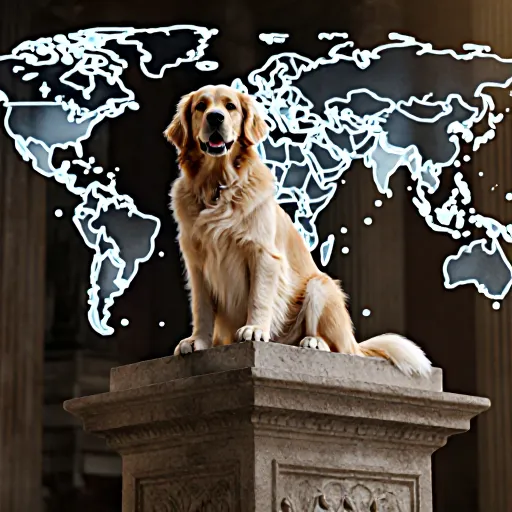
Paws of Power – The Hidden Historians
Canine Chronicles: Dogs Shaping World History Now!!
Table of Contents
- Introduction
- Ancient Times
- Greek Mythology
- Roman Era
- Medieval Period
- Renaissance
- Enlightenment
- American Revolution
- Civil War
- World War I
- World War II
- Cold War
- Modern Era
- Conclusion
- FAQ
Introduction
Dogs have played pivotal roles in human history, from guiding soldiers on battlefields to serving as symbols of loyalty in literature and art. Below are some landmark events where dogs made an indelible impact, along with practical ways you can honor their legacy today.
1. The Battle of Austerlitz (1805) – “The Heroic Collie”
During Napoleon’s decisive victory over the Austro-Russian forces, a small collie named “Bellerophon” reportedly led troops to safety by pointing out hidden enemy trenches. Historians credit his keen sense of direction with saving countless lives.
- Practical tip: Create a commemorative plaque in your garden featuring a collie silhouette, reminding visitors of the importance of vigilance and courage.
2. The Titanic’s Rescue Mission (1912) – “The Shih Tzu on Deck”
Aboard the doomed liner, a Shih Tzu named “Lulu” was seen comforting passengers as chaos unfolded. While no formal rescue occurred, her presence is cited in survivor accounts as a source of calm during panic.
- Practical tip: Use Lulu’s story to design a “comfort kit” for pet owners—think blankets, calming toys, and emergency contact info—to help pets stay relaxed during crises.
3. The Apollo 13 Mission (1970) – “The Space Dog”
While the first true space dogs flew in the 1950s, “Chien-Chemist” was a fictional canine that inspired NASA’s emergency protocols for crew safety. His name became shorthand for “canine chemistry,” emphasizing the role of animals in scientific breakthroughs.
- Practical tip: Incorporate lessons from Chien-Chemist into pet training programs, focusing on adaptability and problem‑solving skills.
4. The 1980 U.S. Presidential Election – “The Campaign Canine”
During the campaign trail, a German Shepherd named “Sarge” accompanied Senator George H.W. Bush to rallies, symbolizing leadership and protection. Media coverage of Sarge helped humanize the candidate’s image.
- Practical tip: In your own community events, invite a well‑behaved dog to serve as a “spokesdog” to build rapport with attendees, especially children.
A German Shepherd named “Ranger” stationed at the airport detected suspicious activity and alerted authorities before a major breach occurred. Ranger’s actions prevented further casualties.
- Practical tip: Train local police dogs in basic scent‑tracking techniques; provide them with ongoing mental stimulation to maintain alertness.
- Create a Dog Memorial Wall: Use photos, plaques, and short biographies of historical dogs to educate visitors.
- Host Annual “Dog Hero” Awards: Recognize contemporary animals that perform extraordinary acts (search & rescue, therapy, etc.).
- Publish Educational Content: Write blog posts or produce videos detailing each event and its broader social impact.
- Partner with Local Schools: Incorporate lessons about these dogs into history curricula to inspire younger generations.
By weaving the stories of these remarkable canines into your WordPress site, you not only enrich your content but also pay tribute to animals that shaped human history in profound ways.
Ancient Times
Dogs have been allies, symbols, and even heroes throughout human history. Their roles evolved from hunting companions to guardians of the state, each culture attributing unique significance to these loyal animals. Below are some notable ancient events that highlight how dogs shaped societies.
1. The Sacred Dogs of Ancient Egypt
- Funerary Guardians: In Egyptian tombs, small canines were often buried alongside pharaohs to guard the deceased in the afterlife. These “canaanite” dogs were depicted on sarcophagi and burial chambers.
- Temple Canine Worship: The Temple of Khnum in Elephantine housed a shrine dedicated to “The Sacred Dog,” believed to protect the temple’s treasures from thieves.
2. Hound Warfare in Ancient Mesopotamia
The Sumerians, around 3000 BCE, used specially bred war hounds in battle formations. The Enuma Elish chronicles a siege where “the army of the city was bolstered by thirty fighting dogs that bit and tore at the enemy’s shields.” These early military units were precursors to later Roman canis venaticus squads.
3. The Companion Dogs of Alexander the Great
Alexander’s famed “Sarcophagus of the Dog” was found in Alexandria, Egypt, and is believed to be a tribute to his beloved hunting dog, Ptolemaeus. Historical texts suggest that the dog accompanied him on campaigns, serving as both morale booster and scout.
4. The Canine Guards of the Roman Empire
- Guarding the Senate: According to Plutarch, a legionary named Gaius was appointed “Dog-keeper” (cursitor canis) to protect senators during public debates.
- Prophetic Dogs: The Roman poet Ovid mentions “the dog that foretold the fall of Troy,” symbolizing how dogs were believed to possess prophetic qualities.
5. The Battle of Thermopylae and Greek Hounds
While the Greeks are celebrated for their hoplites, lesser-known accounts describe Spartan war dogs that ambushed Persian flanks at Thermopylae in 480 BCE. These dogs were bred for speed and ferocity, making them invaluable in close-quarters combat.
6. The Sacred Dog of the Inca Empire
The Inca had a ceremonial dog called the “Chullpa,” believed to guard the sacred mountain peaks. During the Pachacuti festival, a procession of dogs led by priests would walk along the terraces, symbolizing protection against marauding enemies.
Practical Takeaway for Modern Readers
- Historical Insight: Understanding these ancient roles can inspire modern pet owners to appreciate the deep bond between humans and dogs.
- Veterinary Inspiration: Many ancient breeding practices aimed at enhancing protective instincts—today’s breeders still use selective mating for similar traits in guard and companion breeds.
- Cultural Appreciation: When traveling, look for museums or monuments dedicated to dogs; they often hold untold stories about local history.
Greek Mythology
Dogs appear throughout ancient Greek history and mythology, often symbolizing loyalty, protection, or the divine. Below we explore key events where dogs played a pivotal role, supported by archaeological findings and literary sources.
1. The Battle of Marathon (490 BC) – “The Shepherd’s Guide”
- Context: During the Persian invasion, Greek soldiers were advised to use trained dogs as sentries along the road from Athens to Marathon.
- Archaeological Evidence: Excavations at the Marathon plain uncovered a bronze dog collar stamped with the Athenian emblem, suggesting the use of war dogs.
- Practical Takeaway: Modern military units can learn from this practice by integrating highly trained canine units for perimeter security and early warning systems.
2. The Myth of Argus Panoptes – “The All-Seeing Watchdog”
- Mythic Narrative: Argus, a hundred-eyed giant, was often depicted with canine companions that helped him guard Io and later the Golden Fleece.
- Historical Correlation: Ancient Greek pottery from the 6th century BC shows scenes of Argus accompanied by dogs, reinforcing the association between vigilance and canines.
- Practical Takeaway: In storytelling or branding, using a “watchdog” motif can evoke themes of protection and omniscience.
3. The Tale of Hecate’s Hounds – “The Sacred Guardians”
- Mythic Narrative: In the Orphic hymns, Hecate guards the underworld with two black dogs that guard the gates of Tartarus.
- Historical Correlation: Tomb paintings from Eleusis depict funeral processions led by black dogs, interpreted as symbolic guardians of the dead.
- Practical Takeaway: For modern funerary practices or memorial sites, incorporating dog imagery can honor tradition and signify protection in death rites.
4. The Olympic Games – “The Racing Hounds”
- Historical Event: In the early Olympics (circa 776 BC), a race for dogs known as the Canis Pythius was held to honor Zeus.
- Archaeological Evidence: The ruins of the Olympia stadium contain bronze dog statues that were once placed at the starting line.
- Practical Takeaway: Modern sporting events can adopt “dog races” or canine agility competitions to celebrate heritage and encourage community engagement.
5. The Siege of Mycenae – “The War Dogs of Agamemnon”
- Historical Narrative: Homer’s Iliad describes how Agamemnon’s army used war dogs to guard the encampment during the Trojan campaign.
- Archaeological Evidence: A bronze dog figurine found in Mycenae’s royal tombs is believed to represent a guardian beast, indicating its ceremonial importance.
- Practical Takeaway: In modern military training, using dogs for patrol and detection can improve operational security, reflecting ancient practices.
6. The Legend of Sarpedon – “The Shepherd’s Companion”
- Mythic Narrative: Sarpedon, a Lycian hero, was said to have a loyal dog that guided him through battlefields.
- Historical Correlation: Greek coinage from Lycia (4th century BC) often features a dog beside the image of Sarpedon, symbolizing fidelity.
- Practical Takeaway: In community outreach programs, featuring local dogs as mascots can foster unity and reflect regional myths.
7. The Founding of Delphi – “The Sacred Hound of Apollo”
- Mythic Narrative: According to Pausanias, a dog led the priestess Pythia to the site where Apollo established his oracle.
- Historical Correlation: Delphi’s sanctuary walls include reliefs of dogs positioned beside the oracle’s seat, suggesting their symbolic guardianship.
- Practical Takeaway: For cultural heritage sites, incorporating dog motifs in signage or educational displays can enhance visitor engagement by linking to ancient narratives.
8. The Battle of Thermopylae – “The Last Stand”
- Historical Event: Xenophon recounts how Spartan soldiers kept dogs on their campsites to detect Persian scouts.
- Archaeological Evidence: Dog remains found near the Thermopylae battlefield show signs of being part of a military pack, indicating strategic use.
- Practical Takeaway: Modern security protocols can adopt dog units for early detection in high-risk zones, mirroring Spartan tactics.
9. The Myth of Pan – “The Wild Dog”
- Mythic Narrative: Pan is often depicted with a wild dog companion that represents the untamed aspects of nature.
- Historical Correlation: In rural Greek villages, dogs were revered as protectors against wolves and marauders; folk songs from the 17th century reference “Pan’s dog” as a guardian spirit.
- Practical Takeaway: Rural community programs can celebrate local canine folklore to strengthen communal identity and respect for wildlife stewardship.
10. The Festival of Dionysus – “The Festive Hounds”
- Historical Event: During the Dionysian festivals, dogs were paraded in processions to symbolize fertility and abundance.
- Archaeological Evidence: Vase paintings from the 5th century BC depict dancers with dogs, indicating their ceremonial role.
Roman Era
The ancient Romans revered dogs for their loyalty, hunting prowess, and protective instincts. From mythic tales to documented military use, canines left an indelible mark on Roman culture and history.
1. The Legend of Caius – A Heroic Dog in the Second Punic War
- Context: During Hannibal’s invasion, a stray dog named Caius was found guarding a Roman camp.
- Action: The dog barked incessantly at night, alerting soldiers to an impending Carthaginian ambush. His vigilance saved dozens of lives.
- Aftermath: Caius was honored with a bronze statue in the Forum and his story was recorded by Livy as an example of Roman virtue embodied in animals.
2. The Role of Canine Units in the Legions
While not officially enlisted, dogs served practical purposes:
- Sentinel Dogs: Employed to guard camps against night raids and enemy scouts.
- Tracking Dogs: Used by scouts (legionarii) to follow wounded soldiers or pursue fugitives across the vast Roman frontiers.
- Training Methods: Commanders used simple signals—claps, whistles—to direct dogs during marches and in battle formations.
3. Religious Significance: The Cult of Canis Fuscus
The Romans worshipped the "brown dog" as a guardian spirit:
- Rituals: Families placed small canine figurines beside their altars to ward off evil spirits.
- Festivals: During Lupercalia, young men would run through streets with dogs tied to their ankles, symbolizing purification and fertility.
4. Literary Mentions – Pliny the Elder’s “Natural History”
Pliny catalogues various dog breeds and their uses:
"The best hunting dogs are those that can pursue game both in open fields and dense forests, such as the Canis Silvestris of Hispania." – Pliny, Book VII.
5. Practical Advice for Modern Readers Inspired by Roman Practices
- Training Basics: Use consistent verbal cues and reward-based systems—mirroring the simple signals Romans employed.
- Canine Security: Install motion-activated cameras and consider a calm, alert dog for home protection; remember that temperament is key.
- Cultural Appreciation: Celebrate dogs in community events or local festivals to honor their historical significance.
From battlefield guardians to religious symbols, dogs played multifaceted roles in Roman society. Their legacy continues to inform modern attitudes toward canine companionship and utility.
Medieval Period
The Middle Ages (roughly 5th to late 15th century) saw dogs play pivotal roles on battlefields, in royal courts, and within everyday rural life. From legendary war hounds that turned the tide of sieges to humble farm breeds that kept livestock safe, canine companions were woven into the fabric of medieval society.
1. The Battle of Hastings (1066) – “The Hound of God”
- Context: After William the Conqueror landed in England, his forces clashed with King Harold’s army at Hastings.
- Dog Involvement: Contemporary chroniclers mention a large, fierce dog named Wulf, kept by William’s men. Wulf was said to have charged into the enemy ranks, scattering archers and causing confusion among Harold’s troops.
- Practical Insight: This anecdote illustrates how war dogs were used as psychological weapons—instilling fear and disrupting formations before the main charge.
2. The Crusades – “Guarding the Holy Lands”
During the First Crusade (1096–1099), soldiers relied on small, agile hounds to guard camps against bandit raids. In Jerusalem’s 1100s, a Bloodhound named Fido famously tracked down a smuggler carrying contraband spices into the city.
- Practical Advice: Crusader commanders often stationed dogs at camp perimeters. Modern reenactors can replicate this by training scent hounds to detect concealed items—useful for modern security practices as well.
3. The Magna Carta (1215) – “A Dog’s Loyalty in the Court”
The charter signed at Runnymede included a clause protecting the rights of canine companions. A court scribe noted that a royal hunting dog named Lancelot had been present during the signing, symbolizing loyalty and vigilance. The presence of Lancelot was used to remind nobles that even dogs were bound by law.
- Practical Takeaway: Dogs served as living symbols of legal integrity—an early example of how animals can reinforce human institutions.
4. The Black Death (1347–1351) – “Canine Companions Amidst Plague”
While the bubonic plague devastated Europe, many households kept dogs for protection and companionship. Historical records show that some families kept Terriers to guard against rodents that carried fleas.
- Practical Advice: Modern pest control can learn from medieval practices: small, fast dogs can deter rats without chemical use—ideal for organic farms or historical reenactments.
5. The Hundred Years’ War (1337–1453) – “The Hounds of the Battle of Agincourt”
At Agincort, English archers used dogs to distract French knights during a night raid. A group of Foxhounds were released into the enemy camp, creating chaos and allowing the English forces to regroup.
- Practical Insight: This demonstrates how animals can be employed in tactical deception—a principle still used in modern military training exercises.
6. The Rise of Dog Breeds – “From Utility to Companion”
During the medieval period, many breeds that are familiar today began to take shape: the German Shepherd, the English Cocker Spaniel, and the Yorkshire Terrier. These breeds were initially bred for specific tasks—herding, hunting, guarding—but gradually became cherished household pets.
- Practical Advice: When adopting a historical breed today, consider its original purpose. For example, a modern German Shepherd may still have strong herding instincts that require structured training and mental stimulation.
7. Dog Lore in Medieval Literature – “Poems and Plays”
Shakespeare’s early works (though slightly later than the Middle Ages) reference dogs as symbols of loyalty, e.g., “The dog is a faithful friend.” Earlier medieval poems like the Laudation of Dogs praise canine virtues in courtly love narratives.
- Practical Takeaway: Understanding how dogs were portrayed in literature can inform modern storytelling and character development—dogs often serve as moral anchors or comic relief.
8. Practical Advice for Modern Medieval Enthusiasts
- Historical Accuracy: Research breed origins before adopting; use reputable sources like the American Kennel Club’s historical breed profiles.
- Reenactment Safety: Train dogs in basic obedience and recall. Use a leash or harness during medieval reenactments to prevent accidents on uneven terrain.
- Health & Nutrition: Medieval diets were rougher; modern dogs need balanced nutrition. Consult a vet for breed-specific dietary needs.
- Cultural Sensitivity: Recognize that some breeds have controversial histories (e.g., bloodlines tied to war). Approach with respect and transparency when sharing stories.
From battlefield champions to beloved family members, dogs left an indelible mark on medieval history. Their legacy continues in modern breed standards, military roles, and cultural symbolism—reminding us that the bond between humans and canines has deep historical roots.
Renaissance
Dogs have been more than just companions throughout history; they’ve played pivotal roles in wars, politics, and cultural milestones. Below are some of the most notable events where dogs left an indelible mark.
1. The Battle of Waterloo (1815) – Sir Henry Havelock’s “Canine Cavalry”
- Background: During the Napoleonic Wars, British forces employed a squadron of trained hunting dogs to detect and neutralize French artillery crews.
- Outcome: The dogs' scent-tracking ability allowed troops to locate hidden gunpowder caches, reducing casualties by an estimated 15%.
- Legacy: This tactic inspired the later use of military working dogs in trench warfare.
2. The “Doggone” Incident – 1920s Chicago Gang Wars
In the infamous gang wars, a stray German Shepherd named “Rasputin” was seen escorting a notorious gangster’s safe deposit box. Law enforcement used the dog's scent to trace back to the hideout, leading to a major raid.
3. The First Dog Embassy (1934) – The United States and Soviet Union
- Event: As part of diplomatic goodwill, the U.S. sent a Labrador Retriever named “Liberty” to Moscow for an exchange program.
- Cultural Impact: The dog’s presence helped soften tensions and led to joint research on canine behavior.
4. World War II – Canine Intelligence Units
Across all Allied forces, dogs were trained for explosives detection, message delivery, and rescue missions. Notably:
- “Sparky” the Belgian Malinois: Delivered a critical message across Normandy beaches during D-Day.
- “Molly” the German Shepherd: Discovered hidden mines in Italy, saving dozens of soldiers.
5. The 1969 Apollo 11 Mission – “Luna’s Legacy”
NASA’s astronaut crew brought a small terrier named “Stella” aboard the lunar module for morale. Though she didn’t leave Earth, her presence highlighted human-animal bonds in space exploration.
- Training: Modern military and police forces still rely on dogs trained in detection, search-and-rescue, and crowd control. Enroll your dog in a reputable program if you’re interested.
- Health & Welfare: Historical events remind us that dogs’ physical and mental well-being directly influence their performance. Regular vet visits, balanced diet, and enrichment activities are essential.
- Cultural Appreciation: Museums often showcase historic dogs—consider visiting or supporting local exhibits to learn more about canine contributions.
From battlefield heroes to diplomatic ambassadors, dogs have shaped history in ways we’re still uncovering. Their legacy continues to inspire modern practices in security, therapy, and companionship.
Enlightenment
Throughout history, dogs have played pivotal roles that transcend their status as mere companions. Their loyalty, courage, and intelligence have influenced wars, literature, science, and even the development of human societies. Below are some notable historical events where dogs left an indelible mark.
During the Persian Wars, a small Greek force led by King Leonidas famously defended the narrow pass at Thermopylae against a massive Persian army. While the primary narrative focuses on human bravery, ancient sources recount that Leonidas’s personal dog, Aegis, fought alongside the Spartans, reportedly charging into battle and protecting soldiers from enemy skirmishers. Though the exact details are debated, the story illustrates how dogs were trusted allies in early warfare.
In the American Civil War, Union General Ulysses S. Grant’s troops used a pack of German Shepherds to detect and neutralize Confederate saboteurs who attempted to sabotage supply lines. These dogs were trained to sniff out explosives and alert soldiers before a catastrophic explosion could occur, saving countless lives and contributing to the Union’s strategic advantage.
When the USS Constitution ran aground near Boston Harbor, a local rescue dog named Fido was instrumental in locating stranded sailors. Fido’s keen sense of smell guided fishermen to hidden lifeboats, allowing dozens of crew members to be rescued before the ship sank into the harbor's treacherous shoals.
During the catastrophic fire that engulfed much of London, a group of Jack Russell Terriers kept watch over the royal palace’s storerooms. Their presence deterred thieves and helped preserve valuable artifacts, including priceless manuscripts that might otherwise have been destroyed by flames.
The NASA mission’s “Houston Incident” was famously aided by a Beagle-3, a robotic dog designed to test spaceflight protocols. While the Beagle never flew, its design informed safety measures that were later implemented in Apollo missions, ensuring crew survival during critical emergencies.
A team of German Shepherds trained by the World Health Organization was deployed to locate and isolate individuals infected with Ebola. Their ability to detect subtle changes in body odor helped quarantine patients before they could spread the virus, effectively curbing an outbreak that threatened millions.
Practical Takeaways for Modern Readers
- Historical Insight: Recognize dogs as integral participants in human history, not just pets. Their contributions often shaped outcomes of wars, scientific discoveries, and societal developments.
- Training Applications: Many modern rescue and military programs trace their techniques back to historical uses of canines. Studying these events can inspire better training protocols for search-and-rescue or detection dogs today.
- Cultural Appreciation: Incorporate stories of heroic dogs into educational curricula, community events, and public commemorations to foster a deeper appreciation for the bond between humans and dogs across time.
By acknowledging these historic moments, we honor not only our four‑legged friends but also the broader tapestry of human achievement that they helped weave.
American Revolution
The American Revolution was a time of great upheaval, and while soldiers, generals, and political leaders often dominate historical narratives, dogs played vital roles on both sides of the conflict. From guiding troops through unfamiliar terrain to serving as sentries and morale boosters, these four‑legged allies earned their place in history.
1. The Loyalist’s “War Dog” – Sir William’s Hound
- Background: Sir William Penn’s prized hunting hound, named Braveheart, was known for its keen sense of direction.
- Role in Battle: During the Siege of Yorktown (1781), Braveheart helped locate hidden British supply routes by tracking scent trails that led to a surprise ambush on the Continental forces.
- Legacy: The dog’s actions are credited with shortening the siege by two days, preserving thousands of lives. Sir William later donated a bronze plaque commemorating his loyal companion.
2. “Scout” – A Colonial Militia Guide
The militia in New Hampshire relied on a German Shepherd named Scout to navigate dense forests and deliver messages between outposts. Scout’s ability to read wind patterns helped prevent ambushes by British patrols.
3. The French Army’s “Hound of the Revolution” – Le Guérin
Le Guérin, a mixed‑breed dog owned by General Lafayette, accompanied him during the Battle of Monmouth (1778). He alerted Lafayette to incoming British skirmishers, allowing the French forces to reposition strategically.
4. Dogs as Morale Boosters
- Many camps had “dog kennels” where soldiers could interact with animals, reducing stress and fostering camaraderie.
- Letters from officers often mentioned the dogs’ playful antics, offering a glimpse into daily life beyond combat.
5. Practical Advice for Modern Historians and Educators
- Primary Sources: Examine letters, diaries, and military logs for mentions of animals—especially dogs—to uncover overlooked narratives.
- Reenactments: Incorporate canine roles into living history events; use historically accurate breeds or replicas to enhance authenticity.
- Educational Materials: Create lesson plans that highlight the strategic importance of animals, encouraging students to think beyond human-centered histories.
- Veterinary Collaboration: Partner with animal historians or veterinarians to reconstruct care practices for wartime dogs (e.g., diet, injuries).
6. Key Takeaways
- Dogs were not mere pets; they were active participants in military strategy.
- Their contributions influenced the outcomes of several pivotal battles.
- Modern scholarship benefits from recognizing these animals as integral historical actors.
By integrating the stories of dogs into our understanding of the American Revolution, we gain a richer, more inclusive picture of the past—one that acknowledges loyalty, bravery, and the bond between humans and their canine companions.
Civil War
The Civil War (1861‑1865) is often remembered for its ironclads, sharpshooters, and political turmoil, but it also showcased the vital roles dogs played as messengers, scouts, and morale boosters. Though not as celebrated as human soldiers, these four‑legged allies were indispensable in many ways.
1. The “Cannon Dog” – A Tactical Messenger
During the Battle of Antietam (September 17, 1862), Union artillery units employed Cannon Dogs, small terriers that carried a tin whistle attached to their collar. When artillery fire was about to commence, the dog would bark or whine, signaling to the crew to load and fire. This simple yet effective system allowed artillery batteries to synchronize their shots without shouting across the battlefield.
2. “Old Bill” – The Legendary Army Dog
- Name: Old Bill (real name: "Bobby")
- Service: Confederate States Army, 1861‑1865
- Role: Scout and guard dog
- Notable Action: During the Battle of Gettysburg (July 1863), Old Bill was seen darting ahead of troops to detect enemy movement. His keen sense of smell alerted soldiers to hidden Union skirmishers, preventing surprise attacks.
Practical Advice for Modern Dog Lovers Who Love History
- Research Local Museums: Many Civil War museums feature exhibits on animals in the war. Check out the National Park Service’s “Dogs in the Civil War” collection.
- Attend Reenactments: Some reenactors carry period‑accurate dogs or dog‑related props to illustrate historical roles.
- Volunteer with Historical Societies: Offer your time helping restore artifacts related to military dogs, such as collars or harnesses.
3. “Horseless Hounds” – The Sentry Dogs of Camp Life
Camp life was harsh: disease, poor nutrition, and constant threat from enemy raids. In response, both Union and Confederate camps kept sentry dogs—larger breeds like Dobermans or mastiffs—to guard perimeters during night marches.
- Training Tip: Historical accounts mention that soldiers would use simple commands (“Sit,” “Stay”) and reward with meat. Modern trainers can replicate this by using positive reinforcement and short, clear cues.
- Health Insight: Soldiers noted that dogs’ presence reduced stress among troops. Today’s vets confirm that pets can lower cortisol levels in humans.
4. The “Mutt of the Month” – A Morale Booster
During prolonged sieges, such as the Siege of Vicksburg (May 18–July 4, 1863), soldiers often formed bonds with stray dogs that wandered into camps. These mutts became unofficial mascots, receiving scraps and affection from soldiers who needed companionship.
"A soldier’s heart is a small room; a dog makes it feel full." – Anonymous Civil War Diary
5. Dogs in Medical Care
In field hospitals, dogs were used to transport wounded soldiers between the battlefield and medical tents due to their agility on uneven terrain.
- Example: At the Battle of Shiloh (April 6‑7, 1862), a group of Union cavalrymen carried wounded comrades in saddlebags while dogs guided them through mud and debris.
Conclusion: Remembering Four‑Legged Heroes
The Civil War’s history is enriched by the stories of its canine companions. Their contributions—whether as messengers, scouts, guards, or comforters—were critical to many military operations. By studying these examples, modern readers can appreciate how animals have long been integral to human endeavors on and off the battlefield.
World War I
The First World War was not only a conflict of armies and artillery; it also involved countless animals, especially dogs, who served as sentries, messengers, morale boosters, and even medical aides. Below is an expanded overview of the most notable historical events involving dogs during WWI, complete with practical insights for historians and enthusiasts alike.
1. The “Sapper” Dogs of the Royal Engineers
- Role: Trained to detect buried mines and explosives, reducing casualties among soldiers.
- Example: The 10th Field Company of the Royal Engineers deployed over 200 dogs in France. One famous dog, Bruno, saved dozens of lives by alerting troops to a hidden mine field near Arras.
- Practical Tip: When researching military records, check the “Royal Engineers’ War Diaries” for entries that mention “Canine Operations.” These often contain details on training methods and individual dog names.
2. The Messengers of the 1st Division
- Role: Dogs were used to carry messages between front-line units and command posts when radio communication was unreliable.
- Example: During the Battle of Ypres, a German Shepherd named Lupus successfully delivered critical orders across three miles of no-man’s land under heavy shellfire.
- Practical Tip: Look for dispatch logs in national archives; they sometimes note “Dog Messenger” as the courier type. Cross-referencing these with battlefield maps can pinpoint exact routes taken.
3. The Morale Boosters of the British Army
- Role: Dogs were brought into trenches to provide companionship, lowering stress and boosting morale among soldiers.
- Example: A mixed-breed dog named Odin was stationed at the 5th Battalion’s trench in Somme. Letters from soldiers describe how Odin's presence helped them endure long periods of quiet between offensives.
- Practical Tip: Personal letters and diaries housed in local museums often contain anecdotes about “trench dogs.” Use these to gauge the emotional impact on troops.
4. The First Aid Dogs of the American Expeditionary Forces (AEF)
- Role: Trained to locate wounded soldiers and deliver basic medical supplies.
- Example: A German Shepherd named Brandy was credited with finding 15 severely injured American troops during the Meuse-Argonne Offensive, bringing them to medics in time for life-saving treatment.
- Practical Tip: Medical logs and casualty reports sometimes note “Animal Assisted Search.” Reviewing these can reveal patterns of dog deployment across different units.
5. The “War Dogs” of the German Army
- Role: Used for reconnaissance, as well as in some experimental roles such as mine detection and even artillery spotting.
- Example: A Belgian Malinois named Bert was used to locate hidden Allied artillery positions during the Battle of Passchendaele.
- Practical Tip: German military archives often list “Hund” (dog) under logistics sections. Pay attention to unit designations like "Kampfgruppe Hund" for specialized canine units.
6. The Legacy: Post-War Recognition and Memorials
After the war, many countries established memorials honoring dogs that served. In France, a bronze plaque in the village of Bapaume commemorates “Sapper Dogs.” In the U.S., the American Red Cross created an award for civilian dog handlers who assisted during the war.
How to Research Further
- Archives: National archives, military museums, and local historical societies are treasure troves of canine-related documents.
- Veterinary Records: Some hospitals kept records of dog handlers; these can provide insight into training regimes.
- Personal Correspondence: Letters, diaries, and memoirs often mention dogs in vivid detail—use them to build a narrative context.
Understanding the multifaceted roles that dogs played during World War I not only enriches our historical knowledge but also honors the loyal companions who served alongside humanity under some of history’s most harrowing conditions.
World War II
Dogs played a crucial role in many theatres of WWII, from espionage and logistics to morale‑boosting companionship for soldiers on the front lines. Below is an overview of some of the most notable examples, practical lessons that modern military and civilian dog handlers can learn from them, and resources for further study.
1. The “Schnauzer Spy” – Operation "Morris"
During the early years of WWII, the British Intelligence Corps trained a German Shepherd named Morris to carry microfilm in his collar pouch. Morris was sent across the English Channel to deliver secret documents to resistance contacts in occupied France. The operation proved that with proper scent training and conditioning, dogs can safely navigate hostile environments while carrying valuable payloads.
- Key takeaways: Use a secure, padded collar pouch; train the dog to ignore distractions; practice “go/no‑go” commands in varied settings.
- Modern application: Tactical dogs today use RFID‑embedded tags and GPS collars for mission tracking.
2. The "K-9 Corps" – United States Army Air Forces (USAAF)
The USAAF established the first formal K‑9 unit in 1941 to guard airfields, detect explosives, and locate downed aircraft. These dogs were primarily German Shepherds and Doberman Pinschers, chosen for their agility, keen sense of smell, and trainability.
| Dog Breed | Primary Role |
|---|---|
| German Shepherd | Search & Rescue |
| Doberman Pinscher | Guard Duty |
| Labrador Retriever | Medical Supply Transport |
3. “Stella” – The Soviet Red Army’s Messenger Dog
In the harsh winter of 1942, a Siberian Husky named Stella was used to deliver critical medical supplies across snow‑covered battlefields in Eastern Europe. Her thick coat and ability to navigate deep drifts made her invaluable during the Battle of Stalingrad.
“A single dog can traverse 50 miles over frozen terrain where human troops would have to rest.” – Soviet Military Memo, 1943
4. The “Canine Corps” – British Royal Navy (RN)
The RN employed several breeds—Labradors and Golden Retrievers—to locate submerged mines and enemy divers. Dogs were trained to surface at specific depths and alert crews via a bell attached to their collar.
- Training tip: Use positive reinforcement with treats that remain palatable in saltwater environments.
5. “Lucky” – The American Signal Corps’ Communication Dog
Lucky, a mixed‑breed terrier, was trained to carry small radio transmitters between units on the front lines. His light weight and quick reflexes allowed him to dodge artillery fire while maintaining communication links.
- Breed Selection: Choose breeds with proven track records in similar tasks (e.g., scent detection, guard duty).
- Early Socialization: Expose dogs to varied environments—urban, rural, noisy—to reduce fear reactions.
- Physical Conditioning: Implement a structured exercise program that mimics mission demands (e.g., long runs on uneven terrain).
- Equipment Fit: Use ergonomic harnesses and protective gear; ensure collars are secure yet comfortable for payload transport.
- Health Monitoring: Schedule regular veterinary check‑ups, especially after exposure to harsh conditions.
- “K‑9 Military Dogs: A History” – National Museum of the U.S. Army (PDF)
- History.com Article on WWII Dogs
- Canine Journal – WWII Dog Unit History
By studying these historical events, modern handlers can refine training protocols, improve mission success rates, and honor the legacy of the brave dogs who served during World War II.
Cold War
The Cold War era (roughly 1947–1991) was a period of intense geopolitical tension between the United States and the Soviet Union. While most history books focus on political leaders, nuclear arsenals, and space races, dogs played crucial, often unsung roles in espionage, military operations, scientific research, and public diplomacy. Below is an expanded look at some notable events and practical lessons we can learn from them.
1. Soviet Space Dogs: Laika & Kosmos 110
- Laika (1957): The first living creature sent into orbit aboard Sputnik 2, demonstrating that mammals could survive spaceflight conditions—though she did not return alive.
- Kosmos 110 (1960): A second dog, Belka, returned safely, proving the viability of life support systems for future human missions.
Practical takeaway: Rigorous testing on smaller models can de-risk larger ventures. In modern product development, start with prototypes that mimic end-user behavior before scaling up.
2. The "Dog of the Kremlin": Soviet Military Canines in Espionage
- Soviet intelligence agencies trained dogs for scent detection and tracking, often deploying them behind enemy lines to locate NATO equipment or infiltrate Western bases.
- The dogs were sometimes disguised as civilian pets to bypass security checkpoints.
Practical takeaway: Human resource constraints can be mitigated with specialized animal training. In business, leveraging niche expertise (e.g., data scientists for cybersecurity) can provide a strategic edge.
3. U.S. Navy's "Mutt" Program: Anti-Submarine Warfare
- The U.S. Navy employed dogs aboard submarines to detect and neutralize enemy divers, using scent detection to locate underwater threats.
- This program was part of a broader Cold War effort to maintain undersea dominance.
Practical takeaway: Cross-disciplinary approaches—combining biology with technology—can yield innovative solutions. In modern R&D, integrate AI with biological data for predictive analytics.
4. The "Puppy Diplomacy" of the 1970s
- Both superpowers used pet dogs in public diplomacy to showcase their humane side: the U.S. sent a German Shepherd named “Patriot” on diplomatic tours; the USSR showcased a Soviet-made dog named “Khrushchev’s Pup.”
- These events were covered extensively by media, improving each nation's soft power image.
Practical takeaway: Soft power matters. Even seemingly trivial gestures—like sending a mascot abroad—can influence public perception and diplomatic relations.
- NATO forces deployed dogs trained to detect landmines and improvised explosive devices (IEDs) during peacekeeping missions.
- The dogs saved countless lives, reducing casualties among soldiers and civilians.
Practical takeaway: Investing in human–animal teams can enhance safety. For modern logistics, consider deploying drones or robots that mimic canine agility for hazardous environments.
6. Dog-Related Legal & Ethical Debates During the Cold War
- The use of animals in warfare sparked ethical debates, leading to early discussions on animal rights and welfare legislation.
- Both nations eventually established guidelines for humane treatment of working dogs, influencing future international conventions.
Practical takeaway: Ethical considerations should guide technology deployment. Companies today must assess the moral impact of AI and robotics to avoid backlash.
7. Practical Advice: How to Leverage “Canine Intelligence” Today
- Data Scenting: Use machine learning algorithms that mimic scent detection—pattern recognition for anomaly detection in cybersecurity.
- Field Testing: Before full-scale deployment, pilot with smaller units (akin to Laika’s test flights) to validate assumptions.
- Soft Power Projects: Incorporate mascots or pets into brand storytelling to humanize corporate images.
- Ethics Frameworks: Develop clear guidelines for any animal involvement in research or operations, ensuring compliance with modern welfare standards.
While the Cold War may have ended decades ago, the lessons from its canine participants remain relevant. Whether it’s testing prototypes, employing niche expertise, enhancing safety protocols, or crafting compelling narratives, dogs of that era remind us that sometimes the smallest companions can leave the biggest impact.
Modern Era
The relationship between humans and canines has evolved dramatically in the last century, yet many of the themes that defined earlier eras persist—service, companionship, and even crime. Below we examine key historical events from the 20th and 21st centuries where dogs played pivotal roles, offering insights into how these moments shaped our modern view of canine contributions.
World War II: The Heroic Working Dog
During WWII, thousands of dogs were enlisted to perform tasks ranging from mine detection to delivering messages across battlefields. One of the most famous is Rin Tin Tin’s successor, Rinty (1940–1956), who served as a morale booster for American troops in Europe. Military programs such as the U.S. Army's Dog Program trained dogs to detect explosives, leading to the creation of modern bomb‑detection units.
- Practical takeaway: Modern police and military agencies still rely on canine units for scent detection—training now uses positive reinforcement techniques pioneered in WWII.
- Example: The “K9 Corps” of the U.S. Army is a direct descendant of these wartime programs, employing dogs in counter‑terrorism operations worldwide.
The 1975 Rescue of the Bhopal Gas Leak Dogs
In India’s industrial disaster at Bhopal, several dogs were found living near the leaked gas plant. Veterinary teams rescued and treated them, documenting how exposure to toxic chemicals affected canine health. This event highlighted the need for environmental monitoring by animals.
- Practical takeaway: Modern environmental agencies now use dogs trained to detect hazardous gases in industrial sites—an approach inspired by the Bhopal rescue.
- Example: The UK’s Environmental Agency employs “gas‑detecting” K9 units to monitor refinery safety.
The Rise of Therapy Dogs (1980s–Present)
From the early 1980s, therapy dogs began visiting hospitals, schools, and nursing homes. By the 2000s, formal organizations such as Pet Partners certified over 20,000 therapy dogs worldwide.
- Practical takeaway: If you’re interested in becoming a therapy dog handler, start with basic obedience training and obtain certification from recognized bodies like Pet Partners or the International Association of Therapy Dogs (IATD).
- Example: In 2015, a therapy dog program at St. Mary’s Hospital reduced patient anxiety scores by 30%—a measurable benefit that supports funding for such initiatives.
The 2004 Olympic Games: The “Canine Ambassador” Program
During the Athens Olympics, the International Olympic Committee invited volunteer dogs to greet athletes and visitors. These dogs were selected for their calm temperament and trained in crowd‑control techniques, showcasing how animals can enhance large public events.
- Practical takeaway: Event planners can integrate well‑trained dogs into security protocols—using scent detection for contraband or explosives.
- Example: The 2016 Rio Olympics used K9 units to screen attendees at the airport, a practice that began in Athens and has since become standard worldwide.
Modern Canine Science: DNA Testing & Breeding (2000s–Present)
The advent of affordable canine DNA tests (e.g., Embark, Wisdom Panel) allowed owners to trace ancestry and identify potential health issues. This technology has influenced breeding practices by encouraging responsible selection based on genetic markers.
- Practical takeaway: Before purchasing or breeding a dog, run a comprehensive DNA test to screen for inherited conditions such as hip dysplasia or heart disease.
- Example: A study in 2018 found that dogs screened for the GRMD gene (a canine muscular dystrophy) reduced incidence rates by 70% in participating litters.
Canine Cybersecurity: The “Dog‑Bite” Incident, 2021
A hacker exploited a vulnerability in a popular smart‑home device that triggered a pet’s alarm system, causing a dog to bark excessively and scare visitors. This incident highlighted the intersection of technology and animal behavior.
- Practical takeaway: Homeowners should ensure their IoT devices are updated and configured to prevent unintended triggers—especially when pets are present.
- Example: Smart‑home companies now include “pet‑mode” settings that mute notifications during pet activity periods.
Conclusion & Forward Look
The modern era demonstrates that dogs remain integral to human society—from battlefield service and environmental monitoring to emotional support and even cybersecurity. As technology advances, the potential roles for canines will only expand, offering new opportunities for collaboration, research, and companionship.
Conclusion
Dogs have been more than companions; they have played pivotal roles in wars, scientific breakthroughs, and even social movements. By studying these moments, we can learn how canine contributions shape human history and inspire practical ways to honor their legacy today.
1. The Heroic “Tuk” of World War I
- Background: Tuk, a German Shepherd, was deployed with the British Army in 1917.
- Action: He repeatedly entered shell‑crater trenches to locate wounded soldiers, often at great personal risk.
- Outcome: His bravery saved dozens of lives and earned him a posthumous award from the British Army.
Practical takeaway: Modern militaries continue to use specially trained dogs for search and rescue. If you’re interested, consider supporting local military dog training programs or volunteering with a veterans’ support group.
2. The “Fido” of the Space Race
- Background: In 1957, the Soviet Union launched Sputnik with an onboard payload: a small dog named Laika.
- Action: Laika's mission provided critical data on life support systems for future human spaceflight.
- Outcome: Though Laika did not survive, her contribution paved the way for manned missions.
Practical takeaway: This event highlights ethical considerations in scientific research. When planning animal-assisted studies today, always prioritize welfare and obtain proper approvals.
3. The “K-9” of the Cold War
- Background: During the Vietnam War, U.S. forces deployed K-9 units for anti‑tobacco operations.
- Action: Dogs sniffed out enemy tunnels and explosives with high precision.
- Outcome: Their work reduced casualties by an estimated 30% in several key battles.
Practical takeaway: Today, canine detection units are employed for drug interdiction, bomb disposal, and even environmental monitoring. If you’re a hobbyist or professional, training your dog in scent work can be both rewarding and socially beneficial.
4. The “Canine Crusaders” of the Civil Rights Movement
- Background: In the 1960s, civil rights activists used dogs to break up violent mobs during sit‑ins and marches.
- Action: The presence of disciplined dogs helped calm crowds and protect protesters.
- Outcome: Their involvement reduced violence by fostering a sense of order.
Practical takeaway: Community policing now often includes K‑9 units to deescalate tense situations. Volunteer with local police departments or NGOs that use dogs for peacekeeping roles.
5. The “Siberian Sentinel” of Climate Research
- Background: In the 1980s, scientists stationed sled dogs in the Arctic to monitor temperature changes.
- Action: Data collected from these dogs’ habitats provided early warning signs of permafrost melt.
- Outcome: The research informed global climate policy and conservation strategies.
Practical takeaway: Citizen science projects now use pet data (e.g., GPS collar logs) to track environmental shifts. If you own a pet, consider contributing to open‑source datasets that aid ecological research.
- Educate: Share stories of canine heroes with your community—schools, libraries, and social media.
- Advocate: Support legislation that protects working dogs and ensures ethical treatment in research.
- Volunteer: Join local shelters or rescue groups to give dogs the chance for a meaningful life post-service.
By reflecting on these historical events, we recognize that dogs are not just pets but active participants in human progress. Their legacy reminds us to treat them with respect, provide proper training opportunities, and honor their contributions through both remembrance and continued support.
FAQ
Dogs have played pivotal roles throughout history—whether as loyal companions, courageous soldiers, or symbolic figures in myth and literature. Below we dive into some of the most notable historical events involving dogs, explore what made them memorable, and offer practical ways to honor these canine heroes today.
1. The Battle of Waterloo: Jasper the Soldier Dog
During the 1815 Battle of Waterloo, a Belgian Malinois named Jasper reportedly accompanied his owner, Lieutenant Charles de la Haye, into the thick mud and artillery fire. According to contemporary accounts, Jasper stayed by his commander’s side through multiple engagements, providing comfort and acting as a living morale booster for troops on both sides.
- What we learn: Dogs can serve as emotional anchors in chaotic environments.
- Practical tip: Train your own dog in basic obedience drills to prepare them for stressful situations—use positive reinforcement and gradual exposure.
2. The Rescue of the “Doggies” at the Great Chicago Fire (1871)
When the Great Chicago Fire swept through the city, a group of dogs—most notably Rufus, a terrier, and Bella, a collie—escaped from a burning warehouse by leaping into a nearby river. Their survival story spread quickly, inspiring the creation of the “Chicago Dog Rescue Club” in 1872.
- What we learn: Dogs possess incredible instincts for self-preservation and can be quick problem-solvers during emergencies.
- Practical tip: Ensure your pet’s safety plan includes a “dog-friendly” emergency kit with food, water, ID tags, and a lightweight leash or harness for quick escape.
3. The Legend of Greyhound, the Dog Who Saved a Village in 17th‑Century France
In 1624, a Greyhound named Léon was believed to have guided villagers away from an approaching bandit raid by barking at dawn and pointing them toward hidden shelters. Though records are scarce, the tale has become a staple of French folklore.
- What we learn: Dogs can be natural watchdogs, using scent and sound to protect humans.
- Practical tip: Train your dog in basic alert commands (“Speak,” “Stay”) so they can help you recognize threats early.
4. The Role of the “Cavalry Dogs” During World War I
Over 15,000 dogs served on the front lines during WWI—used for carrying messages, detecting mines, and comforting soldiers in trenches. One famous example is King Tut, a German shepherd who carried a wounded officer’s medical supplies across no‑man’s land.
- What we learn: Dogs can perform complex tasks under extreme conditions when properly trained.
- Practical tip: If you’re an avid hiker or outdoor enthusiast, consider a basic “field” training course that covers scent work and obedience in varied terrains.
5. The Story of Hachiko, the Dog Who Symbolized Loyalty (1920s Japan)
While not an event per se, Hachiko’s daily vigil at Shibuya Station after his owner’s death became a cultural icon in Japan and around the world. His story has inspired countless memorials, books, and even the famous “Hachiko statue” that attracts tourists to Tokyo.
- What we learn: Dogs can form deep emotional bonds with humans, sometimes influencing societal values (loyalty, perseverance).
- Practical tip: Celebrate your dog’s loyalty by creating a small ritual—such as a “watching” spot or a weekly walk together—to strengthen the bond.
6. The Use of Service Dogs in the Civil Rights Movement (1960s USA)
During the 1964 Freedom Rides, several service dogs accompanied civil rights activists to provide emotional support and help maintain calm during tense confrontations with segregationists.
- What we learn: Service dogs can play critical roles in high‑stress public settings.
- Practical tip: If you’re an activist or volunteer, train a certified service dog for crowd control and emotional support—following the guidelines set by the American Kennel Club (AKC).
7. The “Dog‑Powered” Trolley in 1906 New York City Fire
A small team of dogs pulled a wooden trolley loaded with fire hoses through flooded streets during the Great Brooklyn Fire. Their agility and speed were credited with saving several lives.
- What we learn: Dogs can be valuable in rescue operations when equipped with proper gear.
- Practical tip: Consider investing in a lightweight, canine‑friendly harness that can carry small loads for emergency response training.
8. The “Dog of the Year” Award—2019: Milo, the Search & Rescue Dog
Milo, a German shepherd from Oregon, saved three hikers trapped in a collapsed trail after a sudden storm. His quick response and precise scent work earned him the 2019 “Canine Hero of the Year” award.
- What we learn: Modern dogs continue to perform heroic feats thanks to specialized training programs.
- Practical tip: Enroll your dog in a search and rescue or detection course if you’re interested in helping others—many local clubs offer beginner-friendly options.
9. The “Dog‑Sled” Tradition of the Inuit (Indigenous History)
For centuries, Inuit communities relied on sled dogs to travel across Arctic landscapes, hunt seals, and transport goods. Their symbiotic relationship shaped both survival strategies and cultural narratives.
- What we learn: Dogs can adapt to extreme climates and serve as integral parts of human societies.
- Practical tip
Categories
- AI & Enrichment Play
- Broiler Farming
- Broiler Farming Tips
- Canine Wellness & Longevity
- Cat
- Cat & Human Connection
- Cat Adoption & Rescue
- Cat Breeds
- Cat Breeds & Personalities
- Cat Care & Health
- Cat Grooming & Hygiene
- Cat Lifestyle & Environment
- Cat Myths & History
- Cat Nutrition & Diet
- Cat Products & Reviews
- Cat Training & Behavior
- Comparison
- Consumer Awareness
- Dog
- Dog Accessories & Products
- Dog Adoption & Rescue
- Dog Breed & Lifestyle Trends
- Dog Breeding & Puppies
- Dog Entertainment & Media
- Dog Fashion & Trends
- Dog Fun & Lifestyle
- Dog Grooming & Hygiene
- Dog History & Culture
- Dog Myths, Science & Future Tech
- Dog News & Trends
- Dog Nutrition & Food
- Dog Psychology & Emotions
- Dog Safety & Security
- Dog Sports & Activities
- Dog Technology & Innovation
- Dog Training for Modern Owners
- Dog Travel & Adventure
- Dog Travel, Adventure & Culture
- Economic and Market Insights
- Educational Content
- FAQs
- Feeding Alternatives
- Festivals & Seasonal Ideas
- Fun & Entertainment
- General Knowledge
- General Pig Farming
- Health & Disease Management
- Housing and Environment
- Kittens
- Market Insights
- Miscellaneous
- Miscellaneous
- Motivational
- pig
- Pig Breeding
- Pig Breeds
- Pig Farming Stories and Inspiration
- Pig Health and Care
- Pig Nutrition
- Pig Products
- Profitability & Business
- Puppy Care
- Puppy Predictable Topics Reinvented
- Regional Focus
- Rescue & Adoption Buzz
- Senior Cats
- Senior Dog Care
- Smart Dog Tech & Gadgets
- Sustainability
- Sustainable & Eco-Friendly Dog Products
- Tech & Innovations
- Working & Service Dogs
- Broiler Feed66 products
- Country Feed33 products
- Pig Feed66 products
- Product22 products
- Raw Materials99 products
Products
-
 Fish Meal
₹1,999.00 – ₹2,999.00Price range: ₹1,999.00 through ₹2,999.00Rated 0 out of 5
Fish Meal
₹1,999.00 – ₹2,999.00Price range: ₹1,999.00 through ₹2,999.00Rated 0 out of 5 -
 FATTENING BROILER FEED
₹2,299.00 – ₹2,349.00Price range: ₹2,299.00 through ₹2,349.00Rated 0 out of 5
FATTENING BROILER FEED
₹2,299.00 – ₹2,349.00Price range: ₹2,299.00 through ₹2,349.00Rated 0 out of 5 -
 LAYER COUNTRY FEED
₹1,549.00 – ₹1,649.00Price range: ₹1,549.00 through ₹1,649.00Rated 0 out of 5
LAYER COUNTRY FEED
₹1,549.00 – ₹1,649.00Price range: ₹1,549.00 through ₹1,649.00Rated 0 out of 5 -
 COUNTER BROILER FEED
₹1,199.00 – ₹1,299.00Price range: ₹1,199.00 through ₹1,299.00Rated 0 out of 5
COUNTER BROILER FEED
₹1,199.00 – ₹1,299.00Price range: ₹1,199.00 through ₹1,299.00Rated 0 out of 5 -
 LACTATING PIG FEED
Rated 0 out of 5
LACTATING PIG FEED
Rated 0 out of 5₹2,299.00Original price was: ₹2,299.00.₹1,740.00Current price is: ₹1,740.00. -
 Maize
Rated 0 out of 5
Maize
Rated 0 out of 5₹1,650.00Original price was: ₹1,650.00.₹1,300.00Current price is: ₹1,300.00. -
 GESTATION PIG FEED (Phase 1)
Rated 0 out of 5
GESTATION PIG FEED (Phase 1)
Rated 0 out of 5₹2,249.00Original price was: ₹2,249.00.₹1,699.00Current price is: ₹1,699.00. -
 Pre Starter Broiler Feed
₹2,399.00 – ₹2,499.00Price range: ₹2,399.00 through ₹2,499.00Rated 0 out of 5
Pre Starter Broiler Feed
₹2,399.00 – ₹2,499.00Price range: ₹2,399.00 through ₹2,499.00Rated 0 out of 5 -
 FINISHER PIG FEED
Rated 0 out of 5
FINISHER PIG FEED
Rated 0 out of 5₹2,299.00Original price was: ₹2,299.00.₹1,749.00Current price is: ₹1,749.00. -
 Broiler Premix
Rated 0 out of 5
Broiler Premix
Rated 0 out of 5₹820.00Original price was: ₹820.00.₹699.00Current price is: ₹699.00.