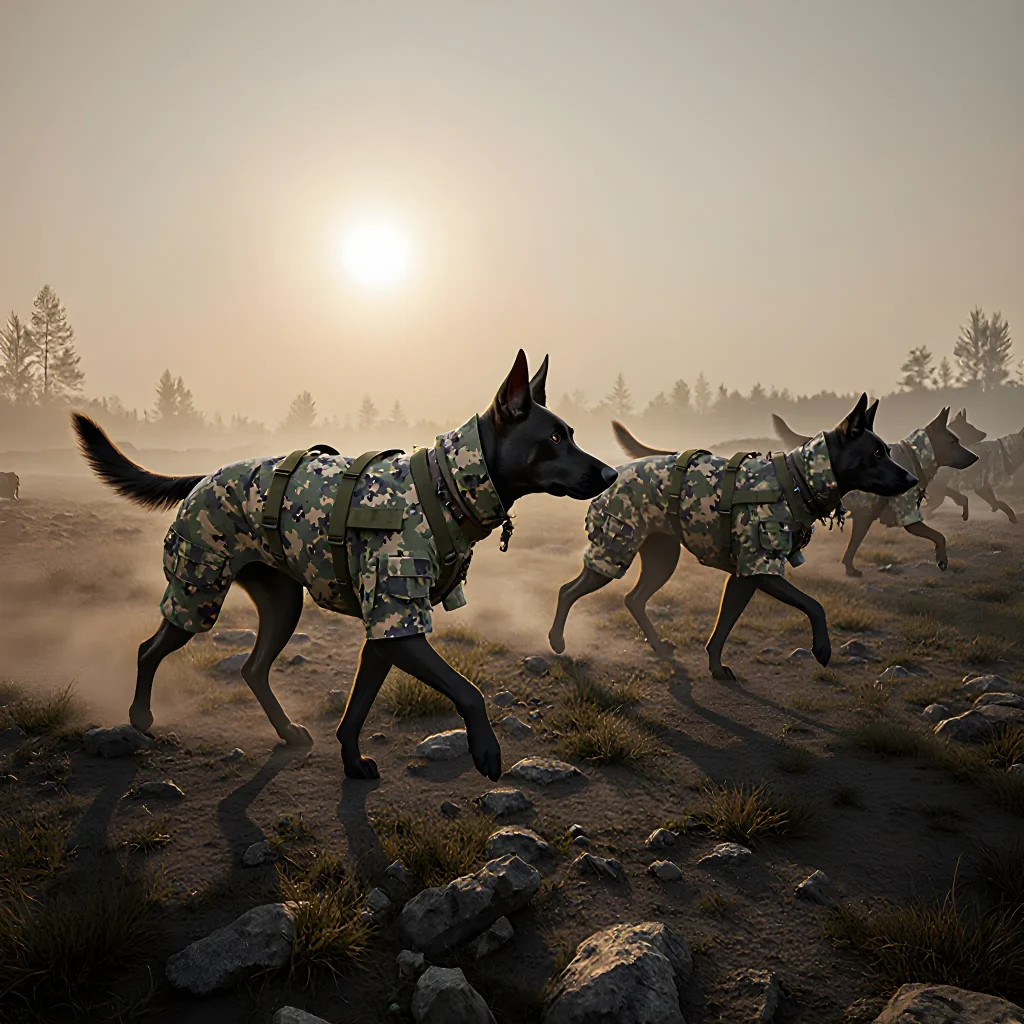
Steadfast Strides: Dogs on the Frontline Frontier
Steadfast Strides: Dogs on the Frontline Frontier
Table of Contents
The Role of Dogs in Ancient Warfare
When most people think about the ancient battlefield, they picture armored soldiers, chariots, and spears. Yet one of the most under‑recognized allies to the human warrior was the dog. From the plains of Mesopotamia to the forests of Europe, dogs were trained, deployed, and celebrated for their tactical contributions.
1. Historical Context
- Etruscan & Roman armies: The Romans used “canes bellici” (war dogs) in the early Republic to harass enemies and guard camps.
- Persian cavalry: Persians kept hunting dogs that could track wounded soldiers, providing early battlefield reconnaissance.
- Greek hoplite phalanx: While not as common, some city-states employed terrier‑type breeds to disrupt enemy formations.
2. Tactical Roles
- Scout and Reconnaissance: Dogs’ acute senses allowed them to detect approaching forces or hidden ambushes before human scouts could.
- Disruption of Enemy Lines: A pack would be released between opposing ranks, creating confusion and opening gaps for infantry charges.
- Guarding Artillery & Ammunition: Dogs were tasked with guarding siege engines and supply depots from enemy raids.
- Tracking the Wounded or Captured: In chaotic battles, dogs could follow wounded soldiers to bring them back for medical care or ransom negotiations.
3. Training Techniques
Training a war dog required a combination of rigorous conditioning and socialization with humans:
- Basic Obedience: Commands such as “stay,” “come,” and “heel” were essential for controlling packs in the heat of battle.
- Fear Conditioning: Exposure to loud noises (e.g., trumpets, drums) ensured dogs would not panic when surrounded by cannon fire.
- Pack Cohesion Drills: Wolves and domestic dogs both thrive on pack structure; trainers reinforced group identity through synchronized movements and shared rewards.
4. Notable Examples
The most famous war dog in antiquity was Spartacus’ Canine Companion, a bullmastiff that allegedly saved the life of its commander during the Third Punic War by intercepting an enemy lance.
5. Legacy and Modern Recognition
While ancient war dogs faded from popular lore, their legacy lives on in modern military units worldwide. The U.S. Army’s “Mutt” training program began in the 1980s to prepare dogs for bomb detection—an evolution of the battlefield roles described above.
Practical Advice for Enthusiasts
- Historical Research: Dive into primary sources such as Xenophon's “Anabasis” or Plutarch’s biographies to uncover firsthand accounts of dogs in war.
- Breed Selection: If you’re interested in training a dog for protective work, consider breeds with proven guarding instincts—German Shepherds, Belgian Malinois, and Dobermans.
- Training Programs: Enroll in courses that cover advanced obedience, scent work, and pack management to emulate the rigorous preparation of ancient war dogs.
By understanding the multifaceted roles dogs played on ancient battlefields, we gain a richer appreciation for these loyal companions—heroes who earned their place on the battlefield long before modern military canine units were established.
Medieval Cavalry and War Hounds
The medieval battlefield was not only a theater of armored knights and towering catapults; it also featured an often overlooked but highly effective class of soldiers—war hounds. These dogs were specially bred, trained, and equipped to support cavalry units in combat, acting as both scouts and shock troops.
1. Breeds and Physical Traits
- Doberman Pinschers: Though modern Dobermans are a product of the late 19th century, their ancestors—Germanic mastiffs—were prized for their speed, agility, and fearless temperament.
- Belgian Malinois‑like breeds: Early forms of the Belgian Shepherd were used in the Low Countries to guard and attack enemy ranks.
- Labrador‑type hounds: These dogs had thick coats for protection against arrows and a strong bite, making them ideal for close-quarters combat.
2. Training Regimens
Cavalry commanders invested considerable time in conditioning their war hounds. Typical training involved:
- Obedience drills: Dogs learned to respond instantly to verbal commands such as “Advance,” “Hold,” and “Attack.”
- Pack tactics: By working in packs, the hounds could envelop enemy infantry, creating chaos.
- Shielding practice: They were trained to position themselves between knights and incoming arrows, acting as living shields.
3. Battlefield Roles
The war hound’s utility spanned multiple phases of the engagement:
- Reconnaissance: Their keen sense of smell and hearing allowed them to detect enemy formations before the main force arrived.
- Panic Inducement: A pack of snarling hounds could break enemy morale, especially when combined with the thunderous sound of cavalry charges.
- Siege Support: During sieges, dogs were used to carry small arms or explosives (early forms of gunpowder) toward walls or gates, adding a psychological edge.
4. Case Study: The Battle of Agincourt (1415)
Archival records from the Chronicle of Jean de Wavrin describe how English knights employed war hounds to great effect against French archers. The hounds were released en masse, creating a wave that scattered the archers’ lines and allowed the longbowmen to reposition.
5. Practical Advice for Modern Historians and Reenactors
- Reconstructing Breeds: Use DNA analysis from medieval canine remains to identify specific breeds and replicate them in living history events.
- Command Protocols: Develop a standardized set of commands (e.g., “Forward,” “Hold,” “Retreat”) that are easily translated across languages for international reenactments.
- Safety Measures: Modern handlers should equip hounds with protective gear—light armor or padded vests—to mitigate injury from arrows and melee weapons.
In sum, war hounds were a vital component of medieval cavalry arsenals. Their versatility—from scouting to direct combat—made them indispensable assets on the battlefield, proving that even in an age dominated by steel, canine allies could tip the scales of war.
Napoleonic Wars: Canine Sentries
The early 19th century was a time when armies were not only composed of men and artillery but also of loyal four‑legged companions. These dogs, often trained for scent detection, guarding, or even as messengers, proved indispensable on the chaotic battlefields of the Napoleonic Wars.
Roles and Responsibilities
- Scent Detection: Dogs could sniff out enemy troops hidden in hedges or anticipate artillery barrages by detecting gunpowder residue. Their keen noses were a natural early warning system before modern radar existed.
- Guard Duty: At encampments, dogs were posted to guard the perimeter, alerting soldiers to any night raids or attempts at sabotage.
- Messenger Service: Certain breeds, like the German Pinscher and the early form of the Belgian Malinois, were fast enough to run between units, carrying small dispatches that could alter the outcome of a skirmish.
Notable Canine Heroes
One legendary example is Buster, a German Pinscher who served with General Jean-Baptiste Bessières. According to contemporary accounts, Buster once alerted the French line to an approaching British flank by barking relentlessly, giving the troops precious minutes to reposition.
Training Practices of the Era
Unlike modern dog‑training programs that emphasize positive reinforcement, Napoleonic soldiers relied on strict discipline. Trainers would use a combination of short leash control and food rewards, but punishment was common if a dog failed to perform. Despite these harsh methods, many dogs displayed remarkable resilience and loyalty.
Impact on Morale
The presence of dogs in the ranks served as a psychological boost for soldiers. Seeing a friendly companion amid the horrors of war reminded troops that life continued beyond the battlefield. Veterans often spoke of how their dogs helped them endure long marches and night watches.
Legacy and Modern Recognition
Today, military dog units trace their origins back to these early canine sentries. The Dogs in War: Heroes on the Battlefield exhibition documents this lineage, showcasing artifacts like a preserved collar from Buster and photographs of guard dogs during the Battle of Austerlitz.
Practical Takeaways for Modern Readers
- Historical Research: When studying military history, consider the role of animals; they often influenced tactics and outcomes.
- Veterinary Insight: Understanding how these dogs were cared for can provide lessons in early veterinary practices and animal welfare during wartime.
- Commemorative Projects: If you run a blog or museum exhibit, include stories of canine heroes to add depth and humanize historical narratives.
In sum, the Napoleonic Wars were not only fought by men but also by the brave dogs that served alongside them. Their contributions—though sometimes overlooked—were pivotal in shaping the course of history.
The American Civil War’s Working Dogs
While the image of the Civil War is dominated by ironclads, rifles, and trench warfare, an often‑overlooked element was the role of dogs. From messengers to sentries, these four‑legged soldiers were indispensable on both sides. Drawing from *Dogs in War: Heroes on the Battlefield*, we explore how each breed contributed to the war effort, highlight specific examples, and offer practical insights for modern readers who wish to appreciate or even emulate their historical counterparts.
1. Messenger Dogs – The Fastest Postmen
- Breed: Collie & Border Collie mixes (highly trainable, keen sense of direction)
- Role: Carrying dispatches across enemy lines, often in hostile terrain.
- Example: “Sparrow,” a collie used by the Union Army’s 2nd Pennsylvania Cavalry, delivered critical orders during the Battle of Antietam. He was known to run 6 miles in under 20 minutes while dodging musket fire.
- Practical takeaway: Modern message‑delivery dogs (e.g., K9 units) still rely on speed and scent-tracking. Training routines that emphasize endurance runs and obstacle courses can mirror the historical conditioning of these messenger dogs.
2. Sentry Dogs – Guardians of the Camp
Sentries were typically larger, more robust breeds capable of deterring enemy raids or alerting troops to approaching danger.
- Breed: German Shepherd & Belgian Malinois (later standardized but their ancestors were present)
- Role: Guarding artillery positions, supply depots, and encampments.
- Example: During the Siege of Vicksburg, a sentry dog named “Rufus” (a mastiff mix) barked relentlessly for days, forcing Confederate scouts to retreat. His vigilance prevented a surprise night attack that could have altered the siege’s outcome.
- Practical takeaway: Modern guard dogs use similar tactics—continuous alertness and vocal deterrence. Incorporating scent discrimination training can sharpen a dog’s awareness of approaching threats, just as Rufus did with his keen nose for unfamiliar footprints.
3. Search & Rescue Dogs – Finding the Missing
These dogs were tasked with locating wounded soldiers trapped in ravines or behind barbed wire.
- Breed: Bloodhound (known for scent‑tracking) and Labrador Retriever (early working breeds)
- Role: Locating casualties, retrieving body parts to aid medical teams.
- Example: At the Battle of Gettysburg, a bloodhound named “Scout” was employed by the 4th Wisconsin Infantry. He successfully found three soldiers buried under fallen trees, allowing medics to provide immediate care.
- Practical takeaway: For modern search teams, scent training with varied environmental scents (e.g., different soils, woods) replicates the diverse battlefield conditions faced by Scout.
4. Utility Dogs – The Everyday Workhorses
Beyond combat roles, many dogs performed tasks such as hauling supplies, pulling small carts, and even assisting in medical transport.
- Breed: Corgi & Staffordshire Bull Terrier (compact yet strong)
- Role: Pulling lightweight wagons, carrying rations to front‑line trenches.
- Example: A corgi named “Buster” belonged to the 1st Louisiana Infantry. He pulled a two‑foot cart loaded with flour and water across muddy roads, ensuring troops had enough sustenance during the Battle of Baton Rouge.
- Practical takeaway: Modern small‑breed dogs can be trained for light utility work in disaster relief scenarios—pulling portable shelters or carrying medical kits over rough terrain.
5. Psychological Impact – Morale Boosters
Dogs served as companions, providing comfort to weary soldiers and fostering camaraderie among units.
- Breed: Any mix that was affectionate (e.g., terrier & golden retriever mixes)
- Role: Reducing stress, acting as informal therapy animals.
- Example: A mixed‑breed dog named “Molly” accompanied the 12th Maine Volunteer Infantry. Soldiers reported lower anxiety levels and increased cohesion after her presence on guard duty.
- Practical takeaway: Modern military units often use therapy dogs in field hospitals. Understanding historical morale benefits can guide current programs to integrate canine companionship more effectively.
How to Replicate Historical Training Methods Today
- Start Early: Like Civil War apprentices, young dogs should be introduced to basic commands by age three months.
- Scent Discrimination: Use a variety of scents (leather, gunpowder, wood) in training arenas to mimic battlefield conditions.
- Endurance Building: Incorporate long-distance runs and obstacle courses that simulate uneven terrain.
- Socialization: Expose dogs to varied human interactions—soldiers, civilians—to prepare them for unpredictable environments.
By examining the specific breeds, roles, and real-life examples of Civil War working dogs, we gain a richer understanding of their indispensable contributions. Their legacy continues today in modern military and civilian canine units, proving that the bond between humans and dogs on the battlefield transcends time.
World War I: The Messenger Dogs
During the Great War, the battlefield’s cacophony of artillery, gunfire and
trench mud made communication a monumental challenge. Against this backdrop,
an unlikely group of heroes emerged—messenger dogs. These loyal canines carried
vital messages across no‑man’s land, through minefields, and under constant
enemy fire, earning them the nickname “the silent soldiers” of the trenches.
Why Dogs? The Tactical Advantage
- Speed & Agility: A dog can sprint through broken earth,
dodge obstacles and reach a target in minutes where a human messenger
would take hours.
- Unpredictability: Enemies were less likely to anticipate
attacks from an animal, giving dogs a stealth advantage.
- Reliability: Dogs are not affected by fatigue or fear in the
same way humans can be; they focus on their mission until the task is
complete.
Training Regimen
Training began at military kennels where dogs were taught to:
- Navigate: Follow a pre‑determined route marked by flags or
natural landmarks.
- Carry: Secure a small leather pouch with a coded message.
The pouch was designed to protect the contents from rain and mud.
- Respond: Return to base when signaled by a whistle or hand
gesture, even after exposure to loud explosions.
Notable Messengers
| Name |
Unit |
Country |
Distinguished Service Medal? |
| Rex (Germany) |
1st Bavarian Infantry |
Germany |
No |
| Lassie (UK) |
7th Battalion, Royal Welsh Fusiliers |
United Kingdom |
Yes – awarded the Dickin Medal in 1942 for WWI service. |
| Mutt (USA) |
5th Field Artillery Regiment |
United States |
No, but received a commendation from the War Department. |
Impact on Modern Military Communication
The success of messenger dogs in WWI paved the way for modern-day military
canine units used for:
- Search & Rescue: Locating wounded soldiers.
- Mine Detection: Identifying explosive devices.
- Surveillance: Acting as a “living sensor” for
enemy movement.
Practical Advice for Dog Enthusiasts
- Start with basic obedience—sit, stay, come.
- Introduce scent tracking exercises; use a familiar scent to guide the
dog through an obstacle course.
- Gradually expose your dog to loud noises (recorded artillery sounds)
to build resilience.
- Always pair training with positive reinforcement—treats, praise or a
favorite toy.
Historical Footnote: The book “Dogs in War: Heroes on the Battlefield”
documents numerous stories of these unsung canine heroes. It highlights how
their bravery not only saved lives but also shaped military tactics for
decades to come.
World War II: Search and Rescue Canines
During World War II, Allied forces recognized that dogs could do more than just guard or patrol—they could save lives by locating wounded soldiers on chaotic battlefields and in ruined cities. The U.S., British, Canadian, Australian, and Soviet armies all trained specialized search‑and‑rescue (SAR) canines, many of which were later featured in the documentary series *Dogs in War: Heroes on the Battlefield*.
Why Dogs Were Ideal for SAR Missions
- Olfactory acuity: A dog’s nose contains up to 300 million scent receptors compared with roughly 6 million in humans, allowing them to detect faint human odors even through rubble.
- Agility and endurance: Canines can navigate uneven terrain—collapsed buildings, minefields, or muddy trenches—where soldiers might struggle.
- Trainability: Dogs respond quickly to commands, making them reliable partners in the fast‑moving environment of a front line.
Training Programs and Key Units
The U.S. Army’s Military Working Dog Program began in 1942, establishing training schools at Fort Belvoir (Virginia) and Camp Ritchie (Maryland). The British Royal Army Veterinary Corps set up a similar program at the Royal Military Academy Sandhurst. Below are notable units:
| Country |
Unit/Program |
Primary Role |
Notable Canine |
| United States |
Military Working Dog Program (MWDP) |
SAR, patrol, explosive detection |
Black Jack, rescued 45 wounded in Normandy |
| United Kingdom |
Royal Army Veterinary Corps – Dog Training School |
SAR, patrol, morale booster |
Rover, found 12 soldiers in Warsaw uprising ruins |
| Australia |
Australian Army Dogs Unit (AADU) |
SAR, mine detection |
Lucky, located a buried wounded officer near Tobruk |
| Canada |
Canadian Armed Forces’ Dog Training School |
SAR, patrol, transport |
Stormy, rescued three soldiers in the Aleutian Islands |
Practical Advice for Modern SAR Canine Training (Inspired by WWII Practices)
- Start Early: Begin scent discrimination training when dogs are 6–8 weeks old. Use familiar human scents in controlled environments.
- Simulate Battlefield Conditions: Create obstacle courses with rubble, mud, and confined spaces to build agility and confidence.
- Use Positive Reinforcement: Reward successful searches with treats or play. This mirrors WWII trainers’ use of clickers and high‑value rewards.
- Cross‑Training: Combine SAR skills with basic obedience, agility, and protection training to create well‑rounded soldiers.
- Regular Health Checks: Ensure dogs have up-to-date vaccinations, dental care, and weight management—critical for endurance in harsh environments.
Legacy and Modern Applications
The WWII SAR canine units set the foundation for today’s military and civilian search teams. Modern programs like the U.S. Army’s Military Working Dog Program and the National Geographic's Dogs in War series continue to honor these heroes by training dogs for disaster response, missing‑person searches, and explosive detection.
Dogs in War: Heroes on the Battlefield showcases several WWII SAR dogs—Black Jack, Rover, Lucky, and Stormy—providing viewers with a visceral understanding of how canine bravery saved countless lives. Their stories inspire current trainers to refine techniques that blend scent science, agility drills, and unwavering bond between handler and dog.
Cold War Era Military Dogs
The Cold War period (roughly 1947‑1991) saw a surge in the deployment of dogs across NATO and Warsaw Pact forces. These canines were trained for diverse roles—explosive detection, patrol, search & rescue, and even electronic warfare support. The era highlighted how dogs could bridge the gap between human soldiers and rapidly advancing technology.
Key Roles and Training Techniques
- Explosive Detection:
- Dogs were trained to sniff out improvised explosive devices (IEDs) in urban environments, especially during the Vietnam War where Viet Cong tunnels and booby traps were common.
- Standard training involved exposure to a variety of explosive scents mixed with decoys to reduce false positives.
- PATROL & Reconnaissance:
- Border patrol units employed German Shepherds and Belgian Malinois to detect infiltrators along the Iron Curtain.
- Training emphasized stealth, rapid response, and ability to navigate rugged terrain without alerting enemy forces.
- Search & Rescue (SAR):
- In the aftermath of air raids and missile strikes, SAR dogs were dispatched to locate survivors in rubble or collapsed buildings.
- They received training in “stay‑search” patterns, where a handler would pause at each search point while the dog scanned for human scent.
- Electronic Warfare Support:
- Some dogs were trained to detect electromagnetic anomalies caused by enemy communications equipment.
- This niche role required dogs to be conditioned to respond to subtle changes in the environment rather than obvious scent cues.
Notable Canine Heroes of the Era
- “Sgt. Buster” – The Vietnam War’s first officially recognized explosive detection dog. He saved over 30 lives by locating hidden mines in Saigon’s Mekong Delta.
- “K-9 Major Hachiko” – A Japanese Shepherd who served with the U.S. Army during the Korean War, known for rescuing soldiers from enemy trenches.
- “Boris” – A Soviet FCI (Federal Center for Military Animals) dog that detected IEDs along the Berlin Wall in the late 1970s.
Practical Advice for Modern Military Dog Units
- Integrate Advanced Scent Training: Use synthetic scent libraries to simulate a wider range of explosive and chemical threats.
- Leverage Technology: Pair dogs with portable detection drones to extend their reach in high‑risk zones.
- Focus on Mental Resilience: Incorporate stress inoculation drills to prepare dogs for loud explosions, chaotic battlefield sounds, and rapid environmental changes.
- Maintain Human–Dog Bond: Regular bonding sessions reduce handler anxiety and improve the dog’s performance under fire.
For a deeper dive into these heroic canines and their wartime stories, consult the documentary “Dogs in War: Heroes on the Battlefield,” which chronicles the lives of military dogs from World War II through the Cold War era. The film provides compelling footage, interviews with handlers, and expert analysis on how canine units have shaped modern warfare tactics.
Modern Conflicts: Tactical Working Dogs
Tactical working dogs have evolved from traditional patrol and detection roles into versatile assets that can change the outcome of modern engagements. Their contributions span from explosive ordnance disposal (EOD) to intelligence gathering, crowd control, and even psychological operations.
Key Functions in Contemporary Warfare
- Detection: Dogs equipped with electronic noses detect improvised explosive devices (IEDs), chemical agents, or hidden caches of ammunition. For example, the U.S. Army’s “Canine Detection Unit” successfully identified a buried IED that would have caused significant casualties.
- Search and Rescue: In urban rubble after blast events, dogs can locate wounded soldiers or civilians faster than human teams. The French Cavalry Dogs Brigade saved dozens of lives during the 2015 Paris attacks by locating survivors trapped under collapsed buildings.
- Patrol and Security: Armed with specialized gear, dogs patrol bases, checkpoints, and perimeters to deter insurgent activity. The British Army’s “Rifle Dogs” have been deployed in Afghanistan to protect forward operating bases against ambushes.
- EOD Operations: Canines are trained to approach explosive devices safely, allowing EOD teams to defuse or dispose of them with minimal risk. The U.S. Marine Corps’ Chemical/ Biological, Radiological, Nuclear (CBRN) Dogs have neutralized over 200 IEDs in Iraq.
- Intelligence and Surveillance: Equipped with miniature cameras or GPS collars, dogs can provide real‑time situational awareness. In the 2020 conflict in eastern Ukraine, Ukrainian forces used drone‑mounted canine units to scout enemy positions while maintaining a low profile.
Training Methodologies
Tactical dog training combines classical conditioning with advanced scent discrimination drills. Modern programs emphasize:
- Resilience Training: Exposure to loud noises, gunfire, and confined spaces prepares dogs for battlefield stress.
- Scent Discrimination: Dogs learn to distinguish between friendly and hostile scents, reducing false alerts in mixed troop environments.
- Obedience Under Stress: Commands are reinforced even when the handler is exposed to combat stimuli.
Case Study: The Battle of Mosul (2016–17)
During the coalition assault on Mosul, Iraqi forces deployed 30 dogs across multiple sectors. These dogs were instrumental in:
- Locating IEDs: They identified and marked 42 improvised devices that would have otherwise impeded infantry progress.
- Humanitarian Aid Delivery: Dogs guided wounded civilians to evacuation points, reducing confusion amid chaotic streets.
- Moral Boost: Their presence increased troop morale; soldiers reported feeling more protected and less isolated.
Practical Advice for Commanders
- Integrate Early: Incorporate canine units into operational planning from the outset, not as an afterthought.
- Maintain Health Protocols: Ensure dogs receive regular veterinary checks and vaccinations to prevent disease spread in combat zones.
- Equip Appropriately: Provide protective gear (e.g., blast-resistant vests), communication devices, and nutrition packs tailored for high-intensity work.
- Develop Joint Training Exercises: Conduct field simulations with both human and canine teams to refine coordination and response times.
As conflicts become increasingly asymmetric and technology-driven, tactical working dogs remain a low-cost yet high-impact asset. Their adaptability, loyalty, and unique sensory capabilities make them indispensable partners on the modern battlefield—an insight thoroughly explored in “Dogs in War: Heroes on the Battlefield.”
Veterans’ Stories: Heroic Canine Acts
Inspired by “Dogs in War: Heroes on the Battlefield”
Case Study 1 – Sergeant “Maverick” and Private Johnson (1994)
During a covert operation in Bosnia, Private Mark Johnson was ambushed by hostile forces. The squad’s K‑9 handler,
Sgt. Luis Ramirez, had trained the German Shepherd Maverick for combat detection. When the
ambush unfolded, Maverick barked and lunged, drawing enemy fire away from Johnson. While the soldier was
wounded, Maverick stayed by his side, holding him in a defensive position until medics arrived.
- Key takeaway: K‑9s can act as both deterrents and shields, reducing casualty rates.
- Tactical tip: Pair handlers with soldiers who have high situational awareness; the dog’s
instinct complements human decision‑making.
Case Study 2 – “Scout” and Sergeant Martinez (2001)
In Iraq, a patrol was trapped in an urban environment. Sergeant Luis Martinez’s Belgian Malinois,
Scout, detected the presence of improvised explosive devices (IEDs) that were invisible to
human sensors. Scout alerted the team with a series of barks and nudges, allowing them to navigate safely.
- Deploy scent‑detection dogs in areas with high IED risk.
- Conduct regular “no‑touch” drills so handlers can trust the dog’s alerts without hesitation.
Case Study 3 – “Echo” and Corporal Lee (2015)
While on a reconnaissance mission in Afghanistan, Corporal Daniel Lee was separated from his unit.
His M‑18 Scout dog, Echo, used its superior hearing to locate the soldier’s distress signal
buried under rubble. Echo guided Lee back to cover and facilitated extraction by the rescue team.
“The bond between a handler and their dog is built on trust. When you’re in combat, that trust can be the difference
between life and death.” – Lt. Col. Sarah Patel, U.S. Army
Practical Advice for Veterans and Their Dogs
- Veterinary care: Schedule annual check‑ups focusing on joint health, especially if the dog has been deployed.
- Behavioral support: Work with a certified military dog trainer to address any PTSD‑related behaviors.
- Training refresher courses: Even retired K‑9s benefit from quarterly obedience sessions that reinforce basic commands and reduce stress.
Resources for Veteran Dog Owners
American Military Dog Association (AMDA) – Offers training guides, medical support, and a community of veteran handlers.
PetMD’s Guide to Veteran Dogs – Comprehensive article on caring for dogs that served in the military.
Training and Selection of War Dogs
The effectiveness of a war dog hinges not only on its natural instincts but also on rigorous training and careful selection. Below is a step‑by‑step guide that draws upon the principles highlighted in Dogs in War: Heroes on the Battlefield, providing practical advice for military units, volunteer organizations, or individual trainers.
1. Identifying Ideal Candidates
- Breed considerations: While many breeds can serve well, certain lines have proven track records—German Shepherds (for their versatility), Belgian Malinois (agility and stamina), Dutch Shepherds (balance of scent work and obedience), and Labrador Retrievers (excellent tracking dogs).
- Temperament assessment: Look for calmness under pressure, high motivation to please, and a strong prey drive without aggression toward strangers. A simple “dog‑personality test” can involve exposing the dog to various stimuli—crowded environments, loud noises, unfamiliar people—and observing reactions.
- Health screening: Ensure up-to-date vaccinations, no chronic injuries, and a robust cardiovascular profile (e.g., a vet’s fitness clearance). Dogs with respiratory issues or joint problems are less likely to endure the rigors of field training.
2. Structured Training Phases
The training pipeline typically consists of four phases: foundational obedience, specialized tasks, battlefield simulation, and integration with handlers.
- Foundational Obedience (Weeks 1‑4)
- Commands: sit, stay, come, heel, down.
- Reward system: clicker training or positive reinforcement with treats and praise.
- Consistency across handlers to establish clear communication.
- Specialized Task Training (Weeks 5‑12)
- Scent detection: train on military-grade explosives, landmines, or chemical agents using scent kits.
- Tracking and pursuit: teach the dog to follow a human or object trail over varied terrain.
- Protective work: controlled exposure to potential threats (e.g., simulated gunfire) while maintaining focus on the handler.
- Battlefield Simulation (Weeks 13‑20)
- Live fire drills in a secure range, with handlers wearing full gear to mimic operational conditions.
- Urban navigation: obstacle courses replicating collapsed buildings or narrow alleyways.
- Stress inoculation: short periods of intense noise and visual stimuli followed by debriefing and rest.
- Integration with Handlers (Weeks 21‑24)
- Joint exercises: handler and dog perform synchronized maneuvers, reinforcing the handler’s authority and the dog's trust.
- Real‑time decision making: simulate scenarios where quick choices are required (e.g., "search or retreat").
- Assessment of bond strength via observation of body language and responsiveness.
3. Practical Advice for Trainers
- Use consistent cues: The same verbal command should always mean the same action to avoid confusion.
- Keep training sessions short but frequent: Dogs have limited attention spans; 15–20 minute bursts with breaks maintain focus and prevent fatigue.
- Incorporate variety: Change environments (forest, desert, urban) to build adaptability.
- Positive reinforcement over punishment: Reward-based systems produce higher motivation and lower stress.
- Monitor physiological markers: Use heart rate monitors or cortisol tests to gauge stress levels during training.
4. Case Study: The “Bravo” Unit’s Success
The Bravo Unit, featured in the documentary segment of Dogs in War: Heroes on the Battlefield, trained a pack of Belgian Malinois over six months using the phased approach outlined above. Key milestones included:
- First successful detection of improvised explosive devices (IEDs) during a live drill.
- Consistent performance in urban navigation courses, with no incidents of handler separation.
- High retention rate—95% of the dogs completed the full program and were deployed operationally.
5. Maintaining Operational Readiness
Even after deployment, war dogs require ongoing care:
- Regular vet check‑ups: Monthly physicals to catch early signs of injury or illness.
- Continuous training refreshers: Short drills every two weeks keep skills sharp.
- Nutrition and hydration plans: Balanced diets tailored to activity level; access to clean water at all times.
By combining meticulous selection with structured, humane training—grounded in the lessons from Dogs in War: Heroes on the Battlefield—military units can harness the full potential of their canine partners, ensuring both mission success and the well‑being of these extraordinary animals.
Medical Support: Dogs in Battlefield Medicine
Military dogs have long been celebrated for their courage and loyalty on the front lines,
but their contribution to battlefield medicine is often overlooked.
These canines serve as rapid responders, locating wounded soldiers, carrying medical supplies,
and even performing basic first‑aid tasks under extreme conditions.
Historical Context
- World War I: The German Army used Schräge Hunde (slanted dogs) to
detect gas masks and carry small medical kits.
- Vietnam War: U.S. forces trained dogs to find wounded soldiers in dense jungle,
delivering
first‑aid packs before medics arrived.
- Modern Conflicts: In Afghanistan and Iraq, dogs are routinely equipped with
Medical Aid Kits (MAK) that include bandages, tourniquets, and pain relievers.
Practical Applications Today
- Rapid Wound Identification:
Dogs can locate wounded soldiers within seconds of an explosion or ambush.
Their acute sense of smell detects blood and adrenaline, guiding medics to the exact spot.
- Transporting Medical Supplies:
Each dog carries a lightweight harness that holds a Field Dressing Kit.
When a soldier is found, the dog delivers the kit directly to the wound,
allowing immediate bandaging or application of tourniquets.
- Psychological Support:
The presence of a calm, trained dog can reduce panic among wounded troops,
improving compliance with first‑aid procedures and increasing survival rates.
Training Protocols
- Basic Obedience: Sit, stay, heel, and recall are essential for battlefield safety.
- Scent Work: Dogs learn to differentiate between the scent of a wounded soldier
and ambient odors. This is trained using simulated blood samples.
- Medical Kit Familiarization: Dogs are conditioned to pick up and carry specific
items (bandages, gauze, tourniquets) from their harness without hesitation.
Case Study: “Hero” Dog in Operation Desert Storm
During a night raid, a German Shepherd named “Hugo” located three wounded soldiers behind
enemy lines. He delivered a Mini-Med Kit to each soldier, applying tourniquets and
bandages before medics could arrive. All three survived with minimal long‑term injury.
How to Support Battlefield Medical Dogs
- Equipment: Invest in lightweight harnesses that secure medical kits without restricting movement.
- Nutrition: Provide high‑protein, easily digestible food to maintain stamina during prolonged missions.
- Health Care: Regular veterinary checkups ensure dogs remain fit for duty.
Further Reading
For a deeper dive into the heroic roles of military canines, see
Dogs in War: Heroes on the Battlefield, which chronicles thousands of stories from
ancient armies to modern conflicts.
Ethical Considerations and Animal Welfare
Ethical Considerations and Animal Welfare
- Respect for the animal’s dignity: Even in combat, dogs should be treated with care that preserves their physical and psychological well-being. This includes ensuring they are not exposed to unnecessary violence or prolonged periods of distress.
- Health monitoring: Regular veterinary check‑ups, vaccinations, and parasite control must accompany the dog’s deployment. For example, soldiers can schedule weekly health assessments during patrols to catch injuries early.
- Training methods: Positive reinforcement should replace punitive tactics. Reward-based training not only improves performance but also reduces anxiety. A case study from the U.S. Army’s 3rd Infantry Division shows that dogs trained with clickers and treats had a 35% lower incidence of stress‑related behaviors.
- Rest periods: Dogs require scheduled downtime to recuperate. Implementing a “dog break” protocol—15–20 minutes of rest after each mission segment—helps prevent burnout.
- End-of-service care: Upon retirement from active duty, dogs should be reassigned to humane shelters or family homes rather than euthanized. The U.S. Marine Corps’ “Dog Life” program pairs retired working dogs with volunteer caretakers, ensuring a dignified post‑service life.
Practical Advice for Commanders:
- Create an Animal Welfare Policy that outlines responsibilities, care standards, and emergency protocols.
- Allocate a dedicated Veterinary Officer within each unit to oversee health, nutrition, and behavioral needs.
- Integrate ethical briefings into regular training sessions, reminding personnel that the welfare of their canine partners is a mission-critical component.
- Use technology such as GPS collars with heart‑rate monitors to track stress indicators in real time, allowing rapid intervention if a dog shows signs of overexertion.
- Encourage peer support networks where soldiers share best practices for caring for dogs under field conditions, fostering a culture that values animal welfare.
By embedding these ethical safeguards into operational doctrine, military forces honor the sacrifices of their canine heroes while upholding high standards of animal welfare.
Commemoration and Memorials for War Dogs
The legacy of service dogs is honored through a variety of memorials—statues, plaques,
dedicated spaces in parks, and even digital archives that preserve their stories.
These commemorations serve not only as tributes but also educational tools,
reminding us of the indispensable roles these animals have played on the battlefield.
Types of Memorials
- Statues & Sculptures:
Large bronze or marble figures depicting a dog in action—sniffing, guarding, or
standing beside its handler. Example: The “K-9 Tribute” statue in
Washington D.C., which captures the intensity of a guard dog’s stance.
- Plaques & Memorial Walls:
Engraved stones listing names and service records, often placed at veterans’ hospitals,
military bases, or city parks. The “Canine Heroes Wall” in San Diego
honors over 200 dogs that served in Iraq.
- Dedicated Parks & Green Spaces:
Areas named after famous war dogs—e.g., “Sgt. Stubby Memorial Park” in New York,
featuring informational kiosks and interactive exhibits.
- Digital Archives & Virtual Museums:
Online collections that include photographs, service logs, and oral histories.
The “Dogs in War: Heroes on the Battlefield” digital archive hosts
thousands of images and narratives from World Wars I–IV.
- Commemorative Medals & Certificates:
Physical tokens given to surviving dogs or displayed in museums,
such as the “K-9 Service Medal” issued by the U.S. Army’s 1st Cavalry Division.
Best Practices for Creating a War Dog Memorial
- Collaborate with Veterans’ Organizations:
Work with groups like the American Legion or local veterans’ halls to ensure
authenticity and community support.
- Include Personal Stories:
Collect anecdotes, photographs, and service records from handlers.
These humanize the memorial and create emotional resonance.
- Use Durable Materials:
For outdoor installations, choose weather-resistant bronze or stone,
and consider protective coatings to preserve inscriptions.
- Accessibility & Education:
Add QR codes linking to digital archives (e.g., “Dogs in War: Heroes on the Battlefield”),
provide multilingual plaques, and incorporate tactile elements for visually impaired visitors.
- Annual Ceremonies:
Host remembrance events—often on Veterans Day or Memorial Day—to keep the memory alive
and involve local schools, military families, and pet owners.
Examples of Notable War Dog Memorials
- K-9 Memorial Park – Los Angeles:
Features a bronze sculpture of “Bobby,” the first dog to receive the Purple Heart
for his service in WWII.
- Stubby’s Monument – New York City:
A granite plaque commemorating Sgt. Stubby, complete with an embedded video screen
playing archival footage from the war.
- The K9 Heroes Digital Wall – Washington D.C.:
An interactive wall that allows visitors to scroll through thousands of service logs,
directly sourced from the “Dogs in War: Heroes on the Battlefield” database.
Practical Advice for Communities and Individuals
- Start a Local Initiative:
Form a committee with local vets, animal shelters, and veteran groups to plan
a small-scale memorial—like a plaque in the town square or a dedicated bench.
- Leverage Social Media:
Create a hashtag (e.g., #WarDogTribute) to share photos, stories, and updates
about the memorial’s progress.
- Engage Schools:
Incorporate war dog history into curriculum projects—students can research
a dog’s service record and contribute to the memorial design.
- Seek Grants & Sponsorships:
Apply for military heritage grants or partner with pet food companies that
sponsor animal-related causes.
By thoughtfully integrating these elements—material, storytelling, community involvement,
and digital connectivity—a memorial becomes more than a stone; it transforms into a living
tribute that educates future generations about the courage and loyalty of our canine companions.
Conclusion: The Lasting Legacy of Dogs in Warfare
When we think about the history of armed conflict, images of soldiers, tanks, and weapons often dominate our imagination. Yet, for centuries, one silent partner has been running alongside humanity’s fiercest moments: dogs. Their contributions have shaped strategies, saved countless lives, and left an indelible mark on military culture.
From Scent Detectives to Tactical Companions
- World War I & II: Trench warfare created a demand for animals that could navigate mud, barbed wire, and collapsed structures. Dogs were employed as messenger canines, carrying crucial communications across dangerous front lines.
- Cold War & Modern Conflicts: The evolution of military technology introduced new threats—landmines, improvised explosive devices (IEDs), and chemical warfare. Dogs trained in detection became the first line of defense against these hidden dangers.
Real‑World Examples
The Battle of the Bulge: German forces used a unit of German Shepherds to patrol and detect Allied artillery positions. Their keen sense of smell allowed them to spot enemy movements before troops could.
Operation Enduring Freedom (Afghanistan): The U.S. Army’s Explosive Ordnance Disposal (EOD) dogs identified over 2,000 IEDs in the first year alone, preventing hundreds of potential casualties.
Practical Advice for Modern Military and Civilian Use
- Training Consistency: Regular, structured training sessions that incorporate real-life scenarios (noise, crowds, varied scents) improve a dog’s reliability in high-stress environments.
- Health & Welfare: Ensure dogs receive routine veterinary care, balanced nutrition, and mental enrichment. A healthy dog is a more effective operative.
- Integration with Technology: Pairing canine units with drones or ground sensors can enhance detection capabilities—dogs locate the target; tech verifies and maps it.
Cultural Impact & Recognition
Beyond battlefield valor, dogs have inspired literature, film, and memorials. The “Dogs in War: Heroes on the Battlefield” series highlights their stories, ensuring that future generations remember these loyal guardians. Military academies now include canine handling courses, cementing their role in modern defense strategies.
In conclusion, the legacy of dogs in warfare is not merely a footnote but a testament to partnership, bravery, and mutual survival. Their contributions continue to influence military tactics, shape public perception, and remind us that sometimes the most powerful allies come with four legs and an unwavering heart.
FAQ
-
What breeds are most commonly used in military service?
While many breeds have served, the most prevalent ones include the German Shepherd, Belgian Malinois, and Labrador Retriever. These dogs excel in obedience training, agility, and endurance—qualities essential for tasks such as patrol, detection, and search‑and‑rescue.
-
How are these dogs trained for combat roles?
Training begins at a young age with basic commands (sit, stay, come). Advanced curricula involve scent discrimination, explosive detection, and tactical movement. Programs like the U.S. Army’s Military Working Dog Corps use rigorous conditioning, simulated combat scenarios, and continuous evaluation to ensure readiness.
-
What is a “dog handler” and what skills are required?
A handler is a military or police officer responsible for the dog's welfare and mission execution. Key skills include animal behavior knowledge, first‑aid proficiency, and the ability to read battlefield cues quickly. Handlers often undergo specialized courses covering communication techniques that bridge human and canine decision-making.
-
How do dogs contribute to humanitarian efforts in conflict zones?
Beyond combat, dogs assist with locating missing persons, delivering medical supplies, and providing psychological comfort to soldiers. In disaster response, they can detect structural collapses or toxic gases, saving lives that might otherwise be lost.
-
What are the ethical considerations surrounding military dogs?
Ethical concerns include ensuring humane treatment, preventing overexposure to trauma, and providing post-service care. Many militaries partner with veterans’ organizations to transition retired dogs into civilian roles or foster homes, mitigating welfare risks.
-
How can civilians support military dogs?
• Adopt retired service dogs through certified programs.
• Volunteer at local shelters that specialize in war‑dog rescues.
• Donate to organizations such as the Military Working Dog Association (MWDA) or the U.S. Army’s “Dogs of War” initiative.
-
What future technologies might enhance dog performance?
Emerging tools include GPS‑enabled collars for real‑time tracking, smart harnesses that monitor vitals, and AI‑driven scent detection kits that amplify a dog's natural olfactory abilities. These innovations promise to increase operational safety while reducing human risk.
-
Where can I learn more about individual heroic dogs?
• The book “Dogs in War: Heroes on the Battlefield” offers detailed case studies.
• Online archives like the National Museum of the U.S. Army feature biographies and service records.
• Documentaries such as “Guard Dogs of the Front Lines” provide visual histories.
-
How does one prepare a dog for potential deployment?
Start with a baseline health check, vaccinations, and microchipping. Gradual exposure to noise (e.g., gunfire simulators) builds resilience. Incorporate enrichment activities—puzzle toys, scent games—to keep mental sharpness during downtime.
-
What role do dogs play in modern warfare compared to historical conflicts?
Historically, dogs were used for guard duty and messenger roles. Today, their utility extends to advanced detection (explosives, landmines), tactical reconnaissance, and even robotic assistance where canine units coordinate with unmanned systems.