
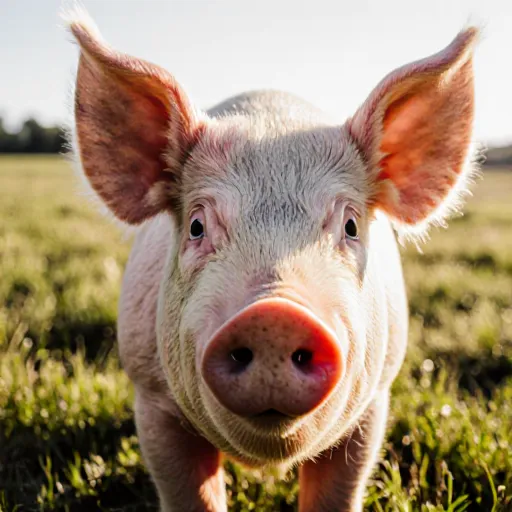
Boost Your Farm with Profitable Pig Raising
Why Pigs Are a Profitable Choice for Farmers
Introduction
Farming has evolved into a strategic business, and selecting the right livestock plays a critical role in profitability. Among livestock options, pigs are often highlighted as one of the most profitable choices for farmers. Their ability to grow quickly, adapt to various climates, and provide multiple income streams makes pig farming a rewarding venture.
This guide delves into why pigs are a smart investment for farmers, exploring key factors that contribute to their profitability. Whether you're an experienced farmer or a beginner, this article provides valuable insights into maximizing returns with pig farming.
Placeholder for Image 1
1. High Market Demand for Pork
Pork is the most widely consumed meat globally, accounting for over 36% of total meat consumption. This high demand ensures a stable and lucrative market for pig farmers.
Reasons for Pork's Popularity
- Versatility: Pork can be prepared in various ways, appealing to different cuisines and cultures.
- Affordability: Pork is generally more affordable than other meats like beef or lamb.
- Nutritional Value: It is rich in protein, vitamins, and minerals, making it a healthy choice.
By aligning pig production with market trends, farmers can tap into a consistent revenue stream.
Placeholder for Image 2
2. Efficient Feed Conversion
Pigs are renowned for their efficient feed conversion rates (FCR), which measure the amount of feed required to gain a kilogram of body weight. With an average FCR of 3:1, pigs require less feed compared to other livestock like cattle.
| Livestock | Feed Conversion Ratio (FCR) | Notes |
|---|---|---|
| Pigs | 3:1 | Highly efficient, leading to cost savings. |
| Cattle | 6:1 | Requires significantly more feed. |
| Chicken | 2:1 | Comparable efficiency for smaller livestock. |
3. Low Startup Costs
Compared to cattle farming, pig farming requires relatively low initial investment. The cost of acquiring piglets, building basic housing, and purchasing feed is more affordable for most farmers.
Cost Breakdown
- Infrastructure: Simple pigsties suffice, reducing building expenses.
- Feed: Pigs can thrive on a diet that includes agricultural by-products, lowering feed costs.
- Veterinary Care: Pigs are hardy animals, requiring fewer medical interventions.
4. Rapid Growth and Reproduction
Pigs have one of the fastest growth rates among livestock, reaching market weight within 4-6 months. Additionally, a single sow can produce 10-12 piglets per litter, with two litters annually.
This rapid reproduction rate allows farmers to expand their herd quickly, maximizing income potential. It also provides a steady supply of pigs for meat production or sale.
Placeholder for Image 3
5. Opportunities for Value-Added Products
Pig farming opens up opportunities to diversify income through value-added products. Examples include pork sausages, bacon, ham, and even pigskin leather.
Why Value-Added Products Matter
- Higher profit margins compared to raw pork.
- Increased market reach with processed products.
- Opportunities to brand and sell directly to consumers.
6. Manure as an Additional Income Source
Pig manure is a valuable by-product that can be sold as organic fertilizer. It enriches soil with nutrients like nitrogen and phosphorus, making it ideal for crop farming.
Benefits of Pig Manure
- Boosts soil fertility naturally.
- Reduces reliance on chemical fertilizers.
- Generates additional income for pig farmers.
7. Adaptability and Low Maintenance
Pigs are highly adaptable animals that can thrive in diverse climates. They are also less labor-intensive compared to other livestock, requiring only basic care and management.
This adaptability makes pig farming accessible to farmers in both rural and urban settings.
FAQs
Is pig farming profitable?
Yes, pig farming is highly profitable due to high market demand, efficient feed conversion, and rapid reproduction rates.
How much space do pigs need?
Space requirements depend on the pig's age and size. On average, growing pigs require 8-12 sq. ft. per pig.
Conclusion
Pig farming offers numerous advantages that make it a profitable choice for farmers. From high market demand and efficient feed conversion to opportunities for diversification, pigs are an excellent investment for both small-scale and commercial farmers.
With proper planning and management, pig farming can provide sustainable income and contribute to food security worldwide.
Placeholder for Image 4
Categories
- AI & Enrichment Play
- Broiler Farming
- Broiler Farming Tips
- Canine Wellness & Longevity
- Cat
- Cat & Human Connection
- Cat Adoption & Rescue
- Cat Breeds
- Cat Breeds & Personalities
- Cat Care & Health
- Cat Grooming & Hygiene
- Cat Lifestyle & Environment
- Cat Myths & History
- Cat Nutrition & Diet
- Cat Products & Reviews
- Cat Training & Behavior
- Comparison
- Consumer Awareness
- Dog
- Dog Accessories & Products
- Dog Adoption & Rescue
- Dog Breed & Lifestyle Trends
- Dog Breeding & Puppies
- Dog Entertainment & Media
- Dog Fashion & Trends
- Dog Fun & Lifestyle
- Dog Grooming & Hygiene
- Dog History & Culture
- Dog Myths, Science & Future Tech
- Dog News & Trends
- Dog Nutrition & Food
- Dog Psychology & Emotions
- Dog Safety & Security
- Dog Sports & Activities
- Dog Technology & Innovation
- Dog Training for Modern Owners
- Dog Travel & Adventure
- Dog Travel, Adventure & Culture
- Economic and Market Insights
- Educational Content
- FAQs
- Feeding Alternatives
- Festivals & Seasonal Ideas
- Fun & Entertainment
- General Knowledge
- General Pig Farming
- Health & Disease Management
- Housing and Environment
- Kittens
- Market Insights
- Miscellaneous
- Miscellaneous
- Motivational
- pig
- Pig Breeding
- Pig Breeds
- Pig Farming Stories and Inspiration
- Pig Health and Care
- Pig Nutrition
- Pig Products
- Profitability & Business
- Puppy Care
- Puppy Predictable Topics Reinvented
- Regional Focus
- Rescue & Adoption Buzz
- Senior Cats
- Senior Dog Care
- Smart Dog Tech & Gadgets
- Sustainability
- Sustainable & Eco-Friendly Dog Products
- Tech & Innovations
- Working & Service Dogs
- Broiler Feed66 products
- Country Feed33 products
- Pig Feed66 products
- Product22 products
- Raw Materials99 products
Products
-
 Fish Meal
₹1,999.00 – ₹2,999.00Price range: ₹1,999.00 through ₹2,999.00Rated 0 out of 5
Fish Meal
₹1,999.00 – ₹2,999.00Price range: ₹1,999.00 through ₹2,999.00Rated 0 out of 5 -
 FATTENING BROILER FEED
₹2,299.00 – ₹2,349.00Price range: ₹2,299.00 through ₹2,349.00Rated 0 out of 5
FATTENING BROILER FEED
₹2,299.00 – ₹2,349.00Price range: ₹2,299.00 through ₹2,349.00Rated 0 out of 5 -
 LAYER COUNTRY FEED
₹1,549.00 – ₹1,649.00Price range: ₹1,549.00 through ₹1,649.00Rated 0 out of 5
LAYER COUNTRY FEED
₹1,549.00 – ₹1,649.00Price range: ₹1,549.00 through ₹1,649.00Rated 0 out of 5 -
 COUNTER BROILER FEED
₹1,199.00 – ₹1,299.00Price range: ₹1,199.00 through ₹1,299.00Rated 0 out of 5
COUNTER BROILER FEED
₹1,199.00 – ₹1,299.00Price range: ₹1,199.00 through ₹1,299.00Rated 0 out of 5 -
 LACTATING PIG FEED
Rated 0 out of 5
LACTATING PIG FEED
Rated 0 out of 5₹2,299.00Original price was: ₹2,299.00.₹1,740.00Current price is: ₹1,740.00. -
 Maize
Rated 0 out of 5
Maize
Rated 0 out of 5₹1,650.00Original price was: ₹1,650.00.₹1,300.00Current price is: ₹1,300.00. -
 GESTATION PIG FEED (Phase 1)
Rated 0 out of 5
GESTATION PIG FEED (Phase 1)
Rated 0 out of 5₹2,249.00Original price was: ₹2,249.00.₹1,699.00Current price is: ₹1,699.00. -
 Pre Starter Broiler Feed
₹2,399.00 – ₹2,499.00Price range: ₹2,399.00 through ₹2,499.00Rated 0 out of 5
Pre Starter Broiler Feed
₹2,399.00 – ₹2,499.00Price range: ₹2,399.00 through ₹2,499.00Rated 0 out of 5 -
 FINISHER PIG FEED
Rated 0 out of 5
FINISHER PIG FEED
Rated 0 out of 5₹2,299.00Original price was: ₹2,299.00.₹1,749.00Current price is: ₹1,749.00. -
 Broiler Premix
Rated 0 out of 5
Broiler Premix
Rated 0 out of 5₹820.00Original price was: ₹820.00.₹699.00Current price is: ₹699.00.