
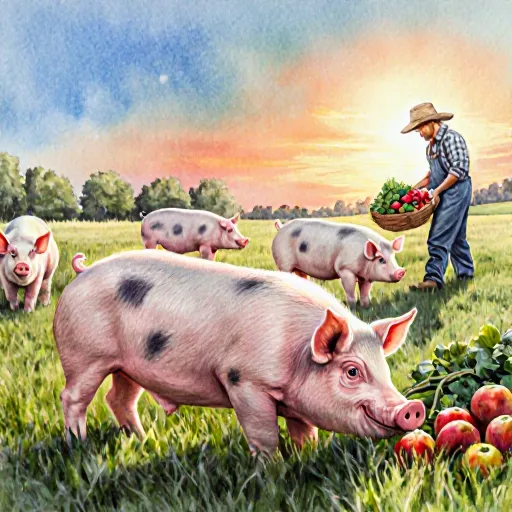
Unlock Profit with Exotic Pigs Today!
Introduction
Pig farming is an essential part of the global agricultural industry, providing pork products for millions of people. When it comes to raising pigs, farmers have the option to choose between native and exotic pig breeds. Each type has its unique characteristics, advantages, and suitability for different farming systems.
In this blog, we will explore the key differences between native and exotic pig breeds, their respective advantages, and help you understand which breed might be more suitable for your farming needs.
Native Pig Breeds
Native pig breeds are those that have evolved and adapted to a particular geographic region over time. These breeds are well-suited to the local climate, soil, and farming conditions. They have typically been raised for centuries in small-scale farming systems and are often prized for their hardiness and ability to thrive without intensive care.
Characteristics of Native Pig Breeds
Native pig breeds are known for their resistance to local diseases, ability to adapt to various environmental conditions, and lower feed requirements. They tend to be smaller in size compared to exotic breeds, but their hardiness makes them ideal for sustainable farming practices.
Examples of Native Pig Breeds
- Tamworth: A hardy breed from the UK, known for its high-quality bacon.
- Large White: A popular breed in the UK and Europe, known for its excellent mothering abilities.
- Welsh: A pig native to Wales, often used for breeding and meat production.
- Kunis: A native breed from China, known for its resistance to harsh weather and diseases.

Exotic Pig Breeds
Exotic pig breeds are those that have been introduced from other regions, usually for their superior growth rates, larger sizes, and higher meat yields. These breeds are often preferred in large-scale commercial farming systems due to their ability to grow quickly and produce high-quality pork.
Characteristics of Exotic Pig Breeds
Exotic breeds are typically larger, faster-growing, and more productive than native breeds. They require more intensive care, including higher feed inputs and specialized management techniques. Exotic breeds are often bred for specific traits such as faster growth, better meat quality, and higher reproductive efficiency.
Examples of Exotic Pig Breeds
- Yorkshire: A fast-growing breed known for its adaptability and high-quality meat.
- Berkshire: An exotic breed valued for its premium pork quality, particularly in high-end markets.
- Duroc: A robust breed known for its excellent growth rate and good meat quality.
- Landrace: An exotic breed known for its excellent reproductive qualities and maternal traits.

Key Differences Between Native and Exotic Pig Breeds
Native and exotic pig breeds have several key differences that impact their suitability for different types of farming operations. These differences can include growth rates, meat quality, reproductive traits, and adaptability to local conditions.
Growth Rate and Size
Exotic breeds are generally larger and grow faster than native breeds. This makes them ideal for commercial farming systems that prioritize high turnover and meat production. In contrast, native breeds are often smaller and grow more slowly but are better adapted to local conditions.
Meat Quality
Exotic breeds like Berkshire and Duroc are prized for their high-quality meat, especially in premium markets. Native breeds, while often having good meat quality, may not reach the same level of marbling or fat content found in some exotic breeds.
Reproductive Efficiency
Exotic breeds, such as Landrace and Yorkshire, are known for their excellent reproductive qualities, producing large litters and having high fertility rates. Native breeds may not be as prolific in terms of litter size but often have stronger maternal instincts and can thrive in more challenging environments.
Adaptability to Local Conditions
Native breeds are well-suited to local climates and farming practices. They have evolved to withstand local diseases, extreme weather, and other environmental factors. Exotic breeds, while highly productive, may require more attention to disease control, feed management, and environmental factors.
| Trait | Native Pig Breeds | Exotic Pig Breeds |
|---|---|---|
| Growth Rate | Slow growth, smaller size | Fast growth, larger size |
| Meat Quality | Good, but not as marbled | Premium quality, high marbling |
| Reproductive Efficiency | Lower litter sizes | High reproductive rates, large litters |
| Adaptability | Excellent for local conditions | May require more management |
Advantages of Native Pig Breeds
Hardiness and Disease Resistance
Native pig breeds are often more resistant to local diseases and pests. This makes them ideal for regions with limited access to veterinary care or in areas where diseases are prevalent.
Lower Feed Costs
Native breeds typically require less feed compared to exotic breeds, making them more cost-effective in areas with limited feed resources.
Adaptability to Local Environments
Native pigs are well-suited to local climates and farming conditions. They are able to thrive in less-than-ideal conditions and require less intervention compared to exotic breeds.
Advantages of Exotic Pig Breeds
Higher Productivity
Exotic breeds are more productive in terms of growth rate, meat quality, and reproductive efficiency. This makes them ideal for commercial farming operations focused on maximizing output.
Superior Meat Quality
Exotic breeds, particularly those bred for premium markets, are known for producing high-quality meat, which is sought after by high-end consumers.
Faster Return on Investment
With their rapid growth rates and high reproductive efficiency, exotic pig breeds can provide a faster return on investment in commercial pig farming operations.
Choosing the Right Breed for Your Farm
When selecting a pig breed for your farm, it’s essential to consider factors like local climate, available resources, and farming goals. If you are focused on premium meat production and high productivity, exotic breeds may be the best option. However, if you prioritize sustainability, disease resistance, and lower feed costs, native breeds could be more suitable.
FAQs
What are native pig breeds?
Native pig breeds are those that have evolved in specific regions and are adapted to local farming conditions and climate.
Why are exotic pig breeds more popular in commercial farming?
Exotic pig breeds are favored in commercial farming due to their superior growth rates, larger sizes, and high-quality meat production.
Conclusion
Understanding the differences between native and exotic pig breeds is essential for making an informed decision about your farming operations. While native breeds offer hardiness and adaptability, exotic breeds excel in productivity and meat quality. By assessing your farming goals and conditions, you can choose the breed that best aligns with your needs.
Products
-
 Fish Meal
Price range: ₹1,999.00 through ₹2,999.00
Fish Meal
Price range: ₹1,999.00 through ₹2,999.00
-
 FATTENING BROILER FEED
Price range: ₹2,299.00 through ₹2,349.00
FATTENING BROILER FEED
Price range: ₹2,299.00 through ₹2,349.00
-
 LAYER COUNTRY FEED
Price range: ₹1,549.00 through ₹1,649.00
LAYER COUNTRY FEED
Price range: ₹1,549.00 through ₹1,649.00
-
 COUNTER BROILER FEED
Price range: ₹1,199.00 through ₹1,299.00
COUNTER BROILER FEED
Price range: ₹1,199.00 through ₹1,299.00
-
 LACTATING PIG FEED
Original price was: ₹2,299.00.₹1,740.00Current price is: ₹1,740.00.
LACTATING PIG FEED
Original price was: ₹2,299.00.₹1,740.00Current price is: ₹1,740.00.
-
 Maize
Original price was: ₹1,650.00.₹1,300.00Current price is: ₹1,300.00.
Maize
Original price was: ₹1,650.00.₹1,300.00Current price is: ₹1,300.00.
-
 GESTATION PIG FEED (Phase 1)
Original price was: ₹2,249.00.₹1,699.00Current price is: ₹1,699.00.
GESTATION PIG FEED (Phase 1)
Original price was: ₹2,249.00.₹1,699.00Current price is: ₹1,699.00.
-
 Pre Starter Broiler Feed
Price range: ₹2,399.00 through ₹2,499.00
Pre Starter Broiler Feed
Price range: ₹2,399.00 through ₹2,499.00
-
 FINISHER PIG FEED
Original price was: ₹2,299.00.₹1,749.00Current price is: ₹1,749.00.
FINISHER PIG FEED
Original price was: ₹2,299.00.₹1,749.00Current price is: ₹1,749.00.
-
 Broiler Premix
Original price was: ₹820.00.₹699.00Current price is: ₹699.00.
Broiler Premix
Original price was: ₹820.00.₹699.00Current price is: ₹699.00.