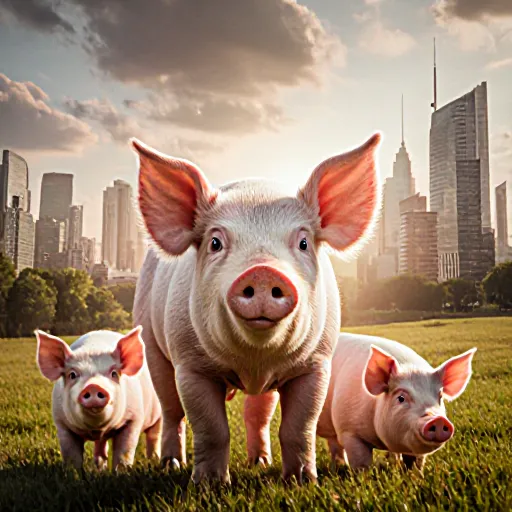
The future prospects for pig farmers are bright, thanks to a growing global demand for pork and innovative farming practices. As the world's population continues to expand, so does the need for sustainable food sources, and pigs play a crucial role in meeting this demand. Success stories from around the world highlight how modern pig farming can lead to increased profitability and sustainability.
Advancements in technology and breeding techniques are paving the way for more efficient and sustainable pig farming practices. For instance, precision feeding systems allow farmers to tailor feed rations based on individual pig needs, reducing waste and increasing growth rates. Genetic research is also playing a significant role, with selective breeding programs focusing on producing pigs that grow faster and have better meat quality.
Case Study: Integrated Farming Systems
In Thailand, farmers are adopting integrated farming systems where pig manure is used to fertilize crops, creating a circular economy. This not only reduces the environmental impact of waste but also improves soil health and crop yield. The success of this model has encouraged other countries to follow suit.
Global Demand for Pork
The global pork market is expected to continue growing, driven by increasing consumer preferences in developing nations like China and India. As these markets expand, so does the demand for high-quality pig products. Pig farmers who can adapt to these trends by improving their production techniques and meeting higher standards will be well-positioned to capitalize on this growth.
Export Markets
Pig farmers in countries with favorable export regulations are seeing significant opportunities to expand their markets. For example, the European Union has stringent quality control measures for pork exports, but it also offers a lucrative market for premium pig products. Farmers who can meet these standards and establish reliable supply chains are likely to see increased demand.
Environmental Sustainability
Sustainability is becoming increasingly important in the agricultural industry, and pig farming is no exception. Farmers who adopt sustainable practices, such as reducing water usage, minimizing greenhouse gas emissions, and implementing biosecurity measures, can not only enhance their reputation but also attract environmentally-conscious consumers.
Case Study: Farmer John Smith from the United States
Farmer John Smith in the United States transformed his pig farm into a model of sustainability and efficiency. By implementing precision feeding, automated cleaning systems, and waste management practices, he was able to reduce costs while increasing production. His success led to partnerships with major food companies, providing him with stable markets and higher prices.
Case Study: Farmer Maria Rodriguez from Mexico
In Mexico, Farmer Maria Rodriguez adapted her pig farm to meet the growing demand for organic pork products. By sourcing organic feed and implementing strict hygiene protocols, she was able to tap into high-value markets in Europe and North America. Her commitment to quality and sustainability has earned her recognition as a leader in sustainable pig farming.
Case Study: Farmer Lee Kim from South Korea
In South Korea, Farmer Lee Kim focused on producing high-quality pork by optimizing feed conversion ratios and improving animal welfare standards. His efforts paid off when he was able to sell premium pork products at premium prices in both domestic and international markets. This success has inspired other farmers in the region to adopt similar practices.
The future of pig farming looks promising for those who are willing to innovate, adapt, and embrace sustainability. By learning from successful case studies around the world, pig farmers can position themselves to take advantage of growing global demand while contributing to a more sustainable food system.