
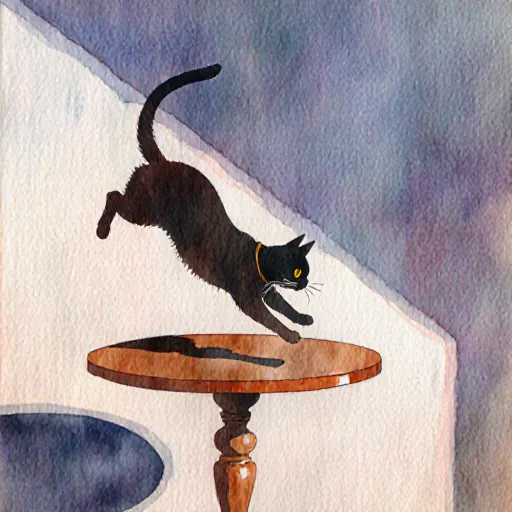
Unlock the Mystery Behind Your Cat’s Magical Table-Tipping!
The Profitable Secret to Your Cat's Table Tipping
Table of Contents
- Why Do Cats Knock Things Off Tables?
- Hunting Instincts
- Attention Seeking Behavior
- Curiosity and Exploration
- Playfulness and Fun
- Territorial Marking
- Lack of Balance
- Environmental Factors
- Stress and Anxiety
- Teaching Skills to Humans
- Socialization with Other Pets
- Health Issues
- Environmental Enrichment
- Conclusion
- FAQ
Why Do Cats Knock Things Off Tables?
Cats are known for their playful and curious nature, which often leads them to knock things off tables. This behavior can be frustrating for many pet owners, but it's important to understand the reasons behind this action. Cats engage in such activities for various reasons, including boredom, curiosity, and even as a form of exercise.
Cats are naturally curious creatures, and knocking things off tables is often just one way they explore their environment. Their keen sense of smell and hearing helps them discover new objects that pique their interest. For instance, a shiny button or an intriguing toy might catch their attention, leading to playful behavior such as batting the object with their paws.
Many cats become bored when left alone for long periods. If your cat doesn't have enough mental and physical stimulation, they may find ways to entertain themselves by knocking things off tables or scratching furniture. Ensuring that your feline companion has engaging toys, climbing structures, and regular playtime can help reduce this boredom-driven behavior.
Cats are natural hunters, and knocking things off tables might be a way for them to practice their hunting skills. They may mimic the act of pouncing on prey or simply enjoy the chase as an object moves around. Providing interactive toys that simulate small movements can satisfy this instinct while keeping your belongings safe.
Cats are social animals and sometimes knock things off tables to gain your attention. If they sense you're not paying enough attention, they may try to get your focus by creating a ruckus or moving objects around. Ignoring this behavior and only rewarding positive behaviors can help manage this issue.
In some cases, knocking things off tables could be a sign of an underlying health problem. For example, if your cat is suddenly more active than usual or exhibits other unusual behaviors, it's advisable to consult with a veterinarian. Conditions such as hyperthyroidism in older cats can increase their activity level and lead to more restless behavior.
- Provide Stimulation: Engage your cat with toys, interactive puzzle feeders, or even laser pointers. This will help satisfy their natural instincts and keep them mentally stimulated.
- Create Obstacle Courses: Set up small obstacles or perches around the house for your cat to climb on and explore. This can provide entertainment without the risk of knocking things off tables.
- Use Positive Reinforcement: Reward your cat with treats, praise, or affection when they engage in desirable behaviors rather than those that lead to knocking things off tables.
- Supervise Playtime: When you're at home and can supervise, play with your cat using interactive toys. This keeps them busy and entertained without the risk of damaging furniture.
In conclusion, while it's natural for cats to knock things off tables as part of their behavior, understanding the underlying reasons can help you manage this issue effectively. By providing appropriate stimulation, supervision, and positive reinforcement, you can ensure that your feline companion remains happy and well-behaved.
Hunting Instincts
Cats are often described as natural hunters, and their curiosity and instinct drive them to engage in behaviors that may seem unusual to us. One such behavior is why cats knock things off tables. This intriguing habit can be attributed to a combination of hunting instincts, boredom, and the desire for attention. Let's delve deeper into these motivations:
Cats are descendants of wild ancestors that relied heavily on hunting for survival. Even though domesticated cats no longer need to hunt for food, their instinctual behaviors remain. When a cat sees or hears something moving, it triggers the same response as it would in the wild—prey detection.
Prey Simulation
Cats are known for knocking over small objects like pens, glasses, and toys, which move when they fall to the floor. This behavior mimics how they would catch a mouse or bird. A cat's pounce and swipe actions are honed from years of practice in their natural environment. By knocking items off tables, cats simulate the act of hunting, even if there is no actual prey present.
Domesticated cats often experience boredom when left alone for extended periods or kept in an under-stimulating environment. Knocking things off tables can be a way to provide themselves with entertainment and stimulation. It's not just about the act of knocking but also about creating movement, which piques their interest.
Interactive Play
Cats enjoy interactive playtime, and this behavior often extends into their daily activities. By toppling objects off tables, they create a game that engages both their body and mind. It's similar to how they would interact with prey in the wild, where the chase leads to capture.
Cats are intelligent and social animals that thrive on interaction. Knocking things off tables can be a subtle way for them to get your attention. They may do this not out of spite or malice but as a means to communicate their need for companionship or play.
Creating Engagement
If you notice that your cat frequently knocks items off tables, consider introducing more interactive toys and games into its routine. This can help satisfy the hunting instinct and provide entertainment without causing any damage around the house. Toys like feather wands, laser pointers, or even simple puzzle feeders are excellent options.
To address this behavior in a positive way, here are some practical tips:
- Create an Enriched Environment: Provide your cat with various toys and activities to keep it entertained. Puzzle feeders and interactive games can help satisfy its curiosity and hunting instincts.
- Supervise Playtime: Keep a close eye on your cat during playtime to ensure that their behavior remains safe and does not damage property.
- Redirect Attention: If you catch your cat in the act, gently redirect its attention to an appropriate toy or game. This helps reinforce positive behaviors.
In conclusion, while knocking things off tables may seem like a quirky behavior at first glance, it is deeply rooted in a cat's natural instincts and social needs. By understanding and addressing these motivations, you can help your cat express itself in healthier ways that are both enjoyable for the pet and the owner.
Attention Seeking Behavior
When it comes to understanding why cats knock things off tables, it's essential to delve deeper into their behavior and psychology. This seemingly playful act often stems from what experts call "attention-seeking behavior." Cats are highly intelligent creatures with complex emotional needs that can sometimes be misunderstood by pet owners.
The Psychology Behind Attention Seeking
Cats are natural hunters, even when they're domesticated. They have an innate need to explore their environment and engage in activities that stimulate their senses. When a cat knocks something off a table or shelf, it might not just be about the "fun" of knocking things over; it could also be a way for them to get your attention.
According to Dr. Sarah Ellis, a renowned veterinarian at Cornell University, cats are highly tuned to their environments and can become bored if they don't have enough stimulation. This boredom might lead them to engage in such behaviors as knocking things off tables or shelves, which can provide both mental and physical stimulation for the cat.
Examples of Attention-Seeking Behavior
Cats exhibit various forms of attention-seeking behavior that go beyond just knocking over objects. Some common examples include:
- Meowing persistently: Cats may meow loudly or continuously to get your attention, especially if they feel neglected.
- Hiding and then reappearing suddenly: This can be a way for cats to surprise you and elicit a reaction from you.
- Pawing at objects or people: Cats may paw at your hands or the furniture, hoping that they will receive some attention in return.
Tips for Managing Attention-Seeking Behavior
To address this issue effectively, it's crucial to understand the root cause of the behavior. Here are a few practical tips:
- Provide ample stimulation: Ensure that your cat has plenty of toys, scratching posts, and interactive playtime with you or other pets.
- Create a routine: Establish a consistent daily schedule for feeding, playing, and cuddling to help your cat feel secure and less inclined to seek attention in unusual ways.
- Use positive reinforcement: Reward good behavior rather than reacting strongly to mischievous actions. Positive reinforcement can encourage your cat to engage in desirable activities.
In conclusion, while it might seem like a simple act of mischief, knocking things off tables is often an expression of a deeper need for attention and stimulation. By understanding this aspect of feline behavior, you can provide the care and attention that your cat truly needs.
Curiosity and Exploration
Curiosity and exploration are key traits of feline behavior, often leading cats to exhibit behaviors that seem peculiar or even destructive to their human companions. One such behavior is why cats knock things off tables, which can be attributed to a combination of curiosity, playfulness, and territorial instincts.
Cats are naturally inquisitive creatures, driven by an inherent desire to explore their environment. Their small size and agility allow them to reach high places like counters and tables where they can observe or interact with objects. However, this curiosity doesn't always translate into harmless exploration; sometimes it results in knocking items off these surfaces.
Curiosity as a Driving Force
Cats are naturally curious about their surroundings. The novelty of new or moving objects on high surfaces piques their interest and can lead to playful behavior. For instance, a cat may see a toy or an item that has been placed on the table and find it fascinating. This curiosity might prompt them to investigate by batting at the object with their paws or teeth, which could inadvertently cause it to fall off.
Playfulness and Hunting Instincts
Cats have a strong predatory instinct, and objects that move can mimic prey for them. When they see something moving on a high surface, they may mistake the object for potential prey and give chase, leading to knocking it down in their playful pursuit.
Territorial Behavior
Knocking items off tables can also be linked to territorial behavior. Cats might perceive certain objects as invaders into their space. By nudging or batting at these objects, they are asserting their control over the area and marking it as theirs.
To address this behavior, cat owners can take several steps to keep both their pets and belongings safe:
- Provide Stimulating Toys: Offer your cat a variety of toys that mimic prey, such as feather wands or laser pointers. This can redirect their energy away from household items.
- Cat Trees and Shelves: Install platforms and climbing structures to provide the cats with safe areas for exploration and play without risking valuable possessions.
- Secure Precious Items: Use sticky pads or straps to secure delicate objects on lower surfaces where your cat can reach them safely.
- Supervision: Keep an eye on your cat during times when you're especially concerned about this behavior, providing positive reinforcement for non-destructive activities.
Understanding the underlying reasons behind why cats knock things off tables can help pet owners foster a better relationship with their feline friends. By addressing these behaviors through play and environmental enrichment, both humans and cats can coexist harmoniously in the home.
Playfulness and Fun
Why do cats knock things off tables? It’s a question that has intrigued pet owners for years, and while there could be several reasons behind this behavior, one factor stands out: playfulness and fun. Cats are naturally curious creatures, and they often use knocking objects off tables as an opportunity to engage in playful activities. This behavior can be seen as their way of exploring the world around them.
Cats, by nature, are predatory animals. Even though many cats live domesticated lives, their instincts remain strong. Knocking things off tables allows them to mimic hunting behaviors, which is a natural part of their play. For instance, when a cat knocks a toy or an item off the table, they may pounce on it as if it were prey. This behavior can be especially noticeable in younger cats who are still learning about their environment.
Another reason behind this behavior could be that cats find it amusing to watch objects fall and crash onto the floor. The sound of something clinking or crashing is often enough to grab a cat's attention, making them curious to see what happens next. Cats are also attracted by movement, so once an object starts falling, they might pounce on it as if it were alive.
It’s important for pet owners to understand that this behavior is usually not malicious or harmful. Cats don’t knock things off tables with the intention of causing damage; rather, they do it out of curiosity and fun. However, if you find your cat knocking items off expensive furniture or breaking delicate objects, it might be a good idea to provide them with appropriate toys instead.
To encourage playfulness without damaging your belongings, consider providing your cat with interactive toys that mimic the behavior they enjoy. For example, you can buy laser pointers, feather wands, or even small stuffed animals that move around on their own. These toys not only satisfy a cat’s natural hunting instincts but also provide mental and physical stimulation.
Additionally, engaging in playtime sessions with your cat can help reduce this kind of behavior. Spend time playing with them regularly to channel their energy into positive activities. Interactive games like hide-and-seek or simply tossing a small ball for them to chase around the house are great ways to keep them entertained without risking any damage.
In conclusion, while cats knocking things off tables might seem frustrating at first glance, it’s actually an expression of their natural curiosity and playfulness. By understanding this behavior and providing appropriate outlets for their energy, you can ensure that both you and your cat have fun together while keeping your belongings safe and sound.
Territorial Marking
Cats are fascinating creatures, and their behaviors can sometimes seem mysterious or even frustrating to owners. One such behavior that many cat owners encounter is when cats knock things off tables—often referred to as "territorial marking." This action is not only a sign of your cat's personality but also serves a purpose in feline communication.
Cats, like other animals, use various methods to mark their territory. For cats, this often includes scratching, rubbing against objects, and even knocking things off tables. These actions are not merely destructive behaviors; they serve a crucial role in the cat's social structure and communication with other felines. Knocking items off tables is one of the ways that your cat is asserting its dominance over an area.
Cats knock things off tables to mark their territory, much like how dogs use scent marking by urinating or defecating in certain areas. By knocking items off a table, the cat leaves behind visual and olfactory signals that communicate its presence and dominance. This behavior is particularly common during periods of heightened territorial awareness, such as when new scents or objects are introduced into the environment.
- Scratching Furniture: Cats scratch to sharpen their claws, but they also leave behind scent markers that signal ownership. This can lead to furniture being knocked over during the process.
- Pawing at Objects: Some cats paw at objects to bring them closer for inspection or play, and in doing so, may accidentally knock things off a table.
- Jumping on Furniture: Cats often jump onto furniture to survey their territory. In the process of balancing, they might knock items off a table.
To address and redirect this behavior, it's important to understand that cats are not being malicious but rather expressing natural instincts. Here are some practical tips:
- Provide Alternatives: Offer your cat scratching posts or climbing trees (indoor versions) as alternatives to furniture. This helps satisfy their need for vertical space and claw sharpening.
- Use Feline Deterrents: Products like citrus-scented sprays can deter cats from certain areas, helping them avoid knocking items off tables in those specific spots.
- Encourage Playtime: Engage your cat in regular play sessions. This reduces stress and provides an outlet for excess energy, potentially decreasing destructive behavior.
- Create a Safe Space: Ensure that your cat has access to several safe spaces where they can feel secure without feeling the need to mark territory aggressively.
Understanding why cats behave in certain ways, such as knocking things off tables, is crucial for a harmonious relationship between you and your cat. By recognizing these behaviors, you can provide an enriched environment that meets their physical and emotional needs, leading to fewer behavioral issues.
In conclusion, while it may be frustrating when your cat knocks things off tables, this behavior is often a sign of territorial marking—a natural and important aspect of feline behavior. By providing appropriate outlets for these instincts, you can help guide your cat's behavior in constructive ways, leading to a happier and healthier relationship between pet and owner.
Lack of Balance
The behavior of cats knocking things off tables can be attributed to a combination of factors, primarily stemming from their natural instincts and lack of balance. Cats are naturally curious creatures with an instinctual drive to explore and interact with their environment. However, this curiosity often intersects with their inherent lack of balance, leading them to engage in activities that seem playful but can sometimes result in unintended consequences.
Cats have a unique center of gravity compared to humans or dogs. Their bodies are built lower to the ground with long legs and a relatively large head, which makes it challenging for them to maintain their balance on unstable surfaces like tables or countertops. This physical characteristic often contributes to their tendency to knock things off. For instance, while attempting to reach for a toy or investigate an object, they may overextend themselves, causing items to fall.
Another aspect of this behavior is the cats' natural hunting instincts. Cats are predators by nature and have a strong instinct to pounce on moving objects. This instinct can be particularly pronounced when there is something that catches their attention from a higher vantage point. They may perceive an object as prey, leading them to leap or swat at it, which can cause items to topple off the table.
It's important for cat owners to understand these behaviors and manage environments accordingly. Providing stable surfaces with non-breakable objects that mimic natural hunting opportunities (like feather wands or toy mice) can satisfy their instincts without risking valuable household items. For example, placing sturdy toys on a lower surface where they can safely explore and play is an effective strategy.
Additionally, some cats may exhibit this behavior as a response to boredom. If a cat is not getting enough mental or physical stimulation, it might engage in knocking things off tables simply to alleviate this boredom. In such cases, increasing the number of toys, puzzle feeders, and interactive play sessions can help redirect their energy positively.
In summary, while cats knock things off tables due to a combination of natural instincts like curiosity and hunting behavior, their lack of balance plays a crucial role in this action. Understanding these underlying reasons allows owners to better manage the situation, ensuring both the safety of cherished belongings and the overall well-being of the cat.
Environmental Factors
The behavior of cats knocking things off tables often stems from a combination of environmental factors. These factors can vary widely, but they generally revolve around the cat's natural instincts and their interaction with its environment.
Natural Instincts
Cats are naturally curious creatures with an inherent hunting instinct. Their ancestors in the wild would often use their paws to test objects or simulate prey. This behavior is deeply ingrained, and many domestic cats retain these instincts despite living in a home environment.
When a cat sees something on a table, it may interpret the movement of an object as potential prey. The cat's natural curiosity leads it to investigate further by nudging or batting at the item with its paws. If successful, this action often results in the object falling off the table, reinforcing the behavior through positive reinforcement.
Play Behavior
Cats use their paws as extensions of their mouths during play. They may knock things off tables to mimic hunting and to practice skills that are essential for their survival in the wild. For instance, batting at objects helps them develop coordination and dexterity.
Many cat owners have noticed that cats tend to target certain types of objects or surfaces, especially those that move or make noise when knocked over. This further reinforces the play behavior, as the sound and movement can stimulate a cat's interest and encourage continued interaction.
Stimulus Seeking Behavior
Cats are creatures that seek stimulation to maintain their mental health and well-being. When they find an interesting object on a table, they may knock it off simply because they want more stimulation or engagement with the item. This behavior is particularly common in younger cats who are still developing their motor skills.
Providing adequate environmental enrichment can help reduce such behaviors by giving your cat other opportunities to engage and play. Toys that simulate prey, puzzle feeders, and climbing structures can provide the stimulation a cat needs without resorting to knocking things off tables.
Physical Factors
The physical layout of a home can also contribute to this behavior. Cats may knock things off tables because they are naturally drawn to high places where they feel safe and in control. Tables provide an elevated vantage point, which is why these areas are often targets for their playful antics.
Additionally, the size and weight of objects on a table can influence how easily they are knocked over. Lightweight or unstable items may be more prone to falling off when touched by a curious cat. Ensuring that your furniture and objects are stable and securely placed can help reduce this behavior.
Potential Solutions
To address the issue of cats knocking things off tables, consider providing alternative play options for your cat. Interactive toys, such as feather wands or laser pointers, can redirect their attention from objects on the table to more appropriate targets.
Another solution is to create a barrier around fragile items using pet-safe barriers like baby gates or furniture covers designed for pets. This not only protects valuable belongings but also helps your cat understand which areas are off-limits.
Lastly, ensure that your cat has a variety of stimulation and mental challenges throughout the day. Regular playtime, puzzle feeders, and varied environments can help keep your cat mentally engaged and reduce their inclination to seek out stimulation through knocking things over.
Stress and Anxiety
The question "Why do cats knock things off tables?" often leads to discussions about cat behavior, but it also opens up a broader conversation about stress and anxiety in animals. Cats, like humans, can experience stress and anxiety, which may manifest through various behaviors that might seem unusual or problematic to owners.
Cats and Stress: A Common Phenomenon
Cats are naturally curious creatures, but when they feel threatened or anxious, their behavior can change. One of the signs of a stressed cat is knocking things off tables, which can be linked to several factors such as environmental changes, lack of stimulation, or even health issues.
Identifying Stress Indicators in Cats
- Pacing and restlessness
- Hiding or withdrawing from usual activities
- Loss of appetite
- Increased meowing or vocalization
- Knocking things off tables (as seen in the behavior you mentioned)
Addressing Stress and Anxiety in Cats
To help your cat manage stress and anxiety, it's important to address both environmental and behavioral factors. Here are some practical tips:
- Create a Safe Environment: Ensure that your home is a comfortable and secure place for your cat. Provide hiding spots, elevated perches, and safe spaces where they can retreat when feeling overwhelmed.
- Provide Stimulation: Engage your cat in playtime and provide toys to keep them mentally stimulated. This helps reduce boredom and provides an outlet for their natural hunting instincts.
- Predictable Routine: Cats thrive on routine, so try to maintain a consistent feeding schedule and daily activities to help them feel secure.
- Consult a Veterinarian: If you suspect that your cat's behavior is due to underlying health issues, consult with a veterinarian. Medical conditions such as hyperthyroidism or other hormonal imbalances can cause behavioral changes.
Understanding the Behavior: Why Do Cats Knock Things Off Tables?
The act of knocking things off tables might be linked to several reasons:
- Anxiety or Frustration: Your cat may be feeling anxious or frustrated and is looking for a way to vent this emotion. The noise and movement created by knocking objects can provide some form of relief.
- Hunting Instincts: Cats are natural hunters, and their hunting instinct might be triggered when they see moving shadows or hear sounds that remind them of prey.
- Boredom: If your cat is bored, they may seek stimulation by knocking things off tables. Ensuring they have enough mental and physical activity can help reduce this behavior.
Conclusion
In conclusion, while cats knocking things off tables might seem like a minor issue, it could be a sign of underlying stress or anxiety. By understanding the root cause and addressing these issues with proper care and attention, you can help your cat lead a happier, healthier life.
Teaching Skills to Humans
The question "Why do cats knock things off tables?" might seem like a simple query, but it actually delves into several aspects of feline behavior and psychology. Understanding this behavior can provide valuable insights that are applicable to teaching skills to humans as well.
Cats knocking things off tables is often linked to their natural hunting instincts. Cats are predators, and in the wild, they stalk, pounce, and play with small objects to practice hunting skills. This behavior can be seen as an extension of their innate curiosity and need for mental stimulation.
Natural Instincts
By observing cats knock things off tables, we see a clear demonstration of how certain behaviors are hardwired into feline nature. These instincts play a crucial role in teaching humans about the importance of fostering curiosity and providing mental challenges for individuals to thrive.
The same principles that apply to cats can be adapted to human learning environments. Just as it's essential to keep cats entertained with toys and puzzles, educators should provide stimulating activities that challenge the mind. This could include problem-solving tasks, interactive lessons, and hands-on experiments.
Creating Engaging Learning Environments
To teach skills effectively, create an environment where learners feel stimulated and motivated to explore. For example, incorporate games and simulations into your curriculum to make learning more engaging. This approach mirrors how cats are drawn to play with objects that mimic their natural hunting prey.
Curiosity is a driving force behind both feline behavior and human learning success. By encouraging curiosity, you can foster an environment where learners feel safe to ask questions and explore new concepts without fear of failure. This aligns with the idea that cats knock things off tables not just out of mischief but also as part of their natural learning process.
Practical Advice for Educators
- Incorporate play elements into your lessons to stimulate curiosity and engagement.
- Provide opportunities for learners to explore and experiment with materials in a safe environment.
- Create scenarios that mimic real-world challenges, helping learners apply skills they've learned.
In conclusion, while the behavior of cats knocking things off tables may seem trivial at first glance, it offers profound lessons about fostering curiosity and providing mental stimulation. By understanding these behaviors, educators can create more effective learning environments that encourage exploration and skill development in their students.
Health Issues
Cats are known for their playful and curious nature, which often results in them knocking things off tables. This behavior can sometimes be attributed to a variety of factors including stress, boredom, or even a medical issue. It's important to understand the underlying reasons behind this behavior to ensure that your cat remains healthy and happy.
Behavioral Causes
Cats are naturally inquisitive creatures, and their curiosity can lead them to explore by knocking items off tables or shelves. This is especially common for young kittens who are still learning about their environment. However, if the behavior persists into adulthood, it may be indicative of boredom or an excess of energy.
- Young Kittens: Their exploration and playfulness can lead to knocking things off tables as part of their development.
- Boredom: Cats need mental and physical stimulation. Lack of activity or a stimulating environment may drive them to seek entertainment by moving items around.
- Excess Energy: Overactive cats, especially those that are not getting enough exercise, might knock things off as a way to expend energy.
Medical Causes
While behavioral issues are the most common reason for knocking things off tables, there can also be underlying medical causes. If your cat's behavior is sudden or accompanied by other changes in behavior or health, it might be worth consulting a veterinarian.
- Hypothyroidism: This condition affects the thyroid gland and can cause lethargy, weight gain, and increased appetite. It may also lead to behavioral changes including increased activity levels.
- Cushing’s Disease (Hyperadrenocorticism): This occurs when there is an overproduction of cortisol in the body. Symptoms include excessive drinking, urination, and hair loss. Behavioral changes are also possible.
- Dementia: Similar to Alzheimer's disease in humans, feline cognitive dysfunction can cause increased restlessness, confusion, and inappropriate behavior like knocking things off surfaces.
Potential Solutions
To address the issue of your cat knocking things off tables, consider implementing a few strategies:
- Provide Mental Stimulation: Keep your cat engaged with interactive toys and puzzles. This can help reduce boredom-driven behavior.
- Create Obstacle Courses: Set up an obstacle course using various household items to give your cat something safe to play with instead of knocking things off tables.
- Check for Medical Issues: If the behavior is new or if you suspect a medical problem, consult with a veterinarian. They can perform tests and provide treatment options if necessary.
Conclusion
Cats knocking things off tables can be a combination of natural behaviors and underlying health issues. By understanding the reasons behind this behavior, you can work to prevent it from becoming a problem while ensuring your cat remains healthy and happy. If you are concerned about your cat's behavior or if changes in their routine coincide with other symptoms, don't hesitate to seek veterinary advice.
Environmental Enrichment
Understanding why cats knock things off tables is crucial for creating an environment that satisfies their natural instincts and promotes their well-being. Environmental enrichment, which involves providing stimulation to enhance a cat's physical, mental, and emotional health, plays a vital role in addressing this behavior.
Environmental enrichment is all about making sure your cat has the tools it needs to express natural behaviors like hunting, climbing, and playing. Cats that are bored or under-stimulated may engage in destructive behaviors such as knocking things off tables out of boredom or frustration.
Cat Behavior and Knocking Things Off Tables
Knocking items off tables is often a sign that your cat feels the need for more mental and physical stimulation. This behavior can stem from boredom, stress, or even an attempt to mimic hunting prey by knocking small objects into motion.
Examples of Environmental Enrichment
- Hanging Toys: Suspended toys provide great physical activity and mental stimulation. Cats love batting at dangling objects, which mimics the movement of prey.
- Consider getting a toy that can be hung from the ceiling or attached to the corner of a table where your cat can reach it easily.
- Climbing Structures: Cats are natural climbers, and providing them with a vertical space to explore will keep them active. A cat tree or tower is perfect for this purpose.
- Choose one that has multiple levels, perches, and climbing paths so your cat can move around as if it were in the wild.
- Sight Stimulation: Cats are visually stimulated by moving objects. Use feather wands or laser pointers to keep them engaged during playtime.
- Ensure you spend quality time playing with your cat at least a few times each day to meet its exercise and social needs.
The Benefits of Environmental Enrichment
By enriching the environment, you're not just stopping destructive behaviors; you're enhancing your cat's overall quality of life. Cats that are mentally and physically stimulated tend to be less stressed, more relaxed, and exhibit fewer signs of boredom or frustration.
Practical Tips for Environmental Enrichment
- Create a Routine: Establishing a regular playtime can help prevent your cat from feeling bored. Aim to have at least 10 minutes of play every day.
- Vary the Toys: Cats get tired of the same toys, so it's important to rotate them or introduce new ones regularly.
- Promote Natural Behaviors: Encourage behaviors like hunting and climbing by providing appropriate enrichment tools. This can reduce unwanted behaviors and promote a healthier lifestyle for your cat.
In conclusion, understanding why cats knock things off tables is key to addressing this behavior. By enriching their environment with interactive toys, climbing structures, and other stimulating activities, you can provide your cat with the mental and physical stimulation it needs, leading to a happier and healthier pet.
Conclusion
Why do cats knock things off tables? This behavior can be attributed to a combination of natural instincts, curiosity, and playfulness. Cats are naturally drawn to high vantage points from which they can survey their environment—this is a survival trait that dates back to when they were wild animals. When they see an object on a table, it may spark their interest or serve as an engaging toy to chase after.
For instance, if you place a small, shiny object like a coin or a glass ornament on the edge of a countertop, your cat might be tempted by its movement or reflection. The reflection can appear to move in ways that seem unusual and captivating for them. This curiosity often leads to playful interactions where they might nudge or pounce at these objects, sometimes knocking them off unintentionally.
Another reason could be related to their hunting instincts. Cats love to stalk and pounce on moving targets, which can explain why they might knock small items off tables. It’s a form of practice for when they need to hunt in the wild.
To prevent such incidents while still allowing your cat to explore and enjoy its environment, you could use various strategies. One effective method is to provide your cat with interactive toys that mimic prey-like movements but are safe from accidental knocking over. Another idea is to elevate their play area so they can jump in and out without the risk of toppling items.
Understanding this behavior helps in creating a safer environment for both you and your cat. By addressing these instincts constructively, you not only protect your belongings but also enrich your cat's mental and physical health through proper stimulation.
FAQ
Cats are known for their playful and curious nature, which can sometimes lead to knocking things off tables. This behavior is often a result of several factors that can be fascinating to understand from both a behavioral and practical perspective.
Exploring the Reasons Behind the Behavior
Cats are naturally inquisitive creatures with an instinct for exploration. Their curiosity drives them to investigate their environment, which often includes knocking objects off tables or shelves. This behavior can be seen as a way for cats to explore and understand their surroundings.
- Playfulness: Cats are playful by nature, especially during kittenhood. Knocking things off surfaces is sometimes just an extension of this playfulness.
- Instincts: Some believe that cats mimic hunting behaviors when they knock items off tables. This could be a way for them to practice pouncing on prey-like objects.
- Sense of Exploration: Cats are naturally inquisitive and love to explore their environment. They may be investigating the properties of the object or simply curious about how it behaves when knocked over.
Possible Solutions for Preventing the Behavior
To address this behavior, owners can implement a few practical solutions that not only protect valuables but also satisfy the cat's natural instincts in healthier ways:
- Provide Alternative Toys: Introduce interactive toys that can provide similar stimulation without the risk of damaging items. Puzzle feeders or feather wands are great options.
- Create Obstacle Courses: Set up an indoor obstacle course for your cat to explore and play. This encourages physical activity and mental stimulation in a safe environment.
- Use Positive Reinforcement: Reward cats with treats or praise when they engage in acceptable behaviors, such as playing with toys instead of knocking things off tables.
Understanding Your Cat's Mind
To fully understand why your cat behaves this way, it helps to observe their actions and preferences. Each cat is unique, so what works for one might not work for another. By understanding your cat’s individual needs and behaviors, you can better cater to them while protecting your belongings.
Remember, cats are complex creatures with a wide range of behaviors driven by instinct, curiosity, and playfulness. By providing appropriate outlets for these instincts, you can both protect your home and enjoy the delightful companionship that comes with pet ownership.
Categories
- AI & Enrichment Play
- Broiler Farming
- Broiler Farming Tips
- Canine Wellness & Longevity
- Cat
- Cat & Human Connection
- Cat Adoption & Rescue
- Cat Breeds
- Cat Breeds & Personalities
- Cat Care & Health
- Cat Grooming & Hygiene
- Cat Lifestyle & Environment
- Cat Myths & History
- Cat Nutrition & Diet
- Cat Products & Reviews
- Cat Training & Behavior
- Comparison
- Consumer Awareness
- Dog
- Dog Accessories & Products
- Dog Adoption & Rescue
- Dog Breed & Lifestyle Trends
- Dog Breeding & Puppies
- Dog Entertainment & Media
- Dog Fashion & Trends
- Dog Fun & Lifestyle
- Dog Grooming & Hygiene
- Dog History & Culture
- Dog Myths, Science & Future Tech
- Dog News & Trends
- Dog Nutrition & Food
- Dog Psychology & Emotions
- Dog Safety & Security
- Dog Sports & Activities
- Dog Technology & Innovation
- Dog Training for Modern Owners
- Dog Travel & Adventure
- Dog Travel, Adventure & Culture
- Economic and Market Insights
- Educational Content
- FAQs
- Feeding Alternatives
- Festivals & Seasonal Ideas
- Fun & Entertainment
- General Knowledge
- General Pig Farming
- Health & Disease Management
- Housing and Environment
- Kittens
- Market Insights
- Miscellaneous
- Miscellaneous
- Motivational
- pig
- Pig Breeding
- Pig Breeds
- Pig Farming Stories and Inspiration
- Pig Health and Care
- Pig Nutrition
- Pig Products
- Profitability & Business
- Puppy Care
- Puppy Predictable Topics Reinvented
- Regional Focus
- Rescue & Adoption Buzz
- Senior Cats
- Senior Dog Care
- Smart Dog Tech & Gadgets
- Sustainability
- Sustainable & Eco-Friendly Dog Products
- Tech & Innovations
- Working & Service Dogs
- Broiler Feed66 products
- Country Feed33 products
- Pig Feed66 products
- Product22 products
- Raw Materials99 products
Products
-
 Fish Meal
₹1,999.00 – ₹2,999.00Price range: ₹1,999.00 through ₹2,999.00Rated 0 out of 5
Fish Meal
₹1,999.00 – ₹2,999.00Price range: ₹1,999.00 through ₹2,999.00Rated 0 out of 5 -
 FATTENING BROILER FEED
₹2,299.00 – ₹2,349.00Price range: ₹2,299.00 through ₹2,349.00Rated 0 out of 5
FATTENING BROILER FEED
₹2,299.00 – ₹2,349.00Price range: ₹2,299.00 through ₹2,349.00Rated 0 out of 5 -
 LAYER COUNTRY FEED
₹1,549.00 – ₹1,649.00Price range: ₹1,549.00 through ₹1,649.00Rated 0 out of 5
LAYER COUNTRY FEED
₹1,549.00 – ₹1,649.00Price range: ₹1,549.00 through ₹1,649.00Rated 0 out of 5 -
 COUNTER BROILER FEED
₹1,199.00 – ₹1,299.00Price range: ₹1,199.00 through ₹1,299.00Rated 0 out of 5
COUNTER BROILER FEED
₹1,199.00 – ₹1,299.00Price range: ₹1,199.00 through ₹1,299.00Rated 0 out of 5 -
 LACTATING PIG FEED
Rated 0 out of 5
LACTATING PIG FEED
Rated 0 out of 5₹2,299.00Original price was: ₹2,299.00.₹1,740.00Current price is: ₹1,740.00. -
 Maize
Rated 0 out of 5
Maize
Rated 0 out of 5₹1,650.00Original price was: ₹1,650.00.₹1,300.00Current price is: ₹1,300.00. -
 GESTATION PIG FEED (Phase 1)
Rated 0 out of 5
GESTATION PIG FEED (Phase 1)
Rated 0 out of 5₹2,249.00Original price was: ₹2,249.00.₹1,699.00Current price is: ₹1,699.00. -
 Pre Starter Broiler Feed
₹2,399.00 – ₹2,499.00Price range: ₹2,399.00 through ₹2,499.00Rated 0 out of 5
Pre Starter Broiler Feed
₹2,399.00 – ₹2,499.00Price range: ₹2,399.00 through ₹2,499.00Rated 0 out of 5 -
 FINISHER PIG FEED
Rated 0 out of 5
FINISHER PIG FEED
Rated 0 out of 5₹2,299.00Original price was: ₹2,299.00.₹1,749.00Current price is: ₹1,749.00. -
 Broiler Premix
Rated 0 out of 5
Broiler Premix
Rated 0 out of 5₹820.00Original price was: ₹820.00.₹699.00Current price is: ₹699.00.
Socialization with Other Pets
Understanding why cats knock things off tables can shed light on their behavior, which is crucial when socializing them with other pets. Cats are naturally curious and playful creatures, but they also have a strong prey drive that sometimes manifests in behaviors like knocking objects off surfaces. This instinctual action is often a result of their hunting instincts, as they mimic the way they would catch small moving prey.
When introducing your cat to other pets, such as dogs or another cat, it's important to consider these natural behaviors and how they might affect interactions between them. Cats are territorial animals by nature, and they need time to adjust when meeting new pets. Proper socialization can help reduce stress and prevent conflicts.
Steps for Socializing Your Cat with Other Pets
Example Scenario
Imagine you have a cat named Luna who has a tendency to knock things off tables when she sees another cat, Bella, eating. Initially, both cats are kept in separate rooms with ample resources and time for adjustment.
Through careful and patient socialization, you can help your cat adapt to living with other pets in a harmonious environment. By addressing their instincts and behaviors appropriately, you ensure that all pets feel secure and happy within the household.