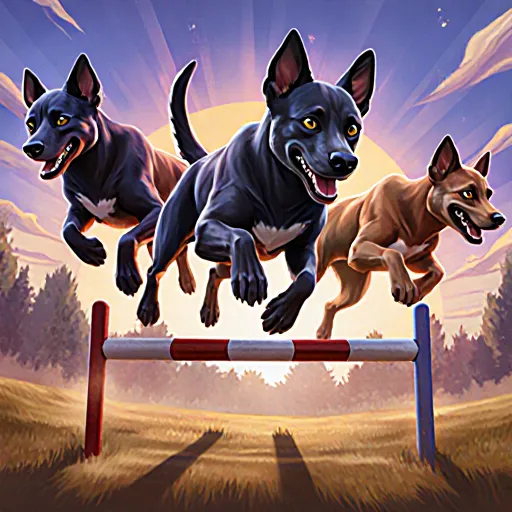
Unleash Your Dog’s Hidden Talents
Command Courageous Canines: Unlock Spectacular Tricks!!
Table of Contents
- Introduction
- Choosing the Right Dog for Advanced Tricks
- Understanding Dog Motivation and Reward Systems
- Basic Reinforcement Techniques
- Advanced Command 1: Spin in Place
- Advanced Command 2: Play Dead on Cue
- Advanced Command 3: Fetch Specific Items by Name
- Advanced Command 4: Navigate an Obstacle Course
- Advanced Command 5: Open and Close Doors
- Mental Stimulation Techniques for Advanced Learning
- Handling Failure and Frustration in Training Sessions
- Training Schedule and Consistency Tips
- Troubleshooting Common Problems
- Conclusion
- FAQ
Introduction
Once your pup masters the basic commands of sit, stay, and come, it’s time to spice up training with advanced tricks that challenge their mind, body, and bond. These skills not only keep your dog mentally sharp but also reinforce obedience in a fun, engaging way.
1. The “Shake Hands” Trick
- Why it’s useful: A classic crowd‑pleaser that builds trust and hand‑scent recognition.
- Step‑by‑step:
- Hold a treat in your closed fist.
- Encourage the dog to paw at your hand; reward immediately with praise and the treat.
- Gradually add the cue “shake” before offering the paw.
- Pro tip: Use a small, soft toy as an alternative reward for dogs who are easily distracted by treats.
2. The “Spin” Command
- Why it’s useful: Enhances agility and body awareness; great for obstacle courses.
- Step‑by‑step:
- Hold a treat near the dog’s nose and slowly move it in a circular path.
- When the dog follows, say “spin” and give the treat.
- Repeat until the dog spins on cue without visual lure.
- Variations: Spin left or right, add a pause in the middle for a “half‑turn.”
3. The “Fetch Specific Items” Trick
- Why it’s useful: Improves memory and obedience; excellent for multi‑tasking.
- Step‑by‑step:
- Name each toy (e.g., “ball,” “rope”).
- Place one toy in a clear bowl, say the name, and reward when the dog retrieves it.
- Gradually add more toys and use verbal cues (“bring the ball!”).
- Safety note: Ensure all items are safe for chewing; avoid small parts that can be swallowed.
4. The “Jump Through a Hoop” Trick
- Why it’s useful: Builds confidence, strength, and coordination.
- Step‑by‑step:
- Place a hoop on the ground and encourage the dog to step through with a treat.
- Gradually lift the hoop slightly; reward each successful pass.
- Add the verbal cue “jump” or “through” before lifting.
- Tip: Start with a low hoop for small breeds and gradually increase height as confidence grows.
5. The “Roll Over” Trick
- Why it’s useful: Strengthens core muscles and encourages trust in following commands while lying down.
- Step‑by‑step:
- Ask the dog to lie down, then gently guide its body to roll onto its side with a treat.
- Say “roll over” and reward when it completes the movement.
- Practice until the dog rolls on cue without assistance.
- Common challenge: Some dogs resist lying flat; use a soft mat to reduce discomfort.
6. The “Play Dead” Trick (Bang!)
- Why it’s useful: A fun, theatrical trick that reinforces obedience and listening skills.
- Step‑by‑step:
- Start with “lie down.”
- Use a treat to coax the dog onto its side, then gently turn it toward you.
- Say “bang” or “play dead,” and reward when the dog stays in position for a few seconds.
- Advanced twist: Add a hand signal (a “gun” gesture) to make it more realistic.
7. The “Find It” Game (Hidden Treats)
- Why it’s useful: Stimulates the dog’s natural scent‑tracking abilities and sharpens problem‑solving skills.
- Step‑by‑step:
- Hide a treat in an easy spot while the dog watches.
- Encourage the dog to “find it.”
- Increase difficulty by hiding treats in different rooms or under blankets.
- Pro tip: Use a scent marker (like a dab of vanilla) on the treat for advanced tracking sessions.
Practical Training Tips for Advanced Tricks
- Keep Sessions Short: 5–10 minute bursts maintain focus and prevent fatigue.
- Use Positive Reinforcement: Treats, praise, or play are more effective than punishment.
- Consistency is Key: Use the same cue words and hand signals every time.
- Gradual Progression: Master each step before adding complexity.
- Celebrate Small Wins: Every correct attempt should be rewarded to build confidence.
By incorporating these advanced tricks into your routine, you’ll not only entertain yourself and guests
Choosing the Right Dog for Advanced Tricks
When it comes to teaching your dog advanced tricks—beyond the basic “sit” and “stay”—the foundation lies in selecting a breed (or individual) that is naturally inclined toward learning, possesses good stamina, and has an eager-to-please temperament. Below are practical guidelines, real‑world examples, and actionable advice for making this crucial first step.
1. Look at the Breed’s Natural Aptitude
- High Intelligence & Trainability: Breeds such as Border Collies, Poodles, German Shepherds, and Golden Retrievers consistently rank near the top of canine IQ surveys. They grasp commands quickly and retain them over long periods.
- Eager to Please: Breeds like Labradors, Cocker Spaniels, and Australian Shepherds thrive on positive reinforcement because they seek human approval. This trait keeps training sessions upbeat and productive.
- High Energy Levels: For tricks that involve agility or complex sequences (e.g., “roll over,” “play dead,” or “fetch a specific object”), an energetic breed will maintain enthusiasm throughout the routine.
2. Consider Individual Personality
A single dog’s temperament can override breed expectations. Use these checkpoints during adoption or purchase:
- Curiosity & Problem‑Solving: Does the dog sniff around new objects, try to open doors, or investigate toys? Curiosity signals a mind ready for mental challenges.
- Patience & Focus: Dogs that can sit calmly while you practice commands are more likely to succeed in advanced trick training. Look for those who don’t get easily distracted by squirrels or other dogs.
- Confidence vs. Fearfulness: A confident dog will take the initiative during a trick (e.g., stepping onto a stool). Fearful dogs may need extra reassurance and slower progression.
3. Evaluate Physical Capabilities
Advanced tricks often require specific body movements—jumping, turning, or balancing. Match the trick to the dog’s physique:
- Large Breeds (e.g., Great Danes): Excellent for “sit‑and‑stay” variations that involve weight shifts but may struggle with intricate body contortions.
- Medium Breeds (e.g., Boxers, Belgian Malinois): Ideal for agility tricks like weaving poles or obstacle courses due to their balanced strength and speed.
- Small Breeds (e.g., Jack Russell Terrier): Great for tricks that involve fine motor skills—like opening a small latch or picking up tiny objects—but may lack the stamina for long sessions.
4. Practical Example: Teaching a Border Collie “Play Dead”
This breed’s intelligence and high energy make it an excellent candidate. Follow these steps:
- Start with the “Down” Position: Use a treat to guide your dog into a lying position.
- Add the “Dead” Cue: While they’re down, say “bang!” or “dead” and gently roll them onto their side. Reward immediately.
- Build Duration: Gradually increase how long your dog stays on its side before giving a treat.
- Introduce Variations: Add a “release” command like “okay!” so the dog knows when to return to an alert stance.
5. Practical Example: Training a Labrador for “Fetch Specific Object”
Labradors love retrieving, making them perfect for this trick:
- Name the Object: Give each toy a distinct name (“ball,” “tug‑rope”). Use that name consistently.
- Use Positive Reinforcement: When your dog brings the correct item, give verbal praise and a treat.
- Gradual Complexity: Start with one toy in a single location. Once mastered, introduce multiple toys in different spots.
6. Bottom Line: Match Mind & Body
The best dog for advanced tricks is one whose intelligence, energy, and temperament align with the demands of the trick set you plan to teach. By carefully assessing breed traits, individual personality, and physical ability—and by using step‑by‑step examples—you’ll lay a solid foundation that turns your training sessions into fun, rewarding adventures.
Understanding Dog Motivation and Reward Systems
When you’re teaching a dog advanced tricks—like backflips, high‑five with two paws, or even a “roll the ball” routine—the foundation remains the same: clear communication, consistent cues, and a reward system that keeps your pup engaged. However, advanced behaviors often require deeper insight into what motivates each individual dog and how to scale rewards so the learning stays exciting rather than tedious.
1. Identify Your Dog’s Primary Motivators
- Food Rewards: The classic choice for most dogs, especially those with a strong appetite or when you’re working on precision tasks. Use high‑value treats (e.g., small pieces of chicken, cheese cubes, or commercial “super‑treats”) that the dog doesn’t get during regular walks.
- Play: Toys, tug‑rope, fetch, or a quick game of hide‑and‑seek can be powerful rewards for play‑oriented breeds (like terriers or retrievers). Consider using a favorite squeaky toy as the “treat” when you need to keep the dog focused.
- Social Praise: Many dogs thrive on verbal praise and petting. A quick, enthusiastic “Good girl!” followed by a gentle rub can reinforce positive behavior without food.
- Novelty/Exploration: Some dogs are driven by curiosity—giving them the chance to explore new scents or objects can serve as a reward in itself. For instance, after completing an advanced trick, allow your dog to sniff a treat‑filled puzzle toy.
2. Use Tiered Reward Structures for Advanced Tricks
Advanced tricks often require multiple steps or complex sequences. A tiered reward system helps maintain motivation throughout the learning process:
- Immediate micro‑rewards: Small, quick treats or a brief tug after each successful sub‑step (e.g., “sit” before “roll over”).
- Mid‑session rewards: A slightly larger treat or a short play break after completing an entire sequence.
- Final reward: The most valuable treat, extended playtime, or a favorite toy when the full trick is executed flawlessly.
3. Keep Rewards Consistent but Flexible
The key to preventing confusion is consistency in how you signal that a reward will follow. Use the same cue (“yes!”) and gesture each time, regardless of the reward type. However, be ready to switch rewards if one loses its potency—dogs can become less responsive if they’re overfed with treats or if play becomes too predictable.
4. Avoid Over‑Rewarding
While it’s tempting to give a treat for every tiny movement, doing so can dilute the learning signal. Instead, reward only when the dog completes the correct action within an acceptable tolerance. This keeps the training efficient and helps the dog focus on precision.
5. Practical Example: Teaching “Spin” with Reward Progression
- Step 1 – Cue: Hold a high‑value treat in front of your dog’s nose, slowly move it in a circle to encourage a spin.
- Reward: As soon as the dog completes the full 360° turn, give a quick “yes!” and a tiny bite of treat. This immediate micro‑reward reinforces the exact movement.
- Step 2 – Add Duration: Increase the spin duration by half a second each session. After a successful longer spin, offer a slightly larger treat (e.g., a small cheese cube).
- Final Reward: When the dog can spin on cue for several seconds without hesitation, finish with a full treat or a short play break.
6. Using Clicker Training as an Intermediate Reward
A clicker provides a precise auditory signal that something perfect has happened. Pair the click with your chosen reward (food, play, or praise). For advanced tricks where timing is critical—like “jump over a hurdle” or “traverse a line”—the click can help anchor the exact moment of success.
7. Monitor Hunger and Energy Levels
Dogs that are overly hungry may chase treats even when they’re not performing correctly, while dogs with low energy might not respond well to high‑intensity rewards. Adjust your reward type and quantity based on the dog’s current state—this keeps training sessions positive and effective.
8. Integrate Reward Systems into Daily Routines
To reinforce advanced tricks outside of formal training, use everyday moments as teaching opportunities:
- Ask your dog to “sit” before you open the door and reward immediately.
- When leaving for work, ask them to “stay” in a designated spot; when they comply, give a treat.
- Use “high‑five” as a quick reward after completing a trick during walk breaks.
Conclusion
Understanding and leveraging your dog’s motivation is the cornerstone of successful advanced trick training. By selecting the right rewards, structuring them in tiers, and staying consistent yet flexible, you’ll keep your canine companion engaged, motivated, and eager to learn more complex behaviors.
Basic Reinforcement Techniques
Reinforcement is the cornerstone of any successful dog training program, especially when teaching advanced tricks that build on foundational commands like sit and stay. The goal is to make the desired behavior more likely to occur by rewarding it consistently. Below are practical techniques you can use in a home or classroom setting.
1. Positive Reinforcement: Treats, Praise, & Play
- Treats: Use high-value treats (e.g., small pieces of chicken, cheese, or commercial training biscuits) that the dog can’t resist. Deliver the treat immediately after the correct behavior to strengthen the association.
- Praise: Combine verbal praise (“Good girl!”) with a happy tone and gentle petting. Dogs are more likely to repeat behaviors when they receive both tangible and social rewards.
- Play: A quick game of tug or fetch can be an excellent reward for energetic breeds, especially when the trick requires physical effort (e.g., “roll over” or “play dead”).
2. Shaping: Incremental Steps Toward Complex Tricks
Shaping involves rewarding successive approximations of a target behavior. For example, to teach a dog to spin:
- Reward the dog for turning its head slightly in the desired direction.
- Next reward when it turns half a circle.
- Then reward full 360° turn.
Each step is reinforced until the final behavior is achieved. This method prevents frustration and keeps training fun.
3. Clicker Training
- A clicker delivers a distinct, consistent sound that signals the exact moment of correct behavior.
- Pair the click with a treat immediately to reinforce timing.
- Once the dog understands the click’s meaning, you can phase out treats gradually and use praise or play as primary reinforcement.
4. Variable Ratio Schedules for Long-Term Retention
After mastering a trick, vary the reward schedule (e.g., treat on 1st success, then on 2nd, 5th, or random occasions). This keeps the dog motivated and prevents over-reliance on treats.
5. Time-Based Rewards for Attention-Dependent Tricks
Tricks like “stay” or “wait” can be reinforced by timing how long the dog holds a position before rewarding:
- Use a timer or a simple countdown (“Three, two, one, good!”).
- Gradually increase the hold time as proficiency improves.
6. Contextualizing Rewards to Different Environments
To generalize advanced tricks, practice in varied settings—living room, backyard, park, and even a quiet hallway. Use the same reinforcement strategy but adjust reward type (treat vs. praise) based on distractions present.
7. Consistency Across Trainers
If multiple people are involved (family members, classmates), ensure they all use the same cues and rewards. Inconsistent signals can confuse the dog and slow progress.
8. Avoiding Over-Training
Keep training sessions short (5–10 minutes) to maintain focus. End on a positive note, even if the trick isn’t perfect—this keeps the dog motivated for future attempts.
9. Real-Life Example: Teaching “Spin” Using Shaping and Clicker
- Step 1: Hold a treat in front of the dog’s nose and slowly move it to the left, encouraging a small turn.
- Reward: Click and give a treat when the dog turns its head 90°.
- Step 2: Increase movement to a full 180°. Click and reward at each new threshold.
- Final Step: Ask for a complete spin, click on completion, then reward with a treat and enthusiastic praise.
By applying these reinforcement techniques consistently, you’ll create a solid foundation that allows your dog to master advanced tricks confidently and enjoyably.
Advanced Command 1: Spin in Place
This trick takes your dog’s basic obedience to the next level by adding a fun, visually impressive element that also reinforces focus and responsiveness. Unlike a simple “spin,” this variation requires the dog to turn around on a single pivot point—usually a marker or their own body—while staying balanced and attentive.
Why Spin in Place is Valuable
- Improved Balance & Core Strength: The dog must maintain an upright posture while rotating, which builds core muscles.
- Enhanced Focus: Performing a spin on cue demands concentration; it’s great for training attention in distracting environments.
- Increased Trainability: It serves as a bridge between simple obedience and more complex tricks like “roll over” or “play dead.”
Step‑by‑Step Training Guide
- Choose the Right Environment: Start in a quiet, flat space with minimal distractions. A small indoor area works best.
- Mark the Pivot Point: Place a small marker (a cone or a colored band on the floor) where you want your dog to spin around.
- Use a Lure: Hold a treat near the pivot point and slowly move it in a circular path, encouraging the dog to follow. Keep the circle’s radius about 1–2 feet from the marker.
- Introduce the Cue Word: As the dog completes the first turn, say “Spin!” or your chosen cue. Repeat several times until the dog associates the word with the action.
- Add a Release Command: Once the dog is comfortable spinning on cue, add a release word like “Okay” to signal the end of the trick.
- Increase Difficulty: Gradually extend the radius or move the pivot point slightly to challenge balance. You can also ask the dog to spin in place with one foot off the ground (a slight hop).
Troubleshooting Common Issues
| Issue | Possible Cause | Solution |
|---|---|---|
| Dog hesitates to start spinning. | Uncertainty about the cue or lack of motivation. | Use higher-value treats and keep training sessions short (5–7 minutes). |
| Dog spins in a circle rather than around a fixed point. | Marker too far away or not visible. | Place the marker closer to the dog’s starting position and keep it clearly visible. |
| Dog loses balance mid‑spin. | Insufficient core strength or too fast a rotation. | Pace the lure slowly, give plenty of rest breaks, and reinforce the “stay” component before attempting another spin. |
Practical Tips for Everyday Use
- Short Rehearsals: Even a quick 2‑minute practice during walks can keep the skill sharp.
- Integrate with Other Commands: Combine spin in place with “sit,” “down,” or “stay” to create a fluid routine.
- Use Different Environments: Practice on grass, carpet, and even a slightly uneven surface to build adaptability.
Advanced Variations
If your dog masters the basic spin, try these variations for added challenge:
- Spin in Place with a Hand Gesture: Replace the treat lure with a hand wave to cue the rotation.
- Spin on a Single Leg: Ask the dog to lift one paw slightly while spinning, which increases core engagement.
- Reverse Spin: Teach the dog to spin in both directions by using “spin left” and “spin right” cues.
With patience, consistency, and a lot of positive reinforcement, your canine companion will not only master the spin in place but also develop greater agility, confidence, and obedience—making it an excellent addition to any advanced training curriculum.
Advanced Command 2: Play Dead on Cue
Play dead, often called “bang” or “roll over,” is a classic trick that showcases a dog’s flexibility and trainability. While it may sound simple, mastering this command requires patience, consistent cueing, and an understanding of body language.
Why Teach Play Dead?
- Bonding & Trust: The trick encourages your dog to trust you enough to lie down safely on a cue.
- Mental Stimulation: It challenges the dog’s memory and problem‑solving skills.
- Fun for Shows & Social Events: A polished “play dead” can impress friends, family, or judges at an agility competition.
- Safety Cue: In emergencies, a calm “bang” can be used to distract or control a dog in distress.
Materials Needed
- High‑value treats (e.g., small pieces of chicken or cheese)
- A clicker (if you use clicker training) or a distinct verbal marker (“Yes!”)
- A calm, distraction‑free environment for initial practice
- Optional: A “bang” cue word or hand signal (e.g., a quick flick of the wrist or “Bang!”)
Step‑by‑Step Training Guide
- Establish the “Down” Position
If your dog doesn’t already know how to lie down on command, teach them first. Use a treat to lure them into a horizontal position and reward.
- Introduce the “Roll Over” Movement
With the dog lying down, gently guide their head toward the side you want them to roll onto. Use a treat as a lure: move it from the nose to the floor on the side of the desired roll.
- Add the Cue Word or Hand Signal
Choose a short, unique cue such as “Bang!” or a quick wrist flick. Say/gesture it just before you begin the lure movement.
- Reward the Full Roll
Once the dog completes the roll and lies flat on their side, immediately give them the treat and praise (“Good bang!”). This reinforces that lying still is the desired outcome.
- Practice with Variation
- Alternate between “Bang!” and a hand signal to ensure your dog responds to both.
- Gradually reduce the lure’s visibility; rely more on the cue alone.
- Test in slightly noisy or busy areas to build reliability.
- Transition to “Play Dead” (Optional)
If you want a dramatic effect, add a brief pause after the roll. You can also use a small sound cue (“Bang!”) with a hand signal that mimics pulling a gun.
Troubleshooting Common Issues
- Dog Won’t Roll: Ensure they’re comfortable lying down. Use a softer lure and keep the movement slow.
- Over‑Excitement: Keep sessions short (<5 minutes). Allow your dog to calm before attempting again.
- Inconsistent Response: Verify that the cue word or hand signal is distinct from other words/sounds in the environment.
Practical Tips for Real‑World Use
- Keep It Fun: End each session with a favorite game or walk, preventing your dog from associating training with only work.
- Use Positive Reinforcement: Treats should be high value but not so tempting that they’re eaten on the spot. This keeps the dog focused on the command.
- Maintain Consistency: Train every day, even if only for a few minutes. Repetition builds muscle memory.
- Pair With Other Tricks: Combine “Play Dead” with “Shake,” “Speak,” or “Fetch” to create a full trick routine.
Sample Training Script (Audio + Text)
Trainer: “Bang!” (hand flick) Dog: Lying down Trainer: [Lure treat] → Dog’s head moves left Trainer: “Bang!” (cue) Trainer: Reward with treat and praise
Remember, the key to teaching advanced tricks like play dead is patience, consistency, and a positive learning environment. With practice, your dog will not only perform a flawless roll but also deepen the bond you share.
Advanced Command 3: Fetch Specific Items by Name
When you’re training a dog to perform complex behaviors beyond the basic “sit” and “stay,” it’s essential to be able to retrieve specific training items—such as commands, cues, or rewards—from your database or content management system. This section walks through how to fetch those items by name using WordPress’ built‑in functions, with a focus on real‑world dog‑training scenarios.
Why Fetching By Name Matters
- Clarity: Naming your training modules (“Roll Over,” “Spin,” “Fetch the Frisbee”) allows trainers to quickly locate and reuse content across multiple classes or videos.
- Scalability: As you add more tricks, a name‑based query prevents duplication and keeps your database tidy.
- Automation: You can auto‑generate lesson plans or progress reports by pulling items with the same name across different posts or custom post types.
WordPress Setup: Custom Post Type for Training Items
function register_training_item_cpt() {
$labels = array(
'name' => __( 'Training Items', 'dogtricks' ),
'singular_name' => __( 'Training Item', 'dogtricks' ),
// ... other labels ...
);
$args = array(
'label' => __( 'Training Items', 'dogtricks' ),
'labels' => $labels,
'public' => true,
'has_archive' => false,
'supports' => array( 'title', 'editor', 'thumbnail' ),
'rewrite' => array( 'slug' => 'training-item' ),
);
register_post_type( 'training_item', $args );
}
add_action( 'init', 'register_training_item_cpt' );
Fetching an Item by Its Name (Title)
Below is a reusable function that retrieves a single training item based on its title. It returns the full WP_Post object, which you can then use to display details or embed media.
function get_training_item_by_name( $name ) {
$args = array(
'post_type' => 'training_item',
'title' => $name,
'posts_per_page' => 1,
'fields' => 'all', // Return full post object
);
$query = new WP_Query( $args );
if ( $query->have_posts() ) {
return $query->post; // WP_Post instance
}
return null;
}
Example Usage: Displaying the “Spin” Trick
$spin_item = get_training_item_by_name( 'Spin' );
if ( $spin_item ) : ?>
ID, 'medium' ); ?>
No training item found with that name.
Practical Advice for Trainers
- Consistent Naming Conventions: Use a simple, descriptive title (e.g., “Fetch the Frisbee”) and avoid special characters. This ensures reliable queries.
- Tagging & Taxonomies: Add custom taxonomies like “Difficulty” or “Reward Type.” You can then fetch items that match both name and taxonomy for targeted lesson plans.
- Template Integration: Create a page template (e.g.,
single-training_item.php) that automatically displays the content when accessed via its permalink. Use the function above in the loop to pre‑populate variables. - Version Control: Store your training items as posts, not hardcoded arrays. This allows you to edit videos or instructions without touching code.
Advanced Query: Multiple Items with the Same Name
If you have variations of a trick (e.g., “Spin – Beginner” vs. “Spin – Advanced”), you can fetch all items that contain a particular keyword using WP_Query with a LIKE clause.
function get_training_items_by_keyword( $keyword ) {
return new WP_Query(
array(
'post_type' => 'training_item',
's' => $keyword, // Search in title & content
'posts_per_page' => -1,
)
);
}
// Usage
$spin_variants = get_training_items_by_keyword( 'Spin' );
if ( $spin_variants->have_posts() ) {
while ( $spin_variants->have_posts() ) : $spin_variants->the_post();
// Display each variant
endwhile;
}
wp_reset_postdata();
Conclusion
Fetching specific training items by name gives you the flexibility to build dynamic, scalable dog‑training resources. By combining WordPress’ powerful querying capabilities with consistent naming practices, you can create a robust library of advanced tricks—ready for trainers and pet owners alike.
Advanced Command 4: Navigate an Obstacle Course
Teaching your dog to navigate an obstacle course is a fantastic way to build confidence, coordination, and mental agility. Unlike basic commands such as Sit or Stay, this advanced skill requires a combination of physical movement, problem‑solving, and trust between you and your canine partner.
Why an Obstacle Course?
- Physical Conditioning: Jumping, weaving, and balancing keep your dog fit.
- Cognitive Stimulation: Planning routes and reacting to changes sharpen mental acuity.
- Bond Strengthening: Working together toward a common goal deepens the human‑dog connection.
- Competition Preparation: If you’re eyeing agility competitions, this is the foundational training.
Step‑by‑Step Setup
- Choose Your Space: A flat backyard or a quiet park works best. Ensure there’s enough room for each obstacle and that the surface is safe (grass, rubber mats).
- Select Obstacles:
- Weave Poles: 6–8 poles spaced about 3 feet apart.
- Tunnel: A collapsible plastic tunnel (4–5 ft long).
- Jumps: Adjustable PVC pipes or a low jump bar (~12 inches for small dogs, up to 24 inches for larger breeds).
- Pause Table: A sturdy box or platform where the dog must sit or lie before continuing.
- Mark a Clear Path: Use cones or flags to outline the sequence. This helps both you and your dog understand the order.
Training Sequence
Start with one obstacle at a time, then gradually combine them. Here’s a typical progression:
| Obstacle | Goal |
|---|---|
| Weave Poles | Walk through from left to right. |
| Tunnel | Enter and exit without hesitation. |
| Jump | Clear the bar in one fluid motion. |
| Pause Table | Sit or lie for 3–5 seconds before moving on. |
| Full Course | Complete all obstacles in sequence. |
Example Routine (Beginner Dog)
- Lead the dog through weave poles, rewarding with a treat at the end.
- Add the tunnel next session: use a toy to entice entry.
- Introduce the low jump; start with a very low bar and gradually raise it.
- Incorporate the pause table by calling “Sit” or “Down” at the platform.
- Combine all four in one run, rewarding after each successful pass.
Practical Tips & Common Pitfalls
- Keep Sessions Short: 10–15 minutes max to avoid fatigue.
- Use High‑Value Rewards: Small pieces of chicken or commercial treat packs work best for motivation.
- Positive Reinforcement Only: Avoid punishment; it can create anxiety around obstacles.
- Gradual Progression: Increase obstacle difficulty only after the dog consistently succeeds at the current level.
- Watch for Physical Signs: Tiredness, lagging joints, or hesitation may indicate overexertion; give a break if needed.
Advanced Variations
Once your dog masters the basic course, add these challenges to keep training fresh:
- Timed Runs: Use a stopwatch to encourage speed while maintaining accuracy.
- Obstacle Reversal: Run the course in reverse order to test memory and adaptability.
- Team Courses: Pair two dogs side‑by‑side, requiring coordination and mutual support.
- Blindfolded Runs (with guidance): Use a leash or voice commands only; this builds trust and reliance on scent/voice cues.
Safety Checklist Before Each Run
- Inspect all obstacles for wear, loose fittings, or sharp edges.
- Ensure the ground is level and free of debris.
- Confirm your dog’s collar/vest fits snugly but comfortably.
- Have a water bowl within arm’s reach.
- Keep a first‑aid kit handy for minor cuts or sprains.
By following these steps and maintaining a patient, reward‑based approach, you’ll turn obstacle navigation from a fun activity into a cornerstone of your dog’s advanced training repertoire.
Advanced Command 5: Open and Close Doors
Teaching your dog to open and close doors is a fun, practical trick that showcases their intelligence while adding convenience to daily life. This command blends obedience training with problem‑solving skills, giving both you and your pup a sense of accomplishment.
Why Teach Door Control?
- Safety: Keep unwanted guests or children from entering certain rooms.
- Convenience: Let your dog help with chores—like opening the front door when you’re in a rush.
- Mental Stimulation: Dogs love puzzles; this trick keeps their mind sharp.
Materials Needed
- A lightweight, single‑panel door (e.g., a closet or pantry door).
- Clicker (optional but helpful for precise timing).
- High‑value treats or a favorite toy.
- Leash for safety during initial trials.
Step‑by‑Step Training Guide
- Introduce the Door: Let your dog sniff and investigate the door. Praise calmly to build curiosity.
- Targeting the Handle:
- Hold a treat near the handle, encouraging your dog to touch it with their nose or paw.
- When they make contact, give a click (if using) and reward.
- Repeat until they reliably target the handle on cue.
- Open the Door:
- Place your dog in front of the door with the handle within reach.
- Say “open” and guide their paw or nose toward the handle. If they push or pull, reward immediately.
- If the door is heavy, start with a lighter one or use a door that slides to reduce effort.
- Close the Door:
- After opening, give the cue “close.” Show them how to push the opposite side of the door back into place.
- Reward each successful attempt. Gradually increase resistance by closing a slightly heavier door.
- Adding Distance:
- Once your dog can open and close from the doorway, add distance by placing them on a short leash behind the door.
- Use a long line to allow movement while keeping control.
- Generalization:
- Practice with different doors (closet, pantry, garage). Use varied cues like “go open” or “close it.”
- Introduce distractions gradually—pets, people walking by—to ensure reliability.
- Safety Tips:
- Avoid forcing the door if your dog is hesitant; it can create negative associations.
- Never let a heavy or locked door be opened by your dog without supervision.
- Use a leash during initial training to prevent accidental pulls on other doors.
Common Pitfalls & Fixes
- Dog is reluctant: Use more enticing treats or break the door into smaller steps (touch, then pull).
- Lack of consistency: Keep training sessions short (5–10 minutes) and end on a positive note.
- Door slams shut: Train with a soft closing first; gradually increase force as confidence grows.
Practical Applications
- Let your dog open the front door when you’re running late—use “open” and reward them at the threshold.
- Use the trick to guide a guest through a hallway: “close the door, please.”
- In emergencies, teach your dog to open a back exit or emergency closet.
Final Tips for Success
- Always end training with a fun game or walk—positive reinforcement keeps motivation high.
- Mix up the reward: treats, praise, or playtime. Variety prevents boredom.
- Be patient: Some dogs take longer to grasp mechanical tasks; celebrate small wins.
Mastering door control not only impresses friends but also deepens the bond between you and your dog through shared problem solving. With consistency, positive reinforcement, and a touch of creativity, any canine can become an adept “door operator.”
Mental Stimulation Techniques for Advanced Learning
When you move beyond the basics of “sit” and “stay,” your dog’s brain needs new challenges to stay engaged, focused, and eager to learn. Below are proven methods that work well in a home or training environment, complete with step‑by‑step examples and practical tips for keeping your pup motivated.
1. Puzzle Toys & Food-Dispensing Games
- Example: Use a Kong stuffed with peanut butter and freeze it. Your dog will have to roll, paw, and lick to get the treat out.
- Practical Advice: Start with simple puzzles, then progress to more complex ones (e.g., Puzzle Board with multiple compartments). Rotate toys every week to maintain novelty.
2. Interactive “Find It” Games
This game encourages scent tracking and problem solving.
- Step 1: Choose a small treat or favorite toy.
- Step 2: Let your dog watch you hide it under one of three cups.
- Step 3: Release the command “Find it” and let them sniff out the hidden item.
- Progression: Increase the number of hiding spots, add distractions (like a doorbell), or hide items behind obstacles.
3. Obstacle Courses & Agility Training
Build an indoor or backyard course that incorporates jumps, tunnels, weave poles, and pause boxes.
- Example: Teach your dog to jump over a broomstick set at waist height, then weave through three cones, and finish by lying down in a marked box.
- Practical Advice: Use positive reinforcement—treats or praise—to reward each completed segment. Keep sessions short (5–10 minutes) to avoid fatigue.
4. “Which Hand” and Other Scent Games
This simple game trains focus and discrimination.
- Hold a treat in one closed fist.
- Ask your dog to choose the correct hand by saying, “Which hand?”
- Reward the right choice with the treat and praise.
5. Clicker Training for Complex Sequences
The clicker marks the exact moment of correct behavior, making it easier to chain multiple actions together.
- Example: Train a “spin and sit” sequence: click when the dog turns, then again when they sit. Gradually add a verbal cue for each step.
- Practical Advice: Keep clicker sounds consistent; avoid using it as a punishment tool.
6. Mental Games via Training Apps
Several smartphone apps provide interactive games that your dog can “solve” by pressing buttons with their nose or paw.
- Example: Use an app like “Doggy Puzzles” where the dog must tap a specific area to earn a treat cue.
- Practical Advice: Supervise sessions to ensure safety and prevent frustration. Combine with real-life rewards for best results.
7. Teaching “Open/Close” Commands
This advanced trick requires the dog to understand spatial commands and use fine motor skills.
- Start: Place a small box with a treat inside. Show your dog how to open it with their nose or paw.
- Command: Say “Open” while guiding the dog's hand into the lid. Reward immediately after successful opening.
- Progression: Move on to closing: place a small ball inside, command “Close,” and reward when they close the lid over it.
8. Role-Playing Scenarios
Simulate real-life situations that require decision-making.
- Example: Pretend you’re at a pet store: command “Leave it” when a toy is displayed, then “Take it” when you pick one up.
- Practical Advice: Use varied environments to generalize the behavior—parks, streets, and homes.
9. Advanced Scent Work: “Which Room?”
This game trains your dog’s ability to locate a scent in an unfamiliar environment.
- Step 1: Place a scented object (e.g., a piece of cloth with your perfume) in one room.
- Step 2: Release the dog into another room and give the command “Find it.”
- Progression: Increase the number of rooms or add distractions such as music or other pets.
10. Consistency & Timing: The Secret Sauce
No matter which mental stimulation technique you choose, timing is critical. Reward immediately after correct behavior to strengthen associations.
- Tip: Use a “click” or a distinct verbal marker (e.g., “Yes!”) at the exact moment of success.
- Tip: Keep training sessions varied but brief—20–30 minutes tops—to avoid overstimulation.
By incorporating these mental stimulation techniques, you’ll keep your dog’s brain active, reduce boredom‑related behaviors, and accelerate the learning of advanced tricks. Remember: patience, consistency, and positive reinforcement are your best tools for turning a curious canine into a true learning partner.
Handling Failure and Frustration in Training Sessions
Advanced trick training is a marathon, not a sprint. Your dog will make mistakes, stall at certain cues, or even become frustrated when the desired behavior doesn’t materialize immediately. Knowing how to respond calmly and constructively can turn a potential setback into an opportunity for deeper learning.
1. Keep Your Own Emotions in Check
- Pause before reacting: If your dog freezes, give them a moment (5–10 seconds) to process rather than immediately pushing the cue again.
- Use a calm voice tone: A soft “yes” or “good” is more encouraging than a sharp bark or sigh.
- Practice self‑reflection: After a session, note any moments where you felt irritated. Identify triggers (e.g., time of day, environment) and plan adjustments for next time.
2. Break the Trick into Micro‑Steps
If your dog can’t complete a full trick in one go, isolate the component that’s failing. For example, when training a “spin” on a cue:
- Step 1: Teach the spin using a treat lure. Reward each half‑turn.
- Step 2: Add a verbal cue (“Spin”) after the first turn is mastered.
- Step 3: Increase the duration to a full circle, rewarding only at the finish.
3. Use Positive Reinforcement Strategically
- Immediate rewards: Give praise or a treat as soon as the dog displays the desired behavior, even if it's just a partial step.
- Variable reinforcement: Occasionally switch from treats to verbal praise or play. This keeps the dog guessing and engaged.
4. Incorporate “Break” Commands
Teaching your dog a reliable break command (e.g., “Stop,” “Enough”) allows you to halt training when frustration rises. Use it sparingly so the dog associates it with ending a task, not punishment.
5. Maintain Consistency in Timing and Signals
- Consistent cue timing: Deliver the verbal cue at the same moment each time (e.g., just before the dog completes the motion).
- Signal consistency: Use the same hand gesture or treat placement to avoid confusing your pup.
6. Keep Sessions Short and Focused
Dogs have limited attention spans for complex tasks. Aim for 5–10 minute training bursts with a clear objective, followed by a play break. This prevents fatigue that can look like frustration.
7. Review Progress Logically
Maintain a simple log: date, trick attempted, success level, and any obstacles encountered. Over time, patterns will emerge—perhaps certain tricks fail in specific lighting or when the dog is hungry. Adjust accordingly.
8. Celebrate Small Wins Publicly
- Showcase progress: When your dog successfully performs a micro‑step, share it on social media or with friends to reinforce confidence.
- Use “Good Dog” moments as building blocks: Each success builds the dog’s self‑esteem and reduces future frustration.
9. When to Seek Professional Help
If failure is accompanied by aggression, extreme anxiety, or repetitive negative behaviors (e.g., excessive barking, pawing), consult a certified trainer or veterinary behaviorist. They can rule out medical issues and provide tailored strategies.
10. Example Scenario: Teaching “Back Up & Spin”
- Phase 1 – Back up: Use a treat to lure the dog backward until they reach a designated spot. Reward immediately.
- Phase 2 – Spin introduction: Once the back‑up is consistent, add a slow spin cue (hand motion). Reward after each half‑turn.
- Phase 3 – Combine cues: Say “Back up” and then “Spin” in quick succession. Use a clicker or a clear verbal marker to signal correct sequencing.
- Troubleshooting failure: If the dog stalls after “Back up,” pause, give a treat for staying still, then re‑attempt. If frustration escalates, use the break command and resume later with a shorter session.
By anticipating failure points, managing your own emotional state, and systematically reinforcing each component of an advanced trick, you create a resilient learning environment that keeps both you and your dog motivated.
Training Schedule and Consistency Tips
One of the most common pitfalls when teaching advanced tricks is an irregular training routine. Dogs thrive on predictability, and a well‑structured schedule helps reinforce new behaviors while preventing frustration for both you and your pup.
1. Set a Daily Routine (15–20 minutes per session)
- Morning Warm‑Up: Start with a short walk or light play to get the dog’s energy level in check.
- Focused Training: Dedicate 10–12 minutes to one trick or skill set (e.g., “spin,” “play dead”). Keep sessions short so the dog stays engaged.
- Cool‑Down & Review: End with a relaxed walk or gentle petting while repeating the trick in a calm setting. This reinforces learning and allows you to assess progress.
2. Use the Same Time Slots Every Day
Consistency in timing signals to your dog that training is a regular part of life, not an occasional activity. If possible, schedule all sessions at roughly the same time each day—morning and evening work well because dogs are more alert after waking up or winding down.
3. Keep Sessions Structured but Flexible
- Structure: Start with a cue, give the reward, then repeat. Use a consistent verbal command (“roll over,” “high five”).
- Flexibility: If your dog shows signs of fatigue or distraction, shorten the session or switch to a simpler trick. For example, if they’re struggling with “play dead” after a long walk, try a single “sit” before attempting the death again.
4. Incorporate “Micro‑Sessions” Throughout the Day
Short bursts of practice (2–3 minutes) during routine activities can reinforce learning without requiring a full training block. Example: ask for a “stay” while you’re pouring coffee, or do a quick “spin” before dinner.
5. Maintain a Training Log
- Record the date, trick practiced, duration, and any notable observations (e.g., “dog looked confused during spin”).
- Use this log to spot patterns—perhaps your dog performs better in cool weather or after a particular type of food treat.
6. Reward Consistency with Variety
While treats are essential, diversify rewards: high‑value snacks (cheese cubes), favorite toys, or verbal praise. Switching up the reward keeps training exciting and prevents over‑dependency on a single treat type.
7. End on a Positive Note
No matter how many tricks you’ve practiced in a session, finish with something your dog loves—maybe a game of fetch or belly rubs. This ensures they leave the session feeling happy and eager for next time.
Sample Weekly Schedule (Example)
| Day | Morning Session | Evening Session |
|---|---|---|
| Monday | Spin & Roll Over (10 min) | High Five & Sit (5 min) |
| Tuesday | Play Dead (8 min) | Recall “Come” (7 min) |
| Wednesday | Weave Poles (12 min) | Fetch Target (5 min) |
| Thursday | Doorway Crawl (10 min) | Quiet “Stay” (6 min) |
| Friday | Balance on Box (9 min) | Roll Over & Treat Reward (4 min) |
| Saturday | Obstacle Course (15 min) | Free Play & Praise (10 min) |
| Sunday | Review Session (10 min) | No training—rest day! |
By following a predictable yet flexible routine, you’ll help your dog internalize advanced tricks more efficiently and enjoy the process of learning together.
Troubleshooting Common Problems
Even with the best training plan, you’ll run into a few snags along the way. Below is a quick reference guide that covers the most frequent obstacles and offers practical, step‑by‑step solutions so you can keep your dog’s learning momentum going.
1. Your Dog Won’t Respond to New Commands
- Root Cause: Lack of consistent cue association or too many distractions.
- Solution Steps:
- Start in a low‑distraction environment (e.g., your living room).
- Use the same hand gesture and verbal cue every time.
- Reward immediately after the correct response, even if it’s just a clicker sound.
- Gradually add one new distraction at a time (e.g., a squeaky toy) to build tolerance.
2. Your Dog Gets Bored During Training Sessions
- Root Cause: Repetitive routine or insufficient mental stimulation.
- Solution Steps:
- Keep sessions short—15–20 minutes is ideal for most dogs.
- Introduce a “mental break” trick (e.g., roll over) between more complex tasks.
- Use puzzle feeders or scent games to mix up the learning experience.
3. Your Dog Is Over‑Excited and Can’t Stay Calm
- Root Cause: High energy levels or insufficient physical exercise.
- Solution Steps:
- Take a brisk walk or play fetch before starting training to burn off excess energy.
- Teach the “settle” cue on a low‑energy day, using a mat or blanket as a visual anchor.
- Use a calm, firm voice and avoid over‑enthusiastic gestures that might amplify excitement.
4. Your Dog Keeps Ignoring the Clicker or Treats
- Root Cause: Devaluation of rewards.
- Solution Steps:
- Rotate treats: swap between high‑value (e.g., chicken bits) and low‑value (plain kibble).
- Introduce “secret” rewards (a small piece of cheese or a favorite chew) to keep anticipation high.
- Limit clicker use to only the most desirable moments—over‑clicking can dilute its meaning.
5. Your Dog Starts Barking or Jumping During Tricks
- Root Cause: Miscommunication of the desired behavior.
- Solution Steps:
- Teach a “quiet” cue before attempting advanced tricks. Use a treat to get them to stop barking, then reward.
- Use a leash or short tether during initial practice to prevent jumping and keep the dog in frame.
- Ignore any jump or bark until the dog is calm; then proceed with the trick.
6. Your Dog Loses Interest After Mastering a Trick
- Root Cause: Lack of new challenges or novelty.
- Solution Steps:
- Introduce variations: “sit with a twist,” “stay while rolling over.”
- Combine tricks into sequences—e.g., sit → stay → roll over → high‑five.
- Set up obstacle courses that require the dog to use multiple skills simultaneously.
Quick Troubleshooting Cheat Sheet
| Problem | Likely Cause | First Step Fix |
|---|---|---|
| No response to cue | Inconsistent cues | Re‑practice in low distraction area with consistent gestures. |
| Boredom during sessions | Monotony | Shorten session, add mental games. |
| Excess excitement | Lack of physical outlet | Walk or fetch before training. |
| Ignore clicker/treats | Reward devaluation | Rotate high‑value treats. |
| Barking/jumping during tricks | Unclear expectations | Teach “quiet” and use a leash. |
Keep this page handy while you train. With patience, consistency, and the right adjustments, your dog will master those advanced tricks—and you'll both enjoy the journey!
Conclusion
Once your pup has mastered the basics—sit, stay, come, heel—and can reliably perform them in a variety of settings, it’s time to explore more advanced tricks. Advanced training not only deepens the bond between you and your dog but also stimulates their mental agility, keeps them physically active, and can even improve obedience during everyday situations.
1. Start with Simple “Advanced” Commands
- “Go to Bed” / “Place”:** Teach your dog to go to a designated spot (mat or bed) on command and stay there until released. This is useful for keeping them calm in high‑traffic areas.
- “Leave It” / “Drop It”:** These commands are essential for safety—preventing dogs from ingesting harmful objects or picking up dangerous items.
- “Speak” & “Quiet”:** Controlled vocalization can be a fun trick and a practical tool for managing barking in public places.
2. Incorporate Physical Tricks
Physical agility tricks combine fitness with mental challenge:
- “Roll Over”:** Begin by having your dog lie down, then use a treat to lure them onto their side and back over.
- “Spin” or “Twirl”:** Hold a treat near the dog’s nose and slowly move it in a circle; reward when they complete a full turn.
- “Back Up”:** With a leash, gently pull backward while encouraging your dog to step back one foot at a time.
3. Teach Complex Sequences
Once individual tricks are solid, string them together into sequences:
- Sit → Stay → Spin → Sit Down → Good!
- Use a cue word for the entire sequence (e.g., “Showtime”) so your dog knows to execute all steps in order.
4. Practice “Off‑Leash” Advanced Tricks Safely
Many advanced tricks can be performed off leash, but safety first:
- Use a long line (30–50 ft):** This gives your dog freedom while keeping you in control.
- Reinforce Recall: **Before attempting other tricks, ensure recall is 100% reliable.
- Choose low‑distraction environments:** Parks or open fields work best before moving to busier spots.
5. Incorporate Mental Challenges
Mental stimulation is as important as physical exercise:
- Puzzle Toys: **Teach your dog to retrieve a toy that releases treats when solved.
- “Find It” Games: **Hide treats or favorite toys and cue the dog to locate them by scent.
- “Which Hand?”** Hold two closed fists, one with a treat. Let the dog sniff, then reward for choosing the correct hand.
6. Use Positive Reinforcement Consistently
Advanced training demands patience and consistency:
- Keep Sessions Short (5–10 minutes):** Dogs have limited attention spans; frequent, brief sessions prevent frustration.
- End on a High Note: **Finish each session with a successful trick or a treat to keep motivation high.
- Gradual Increase in Difficulty: **Add distractions slowly—first a second person, then other dogs, finally public spaces.
7. Keep Learning Together
Advanced tricks can be tailored to your dog’s breed and personality:
- Working breeds (e.g., Border Collies):** Focus on agility, scent work, or advanced obedience.
- Shelter dogs: **Use trick training as a tool for socialization and behavioral assessment.
By moving beyond the basic commands, you’ll not only keep your dog mentally sharp but also open doors to new activities—agility courses, canine sports, or simply an even stronger partnership. Remember: every advanced trick starts with a clear cue, a rewarding incentive, and plenty of practice.
FAQ
1. What makes a dog ready for advanced tricks?
A dog that consistently follows basic commands (sit, stay, come) with minimal distractions is usually ready to move on. Look for:
- High motivation: The dog responds quickly to treats or favorite toys.
- Short attention span management: Able to focus on a task for at least 30–45 seconds.
- Confidence in recall: Calls the owner reliably from both close and moderate distances.
2. How do I choose which advanced trick to start with?
Pick a trick that aligns with your dog's natural instincts or your own interests:
| Trick | Natural Instinct | Ideal For |
|---|---|---|
| High Five / Paw Raise | Hand‑shaking, social interaction | Family bonding, beginner advanced level |
| Spin / Roll Over | Playful, exploratory behavior | Energetic breeds, agility training |
| Fetch & Return (to a specific spot) | Retrieval instinct | Border Collies, Labrador Retrievers |
| Speak/Quiet on command | Vocalization control | High‑bark breeds like German Shepherds |
3. What is the best training methodology for advanced tricks?
Use a combination of positive reinforcement, shaping, and chaining:
- Shaping: Reward every small step toward the final behavior (e.g., reward each rotation in a spin).
- Chaining: Link simple commands into a sequence (sit → spin → stay). Practice each link separately before chaining.
- Variable rewards: Mix treats, praise, and play to keep the dog excited but not over‑dependent on food.
4. How can I avoid common pitfalls (e.g., frustration, plateauing)?
- Short, frequent sessions: 5–10 minute blocks maintain focus.
- Clear signals: Use distinct hand cues for each command to prevent confusion.
- Progressive difficulty: Gradually increase speed or add distractions only after mastery.
- Rest days: Allow the dog time to process new information and reduce burnout.
5. Can I incorporate advanced tricks into daily routines?
Absolutely! Here are practical ways to blend training with everyday life:
- Morning routine: Teach “sit” then “high five” before breakfast.
- During walks: Use “heel” and “stay” while practicing a short “roll over” at the park bench.
- At home: Practice “fetch to the kitchen counter” as a way to retrieve your slippers.
6. What tools or accessories can aid advanced training?
- Clicker: Helps mark precise moments of correct behavior.
- Treat pouch: Keeps treats handy for quick rewards during outdoor sessions.
- Lure tools (e.g., tennis balls, sticks): Useful for guiding dogs into desired positions.
- Agility equipment (hurdles, weave poles): Great for advanced tricks like “jump over” or “zig‑zag.”
7. When should I consider professional help?
If you encounter persistent behavioral issues, safety concerns (e.g., pulling hard), or plateauing despite consistent effort, a certified trainer can provide tailored guidance and troubleshoot specific challenges.
8. How do I keep my dog motivated long‑term?
- Rotate tricks: Introduce new commands every few weeks to maintain novelty.
- Use games: Turn training into a play session—e.g., “Simon Says” with different actions.
- Public demonstration: Show off tricks at dog parks or in front of friends to boost confidence and reinforce learning.
Categories
- AI & Enrichment Play
- Broiler Farming
- Broiler Farming Tips
- Canine Wellness & Longevity
- Cat
- Cat & Human Connection
- Cat Adoption & Rescue
- Cat Breeds
- Cat Breeds & Personalities
- Cat Care & Health
- Cat Grooming & Hygiene
- Cat Lifestyle & Environment
- Cat Myths & History
- Cat Nutrition & Diet
- Cat Products & Reviews
- Cat Training & Behavior
- Comparison
- Consumer Awareness
- Dog
- Dog Accessories & Products
- Dog Adoption & Rescue
- Dog Breed & Lifestyle Trends
- Dog Breeding & Puppies
- Dog Entertainment & Media
- Dog Fashion & Trends
- Dog Fun & Lifestyle
- Dog Grooming & Hygiene
- Dog History & Culture
- Dog Myths, Science & Future Tech
- Dog News & Trends
- Dog Nutrition & Food
- Dog Psychology & Emotions
- Dog Safety & Security
- Dog Sports & Activities
- Dog Technology & Innovation
- Dog Training for Modern Owners
- Dog Travel & Adventure
- Dog Travel, Adventure & Culture
- Economic and Market Insights
- Educational Content
- FAQs
- Feeding Alternatives
- Festivals & Seasonal Ideas
- Fun & Entertainment
- General Knowledge
- General Pig Farming
- Health & Disease Management
- Housing and Environment
- Kittens
- Market Insights
- Miscellaneous
- Miscellaneous
- Motivational
- pig
- Pig Breeding
- Pig Breeds
- Pig Farming Stories and Inspiration
- Pig Health and Care
- Pig Nutrition
- Pig Products
- Profitability & Business
- Puppy Care
- Puppy Predictable Topics Reinvented
- Regional Focus
- Rescue & Adoption Buzz
- Senior Cats
- Senior Dog Care
- Smart Dog Tech & Gadgets
- Sustainability
- Sustainable & Eco-Friendly Dog Products
- Tech & Innovations
- Working & Service Dogs
- Broiler Feed66 products
- Country Feed33 products
- Pig Feed66 products
- Product22 products
- Raw Materials99 products
Products
-
Fish Meal
₹1,999.00 – ₹2,999.00Price range: ₹1,999.00 through ₹2,999.00Rated 0 out of 5 -
FATTENING BROILER FEED
₹2,299.00 – ₹2,349.00Price range: ₹2,299.00 through ₹2,349.00Rated 0 out of 5 -
LAYER COUNTRY FEED
₹1,549.00 – ₹1,649.00Price range: ₹1,549.00 through ₹1,649.00Rated 0 out of 5 -
COUNTER BROILER FEED
₹1,199.00 – ₹1,299.00Price range: ₹1,199.00 through ₹1,299.00Rated 0 out of 5 -
LACTATING PIG FEED
Rated 0 out of 5₹2,299.00Original price was: ₹2,299.00.₹1,740.00Current price is: ₹1,740.00. -
Maize
Rated 0 out of 5₹1,650.00Original price was: ₹1,650.00.₹1,300.00Current price is: ₹1,300.00. -
GESTATION PIG FEED (Phase 1)
Rated 0 out of 5₹2,249.00Original price was: ₹2,249.00.₹1,699.00Current price is: ₹1,699.00. -
Pre Starter Broiler Feed
₹2,399.00 – ₹2,499.00Price range: ₹2,399.00 through ₹2,499.00Rated 0 out of 5 -
FINISHER PIG FEED
Rated 0 out of 5₹2,299.00Original price was: ₹2,299.00.₹1,749.00Current price is: ₹1,749.00. -
Broiler Premix
Rated 0 out of 5₹820.00Original price was: ₹820.00.₹699.00Current price is: ₹699.00.