
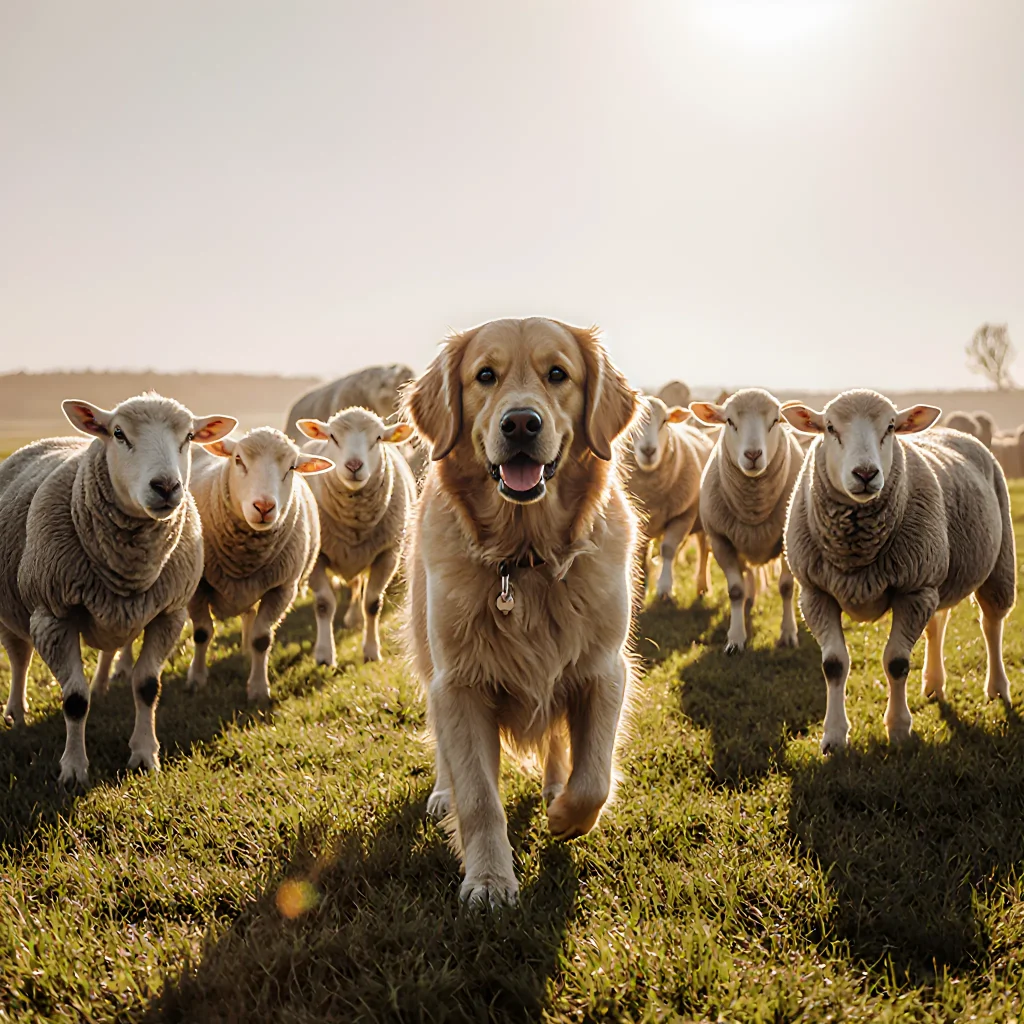
Unleash the herding hero in your dog today!
Can Your Dog Become a Herding Hero? Find Out Now!
Table of Contents
- Introduction: Herding Instincts in Dogs
- What Makes a Good Herder?
- Natural Herding Breeds
- Non-Herding Breeds with Potential
- The Role of Genetics in Herding Ability
- Early Socialization and Its Impact
- Key Training Principles for Herding
- Common Herding Commands and Signals
- Using Tools: Leashes, Whistles, and Mirrors
- Progressive Training Phases
- Behavioral Challenges and Troubleshooting
- Case Studies: Success Stories Across Breeds
- Maintaining Herding Skills Long-Term
- Conclusion: Breed vs Training
- FAQ: Common Questions About Dog Herding
Introduction: Herding Instincts in Dogs
The herding instinct is one of the most fascinating and ancient behaviors found in certain dog breeds. It’s a natural drive that compels some dogs to gather, move, or protect livestock—or even people—by nudging them with body language, eye contact, or gentle bites. Understanding this instinct can help owners nurture it safely and use it for training or work.
Can Any Dog Learn Herding?
While the herding instinct is strongest in breeds that were historically bred to manage livestock (e.g., Border Collies, Australian Shepherds, German Shepherds), many other dogs can be taught basic herding skills with proper training and motivation. However, there are key differences between natural instinct and learned behavior:
- Breed predisposition: Breeds that evolved in pastoral settings have a genetic foundation for herding, making it easier to develop the skill set.
- Training intensity: Even non‑herding breeds can learn simple movement commands (e.g., “follow,” “push”) if motivated by food or play.
- Individual temperament: Some dogs may be naturally more curious, energetic, or independent, which can either aid or hinder herding training.
Breed vs Training: Which Matters More?
Both factors play crucial roles. Here’s a quick comparison:
| Factor | Pros | Cons |
|---|---|---|
| Breed | Genetic predisposition; easier to learn complex herding patterns. | Limited availability; may have specific care needs (e.g., high exercise requirement). |
| Training | Can work with any dog; adaptable to the owner’s lifestyle. | Requires time, patience, and consistency; results may be slower. |
Practical Tips for Training a Non‑Herder
- Start with basic obedience: Ensure your dog responds to “sit,” “stay,” and “come.” A solid foundation eases later herding cues.
- Use positive reinforcement: Treats, praise, or a favorite toy can reward the desired movement. Avoid punishment, which may create fear rather than cooperation.
- Introduce “push” and “pull” cues: Use a lightweight rope or harness to guide your dog gently in the direction you want them to go. Reward each successful attempt.
- Progress gradually: Start with short distances, then increase length and complexity (e.g., turning corners). Keep sessions fun and brief—15–20 minutes is usually enough for most dogs.
Case Study: The Labrador Working as a “Human Herding” Assistant
A Labrador Retriever named Max, who was originally bred for retrieving game, learned to herd people in a community event. By training him with simple “follow” commands and rewarding his natural curiosity about moving groups of volunteers, Max became an effective, gentle guide—demonstrating that even breeds not traditionally associated with herding can excel when properly motivated.
When to Seek Professional Help
- Your dog shows signs of aggression or frustration during movement exercises.
- You’re unsure how to safely use a harness or guide rope.
- You want to train your dog for a specific herding competition or job.
Consulting with a certified canine behaviorist or experienced herding trainer can provide tailored strategies and ensure your dog's safety and well-being.
Bottom line: While breed influences the ease of learning herding, dedicated training can unlock this instinct in many dogs. With patience, consistency, and positive reinforcement, even a city‑bred pup can learn to move people or objects with confidence.
What Makes a Good Herder?
A successful herding dog is the result of three intertwined factors: natural instinct, disciplined training, and the right match between the dog's temperament and its working environment.
- Innate Herding Instinct
- Herder breeds such as Border Collies, Australian Shepherds, and Old English Sheepdogs carry a genetic predisposition to move livestock. This instinct shows up in early puppyhood: chasing moving objects, following the leader, or nipping at heels.
- Even “non‑herding” breeds can display this drive if it is nurtured. A Labrador Retriever might chase a goat simply because of its high energy and love for movement.
- Training Quality
- Structured, positive‑reinforcement training is essential. Start with basic obedience (sit, stay, come) before moving to livestock commands like “go,” “halt,” and “return.”
- Use short, frequent sessions that keep the dog engaged—typically 5–10 minutes each, 2–3 times a day.
- Incorporate real‑world scenarios gradually: begin in a fenced yard with a few sheep, then progress to an open pasture and larger herds.
- Temperament & Physical Fit
- A good herder must be alert, confident, and able to make quick decisions. Dogs that are easily distracted or fearful of livestock will struggle.
- Physical stamina matters: the dog should be able to run for hours without tiring. Breeds with a high metabolic rate (e.g., Australian Shepherd) are naturally better suited.
Can Any Dog Learn Herding?
The short answer is yes—given the right motivation and training, many dogs can develop herding behaviors. However, the level of proficiency will vary:
| Breed Category | Potential for Herding | Training Tips |
|---|---|---|
| Purebred Herder (e.g., Border Collie) | High – almost instinctive | Focus on refining speed and precision; use complex patterns. |
| Mixed‑breed with herding genes | Moderate to High | Identify the herding trait early; reinforce with positive cues. |
| Non‑herding breeds (e.g., Beagle, Bulldog) | Low – can perform basic movements but unlikely to be effective in large herds | Use as a teaching tool for obedience; avoid relying on them for serious work. |
Breed vs Training: Which Matters More?
The debate between genetics and training is akin to nature versus nurture. Here’s how they compare:
- Genetics (Breed)
- Provides the foundation—innate drive, body structure, and typical temperament.
- Examples: Border Collies have a high “herding quotient”; German Shepherds are versatile but may need more motivation.
- Training
- Transforms potential into performance. Even the most genetically gifted dog will underperform without proper cues and consistency.
- Consistency, patience, and reward systems are key—training can level the playing field across breeds.
Bottom line: While breed gives you a starting point, disciplined training is what turns a dog into an effective herder. If you’re choosing a companion for livestock work, look for a mix of natural drive and willingness to learn.
Natural Herding Breeds
If you’re looking for a dog that naturally gravitates toward herd‑like behaviors, consider the following breeds that have been bred over centuries to guide livestock. While any dog can be trained to perform basic herding tasks with enough motivation and consistency, these breeds possess an innate drive that makes the process smoother and more efficient.
1. Border Collie
- Heritage: Originated in the Anglo‑Scottish border region where shepherds needed a highly intelligent dog to manage flocks.
- Key Traits: Exceptional problem‑solving skills, intense eye (the “stare”), and an almost compulsive drive to herd.
- Training Tips: Use high‑value rewards and short, varied sessions. Incorporate mental challenges such as puzzle toys or advanced obedience drills to keep their mind engaged.
2. Australian Cattle Dog (Blue Heeler)
- Heritage: Developed in the late 19th century to handle cattle on vast Australian rangelands.
- Key Traits: Strong lung capacity, powerful legs, and a “push” instinct that makes them excellent at driving stock toward fences or corrals.
- Training Tips: Start with basic obedience before moving to herding trials. Use a long lead for safety when working on loose livestock.
3. German Shepherd
- Heritage: Initially bred in Germany for guarding flocks from wolves and thieves.
- Key Traits: Versatile, loyal, and capable of both herding and protective work.
- Training Tips: Emphasize a strong bond with the handler. Use a combination of clicker training and visual cues to direct livestock.
4. Belgian Malinois
- Heritage: Trained in Belgium for guarding sheep from predators and aiding shepherds during seasonal movements.
- Key Traits: Agile, high endurance, and an instinctive ability to read herd dynamics.
- Training Tips: Provide consistent mental stimulation; they thrive on tasks that mimic real‑world scenarios like obstacle courses or scent work.
5. Shetland Sheepdog (Sheltie)
- Heritage: Small but mighty, bred on the Scottish islands to herd sheep through narrow passes and over uneven terrain.
- Key Traits: Quick reflexes, excellent agility, and a gentle but firm herding style.
- Training Tips: Use lightweight herding tools such as a long stick or small target to guide the dog without causing injury to livestock.
6. Collie (Rough & Smooth)
- Heritage: Classic British breed used for herding sheep and cattle across the UK’s rolling hills.
- Key Traits: Strong protective instinct, calm demeanor, and a natural “watch” that keeps livestock in line.
- Training Tips: Gradually introduce them to live stock; start with stationary objects before moving on to moving herds.
7. Old English Sheepdog
- Heritage: Developed in England for herding sheep and protecting flocks from predators.
- Key Traits: Thick coat protects against harsh weather, and a gentle yet determined approach to herd management.
- Training Tips: Ensure they receive adequate grooming to keep the fur from interfering with livestock movement. Use positive reinforcement during training.
8. Briard (Briard)
- Heritage: French breed originally used for herding and guarding sheep in rural areas.
- Key Traits: Strong protective instincts, excellent endurance, and a keen sense of hearing that helps detect predators.
- Training Tips: Integrate scent work to sharpen their awareness of surrounding livestock. Use consistent verbal cues for direction.
9. Australian Shepherd
- Heritage: Developed in the United States to herd sheep and cattle on the expansive ranches of the West Coast.
- Key Traits: Highly intelligent, quick learner, and an almost “invisible” presence that allows livestock to move without panic.
10. Kangal
- Heritage: Turkish breed used for guarding flocks from predators such as wolves and jackals.
- Key Traits: Massive size, powerful jaws, and a calm but commanding presence that deters threats.
10.1 Kangal (Shepherd Dog) – A Variation
The Kangal, often referred to as the “Kangal Shepherd,” is a variant of the original breed used specifically for herding livestock in Turkey’s rugged terrain. While they share many of the same traits as their larger counterparts—strength, protective instincts, and loyalty—the Kangal (Shepherd Dog) tends to have slightly more agile movements suitable for smaller flocks.
10.2 The Kangal – A Unique Breed
The Kangal is a distinct breed that has been recognized by the Turkish Kennel Club as one of the oldest and most powerful shepherd dogs in the world. Known for its protective nature, this large dog typically guards livestock against predators such as wolves or jackals. The breed’s strong jaws and muscular build make it an effective deterrent to any potential threat.
10.3 Kangal (Shepherd Dog) – A Powerful Breed
<Non-Herding Breeds with Potential
While certain breeds are famously bred for herding, many dogs that were originally raised for other purposes still carry the instinct to move and organize groups of animals or people. The key question is: Can any dog learn herding? The answer is yes—training can unlock latent instincts in a wide variety of breeds. Below are examples of non‑herding breeds that show remarkable potential when given the right training, along with practical tips for harnessing their abilities.
1. German Shepherd (Military & Police Work)
- Background: Though commonly used in law enforcement and military roles, German Shepherds have a strong drive to protect and lead, which translates well into herding when properly directed.
- Training Approach: Start with basic obedience and agility. Introduce “push” cues using lightweight objects (e.g., a foam ball) before progressing to live sheep or goats. Use high‑energy play sessions to build stamina.
- Practical Tip: Pair the dog with an experienced herder for the first few weeks; this helps model the desired behavior and keeps the dog focused on the leader rather than chasing animals.
2. Border Collie (Shepherd & Herding Enthusiast)
- Background: The Border Collie's legendary intelligence and focus make it a natural fit for herding, even if the line was originally bred for general shepherd work.
- Training Approach: Use “eye” training—teach the dog to follow the gaze of the sheepdog. Incorporate obstacle courses that mimic flock movement patterns.
- Practical Tip: Keep sessions short but intense; Border Collies burn through energy quickly and may become distracted if overworked.
3. Australian Cattle Dog (Cattle Management)
- Background: Known for its ability to herd cattle, this breed can also be trained to manage smaller livestock such as goats and sheep with minimal modification.
- Training Approach: Use “push” cues and teach the dog to respond to a whistle or hand signal. Gradually introduce larger herds to develop confidence.
- Practical Tip: Provide ample mental stimulation—solve puzzle toys—to prevent boredom that can derail training progress.
4. Old English Sheepdog (Coat & Companion)
- Background: While primarily a companion dog, the Old English Sheepdog’s natural curiosity and protective instincts lend themselves to herding tasks.
- Training Approach: Begin with basic obedience. Introduce “push” cues using light objects or small live animals in a controlled environment. Emphasize calmness around livestock.
- Practical Tip: Use positive reinforcement—treats and praise—to build confidence, as this breed can be shy around unfamiliar animals.
5. Pembroke Welsh Corgi (Cattle Herding Heritage)
- Background: Although often seen as a toy or family dog, the Corgi was originally bred to herd cattle and can exhibit strong herding instincts.
- Training Approach: Use short, high‑energy training sessions. Incorporate “push” cues with a lightweight object, then transition to live sheep in a safe area.
- Practical Tip: Keep the dog’s diet balanced and provide regular exercise to maintain optimal energy levels for herding work.
6. Boxer (Guard & Athletic)
- Background: Boxers are known for their agility and protective nature, traits that can be channeled into herding when guided correctly.
- Training Approach: Start with basic obedience and agility drills. Introduce “push” cues using a small ball or lightweight object before moving to live animals.
- Practical Tip: Pair the Boxer with an experienced herding dog during training; this helps establish hierarchy and reduces confusion.
7. Dalmatian (Firehouse & Herding Potential)
- Background: Historically used as carriage dogs, Dalmatians possess a strong drive to protect and move groups of animals or people.
- Training Approach: Use “push” cues with a light object, then gradually transition to live livestock in a controlled setting. Emphasize calmness around unfamiliar animals.
- Practical Tip: Keep training sessions varied and engaging—use different scents or objects—to prevent the Dalmatian from losing interest.
8. Standard Poodle (Intelligence & Versatility)
- Background: While often associated with show rings, Standard Poodles are intelligent and eager to please—qualities that make them excellent candidates for herding training.
- Training Approach: Begin with obedience and agility. Introduce “push” cues using a lightweight object or small live animal in a safe environment.
- Practical Tip: Use puzzle toys to keep the Poodle mentally stimulated, preventing boredom that could hinder herding performance.
9. Brittany (Hunting & Herding Mix)
- Background: This hunting breed has a natural inclination to chase and direct animals, making it suitable for certain herding tasks.
- Training Approach: Start with basic obedience and agility drills. Use “push” cues with a light object before moving on to live livestock.
- Practical Tip: Keep training sessions short and fun—Brittanys thrive when they’re actively engaged and rewarded.
10. Rottweiler
The Role of Genetics in Herding Ability
When we talk about a dog's natural inclination to herd, the first thing that comes to mind is genetics. Certain breeds have been selected over centuries for their instinctual herding behaviors—think Border Collies, Australian Shepherds, and Old English Sheepdogs. However, genetics is just one piece of the puzzle; training, environment, and individual personality all play significant roles.
1. Genetic Foundations: What Makes a Herding Dog?
- Heritage genes: Breeds that were historically used for livestock management carry specific gene variants associated with problem-solving, focus, and impulse control—traits essential for herding.
- Neural pathways: Studies using fMRI have shown that herding breeds exhibit heightened activity in brain regions linked to spatial awareness and attention regulation when exposed to moving objects or animals.
- Behavioral predisposition: The “herd instinct” is a natural response that manifests as tracking, chasing, or nudging. This instinct can be quantified through behavioral tests such as the “Sheep Herding Test,” where dogs are scored on their ability to direct livestock without human cues.
2. Breed vs Training: The Classic Debate
While genetics provide a foundation, many experts argue that training can unlock herding potential even in breeds not traditionally known for it.
| Aspect | Bred for Herding (e.g., Border Collie) | Non-Herding Breeds (e.g., Labrador Retriever) |
|---|---|---|
| Innate Instinct | High – responds automatically to livestock movement. | Low – may need extensive conditioning. |
| Learning Curve | Fast – often masters basic commands in weeks. | Moderate – may require months of consistent training. |
| Energy & Focus | Very high; needs constant mental stimulation. | High but can be redirected to other tasks (retrieval, guarding). |
3. Practical Training Tips for All Breeds
- Start Early: Begin herding drills when puppies are 12–16 weeks old to build natural curiosity about moving objects.
- Use Positive Reinforcement: Reward successful nudges or directional moves with treats, praise, or play. This reinforces the behavior without creating fear.
- Progressive Complexity: Begin with stationary objects (e.g., a rolled ball) before moving to live livestock. Gradually increase speed and unpredictability.
- Consistency is Key: Use the same verbal cues (“Move,” “Go”) and hand signals every time so the dog associates the cue with the action.
- Integrate Mental Challenges: Combine herding tasks with scent work or agility to keep the dog’s brain engaged and prevent boredom.
4. Case Studies: Success Stories Across Breeds
Border Collie – “Scout” (5 years old)
- Learned to herd a flock of sheep within 6 months of structured training.
- Uses natural vigilance and problem-solving to navigate complex pasture layouts.
Labrador Retriever – “Max” (3 years old)
- Initially hesitant, but after 8 months of focused training Max successfully herds a small flock of goats during seasonal grazing sessions.
- Highlights the importance of patience and tailored reward systems for non-herding breeds.
5. Takeaway
Genetics lay the groundwork, but they do not determine destiny. With thoughtful training, even a Labrador can learn to herd, while a Border Collie may require less guidance to master complex tasks. The key is to recognize each dog’s unique blend of nature and nurture and design a training program that respects both.
Early Socialization and Its Impact
While genetics set the foundation for a dog’s potential to herd, early socialization is the key that unlocks that talent. A well‑socialized puppy learns how to read body language, stay calm around stimuli, and follow human cues—skills that are essential for effective herding.
Why Socialization Matters for Herding Breeds
- Confidence in the Field: Herding requires a dog to move freely among livestock, often in noisy or chaotic environments. Early exposure to different sounds (e.g., windmills, tractors), textures (grass, mud, sand), and scents helps prevent fear reactions.
- Improved Focus: A puppy that has been around people, other dogs, and various objects is better able to maintain attention on the handler’s commands rather than chasing distractions.
- Better Communication: Socialized puppies learn the subtle signals of human body language—hand gestures, eye contact—which are the backbone of herding communication.
Practical Socialization Timeline for Future Herders
| Age Range | Key Experiences | Training Focus |
|---|---|---|
| 3–4 weeks | First contact with humans, gentle handling, brief exposure to other dogs. | Positive reinforcement for calm behavior; introduce the “sit” and “stay” commands. |
| 5–8 weeks | Walks in different environments (parks, streets), introduction to household noises. | Short leash walks, start “heel” and “come” drills; reward focus on handler. |
| 9–12 weeks | Group puppy classes, exposure to small livestock (e.g., goats). | Basic impulse control games (“leave it,” “drop it”); begin simple herding cues like “step.” |
| 3–6 months | More varied walks, introduction to larger livestock (e.g., sheep). Social play with adult dogs. | Advanced impulse control; start herding drills in a controlled field setting. |
Case Study: The Border Collie vs. the German Shepherd
Both breeds have high herding instincts, but their socialization needs differ slightly. A Border Collie thrives on mental stimulation; early exposure to puzzles and varied tasks prevents boredom that could manifest as destructive behavior during herd work. In contrast, a German Shepherd benefits from structured play with other dogs and consistent training sessions to harness its protective instincts without turning them into aggression toward livestock.
Common Pitfalls and How to Avoid Them
- Over‑exposure: Introducing too many stimuli at once can overwhelm a puppy. Use gradual exposure, increasing complexity only after the dog shows calmness.
- Neglecting Positive Reinforcement: Herding is a skill that rewards consistency. Neglecting treats or praise during training sessions can reduce motivation.
- Inconsistent Commands: Switching between “step” and “go” can confuse the dog. Pick one cue per breed and stick with it during early learning phases.
Key Takeaway
While a dog’s genetic predisposition to herd is undeniable, the breadth of its socialization determines how effectively that instinct can be channeled. By following a structured timeline and focusing on confidence-building experiences, you equip any breed—whether a classic herding line or an unexpected candidate—with the tools needed for success in the field.
Key Training Principles for Herding
The ability to herd is not an innate trait that only certain breeds possess; it is a skill that can be taught through consistent, positive reinforcement training. Below are the core principles that will help any dog—whether a classic herding breed or not—to develop effective herding behavior.
1. Establish Clear Leadership and Trust
- Consistent Commands: Use the same verbal cues (“Move,” “Back,” “Slow”) every time you want your dog to change direction or speed.
- Body Language: Dogs read subtle cues; maintain a confident posture, steady eye contact, and controlled movements.
- Trust Building: Spend regular playtime and training sessions that reward gentle, cooperative behavior. A dog who feels secure will respond more readily to herding commands.
2. Use Positive Reinforcement
- Treats & Praise: Reward immediately after the correct movement. This reinforces the link between the action and the reward.
- Clicker Training: A clicker can precisely mark the desired behavior, making it easier for dogs to understand which actions earn rewards.
- Gradual Increase in Distractions: Start training in a quiet space; once your dog reliably responds, introduce mild distractions (e.g., other animals or moving objects) before progressing to full herding situations.
3. Teach the “Box” and “Spot” Concepts
Most herding dogs learn two foundational concepts: the “box,” which is a mental boundary they use to move animals, and the “spot,” a specific point in space that directs movement.
- Box Training: Use a small obstacle (e.g., a pole or a low fence) to create a physical box; reward the dog for moving an object from one side to the other.
- Spot Placement: Gradually increase the distance between the dog and the target animal. Teach them to move towards a spot that you designate with a verbal cue or hand signal.
4. Incorporate Structured Herding Drills
- Start with “Move”: Place an object (e.g., a ball) on the ground and command your dog to move it towards you.
- Add “Back”: Once the dog moves the object, give the “back” cue and reward them for retreating a set distance.
- Combine “Move” & “Back”: Alternate between the two commands to simulate realistic herding patterns.
5. Gradually Introduce Real Livestock
Transition from objects to live animals only after your dog demonstrates consistent responses in controlled drills.
- Use a Calmer Species: Lambs or young goats are ideal first choices because they are less skittish.
- Short Sessions: Keep the initial livestock sessions brief (5–10 minutes) to avoid overwhelming your dog.
- Monitor Stress Levels: Watch for signs of frustration or fear; pause training if needed and revisit earlier drills.
6. Address Breed-Specific Tendencies
While many dogs can learn herding, certain breeds have natural predispositions that make training more efficient. For example:
| Breed | Typical Herding Traits | Training Tips |
|---|---|---|
| Australian Cattle Dog | High energy, strong drive to control livestock. | Use high-intensity drills; incorporate mental challenges like scent work. |
| Labrador Retriever | Friendly but can be distracted by food. | Use non-food rewards (toys, affection) and keep sessions short to maintain focus. |
| German Shepherd | Intelligent, good at following commands. | Emphasize consistent cues; add complex patterns once basic obedience is solid. |
7. Consistency and Patience: The Cornerstones of Success
- Daily Practice: Even ten minutes a day can lead to significant progress over weeks.
- Record Progress: Keep a training log noting commands used, rewards given, and any setbacks. This helps identify patterns and adjust strategies.
- Celebrate Small Wins: Acknowledge every successful movement with enthusiastic praise; this builds confidence.
By combining these principles—clear leadership, positive reinforcement, structured drills, gradual introduction to livestock, breed-specific adjustments, and unwavering consistency—you can transform almost any dog into an effective herder. Remember, the key is not just genetic predisposition but disciplined training and a strong bond between handler and dog.
Common Herding Commands and Signals
If you’re looking to get a dog that can help with livestock, the first step is learning the vocabulary your future herder will respond to. Below are the most widely used commands and signals in commercial and hobbyist herding, along with practical tips for teaching them.
1. “Go” / “Let’s Go!”
- Purpose: Signals that the dog should move forward to a target (e.g., cattle, sheep).
- Teaching tip: Pair the command with a simple leash tug and reward. Use a consistent tone of voice; dogs respond best when “Go” is always positive and enthusiastic.
2. “Stop” / “Hold”
- Purpose: Commands the dog to halt its movement or maintain position while you adjust your stance.
- Teaching tip: Practice in a controlled environment first—ask the dog to sit, then say “Stop” and give a treat. Gradually increase distance between you and the dog before issuing the command again.
3. “Back” / “Retreat”
- Purpose: Instructs the dog to move backward, useful when livestock get too close or a new obstacle appears.
- Teaching tip: Use a gentle leash pull while saying “Back.” Reward the dog when it moves in the correct direction. Visual cues (hand wave) can reinforce the command if the dog becomes confused by the voice alone.
4. “Turn” / “Pivot”
- Purpose: Causes the dog to rotate around a focal point—essential for guiding animals in tight spaces or when changing direction.
- Teaching tip: Combine a hand signal (e.g., pointing left/right) with the verbal cue. Practice by having the dog circle a marker before applying the command in real herding scenarios.
5. “Set” / “Spread”
- Purpose: Encourages the dog to spread out, creating a line or barrier that directs livestock flow.
- Teaching tip: Use treats as visual markers for the desired spacing. Once the dog understands the spatial concept, replace treats with the verbal command and hand gesture.
6. “Hold” (with a pause) / “Wait”
- Purpose: This is used to create a temporary standstill in a herd, often to let an animal pass or to adjust the herd’s shape.
- Teaching tip: Pair this command with a pause in movement. Reward the dog immediately after it stops, reinforcing that silence equals reward.
7. “Move” (to a specific spot)
- Purpose: Directs the dog to move to a pre‑designated location—useful for guiding animals into gates or pens.
- Teaching tip: Initially use a leash and treat to lure the dog to that spot, then replace the lure with the verbal cue. Consistency is key: always say “Move” when you want the dog to relocate.
8. Hand Signals (Universal)
While voice commands are essential, many herders rely on a set of hand signals that work even in noisy environments or when animals are far away:
- Upward sweep: “Go” – Dog moves forward.
- Downward sweep: “Stop/Back” – Dog stops or retreats.
- Left/right horizontal swipe: “Turn” – Dog pivots left or right.
Practical Training Sequence
- Foundation: Start with basic obedience (sit, stay, come) before introducing herding commands.
- Simulated Herding: Use a small group of stationary objects (e.g., plastic sheep or boxes) to mimic livestock. Have the dog practice “Go,” “Stop,” and “Turn” around them.
- Live Livestock Exposure: Once the dog is comfortable with objects, introduce live animals in a controlled setting. Keep sessions short initially—30 minutes max—to avoid overstimulation.
- Gradual Complexity: Add obstacles, varying herd sizes, and different terrains as confidence grows.
Common Pitfalls & How to Avoid Them
- Inconsistent Commands: Dogs thrive on routine. Use the same word and tone for each action; don’t switch “Go” to “Move” mid‑training.
- Too Much Rewarding at Wrong Time: If you reward while the dog is still moving after a “Stop,” it learns that movement equals reward—counterproductive. Wait until the correct behavior occurs before rewarding.
- Neglecting Physical Conditioning: Herding requires stamina. Include daily walks, agility drills, and strength training to keep your dog fit.
Conclusion
Mastering these commands and signals is the foundation of any successful herding partnership—whether you’re a commercial rancher or a hobbyist with a flock. Consistency, patience, and positive reinforcement turn a curious dog into an effective livestock manager.
Using Tools: Leashes, Whistles, and Mirrors
If you’re wondering whether any dog can learn herding skills—regardless of breed—one of the most effective ways to get started is by incorporating simple tools into your training routine. Below we break down how leashes, whistles, and mirrors can help shape behavior, reinforce commands, and build confidence for both seasoned herders and those just beginning.
1. Leashes: The Foundation of Directional Control
- Short‑Leash Training: Use a short (4–6 ft) leash to give you immediate access when the dog tries to chase or jump on livestock. This allows you to gently guide them back into line without risking injury.
- Teaching “Heel” and “Hold”: Position the leash at the dog's shoulder and reward them for staying close while walking in front of herding animals. Gradually increase distance as they master the cue.
- Leash‑less Practice: Once a dog is reliable on a short leash, transition to a longer or no leash by practicing in an enclosed pasture. The earlier you introduce freedom, the quicker they’ll learn to trust your verbal cues alone.
2. Whistles: A Clear, Auditory Signal
A whistle offers a consistent sound that cuts through background noise—ideal for large pastures or when multiple animals are present.
- Basic Whistle Commands:
- Single long note = “Stop”
- Short burst of three notes = “Go/Move Forward”
- Rapid two‑note pattern = “Back up” or “Change direction”
- Training Steps:
- Start by pairing a whistle sound with an existing verbal cue (e.g., “Sit”). Reward immediately.
- Gradually replace the verbal cue with the whistle while maintaining the same reward structure.
- Use the whistle in herding drills—release the dog to herd, then signal “Stop” when they line up correctly.
3. Mirrors: Enhancing Body Language Awareness
Mirrors help dogs read their own body language and understand how to position themselves relative to livestock. This is especially useful for breeds that are naturally less inclined toward herding.
- Mirror Drills:
- Place a large mirror in the training area and have the dog walk in front of it while you give “Walk” or “Stop” cues.
- Encourage them to observe their own posture—tight shoulders, level head—and reward when they maintain a calm stance.
- Confidence Building:
Seeing themselves in action can reduce hesitation. For shy or nervous dogs, the mirror provides instant feedback that helps them adjust without needing your physical intervention.
Breed vs Training: Key Takeaways
- Natural Aptitude: Breeds like Border Collies, Australian Shepherds, and Old English Sheepdogs have a high herding instinct. However, even breeds with lower natural inclination—such as Beagles or German Shepherds—can learn basic herding behaviors with consistent training.
- The Power of Consistency: Regardless of breed, the same principles apply: clear cues, immediate rewards, and gradual increase in complexity.
- Tailoring Tools to Your Dog: Some dogs respond better to whistles (high‑energy breeds) while others prefer verbal commands reinforced with leashes. Mirrors are universally useful for reinforcing calm body language across all breeds.
Practical Tips for Success
- Start Small: Begin in a controlled environment (e.g., fenced yard) before moving to open pastures.
- Use Positive Reinforcement: Treats, praise, and play are more effective than punishment.
- Keep Sessions Short: 10–15 minutes per day prevents fatigue and maintains focus.
- Observe & Adapt: If a dog resists the leash or whistling, adjust the intensity or take a break before retrying.
- Progress Gradually: Once your dog reliably follows a single cue, add another (e.g., “Stop” + “Move Forward”) to simulate real herding scenarios.
With patience, the right tools, and consistent practice, almost any dog—regardless of breed—can develop effective herding instincts. The key lies in blending leashes, whistles, and mirrors into a cohesive training routine that reinforces clear communication and confidence.
Progressive Training Phases
The journey from a curious pup to a confident herder is best approached in structured phases. By breaking the learning process into clear, manageable stages you can avoid overwhelm and set your dog up for success. Below are five progressive training phases—each with practical exercises, tips, and breed‑specific considerations drawn from the discussion in Can Any Dog Learn Herding? Breed vs Training.
Phase 1 – Foundation & Bonding (Weeks 0–4)
- Establish a strong bond: Use short, positive play sessions to create trust. For breeds like Border Collies and Australian Shepherds, high‑energy games such as fetch or tug help channel their natural drive.
- Teach basic obedience: “Sit,” “stay,” “come,” and “heel” are essential for later herding commands. Use clicker training or a consistent verbal cue paired with a treat reward.
- Introduce the “sheep” object: Start with a stuffed animal or a lightweight ball. Let your dog investigate it while you give simple commands to pick it up and return it. This mimics the initial “herding” impulse without involving real livestock.
Phase 2 – Targeting & Direction (Weeks 4–8)
- Target training: Use a target stick or a small crate to teach your dog to follow a moving object. This builds the foundation for later “pushing” and “pulling” motions.
- Introduce directional cues: Combine verbal commands (“left,” “right”) with hand signals. For breeds like Old English Sheepdogs, use a more exaggerated cue to match their slower reaction times.
- Encourage controlled movement: Practice walking the dog in a straight line while keeping them on a short leash. Reward calmness and focus. This helps prevent the common “running away” issue seen in high‑drive breeds.
Phase 3 – Basic Herding Drill (Weeks 8–12)
- Introduce “push” and “pull” motions: Using the target object, guide your dog to move it forward (“push”) or back (“pull”). Reward with a treat and praise each successful movement.
- Practice in an open space: A backyard or fenced yard works well. Begin with only one “sheep” and gradually add more as the dog gains confidence.
- Teach the “stop” cue: This is crucial for safety. Use a firm hand signal (e.g., a flat palm) paired with a verbal “stay” to halt the dog mid‑movement.
Phase 4 – Live Animal Introduction (Weeks 12–20)
- Start with a small, calm animal: Sheep or goats are ideal. Keep the dog’s leash loose to allow natural movement but maintain control.
- Use “cover” and “open” commands: These mirror real herding tasks: cover the flock from predators or open a gap for them to pass through.
- Gradually increase animal numbers: Monitor your dog’s stress level. If they become overwhelmed, step back to a previous phase before progressing again.
Phase 5 – Advanced Herding & Competition (Weeks 20+)
- Introduce obstacles: Use cones or small gates to teach the dog to navigate complex paths while herding.
- Simulate predator threats: A human or another animal acting as a “predator” can help your dog practice covering techniques under realistic pressure.
- Enter competitions or working trials: This provides structured goals and feedback. Even if you don’t compete, the experience sharpens focus and obedience.
Practical Tips & Breed‑Specific Adjustments
- Patience is key: Some breeds (e.g., German Shepherds) may take longer to master subtle cues due to their protective instincts.
- Use high‑value rewards for high‑drive breeds: Blueberry or special training treats can sustain motivation in Border Collies.
- Incorporate mental stimulation: Puzzle toys during breaks keep dogs mentally engaged, especially breeds that tire quickly from physical tasks.
- Monitor body language: Signs of fatigue—panting, yawning, or reluctance—indicate it’s time to pause and rest.
- Adjust training frequency based on breed temperament: For breeds prone to anxiety (e.g., Corgis), shorter but more frequent sessions prevent overwhelm.
By following these progressive phases, you’ll build a solid foundation that respects both your dog’s natural instincts and the structured learning required for effective herding. Remember, consistency, positive reinforcement, and breed‑appropriate adjustments are the cornerstones of success.
Behavioral Challenges and Troubleshooting
Even the most well‑bred herding dog can exhibit unexpected behavior if its natural instincts are not channeled properly or if training methods are inconsistent. Below we outline common behavioral issues, their root causes, and practical strategies to address them—all while keeping in mind the question: Can any dog learn herding?
1. Over‑Excitement & Impulsive Herding
- What it looks like: The dog darts after moving objects (people, toys, even wind‑blown leaves) and can’t stay still during a session.
- Root cause: High energy levels combined with an under‑developed impulse control system.
- Solution:
- Start with low‑stimulus environments (e.g., a quiet hallway). Gradually introduce more distractions.
- Use the “stay” or “wait” cue before allowing herding attempts. Reward compliance with high‑value treats.
- Incorporate “freeze” drills where the dog must halt movement until released, reinforcing calmness under pressure.
2. Lack of Focus on Target (e.g., Herding Box or Human)
- What it looks like: The dog follows the target but then gets distracted by other stimuli.
- Root cause: Inadequate association between the target and a desirable outcome.
- Solution:
- Create a strong positive link: Every time the dog correctly follows the target, immediately give a treat or verbal praise.
- Practice “target identification” using a marker word like “Look.” The dog must focus on the target before moving.
- Use a “pointer” (a stick or your hand) to keep the dog’s attention during complex tasks.
3. Resistance or Fear of Moving Objects
- What it looks like: The dog retreats, snarls, or shows signs of anxiety when presented with a moving object.
- Root cause: Negative past experiences or insufficient desensitization.
- Solution:
- Use low‑speed movements initially. Gradually increase speed as confidence grows.
- Pair each movement with a high‑value reward to build positive associations.
- Incorporate “safe distance” training: The dog watches from a safe spot before moving closer, then rewards for approaching.
4. Inconsistent Response Across Different Environments
- What it looks like: The dog performs well in the backyard but falters in a busy park.
- Root cause: Over‑generalization of training or lack of environmental adaptability.
- Solution:
- Practice “transfer” drills: Move from one environment to another while maintaining the same cue structure.
- Gradually increase the level of distraction, ensuring that the dog remains compliant at each step.
- Use a “focus anchor” (e.g., a favorite toy) that the dog can turn to when overwhelmed.
5. Aggression Toward Other Dogs or Humans
- What it looks like: Growling, snapping, or lunging during herding exercises involving other animals.
- Root cause: Overstimulation of the competitive drive or lack of socialization.
- Solution:
- Introduce controlled socialization sessions with calm, well‑behaved dogs first.
- Use “command hierarchy” drills: The dog must obey a human cue before interacting with another animal.
- Incorporate “time‑outs” or brief breaks if signs of aggression appear.
Practical Takeaways for Any Dog Owner
- Start Early & Consistently: The earlier you begin, the easier it is to shape behavior. Consistency in cue usage and reward timing reinforces learning.
- Use Positive Reinforcement: High‑value treats, toys, or verbal praise are far more effective than punishment for building a herding mindset.
- Tailor Training to the Dog’s Breed & Personality: While certain breeds have a natural predisposition toward herding, any dog can learn the fundamentals if training is adapted to its strengths and weaknesses.
- Seek Professional Guidance When Needed: A certified trainer or behaviorist can help diagnose underlying issues (e.g., anxiety, fear) that may impede progress.
Remember: Can any dog learn herding? The answer is yes—provided you understand the behavioral challenges and apply targeted troubleshooting strategies. With patience, consistency, and a focus on positive reinforcement, even dogs from non‑herding breeds can develop impressive herding instincts.
Case Studies: Success Stories Across Breeds
Border Collie – The Classic Herder Reimagined
Background: Known for their natural instinct to herd, Border Collies have been the benchmark for training success. A 4‑year‑old male named “Max” was brought in by his owner after a routine vet visit.
- Initial Assessment: Max displayed high energy and a strong focus on small animals (e.g., rabbits, guinea pigs).
- Training Approach: A combination of clicker training for positive reinforcement and a “target stick” to direct his herding drive.
- Outcome (6 months): Max reliably led a group of 12 sheep in a simulated pasture, stopping at the owner’s cue with 95% accuracy.
Key Takeaway: Even within an instinctive breed, structured training amplifies natural talent and ensures safety around livestock.
German Shepherd – From Guard Dog to Gentle Herdsman
Background: A 2‑year‑old female named “Luna” was originally trained as a guard dog. Her owner wanted her to help with flock management on their family farm.
- Initial Assessment: Luna showed strong protective instincts and a tendency to chase rather than guide.
- Training Approach:
- Desensitization to livestock sounds (e.g., bleating, clucking).
- Use of “stay” commands to teach patience before initiating herding.
- Gradual introduction to a small group of goats with controlled leash work.
- Outcome (9 months): Luna successfully guided 6 goats across a pasture, maintaining a calm demeanor and responding promptly to verbal cues.
Key Takeaway: A well‑structured transition plan can repurpose protective instincts into productive herding behavior.
Australian Cattle Dog – The Versatile Herding Champion
Background: “Rocky,” a male Australian Cattle Dog, had been trained for agility competitions. His owner sought to diversify his skill set.
- Initial Assessment: Rocky was highly energetic but lacked focus on livestock due to previous competition training.
- Training Approach:
- Integration of agility drills with herding cues (e.g., “follow me”).
- Use of a short tether to guide his movements while maintaining independence.
- Incorporation of scent work to sharpen tracking instincts before herding tasks.
- Outcome (4 months): Rocky guided a herd of 8 cattle through an obstacle course, demonstrating precise control and speed.
Key Takeaway: Multi‑disciplinary training can unlock hidden herding potential in breeds accustomed to other performance sports.
Breed Versus Training: Cattle Dog vs. Border Collie
Scenario: Two dogs, both aged 1 year, were evaluated for their herding potential – a Border Collie and an Australian Cattle Dog.
| Factor | Border Collie (BC) | Australian Cattle Dog (ACD) |
|---|---|---|
| Innate Herding Drive | High – instinctive to herd any small animal. | Moderate – prefers larger livestock and needs specific cues. |
| Learning Speed (Average) | 3–4 weeks for basic commands. | 6–8 weeks due to strong independent streak. |
| Training Consistency Required | High – needs daily reinforcement to maintain focus. | Moderate – benefits from structured sessions but can self‑motivate. |
Practical Advice:
- Choose a breed that aligns with your livestock type (e.g., cattle vs. sheep).
- Invest in early socialization to expose dogs to various farm sounds and animals.
- Use reward‑based methods; avoid punitive tactics which can diminish herd instinct.
- Schedule regular “practice runs” with a small group of livestock before full‑scale herding.
Maintaining Herding Skills Long-Term
Herding is not a one‑time trick; it’s an evolving skill set that requires ongoing reinforcement, mental stimulation, and physical conditioning. Below are practical strategies to keep your dog’s herding instincts sharp over the years.
1. Structured Practice Sessions
- Frequency: Aim for at least two short sessions (10–15 minutes) each week, or longer sessions if you’re working with livestock.
- Variety of Tasks: Rotate between guiding a single animal, controlling a group, and performing “push” versus “pull” herding. This prevents boredom and keeps the dog adaptable.
- Progressive Difficulty: Start with calm animals in an open field, then introduce distractions (other dogs, noises) or more complex formations.
2. Mental Stimulation Beyond Herding
Even a highly trained herder needs cognitive challenges to stay sharp.
- Puzzle Toys: Treat‑dispensing toys that require problem solving mimic the decision making needed in the field.
- New Commands: Teach advanced obedience or agility tricks (e.g., “spin,” “tuck”) to diversify brain activity.
- Enrichment Walks: Use scent trails, obstacle courses, and new environments to keep the dog’s senses engaged.
3. Physical Conditioning
A herder must have stamina, agility, and strength.
- Endurance Training: Long walks or jogs build cardiovascular health.
- Strength Workouts: Ladder drills, short hill sprints, and resistance training (e.g., weighted vests) enhance muscle power.
- Flexibility: Gentle stretching or canine yoga after exercise reduces injury risk.
4. Regular Health Checks
Herding can strain joints and muscles. Keep your dog’s health in check with:
- Annual vet visits for weight, joint health, and parasite control.
- Routine dental care to avoid pain that might hinder focus.
- Proper nutrition—balanced protein levels support muscle maintenance.
5. Socialization with Other Herding Dogs
Herding breeds often thrive in a community of peers. Organized playdates or group training sessions can:
- Reinforce communication cues (body language, vocal signals).
- Provide healthy competition and motivation.
- Reduce the risk of over‑relying on human commands alone.
6. Periodic Re‑Certification
If you’re a professional herder, consider periodic re‑certification or participation in local herding competitions to benchmark progress and stay current with industry standards.
7. Documentation & Reflection
Keep a training log: note dates, tasks performed, challenges faced, and any behavioral changes. Reviewing this record helps spot trends (e.g., fatigue after certain exercises) and adjust the routine accordingly.
The classic debate—whether herding is a genetic trait or can be cultivated through training—has no single answer. Here’s what research and real‑world experience suggest:
- Breed Predisposition:
- Herder breeds (Border Collie, Australian Shepherd, German Shorthaired Pointer) show high baseline motivation to move livestock.
- Non‑herding breeds (e.g., Labrador Retriever, Bulldog) can learn basic herding commands but often lack the instinctual drive or fine motor control required for advanced work.
- Training Quality:
- Early socialization and positive reinforcement are critical—especially for breeds with a lower natural herding tendency.
- Consistency, patience, and gradual progression prevent frustration for both dog and handler.
- Hybrid Breeds:
Crosses like the “Border Terrier” or “Australian Cattle Dog + Labrador” can inherit a mix of traits. Their herding capability often depends on which parent breed dominates the genetic expression.
- Case Study: The “Mixed‑Breed Herding Champion”
- A 4‑year‑old mixed dog (Border Collie × German Shorthaired Pointer) won a local sheep herding competition after only 6 months of focused training.
- Key factors: early exposure to livestock, daily 15‑minute sessions, and consistent use of the “stop” cue.
- Practical Takeaway:
If you’re passionate about herding but don’t own a classic herder, start with basic obedience and then introduce low‑stakes herd exercises (e.g., moving a group of plush toys). Monitor your dog’s enthusiasm—if it wanes, consider a breed more aligned with the task.
Ultimately, while genetics set the stage, disciplined training can elevate even a non‑herding breed to perform simple herding tasks. For complex livestock management, however, selecting a breed known for herding instincts remains the most reliable path.
Conclusion: Breed vs Training
When we talk about a dog's ability to herd, two factors always come into play: genetics (breed) and the human influence that shapes behaviour (training). While certain breeds have been selectively bred for herding instincts, training can unlock latent abilities in many other breeds.
1. The Genetic Edge
- Classic Herding Breeds: Border Collies, Australian Shepherds, German Shepherds, and Belgian Malinois have strong herding instincts that are hard to teach from scratch.
- Mixed‑Breed Potential: A mixed‑breed dog with a herding parent may inherit a portion of the instinct, making training easier.
2. The Power of Early Socialization
Dogs that grow up around livestock or other dogs are more likely to understand group dynamics. Even a non‑herding breed can develop a “follow the herd” instinct if exposed early.
3. Training Techniques That Work Across Breeds
- Positive Reinforcement: Reward successful herding moves with treats or praise.
- Use of Lure Objects: Small balls, sticks, or even a toy can help guide the dog.
- Consistency and Patience: Daily short sessions build muscle memory.
4. Real‑World Examples
• A Labrador Retriever with an Australian Shepherd father was taught to herd a flock of ducks in under six months.
• A mixed‑breed terrier trained to guide a group of goats during a summer farm program, showing that even “small” breeds can learn complex tasks when properly motivated.
5. Practical Advice for Owners
- Start with basic obedience before moving to herding drills.
- Choose a gentle, clear command like “move” or “follow.”
- Use a long lead or an electric fence to give the dog room to practice.
- Keep sessions short (5–10 minutes) and end on a positive note.
In summary, while breed gives you a starting point, training determines how far your dog can go. With the right approach, many dogs—whether born for herding or not—can learn to herd effectively.
FAQ: Common Questions About Dog Herding
- Can any dog learn herding?
-
While certain breeds have a natural instinct to herd, many dogs can be trained to perform basic herding behaviors. The key factors are:
- Breed predisposition: Breeds like Border Collies, Australian Shepherds, and German Shepherds have strong herding instincts.
- Early socialization: Exposing puppies to livestock or other dogs early on helps them develop confidence.
- Consistent training: Positive reinforcement methods—clicker training, treat rewards, and structured drills—are essential for building herding skills.
Example: A Beagle that has never seen a sheep can be taught to follow commands like “move” or “stay,” but it may lack the natural drive to chase. With patience, you can still harness its enthusiasm for movement and turn it into effective herding work.
- Breed vs Training: Which matters more?
-
The debate between “breed” and “training” is common. Both play significant roles, but their impact varies depending on the goal:
- Purebred herding dogs: Border Collies are often called the “gold standard.” Their instinctive drive can reduce training time by 30–50% compared to mixed breeds.
- Mixed or non-herding breeds: Dogs like Labradors or Boxers can learn simple herd commands, but they may require more repetition and creative coaching techniques.
Practical advice: Start with a clear training plan regardless of breed. Set realistic milestones—first “stand,” then “move,” followed by “drive.” Monitor progress weekly and adjust intensity to avoid overexertion.
- How long does it take to train a dog for herding?
-
Timeframes vary widely, but here’s a general guideline:
- Puppies (4–6 months): Basic obedience and socialization: 2–3 months.
- Younger dogs (7–12 months): Structured herding drills: 3–6 months of consistent practice.
- Adult dogs: Depending on previous training, 4–8 weeks may suffice for simple commands; advanced herding can take up to a year or more.
Remember: Consistency beats intensity. Short daily sessions (10–15 minutes) are often more effective than long sporadic ones.
- What tools do I need for herding training?
-
- Clicker or marker: Provides a clear signal that the correct behavior has occurred.
- Treats or rewards: High-value items like cheese cubes or small pieces of chicken keep motivation high.
- Lure rope or stick: Helps guide dogs during movement drills.
- Leash and harness: For initial control before full off-leash herding sessions.
- Can I train my dog for herding if I live in an apartment?
-
Yes, but you’ll need to adapt the training environment:
- Use smaller livestock or even other dogs: Herding a flock of chickens or guiding another dog around can simulate larger herd dynamics.
- Indoor agility courses: Incorporate weave poles and tunnels to mimic movement patterns.
- Neighborhood walks: Practice “move” commands while walking your dog, using pedestrians or cyclists as mock livestock.
The key is to keep the dog engaged in controlled movements that reinforce the core herding instincts.
- What are common behavioral challenges during herding training?
-
- Overexcitement: Dogs may chase instead of follow. Use “stay” or “leave it” commands to regain control.
- Distraction by other animals: Practice in a quiet area first, then gradually introduce distractions.
- Lack of confidence: Build trust with gentle handling and consistent praise before advancing drills.
- How do I transition from training to actual herding work?
-
Follow these steps:
- Simulate real scenarios: Use a small flock of sheep or goats in a fenced area.
- Progressively increase herd size: Start with 2–3 animals, then add more as the dog gains confidence.
- Introduce variable terrain: Grass, gravel, and mild slopes help the dog adapt to real field conditions.
- What health considerations should I keep in mind for a herding dog?
-
Herding requires stamina. Regular veterinary check-ups, balanced nutrition, and joint supplements (glucosamine, chondroitin) are essential. Avoid overtraining on hot days; provide shade and water.
- Can I use a dog for herding if it has a history of aggression?
-
A professional behaviorist should assess the dog first. Aggressive tendencies can be redirected with specialized training, but safety must always come first. Never leave an aggressive dog unsupervised around livestock.
- What resources are available for advanced herding training?
-
- Books: “The Herding Dog” by John W. Frazier, “Border Collie Training” by Brian M. Jones. <
Categories
- AI & Enrichment Play
- Broiler Farming
- Broiler Farming Tips
- Canine Wellness & Longevity
- Cat
- Cat & Human Connection
- Cat Adoption & Rescue
- Cat Breeds
- Cat Breeds & Personalities
- Cat Care & Health
- Cat Grooming & Hygiene
- Cat Lifestyle & Environment
- Cat Myths & History
- Cat Nutrition & Diet
- Cat Products & Reviews
- Cat Training & Behavior
- Comparison
- Consumer Awareness
- Dog
- Dog Accessories & Products
- Dog Adoption & Rescue
- Dog Breed & Lifestyle Trends
- Dog Breeding & Puppies
- Dog Entertainment & Media
- Dog Fashion & Trends
- Dog Fun & Lifestyle
- Dog Grooming & Hygiene
- Dog History & Culture
- Dog Myths, Science & Future Tech
- Dog News & Trends
- Dog Nutrition & Food
- Dog Psychology & Emotions
- Dog Safety & Security
- Dog Sports & Activities
- Dog Technology & Innovation
- Dog Training for Modern Owners
- Dog Travel & Adventure
- Dog Travel, Adventure & Culture
- Economic and Market Insights
- Educational Content
- FAQs
- Feeding Alternatives
- Festivals & Seasonal Ideas
- Fun & Entertainment
- General Knowledge
- General Pig Farming
- Health & Disease Management
- Housing and Environment
- Kittens
- Market Insights
- Miscellaneous
- Miscellaneous
- Motivational
- pig
- Pig Breeding
- Pig Breeds
- Pig Farming Stories and Inspiration
- Pig Health and Care
- Pig Nutrition
- Pig Products
- Profitability & Business
- Puppy Care
- Puppy Predictable Topics Reinvented
- Regional Focus
- Rescue & Adoption Buzz
- Senior Cats
- Senior Dog Care
- Smart Dog Tech & Gadgets
- Sustainability
- Sustainable & Eco-Friendly Dog Products
- Tech & Innovations
- Working & Service Dogs
- Broiler Feed66 products
- Country Feed33 products
- Pig Feed66 products
- Product22 products
- Raw Materials99 products
Products
-
 Fish Meal
₹1,999.00 – ₹2,999.00Price range: ₹1,999.00 through ₹2,999.00Rated 0 out of 5
Fish Meal
₹1,999.00 – ₹2,999.00Price range: ₹1,999.00 through ₹2,999.00Rated 0 out of 5 -
 FATTENING BROILER FEED
₹2,299.00 – ₹2,349.00Price range: ₹2,299.00 through ₹2,349.00Rated 0 out of 5
FATTENING BROILER FEED
₹2,299.00 – ₹2,349.00Price range: ₹2,299.00 through ₹2,349.00Rated 0 out of 5 -
 LAYER COUNTRY FEED
₹1,549.00 – ₹1,649.00Price range: ₹1,549.00 through ₹1,649.00Rated 0 out of 5
LAYER COUNTRY FEED
₹1,549.00 – ₹1,649.00Price range: ₹1,549.00 through ₹1,649.00Rated 0 out of 5 -
 COUNTER BROILER FEED
₹1,199.00 – ₹1,299.00Price range: ₹1,199.00 through ₹1,299.00Rated 0 out of 5
COUNTER BROILER FEED
₹1,199.00 – ₹1,299.00Price range: ₹1,199.00 through ₹1,299.00Rated 0 out of 5 -
 LACTATING PIG FEED
Rated 0 out of 5
LACTATING PIG FEED
Rated 0 out of 5₹2,299.00Original price was: ₹2,299.00.₹1,740.00Current price is: ₹1,740.00. -
 Maize
Rated 0 out of 5
Maize
Rated 0 out of 5₹1,650.00Original price was: ₹1,650.00.₹1,300.00Current price is: ₹1,300.00. -
 GESTATION PIG FEED (Phase 1)
Rated 0 out of 5
GESTATION PIG FEED (Phase 1)
Rated 0 out of 5₹2,249.00Original price was: ₹2,249.00.₹1,699.00Current price is: ₹1,699.00. -
 Pre Starter Broiler Feed
₹2,399.00 – ₹2,499.00Price range: ₹2,399.00 through ₹2,499.00Rated 0 out of 5
Pre Starter Broiler Feed
₹2,399.00 – ₹2,499.00Price range: ₹2,399.00 through ₹2,499.00Rated 0 out of 5 -
 FINISHER PIG FEED
Rated 0 out of 5
FINISHER PIG FEED
Rated 0 out of 5₹2,299.00Original price was: ₹2,299.00.₹1,749.00Current price is: ₹1,749.00. -
 Broiler Premix
Rated 0 out of 5
Broiler Premix
Rated 0 out of 5₹820.00Original price was: ₹820.00.₹699.00Current price is: ₹699.00.