
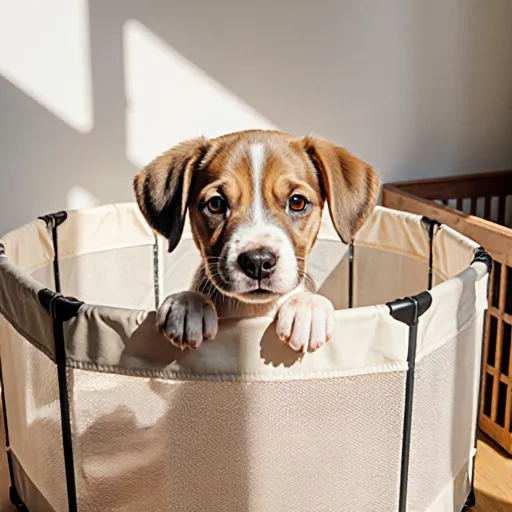
Puppy Playground Showdown!
Crate vs Playpen for Puppies: Which Is Better?
Table of Contents
- Introduction
- Benefits of Crates for Puppies
- Benefits of Playpens for Puppies
- Safety Considerations: Crate vs. Playpen
- Training Tips for Crate Use
- Training Tips for Playpen Use
- Choosing the Right Size and Space
- Material Choices: Durability & Comfort
- Cost Comparison: Crate vs. Playpen
- How Long Should a Puppy Stay Inside?
- When to Use a Crate for Your Puppy
- When to Use a Playpen for Your Puppy
- Transitioning Between Crate and Playpen
- Common Mistakes to Avoid
- Conclusion & FAQ
Introduction
When it comes to keeping your new puppy safe, comfortable, and well‑behaved, the debate between using a crate or a playpen is one that many pet owners face. Both options offer unique advantages and can be effective tools in training, but the choice ultimately depends on your puppy’s temperament, your living situation, and your long‑term goals for their development.
What Is a Crate?
- Definition: A crate is a closed, secure enclosure—often made of wire, plastic, or soft-sided fabric—that mimics the den‑like environment puppies naturally seek.
- Training benefits: Crate training encourages proper elimination habits, reduces destructive chewing, and helps establish routine.
- Portability: Most crates are lightweight and can be carried to vet visits or travel.
What Is a Playpen?
- Definition: A playpen is an open‑ended, usually collapsible structure that creates a safe “room” for puppies to explore while preventing access to hazardous areas.
- Freedom of movement: Puppies can walk, jump, and interact with toys freely—great for socialization.
- Easy setup: Playpens fold flat for storage and expand quickly in any room.
Key Factors to Consider
- Puppy’s Size & Age
If your puppy is very small or still developing, a playpen might be safer to prevent accidental choking on the crate door. For larger breeds that can easily climb out of a playpen, a sturdy crate may be preferable.
- Living Environment
In an apartment with limited space, a lightweight playpen offers flexibility—move it from room to room without the bulk of a large crate. In a house with multiple floors or a backyard, a crate can be placed in a specific spot for consistent training.
- Behavioral Goals
- Crate: Ideal for teaching “leave it” commands, managing separation anxiety, and creating a calm zone.
- Playpen: Excellent for supervised playtime, preventing destructive chewing while still allowing the puppy to roam.
- Safety & Health
Check that both the crate and playpen are made of non‑toxic materials. Avoid wire cages with small bars for puppies under 8 months, as they can get stuck or hurt themselves.
Practical Tips for Using a Crate
- Start Slowly: Place treats and a cozy blanket inside to create positive associations. Let the puppy explore on its own before closing the door.
- Set a Schedule: Use the crate for short intervals—15–20 minutes at first, gradually increasing as your puppy adapts.
- Never Punish in the Crate: The crate should always feel safe. If you need to correct behavior, do it outside and then place the puppy back in the crate calmly.
Practical Tips for Using a Playpen
- Secure Placement: Anchor the playpen to walls or furniture to prevent tipping. Use non‑slip pads if you’re on hardwood floors.
- Toy Rotation: Keep the environment stimulating by rotating toys, puzzles, and treats every few days.
- Supervised Time: While the playpen is safe, always keep an eye on your puppy to catch any signs of stress or boredom early.
Combining Both Methods
A balanced approach can work wonders. Use a crate during nighttime and when you’re not home to reinforce routine, then let the puppy out into a playpen for supervised daytime exploration. This gives them the benefits of both security and freedom.
Common Mistakes to Avoid
- Over‑Crating: Leaving a puppy in a crate for too long can lead to anxiety. Follow the general rule: no more than 4–5 hours for a one‑year‑old puppy.
- Playpen Without Supervision: Even though playpens are safe, puppies can still chew on wires or ingest small parts if left unattended.
- Wrong Size: A crate that’s too large makes the puppy feel unsafe; a playpen that’s too big may reduce focus during training.
Bottom Line
The “better” option depends on your puppy’s personality and your lifestyle. If you prioritize structured training, a crate is often the go‑to solution. For active playtime with minimal restrictions, a playpen shines. Many owners find that using both—each at its optimal time—provides the most balanced environment for a happy, well‑trained pup.
Benefits of Crates for Puppies
Crate training is one of the most effective ways to establish a safe, predictable environment for your new puppy. Below are the key advantages that make crates a must‑have in many households.
- Safety and Security: A crate gives a puppy a den‑like space where they can retreat when feeling overwhelmed or anxious. This sense of enclosure reduces the likelihood of destructive behavior caused by boredom or stress.
- House‑breaking Made Simple: Because puppies instinctively avoid soiling their sleeping area, crates naturally help them learn bladder and bowel control. A well‑timed crate schedule aligns with feeding times and bathroom breaks, making the process smoother for both you and your pup.
- Travel & Vet Visits: Crates are portable, providing a familiar environment during car rides or at the veterinarian’s office. This consistency can significantly lower anxiety levels in unfamiliar settings.
- Protects Household Items: Puppies often chew on anything that catches their interest. A crate keeps them away from valuable furniture and household clutter while you’re not able to supervise directly.
- Sleep Quality: By creating a dedicated space for rest, crates help puppies develop healthy sleep habits. Adequate sleep is crucial for growth, immune function, and overall behavior.
Practical Tips for Successful Crate Training
- Choose the Right Size: The crate should be large enough for your puppy to stand, turn around, and lie down comfortably. For a growing pup, start with a slightly smaller space and upgrade as they mature.
- Make It Inviting: Place a soft blanket or bed inside, add a favorite chew toy, and keep the door closed for short periods while you’re at home. Gradually increase crate time to build confidence.
- Use Positive Reinforcement: Reward your puppy with treats or praise when they enter the crate voluntarily. Avoid forcing them in; this can create negative associations.
- Schedule Regular Breaks: Puppies have limited bladder capacity—especially under six months old. Plan bathroom breaks every 2–3 hours and after meals, play sessions, or naps.
- Never Use the Crate as Punishment: A crate should never be a place of negative experience. If your puppy associates it with scolding, they’ll become fearful rather than comfortable.
Crates vs. Playpens: Which Is Better?
The debate between crates and playpens often centers on safety, convenience, and training goals. While both tools serve to confine a puppy safely, they differ in structure, flexibility, and psychological impact.
| Feature | Crate | Playpen |
|---|---|---|
| Space | Fixed, limited area—ideal for sleeping and house‑breaking. | Expandable; can cover a larger floor area for playtime. |
| Security | Provides a den-like enclosure that reduces anxiety. | Allows more movement but may not feel as secure to some puppies. |
| Training Focus | Excellent for house‑breaking, nighttime sleep, and travel. | Best for supervised play sessions, preventing unsupervised chewing. |
| Portability | Lightweight models are easy to carry; larger ones may be bulky. | Often more cumbersome due to multiple panels and legs. |
| Cost | Generally cheaper, especially for basic models. | Can vary widely; high‑end playpens may be pricey. |
In short, if your primary goal is to establish a consistent sleeping area and facilitate house‑breaking, a crate is usually the best choice. If you need a safe zone for supervised play while keeping your puppy from roaming into restricted areas, a playpen works well—often in combination with a crate for nighttime use.
Final Takeaway
Crates provide an indispensable foundation for responsible puppy ownership. By combining thoughtful design, consistent routine, and positive reinforcement, you’ll help your new friend grow into a confident, well‑behaved adult—while keeping your home safe and stress-free.
Benefits of Playpens for Puppies
When deciding how to keep your new puppy safe and happy while you’re away or during training sessions, a playpen is often the most flexible solution. Unlike crates, which can feel restrictive, playpens give puppies room to explore, exercise, and develop independence—all while staying within a controlled environment.
1. Encourages Exploration and Natural Play
- Open space for movement: Puppies have an innate need to run, jump, and sniff. A playpen allows them to do so without the confinement of a crate.
- Stimulates mental health: The ability to investigate new textures, toys, and scents reduces boredom and can prevent destructive behaviors such as chewing or digging.
2. Supports Positive Training Habits
Playpens can be integrated into training routines in ways that crates cannot:
- Gradual independence: Start by leaving the puppy alone for short intervals and gradually increase time, allowing them to learn self‑regulation.
- Reward zones: Place a favorite blanket or treat jar inside the pen to reinforce calm behavior.
- Safe exploration during house training: Puppies can relieve themselves in designated areas within the playpen, making it easier for owners to supervise until housetraining is complete.
3. Enhances Safety During Household Chaos
If you have toddlers, other pets, or a busy household, a playpen protects your puppy from accidental injury:
- Barrier against hazards: Prevents puppies from accessing sharp objects, toxic plants, or hot surfaces.
- Consistent environment: Even if the house is cluttered, the playpen remains a predictable safe zone for the puppy.
4. Flexible Size and Portability
Playpens come in various sizes—from small indoor models to large outdoor options—making them suitable for apartments or backyards:
| Model | Typical Size (inches) | Best Use Case |
|---|---|---|
| Standard Indoor Playpen | 36 x 24 x 42 | Apartment living; short-term confinement |
| Outdoor Playpen with Gate | 48 x 36 x 45 | Backyard play; supervised exercise |
| Portable Folding Playpen | 30 x 20 x 40 | Travel, dog parks, or temporary setups |
5. Cost‑Effective and Easy to Clean
Compared to crates that require frequent disassembly for washing, many playpens feature removable mats and washable fabric liners. This simplicity keeps cleaning quick and reduces the risk of lingering odors.
6. Can Be Used as a Training Tool for “Leaving” Exercises
Just as you would use a crate to teach your puppy to stay calm while alone, a playpen can serve the same purpose but with more freedom:
- “Stay” command practice: Place a toy on a low shelf and have the puppy wait until you release them.
- Socialization in a controlled environment: Invite other dogs or people to interact with your puppy inside the pen, reinforcing positive associations without full house exposure.
7. Ideal for Multi‑Puppy Households
If you’re raising more than one puppy, a playpen can accommodate multiple animals at once, ensuring they stay safe while still socializing together. Crates usually require individual units for each dog.
Practical Tips for Using Playpens Effectively
- Introduce gradually: Let the puppy explore the pen on a leash first, then allow free access after they seem comfortable.
- Use positive reinforcement: Reward calm behavior with treats or praise to reinforce that the playpen is a safe and enjoyable space.
- Keep it inviting: Place soft bedding, chew toys, and a water bowl inside. Rotate toys regularly to maintain interest.
- Monitor size and safety: Ensure there are no gaps or sharp edges that could trap or injure the puppy.
In summary, while crates excel at creating a single, quiet den for a puppy, playpens offer a versatile, engaging alternative that supports exploration, training, and safety. For many owners—especially those with active puppies or busy households—a playpen can provide the best of both worlds.
Safety Considerations: Crate vs. Playpen
When choosing between a crate and a playpen for your puppy, safety should be at the top of your list. Both enclosures can be safe if set up correctly, but each comes with its own set of risks that owners must understand and mitigate.
Common Safety Risks
- Inadequate Ventilation: A poorly ventilated crate or playpen can lead to overheating, especially in hot climates. Ensure the enclosure has enough airflow, and never leave a puppy inside during high temperatures.
- Paw Tripping & Injury: Crates with narrow openings or playpens with low sides may cause puppies to trip over their own paws when exiting, potentially leading to joint injuries.
- Escape Attempts: A crate that is too large for a puppy’s size can encourage them to chew through the door or latch, while a playpen with gaps in the mesh may allow small puppies to slip through.
- Electrical Hazards: Both enclosures often sit near outlets or cables. Puppies that chew on cords pose a serious risk of electric shock.
Practical Safety Tips for Crate Use
- Choose the Right Size: The crate should be large enough for your puppy to stand, turn around, and lie down comfortably. A cramped space can cause anxiety and make it harder to train.
- Secure the Door: Use a latch that is child‑proof but still easy for you to open. For breeds with strong jaws (e.g., Boxers or Rottweilers), consider a double‑locking system.
- Use a Protective Barrier: Place a puppy‑safe mat or carpet inside to protect the floor from sharp edges and to provide traction if your puppy slips.
- Ventilation & Temperature Control: Position the crate in a shaded area or use a fan. Avoid placing it near heaters, radiators, or direct sunlight.
Practical Safety Tips for Playpen Use
- Select Mesh with Proper Gap Size: The holes should be small enough that a puppy cannot fit through. A common recommendation is a mesh size of no more than 2 inches.
- Anchor the Frame: Secure the playpen to the floor or wall to prevent it from tipping over, especially if your puppy pushes against it.
- Use Soft Padding on Edges: Install foam or rubber edging where the metal posts meet the mesh to cushion any accidental bumps.
- Keep It Away From Hazardous Areas: Position the playpen away from stairways, high shelves, and electrical outlets. If you need it near a power source, use cord covers.
When to Use Each Enclosure for Safety
Crate: Ideal when you need a confined space that the puppy cannot escape from, such as during overnight stays or when leaving the house. The crate’s enclosed nature reduces the chance of accidental falls or chewing on dangerous objects.
Playpen: Best for supervised playtime in a controlled area, especially if you want to allow your puppy some freedom to explore while still containing them. It also works well when you need a temporary “safe zone” during a house clean or when hosting guests.
Real‑World Example
A Labrador Retriever named Max was left in a standard crate that had a loose latch. He managed to chew through the latch and escape, getting stuck under a sofa and injuring his leg. After switching to a double‑locking crate with a reinforced door and adding a padded mat inside, Max never attempted another escape, and his injury was prevented.
Final Safety Checklist
- Check for sharp edges or corners.
- Ensure the enclosure is clean and free of toxic substances.
- Confirm that all doors, latches, and hinges are secure.
- Test the space with your puppy before leaving them unattended.
By paying close attention to these safety considerations, you can confidently choose between a crate and a playpen, ensuring a safe environment for your puppy while meeting their training and comfort needs.
Training Tips for Crate Use
Crate training is one of the most effective ways to give your puppy a safe, secure space while teaching them essential life skills. Below are step-by-step instructions, real‑world examples, and expert advice to help you get started.
1. Choose the Right Crate
- Size matters: The crate should be large enough for your puppy to stand, turn around, and lie down comfortably. A good rule of thumb is to add about 2–4 inches (5–10 cm) to the length of your puppy’s body.
- Type options: Wire crates with a removable plastic floor are great for ventilation and easy cleaning. Foam or padded crates offer extra comfort, especially for older pups or those prone to anxiety.
2. Introduce the Crate Gradually
- Make it inviting: Place a soft blanket and a favorite chew toy inside. Keep the door open so your puppy can explore at their own pace.
- Positive associations: Feed meals inside the crate, give treats, or play gentle games like “find the treat” to create positive memories.
3. Use a Consistent Routine
Consistency helps your puppy understand what’s expected.
- Timing: Crate for short periods during the day (e.g., 15–30 minutes) and then gradually increase as they become comfortable.
- Commands: Teach a simple cue such as “crate” or “kennel” to signal that it’s time to go inside. Pair this with a treat each time to reinforce the behavior.
4. Avoid Negative Associations
Your puppy should never be forced into the crate for punishment. If they are anxious, use calming aids (e.g., pheromone sprays) and avoid tying them up or leaving them in a confined space when you’re not home.
5. Manage Bathroom Needs
- Frequent breaks: Puppies have small bladders; take them out every 2–3 hours, especially after meals or playtime.
- Crate duration limits: A general guideline is “age in months + 1” minutes. For example, a 4‑month‑old puppy can stay for about 5 minutes initially.
6. Use Crate Training to Aid Housebreaking
Because puppies instinctively avoid soiling their sleeping area, the crate becomes a natural deterrent for accidents inside the house.
7. Transition from Crate to Playpen (Optional)
If you need a larger space for play or supervision while still containing your pup, consider a playpen. However, keep in mind:
- Playpens are open on the sides. Puppies may explore more freely and potentially escape.
- Crates provide a “home” feeling that helps with night‑time comfort and reduces anxiety.
8. Troubleshooting Common Issues
| Problem | Possible Cause | Solution |
|---|---|---|
| Whining or barking inside the crate | Too much confinement, not enough exercise, or early training stage | Increase daily playtime, add a comfort item, and ensure they’re not crated for too long. |
| Puppy refuses to enter the crate | Negative association or lack of motivation | Introduce with treats, use positive reinforcement, and avoid forcing them in. |
| Puppy has accidents inside the house | Inadequate bathroom breaks or over‑confined crate time | Adjust break schedule, monitor feeding times, and use a larger crate if needed. |
9. Real-World Example: Max the 6‑Month‑Old Labrador Mix
- Week 1: Max is introduced to a medium wire crate with his favorite chew toy and treats.
- Week 2–4: Crate time is increased from 10 minutes to 20 minutes, paired with the “crate” cue.
- He begins to sleep inside without whining after a short adjustment period.
- Month 3: Max successfully holds his bladder for up to 4 hours during daytime training sessions.
10. Final Tips
- Never use the crate as a punishment.
- Keep the door closed only when you’re sure he’s safe and has had sufficient exercise.
- Always end training sessions with a positive activity—play, walk, or a cuddle—to reinforce that the crate is a comfortable part of his routine.
With patience, consistency, and positive reinforcement, your puppy will view their crate as a safe haven rather than a confinement space. Happy training!
Training Tips for Playpen Use
A playpen can be an excellent training tool when used correctly, but it’s not a magic solution. Below are step‑by‑step strategies that help your puppy learn boundaries, build confidence, and develop good habits—all while keeping the environment safe and enjoyable.
1. Choose the Right Size and Shape
- Space to Move: The playpen should be large enough for your puppy to stand, turn around, lie down, and stretch without feeling cramped. A good rule of thumb is at least twice the length of your puppy’s body.
- Shape Matters: Rectangular or square pens give more space for movement; circular pens reduce corners where a pup might get stuck.
2. Create a Positive First Experience
- Invite Them In: Place a favorite toy, blanket, or a small treat inside the pen and let your puppy explore at their own pace.
- Use Calm Language: Say “Come in” softly. Avoid using a harsh tone that could scare them.
- Short Sessions: Keep the first session under 5 minutes to avoid frustration and let them associate the pen with fun.
3. Establish Routine and Boundaries
Consistency is key in training. Treat the playpen as a safe zone that your puppy can enter when they want to rest or when you’re not able to supervise directly.
- Scheduled Playtime: Use the pen during nap times, after meals, or before bedtime.
- Set “Do Not Enter” Zones: If your puppy is in the playpen, gently say “No” and redirect them outside if they try to jump over or dig under.
4. Use Positive Reinforcement
Rewarding good behavior encourages repetition.
- Treats: Place a high-value treat inside the pen and let your puppy find it. This builds curiosity and positive association.
- Praise & Affection: A soft voice, gentle petting, or a small clicker can reinforce that staying in the playpen is desirable.
5. Gradually Increase Duration
Once your puppy comfortably spends 10–15 minutes inside, slowly extend the time by a few minutes each day. Watch for signs of stress—such as whining or pacing—and back off if necessary.
6. Provide Enrichment Inside
- Toys: Rotate chew toys, puzzle feeders, and stuffed Kongs to keep the environment stimulating.
- Scented Items: A lightly scented blanket or a toy with your scent can calm anxious pups.
7. Teach “Leave It” and “Come” Commands Inside
The playpen is an ideal controlled setting to practice obedience commands that are essential for safety outside the pen.
- “Leave It”: Hold a treat in your closed fist, say “leave it,” and reward when they ignore the hand. Repeat with a toy inside the pen.
- “Come”: Call their name while rewarding them for coming to you from within the playpen. This builds recall skills even when confined.
8. Manage Craving for Freedom
Puppies often want to explore beyond the pen’s limits. Use a “door” system:
- Doorway Training: Place a small gate or door that can be opened and closed by you. Practice opening it, rewarding the puppy for entering on cue.
- Gradual Freedom: Once they reliably obey “come” and “leave it,” allow short supervised sessions outside while keeping the pen as their safe base.
9. Safety Checks
Regularly inspect the playpen for sharp edges, loose hardware, or worn fabric that could become a choking hazard. Keep hazardous items—like cords and small objects—out of reach.
10. Transition to Crate Training (Optional)
If you plan to use both a playpen and a crate, introduce them in tandem:
- Shared Space: Place the crate inside or next to the pen so your puppy sees it as part of their safe zone.
- Positive Association: Offer treats inside both areas. Encourage the pup to go from the pen to the crate on cue, reinforcing “crate time” and “playpen time” as distinct but complementary experiences.
Practical Example: A Week‑Long Playpen Routine
| Day | Activity |
|---|---|
| Mon | 10 min playpen, 2 treats inside. |
| Tue | 12 min playpen, puzzle feeder. |
| Wed | 15 min playpen, “leave it” drill. |
| Thu | 18 min playpen, short supervised walk outside. |
| Fri | 20 min playpen, crate inside pen for 5 min. |
| Sat | 22 min playpen, treat‑rewarded recall practice. |
| Sun | Rest day—playpen only when needed. |
By following these steps and adapting them to your puppy’s temperament, you’ll turn the playpen into a powerful tool for safe, structured training that complements any crate‑based approach. Remember: patience, consistency, and positive
Choosing the Right Size and Space
When deciding between a crate and a playpen for your puppy, one of the most important factors to consider is how much room you can realistically offer. A well‑fitted environment not only keeps your pup safe but also supports healthy behavior development.
1. Understanding Your Puppy’s Physical Needs
- Growth Stage: Puppies grow rapidly, especially during the first six months. A crate that is too small can restrict movement and cause discomfort, while a playpen that is too large may give them too much freedom to roam into dangerous areas.
- Breed Considerations: Small breeds (e.g., Chihuahuas) thrive in compact crates, whereas larger breeds (e.g., Labrador Retrievers) require more spacious playpens or crates with adjustable partitions.
2. Measuring the Space
Measure the length, width, and height of the area where you plan to place the crate or playpen. Add a few extra inches on each side for breathing room and movement. For example:
| Area | Recommended Minimum Size (cm) |
|---|---|
| Crate for Small Breed | 60 × 45 × 35 |
| Playpen for Medium Breed | 200 × 150 × 120 |
3. The “Rule of Thumb” for Crate Size
A good rule: the crate should be large enough that your puppy can stand, turn around, and lie down comfortably. To test it, place a blanket inside; if the puppy can stretch out fully without feeling cramped, you’re likely in the right range.
4. Playpen Size Guidelines
- Minimum: For a single puppy, aim for at least 1.5 m² of floor space.
- Optimal: For multi‑puppy households or larger breeds, consider a playpen that offers 3–4 m² per dog.
5. Practical Tips for Maximizing Space
- Use Vertical Space: Attach shelves or low‑profile storage units above the crate or playpen to keep toys and treats within reach without taking up floor area.
- Multi‑Functional Furniture: Choose a crate with built‑in feeding stations, or a playpen that can double as a sleeping area when covered with a blanket.
- Portable Options: If you plan to move the crate or playpen frequently, opt for collapsible models that can be stored compactly when not in use.
6. Safety Checklists
- Ensure there are no sharp edges or small parts that a puppy could chew off and swallow.
- Confirm the door latch is secure but easy for you to open in case of emergencies.
- Place the crate/playpen on a non‑slippery surface to prevent accidents during play.
7. Real‑World Example: The “Buddy” Scenario
Buddy, a 10‑week‑old Beagle, lives in an apartment with a 4 m² balcony. The owner installed a collapsible playpen that measured 2.5 m by 1.8 m. Buddy could run around freely but still had enough room to rest without feeling confined. Over time, the owner adjusted the partitions as Buddy grew, ensuring the space remained appropriate for his changing needs.
Conclusion
Selecting the right size and space is a balancing act between your puppy’s physical comfort and the practical constraints of your home. By measuring carefully, following breed‑specific guidelines, and using flexible furniture solutions, you’ll create an environment that supports healthy growth, reduces anxiety, and keeps both you and your pup happy.
Material Choices: Durability & Comfort
The material you choose for your puppy’s living space is a critical factor that influences both safety and well‑being. When deciding between a crate and a playpen, pay close attention to the construction of each unit—specifically the frame, flooring, and any lining or padding. Below we break down common materials, their pros and cons, and practical tips for selecting the best option for your pup.
1. Frame Materials
- Aluminum: Lightweight yet sturdy; excellent for travel crates. It resists rust when properly coated but can be more expensive.
- Steel (galvanized or powder‑coated): The most robust choice for stationary playpens. Offers superior durability against chewing and digging, though heavier to move.
- Wood: Aesthetically pleasing and can be customized. However, untreated wood may warp over time and is less chew‑resistant unless sealed with a non‑toxic finish.
2. Flooring Options
A comfortable floor protects your puppy’s paws and keeps the area hygienic.
- Cork: Natural shock absorption, easy to clean, but can be slippery if not treated with a non‑slip mat.
- Rubber mats (PVC or natural rubber): Excellent grip and cushioning. Ideal for puppies that chew on the floor; they are also waterproof and can be removed for washing.
- Foam padding: Soft underfoot, great for small breeds. Ensure it’s high‑density to avoid flattening quickly.
3. Lining & Bedding
Comfort is amplified by the right bedding material. The lining should be breathable and easy to wash.
| Bedding Material | Pros | Cons | Best For |
|---|---|---|---|
| Microfiber Blanket | Soft, absorbent, machine‑washable | Can mat down with heavy use | All breeds |
| Cotton Sheet (non‑lint) | Breathable, hypoallergenic | May wrinkle; less durable against chewing | Small to medium puppies |
| Wool Blanket | Natural insulation, antimicrobial | Can be pricey, may cause allergies in sensitive dogs | Cold climates, mature dogs |
4. Practical Tips for Selecting Materials
- Check the weight limit: A crate’s frame may look solid but can fail if the puppy exceeds the manufacturer’s weight recommendation.
- Inspect chew resistance: For breeds with strong jaws, choose steel or reinforced plastic frames and avoid soft foam that can be gnawed away.
- Consider portability: If you plan to travel frequently, opt for aluminum crates with removable mats. Playpens are usually bulkier but offer more space for play.
- Test the floor’s grip: Slide a small piece of paper across the surface; if it doesn’t stick, add a non‑slip mat or choose a textured rubber base.
- Regular maintenance: Wash bedding weekly and inspect frames for loose screws or rust. Replace any worn components immediately to keep your puppy safe.
5. Case Study: Choosing Between Crate & Playpen
A 4‑month‑old Labrador mix was prone to chewing on his crate’s interior panels. The owner switched from a standard steel crate with a plain rubber floor to a steel playpen that featured a chew‑resistant, reinforced plastic frame, a cork‑backed rubber mat, and a removable microfiber blanket. The change reduced chewing incidents by 80% and allowed the puppy to explore safely while still having a designated safe zone.
Conclusion
Durability and comfort are intertwined when selecting a living space for your puppy. By evaluating frame strength, flooring grip, and bedding quality, you can make an informed decision that ensures safety, promotes healthy behavior, and keeps your pup cozy whether it’s in a crate or a playpen.
Cost Comparison: Crate vs. Playpen
When deciding whether to buy a crate or a playpen for your puppy, the price is often one of the first things that comes up in your mind. However, it’s essential to look beyond the sticker price and consider all the hidden costs that can add up over time.
1. Initial Purchase Price
- Crate: Prices vary widely depending on size, material (plastic, metal, or fabric), and brand. A basic plastic crate for a small dog may start around $20–$30, while a high‑end metal crate can cost upwards of $200.
- Playpen: Playpens are typically less expensive because they’re designed for temporary use and often made from lighter materials. A standard playpen might range from $25 to $80.
2. Additional Accessories
Both crates and playpens may require extra items that affect the overall cost.
- Crate:
- Mattress or bedding ($10–$30)
- Door latch or lock ($5–$15)
- Cleaning supplies (crate cleaner, wipes) – $5–$10 per month
- Playpen:
- Portable floor mat ($10–$25)
- Extra support poles or brackets if needed ($5–$15)
- Cleaning supplies – similar to crates but often less frequent use
3. Longevity and Replacement Costs
A crate is usually built for long‑term use, especially if you plan to keep your dog in it for training or as a safe space when you’re away. A well‑made metal crate can last many years with proper maintenance.
Playpens, on the other hand, are often used for short periods—visits to relatives, travel, or temporary confinement during training sessions. They may need replacement sooner if the structure is damaged by chewing or accidental drops.
4. Space Efficiency and Storage
- Crate: Most crates are collapsible (especially plastic) but can still take up a significant amount of space when stored upright. If you have limited storage, this could be a factor.
- Playpen: Playpens can be folded into relatively compact shapes and often come with carry bags, making them easier to store or transport.
5. Versatility and Multi‑Use Potential
The versatility of a product can influence its value for money. A crate can double as an indoor play area if you remove the door latch and allow your puppy to roam freely. Some crates also come with removable dividers, making them adaptable to different training stages.
Playpens are designed specifically for containment; they’re not meant for long‑term confinement but excel at providing a safe space during short outings or when supervising playtime.
6. Practical Advice for Budget-Conscious Owners
- Start Small: If you’re unsure which option works best, consider starting with a low‑cost crate or a basic playpen and upgrade later if needed.
- Check for Sales: Retailers often discount pet supplies during holidays. Look out for clearance sales on crates and playpens.
- Reuse & Repurpose: A well‑maintained crate can be repurposed as a travel carrier or even an indoor dog bed, extending its life.
- Consider Secondhand: Many owners sell their gently used crates or playpens on platforms like Facebook Marketplace or Craigslist at a fraction of the original price.
7. Bottom Line: Which Is Better for Your Wallet?
If you need a durable, long‑term solution and are willing to invest upfront, a high‑quality crate tends to offer better value over time. For short-term containment or travel scenarios, a playpen provides a cost‑effective, portable alternative with minimal maintenance.
Remember, the best choice ultimately depends on your puppy’s temperament, training goals, and your living situation. By weighing both upfront costs and long‑term expenses, you can make an informed decision that keeps both your pup and your budget happy.
How Long Should a Puppy Stay Inside?
Determining the right amount of time a puppy should spend indoors is essential for its safety, health, and overall development. While every pup is unique, there are general guidelines that can help owners create a balanced routine.
1. Age‑Based Recommendations
- 0–2 weeks: Newborn puppies should stay in a warm, quiet room with the mother or foster mom. They need frequent feedings and no independent playtime.
- 2–4 weeks: Puppies can start exploring a small, safe area while still being closely supervised. Playpens are ideal for this stage because they provide a confined space that prevents accidental escapes.
- 1–3 months: At this age, puppies can spend 2–4 hours inside at a time when you’re home. They should have short walks (5–10 minutes) every 2–3 hours to relieve themselves and get mental stimulation.
- 3–6 months: Puppies can gradually increase indoor time to 4–6 hours, with longer walks (10–15 minutes) and interactive play sessions. They’re beginning to understand house rules.
- 6+ months: As puppies mature into young dogs, they can comfortably spend most of the day indoors (up to 12 hours). However, regular breaks for bathroom needs, exercise, and social interaction remain crucial.
2. Signs Your Puppy Needs More Outdoor Time
- Excessive barking or whining: Indicates boredom or anxiety.
- Destructive chewing: Often a sign of pent-up energy.
- Difficulty sleeping: Puppies that haven’t burned off enough energy may have trouble settling down.
3. The Crate vs. Playpen Debate
When deciding how to confine your puppy indoors, owners often weigh the pros and cons of a crate versus a playpen. Both serve as safe spaces, but they differ in purpose, flexibility, and training outcomes.
| Feature | Crate | Playpen |
|---|---|---|
| Training Support | Excellent for house‑breaking; puppies instinctively avoid soiling inside. | Less effective as a deterrent but good for controlled play. |
| Space Flexibility | Fixed size; may feel cramped if the puppy grows too large. | Can be expanded by adding more sections; adaptable to multiple dogs. |
| Safety | Secure, prevents escape but can cause claustrophobia if overused. | Open design reduces stress but requires supervision to prevent chewing or escaping through gaps. |
| Portability | Easy to move but heavier and less compact. | Often lightweight, foldable, and can be set up anywhere in the house. |
4. Practical Tips for Using Crates and Playpens
- Start with short periods: Keep crate or playpen sessions to 15–20 minutes initially, then gradually extend as the puppy becomes comfortable.
- Use positive reinforcement: Reward your pup with treats and praise when they enter the crate/playpen willingly.
- Provide comfort items: A familiar blanket or a safe chew toy can reduce anxiety.
- Never use as punishment: This undermines trust and can lead to fear of confinement.
5. Sample Daily Schedule (for a 4‑month‑old puppy)
| Time | Activity |
|---|---|
| 7:00 am | Morning walk & potty break |
| 8:00 am | Breakfast + crate (30 min) |
| 9:00 am | Playpen with interactive toys (45 min) |
| 10:00 am | Short walk & training session (15 min) |
| 11:00 am | Rest in crate (1 h) |
| 12:00 pm | Lunch + playpen (30 min) |
| 1:00 pm | Nap time (crate, 2 h) |
| 3:00 pm | Evening walk & potty (20 min) |
| 4:00 pm | Training + playpen (30 min) |
| 5:00 pm | Dinner + crate (30 min) |
| 6:00 pm | Family time or quiet play (1 h) |
| 7:00 pm | Evening walk & potty (15 min) |
| 8:00 pm | Bedtime routine + crate for the night |
This schedule balances indoor confinement with necessary outdoor breaks, ensuring your puppy remains healthy, happy, and well‑trained.
6. Bottom
When to Use a Crate for Your Puppy
Choosing between a crate and a playpen often comes down to timing, training goals, and the puppy’s temperament. Below is a practical guide that explains exactly when a crate becomes the best option—and when you might want to consider a playpen instead.
1. Early Socialization (0–8 Weeks)
- Crate: Use it sparingly for short periods (15‑20 min) during the first week to give your puppy a safe, familiar space. Avoid confining them overnight until they can hold their bladder for at least 2–3 hours.
- Playpen: Ideal for this age range because it allows free movement while still containing the pup in a defined area. It’s perfect for supervised play sessions, helping the puppy learn boundaries without feeling trapped.
2. House‑Training Phase (8–12 Weeks)
- Crate: Begin using a crate for nighttime and when you’re away from home. The confined space encourages the puppy to hold it longer, reinforcing the concept that the crate is “home.” Keep the crate door open during the day so the pup can exit after a bathroom break.
- Playpen: Use a playpen for daytime supervision. It lets your puppy explore, chew on safe toys, and stay out of trouble while you’re busy. If your puppy gets too restless in the crate, switch to a playpen during those hours.
3. Training & Obedience Sessions (12–20 Weeks)
- Crate: Incorporate short “crate stays” into training. After teaching commands like “sit,” “stay,” and “come,” ask the puppy to enter the crate, rewarding them with treats or a favorite toy. This builds confidence that the crate is a safe place.
- Playpen: Use it for group playdates or when you need to confine multiple puppies. It’s also useful for teaching “stay” commands while allowing a visual cue of boundaries.
4. When the Puppy Is Independent (20+ Weeks)
- Crate: Continue to use it as a retreat when the puppy is alone or during travel. The crate should feel like a personal den, not a punishment.
- Playpen: Great for times when you want to keep the puppy in a specific area (e.g., around a baby or fragile furniture) but still allow free movement and play.
Practical Tips for Both Options
- Size Matters: Whether crate or playpen, it must be large enough for the puppy to stand, turn around, and lie down comfortably. A cramped space can cause anxiety.
- Positive Association: Never use the crate or playpen as a punishment. Offer treats, toys, and praise whenever the puppy enters willingly.
- Consistency Is Key: Stick to a schedule—crate during nights and while away; playpen during day supervision. This consistency helps the puppy understand expectations.
- Gradual Transition: If you’re moving from a playpen to a crate, start by leaving the door open in the crate for short periods, then gradually close it as the puppy becomes comfortable.
In summary, use a crate primarily for nighttime containment and when you need a reliable, portable safe space. Opt for a playpen during daytime supervision, playdates, or when the puppy needs more freedom without full confinement. By aligning your choice with these milestones, you’ll support healthy development while keeping training fun and stress‑free.
When to Use a Playpen for Your Puppy
A playpen is an excellent alternative or complement to a crate, especially when you need a safe and contained area that encourages active exploration while preventing access to dangerous items. Below are practical scenarios and tips on how to decide when a playpen is the best choice.
1. Transitional Phase Between Crate and Freedom
- Scenario: Your puppy has been successfully house‑trained in a crate but still needs supervision while exploring new rooms.
- Why a Playpen Helps: It offers the same containment benefits as a crate but allows your pup to move around, sniff, and play without being confined.
- Practical Tip: Start with a small playpen in one room and gradually increase its size as your puppy becomes more comfortable. This mirrors the gradual expansion of crate space in a traditional crate‑training program.
2. Managing High Energy or Playful Breeds
- Scenario: Breeds like Border Collies, Jack Russell Terriers, and Australian Shepherds have high energy levels that can quickly wear out a crate.
- Why a Playpen Helps: It provides a safe zone where they can run, jump, or engage with interactive toys while preventing them from chewing on furniture or doors.
- Practical Tip: Place durable chew toys and puzzle feeders inside the playpen to keep your pup mentally stimulated. Rotate toys weekly to maintain interest.
3. Introducing a New Puppy to Household Items
- Scenario: Your puppy is still learning which household items are safe and which are off‑limits.
- Why a Playpen Helps: It isolates the puppy from hazardous areas (stairs, cords, sharp corners) while letting them explore within a defined space.
- Practical Tip: Use a playpen during the first few weeks of training. Gradually open doors or remove barriers as your pup demonstrates safe behavior around new objects.
4. Overnight Supervision When Crate is Unavailable
- Scenario: You’re traveling, have a guest in the house, or need to supervise multiple puppies at night.
- Why a Playpen Helps: It allows you to keep an eye on your puppy without needing to move around the entire house. A playpen can be placed near your bed or in a quiet corner.
- Practical Tip: Use a lightweight, collapsible playpen that can be set up quickly and folded away when not needed. Add a blanket and a water bowl for comfort.
5. Managing Multiple Puppies Simultaneously
- Scenario: You have more than one puppy in the house and want to prevent them from playing too roughly with each other or getting into trouble.
- Why a Playpen Helps: Separate playpens can keep puppies at an appropriate distance while still allowing supervised interaction.
- Practical Tip: Use different colors or patterns for each playpen to help your puppies distinguish their spaces. Rotate the toys between pens to encourage sharing and reduce competition.
6. When Crate Training is Not Preferred
- Scenario: Some owners prefer not to use crates due to personal beliefs, pet’s temperament, or specific training goals.
- Why a Playpen Helps: It offers an alternative containment method that is less restrictive than a crate but still safe and predictable.
- Practical Tip: Combine the playpen with positive reinforcement techniques. Reward your puppy for staying in or exiting the pen on command, similar to crate training cues.
7. Adapting to Your Puppy’s Growth
- Scenario: As puppies grow, their size and activity levels change, requiring a flexible containment solution.
- Why a Playpen Helps: Many playpens come with adjustable panels or can be expanded to accommodate larger dogs.
- Practical Tip: Start with a smaller pen and gradually add sections or widen the opening as your puppy matures. This mirrors the progressive crate‑training method of increasing crate size.
In summary, use a playpen when you need a flexible, supervised environment that encourages exploration but still provides safety and boundary control. Refer to our comparison guide on “Crate vs Playpen for Puppies: Which Is Better?” to understand how each option fits your specific training style, puppy’s temperament, and household layout.
Transitioning Between Crate and Playpen
Many owners start their puppies in a crate for safety and training, then move them to a playpen once they’re old enough to handle more freedom. The transition can be as smooth or as rocky as you make it, depending on how you prepare both the puppy and your home environment.
Step‑by‑Step Guide
- Assess Your Puppy’s Age and Size
- Puppies under 6 months usually need a crate for potty training. Playpens are best for 8–12 month olds who can stand on their own.
- Measure your puppy’s height at the shoulder to ensure the playpen is tall enough (at least 20 inches).
- Introduce the Playpen While Crate Is Still In Use
- Place the playpen in a quiet corner of your living room, near but not inside the crate.
- Let the puppy sniff and explore it while you’re present. Offer a treat or favorite toy to create positive associations.
- Gradual Release
- Start by leaving the crate door open for 5–10 minutes each day, allowing the puppy to wander into the playpen. Reward calm behavior with praise and a treat.
- If your puppy shows signs of anxiety (whining, pacing), close the door again and try again later.
- Set Clear Boundaries
- Use a command like “Outside” or “Playpen” each time you let your puppy leave the crate. Consistency helps them understand where they’re allowed to go.
- Never force a puppy into a playpen if it’s clearly uncomfortable; this can create negative associations.
- Monitor Interaction With Household Members
- If you have other pets or young children, supervise the first few days of playpen use to ensure everyone feels safe and comfortable.
- Teach family members how to greet the puppy calmly—no sudden movements or loud noises near the playpen area.
- Adjust Playpen Placement as Needed
- If your puppy prefers a different room (e.g., a quieter bedroom), consider moving the playpen there. The goal is to keep the environment safe yet engaging.
- Ensure the playpen’s floor is non‑slippery and that the bedding is clean and cozy.
- Reinforce Crate Training Even After Transition
- Continue to use the crate for nighttime sleep or when you’re not home. This maintains a sense of security for your puppy.
- Use the playpen as a “daytime safe zone” rather than a permanent replacement for the crate.
Troubleshooting Common Issues
| Problem | Possible Cause | Solution |
|---|---|---|
| Puppy refuses to enter playpen | Lack of positive reinforcement or overstimulation | Use high‑value treats, short sessions, and gradually increase time in the pen. |
| Puppy chews on the playpen bars | Teething or boredom | Provide chew toys inside the playpen and rotate them daily. |
| Owner feels unsafe leaving puppy unsupervised in playpen | Lack of confidence in training routine | Set up a camera or use a timer to ensure you’re not too far away; practice short supervised intervals. |
Practical Tips for Long‑Term Success
- Use the same door handle or latch mechanism on both crate and playpen so your puppy learns that “open” always means freedom.
- Keep a consistent feeding schedule; meals right after leaving the playpen help reinforce good behavior.
- Gradually increase the time spent in the playpen each week until it matches or slightly exceeds the crate time, ensuring your puppy doesn’t feel rushed.
By following these steps and maintaining a calm, consistent approach, you’ll help your puppy transition from a secure crate to an engaging playpen while preserving the benefits of both training tools.
Common Mistakes to Avoid
Many new puppy owners make the same pitfalls when deciding between a crate or a playpen. Below are the most frequent errors, why they happen, and how you can steer clear of them.
Forgetting to Introduce the Space Gradually
Puppies often feel overwhelmed if a new environment is thrust upon them. A crate or playpen should be introduced as a positive, familiar space.
- Crate: Start by placing your puppy’s favorite blanket inside and leaving the door open. Let them explore at their own pace before adding treats or a short training session.
- Playpen: Keep the playpen in a quiet corner of your living room for a few minutes each day, gradually increasing the time as the puppy becomes comfortable.
Using the Wrong Size
A space that is too large can hinder training; a space that’s too small can cause distress.
| Space Type | Ideal Size (for 12‑week puppy) | What to Look For |
|---|---|---|
| Crate | 2–3 feet in diameter | Puppy can stand, turn around, and lie down comfortably. |
| Playpen | 5‑6 feet square (or larger if you have space) | Enough room for the puppy to move freely but still feel contained. |
Neglecting Ventilation and Comfort
Puppies can overheat quickly, especially in plastic or metal playpens.
- Crate: Choose one with mesh sides for airflow. If you live in a hot climate, consider a crate made of lightweight, breathable material.
- Playpen: Opt for one with a fabric or canvas side panel that allows air circulation. Avoid overly tight plastic walls.
Over‑Restricting Time Inside the Space
Puppies need socialization and exercise. Keeping them in a crate or playpen for too long can lead to anxiety.
- Crate: 1–2 hours per day is usually sufficient for most puppies, especially during the first few weeks.
- Playpen: Limit continuous time to 3–4 hours. After that, take your puppy outside for a walk or play session.
Using the Space as a Punishment Tool
Puppies learn through positive reinforcement. If you use the crate or playpen to punish, they may develop fear and mistrust.
“A crate is not a jail; it’s a den.” – Professional Trainer
Instead, always pair confinement with treats, praise, and gentle training cues.
Ignoring Safety Features
Make sure there are no sharp edges or loose parts that could injure your puppy.
- Crate: Check for any broken bars or hinges before each use.
- Playpen: Verify that the corners are padded and the mesh is sturdy. Some playpens come with a removable “baby gate” to keep small paws from getting stuck.
Failing to Provide Adequate Mental Stimulation
A puppy that’s bored is more likely to chew or dig at the enclosure.
- Crate: Insert puzzle toys, treat-dispensing balls, or a safe chew toy inside.
- Playpen: Rotate toys regularly and set up short training sessions with basic commands like “sit,” “stay,” or “come.”
Not Cleaning Regularly
Hygiene is crucial for preventing infections and odors.
- Crate: Wash the interior with mild detergent every week. Remove bedding daily.
- Playpen: Spot‑clean spills immediately and launder any fabric panels weekly.
Choosing a Crate or Playpen Based Solely on Price
A cheaper option may lack durability, safety features, or proper ventilation.
When budgeting, consider long‑term value: a slightly higher upfront cost can save you from costly replacements and health issues later.
Forgetting to Transition Out of the Enclosure
Puppies should learn that the crate or playpen is a temporary space, not their permanent home.
- Gradually increase outdoor time each week.
- Encourage exploration in different rooms and on walks.
- Use the enclosure only for rest periods, potty training, or short breaks.
By steering clear of these common mistakes, you’ll create a
Conclusion & FAQ
Choosing between a crate and a playpen for your puppy ultimately comes down to what you want to achieve with the space, how long the puppy will be confined, and the specific environment of your home. If you need a secure, portable zone that can double as a training tool and offers consistent comfort, a crate is usually the better option. Crates also help establish a “den” instinct which many puppies find reassuring.
On the other hand, if your puppy needs more freedom to explore while still staying safe—especially in larger rooms or during play sessions—a playpen provides that balance. Playpens are ideal for short‑term containment, supervising playtime, and creating a defined area where you can keep toys, food bowls, and litter boxes without cluttering the rest of the house.
For most households, a combination works best: crate the puppy during nighttime or when you’re away, and use a playpen for daytime supervision. Whichever you choose, make sure it’s appropriately sized (the puppy should be able to stand up, turn around, and lie down comfortably) and that you introduce it gradually with positive reinforcement.
- 1. How do I decide the right size for a crate or playpen?
- Measure your puppy’s height from shoulder to floor and width from shoulder to shoulder. The container should be at least 3–4 inches wider than the height measurement so the pup can stand up comfortably. For a playpen, ensure there is enough space for toys and a small bed.
- 2. Can I use a crate as an exercise area?
- Crates are not designed for extensive exercise. Use them primarily for sleep, training, or short confinement periods. For active play, switch to a playpen or open space.
- 3. What if my puppy resists the crate?
- Gradual desensitization works best: start with short sessions, place treats inside, and never force the door shut. Positive reinforcement and keeping the crate cozy can help build a positive association.
- 4. Are there any safety concerns with playpens?
- Ensure all edges are rounded or padded, check for small parts that could be swallowed, and keep the playpen in a well‑ventilated area. Never leave your puppy unattended in a large open playpen if they can escape.
- 5. How often should I clean a crate versus a playpen?
- Clean crates weekly with mild detergent, especially if used for sleeping. Playpens should be cleaned more frequently (every few days) because they are exposed to toys, treats, and possibly messes from the puppy’s exploratory behavior.
- 6. Can a crate or playpen replace a dog bed?
- A crate can serve as a sleeping area but may not be as comfortable for long rests. Playpens are versatile but typically require an additional dog bed to give your puppy a cozy spot to rest.
- 7. Is it okay to let my puppy sleep in the playpen at night?
- Some owners do this, especially if they want the pup to be close during the night. Just ensure the area is quiet, safe, and free from drafts or excessive noise.
- 8. How can I transition a puppy from a crate to a playpen?
- Start by letting them explore the playpen while you supervise. Gradually increase the time spent in each space, using treats and praise. Keep the routine consistent so the pup learns both environments are safe.
- 9. What materials should I look for when buying a crate or playpen?
- For crates: sturdy metal frames with removable bedding; for playpens: lightweight yet durable plastic or mesh with padded corners. Avoid cheap materials that could splinter or break.
- 10. Can I use the same crate or playpen for multiple puppies?
- Only if it’s large enough to accommodate them all comfortably and safely. Ensure each puppy has its own designated space within the container to avoid territorial disputes.
Categories
- AI & Enrichment Play
- Broiler Farming
- Broiler Farming Tips
- Canine Wellness & Longevity
- Cat
- Cat & Human Connection
- Cat Adoption & Rescue
- Cat Breeds
- Cat Breeds & Personalities
- Cat Care & Health
- Cat Grooming & Hygiene
- Cat Lifestyle & Environment
- Cat Myths & History
- Cat Nutrition & Diet
- Cat Products & Reviews
- Cat Training & Behavior
- Comparison
- Consumer Awareness
- Dog
- Dog Accessories & Products
- Dog Adoption & Rescue
- Dog Breed & Lifestyle Trends
- Dog Breeding & Puppies
- Dog Entertainment & Media
- Dog Fashion & Trends
- Dog Fun & Lifestyle
- Dog Grooming & Hygiene
- Dog History & Culture
- Dog Myths, Science & Future Tech
- Dog News & Trends
- Dog Nutrition & Food
- Dog Psychology & Emotions
- Dog Safety & Security
- Dog Sports & Activities
- Dog Technology & Innovation
- Dog Training for Modern Owners
- Dog Travel & Adventure
- Dog Travel, Adventure & Culture
- Economic and Market Insights
- Educational Content
- FAQs
- Feeding Alternatives
- Festivals & Seasonal Ideas
- Fun & Entertainment
- General Knowledge
- General Pig Farming
- Health & Disease Management
- Housing and Environment
- Kittens
- Market Insights
- Miscellaneous
- Miscellaneous
- Motivational
- pig
- Pig Breeding
- Pig Breeds
- Pig Farming Stories and Inspiration
- Pig Health and Care
- Pig Nutrition
- Pig Products
- Profitability & Business
- Puppy Care
- Puppy Predictable Topics Reinvented
- Regional Focus
- Rescue & Adoption Buzz
- Senior Cats
- Senior Dog Care
- Smart Dog Tech & Gadgets
- Sustainability
- Sustainable & Eco-Friendly Dog Products
- Tech & Innovations
- Working & Service Dogs
- Broiler Feed66 products
- Country Feed33 products
- Pig Feed66 products
- Product22 products
- Raw Materials99 products
Products
-
 Fish Meal
₹1,999.00 – ₹2,999.00Price range: ₹1,999.00 through ₹2,999.00Rated 0 out of 5
Fish Meal
₹1,999.00 – ₹2,999.00Price range: ₹1,999.00 through ₹2,999.00Rated 0 out of 5 -
 FATTENING BROILER FEED
₹2,299.00 – ₹2,349.00Price range: ₹2,299.00 through ₹2,349.00Rated 0 out of 5
FATTENING BROILER FEED
₹2,299.00 – ₹2,349.00Price range: ₹2,299.00 through ₹2,349.00Rated 0 out of 5 -
 LAYER COUNTRY FEED
₹1,549.00 – ₹1,649.00Price range: ₹1,549.00 through ₹1,649.00Rated 0 out of 5
LAYER COUNTRY FEED
₹1,549.00 – ₹1,649.00Price range: ₹1,549.00 through ₹1,649.00Rated 0 out of 5 -
 COUNTER BROILER FEED
₹1,199.00 – ₹1,299.00Price range: ₹1,199.00 through ₹1,299.00Rated 0 out of 5
COUNTER BROILER FEED
₹1,199.00 – ₹1,299.00Price range: ₹1,199.00 through ₹1,299.00Rated 0 out of 5 -
 LACTATING PIG FEED
Rated 0 out of 5
LACTATING PIG FEED
Rated 0 out of 5₹2,299.00Original price was: ₹2,299.00.₹1,740.00Current price is: ₹1,740.00. -
 Maize
Rated 0 out of 5
Maize
Rated 0 out of 5₹1,650.00Original price was: ₹1,650.00.₹1,300.00Current price is: ₹1,300.00. -
 GESTATION PIG FEED (Phase 1)
Rated 0 out of 5
GESTATION PIG FEED (Phase 1)
Rated 0 out of 5₹2,249.00Original price was: ₹2,249.00.₹1,699.00Current price is: ₹1,699.00. -
 Pre Starter Broiler Feed
₹2,399.00 – ₹2,499.00Price range: ₹2,399.00 through ₹2,499.00Rated 0 out of 5
Pre Starter Broiler Feed
₹2,399.00 – ₹2,499.00Price range: ₹2,399.00 through ₹2,499.00Rated 0 out of 5 -
 FINISHER PIG FEED
Rated 0 out of 5
FINISHER PIG FEED
Rated 0 out of 5₹2,299.00Original price was: ₹2,299.00.₹1,749.00Current price is: ₹1,749.00. -
 Broiler Premix
Rated 0 out of 5
Broiler Premix
Rated 0 out of 5₹820.00Original price was: ₹820.00.₹699.00Current price is: ₹699.00.