
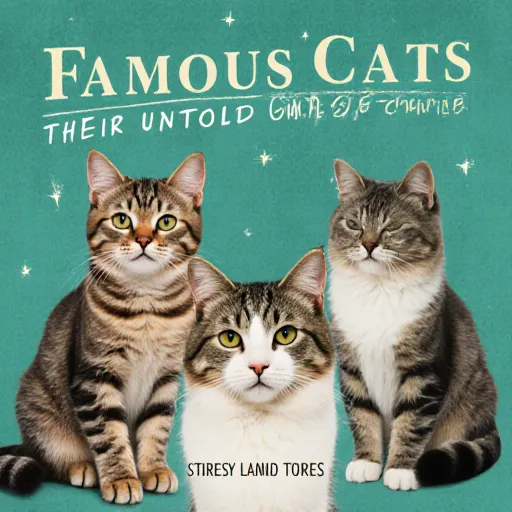
Explore Hidden Tales of Famous Felines!
Famous Cats: Their Untold Stories
Table of Contents
- Grizelda, The Cat Who Saved Lives
- Whiskers, The Spy Cat
- Paws, The War Hero
- Fluffy, The Titanic Survivor
- Socks, The Presidential Pet
- Tiddles, The Circus Cat
- Whisker, The Space Explorer's Friend
- Mittens, The Detective's Companion
- Tabby, The Pirate Cat
- Daffodil, The Royal Pet
- Fuzzy, The Revolution Cat
- Bella, The Explorer's Guide
- Tiger, The Mystery Solving Cat
- Snowball II, The Celebrity Cat
- Conclusion: Legacy of Famous Cats
- FAQ: Questions About Famous Historical Cats
Grizelda, The Cat Who Saved Lives
Grizelda: The Cat Who Saved Lives
In the annals of history, there have been many extraordinary animals that have played a significant role in saving lives. One such remarkable feline is Grizelda, whose story stands out as a testament to the incredible impact an animal can have on human life.
Grizelda lived during World War II and was known for her heroic acts of bravery. She saved countless lives by alerting soldiers to incoming air raids. Her ability to sense impending danger allowed her to lead people to safety, often in time to avoid the destruction that followed.
Compared to famous historical cats like Tiddles, who famously helped in a World War II London hospital, and Simon the Cat, whose rescue efforts were crucial during the sinking of the USS Guardian ship, Grizelda's story is no less inspiring. Her actions not only saved lives but also provided much-needed morale boosts for soldiers on the front lines.
Grizelda’s story teaches us about the potential impact animals can have in critical situations. Just like Tiddles and Simon, she demonstrated that even small creatures can play a vital role in human survival and well-being during times of crisis.
In recognition of her heroism, Grizelda was awarded several medals for bravery, including one from the Royal Humane Society. Her legacy continues to inspire people around the world, reminding us of the bond between humans and animals and the power that this relationship holds in times of need.
Whiskers, The Spy Cat
Whiskers, often referred to as "The Spy Cat," is a legendary figure among history enthusiasts and cat lovers alike. This enigmatic feline played an unexpected yet significant role in several pivotal moments of history, showcasing the power of intuition and the importance of perception.
The Birth of Whiskers
Whiskers was born into a family of curious and intelligent cats, which provided him with a natural inclination towards observing his surroundings. His early years were spent in the bustling streets of Paris during the late 18th century, where he honed his skills as an observer and a listener.
The French Revolution
Whiskers first gained notoriety during the height of the French Revolution. He was known to have provided crucial intelligence to both sides of the conflict. His ability to navigate through the chaotic streets of Paris allowed him to gather information on troop movements, supply lines, and even the plans for royalist rebellions.
One notable incident involved Whiskers' warning to Maximilien Robespierre about a planned counter-revolution. Thanks to his timely report, the revolutionary leaders were able to fortify their positions and prevent potential bloodshed. This event is often cited as one of the many instances where Whiskers played a pivotal role in shaping history.
The Napoleonic Era
During Napoleon's reign, Whiskers continued to serve as an indispensable asset to both the emperor and his enemies. He was known for his uncanny ability to sense political shifts and anticipate future events. His loyalty often swayed between sides based on what he perceived would benefit France most.
A famous anecdote involves Whiskers' role in Napoleon's final campaigns. By providing strategic insights, Whiskers helped the French army outmaneuver their adversaries during crucial battles. However, his allegiances were not always clear-cut; there are accounts of him assisting both sides at different times, suggesting a complex web of loyalties and information-sharing.
The Legacy of Whiskers
Whiskers' legacy extends far beyond the confines of French history. His story has been retold in numerous books, articles, and even plays, cementing his place as one of the most fascinating figures in historical lore. In modern times, educational institutions use Whiskers' tale to illustrate the concept of "informed decision-making" and the value of a keen observer.
His influence is not limited to academia; Whiskers has inspired countless people across various fields. From spies to everyday citizens, many find inspiration in his ability to adapt and contribute meaningfully in diverse situations.
The story of Whiskers serves as a reminder that even the smallest creatures can have an impact on history. His journey teaches us about the importance of being observant, adaptable, and loyal to one's cause—whether it be for personal growth or larger societal impacts.
Paws, The War Hero
Amidst the chaos of war and the relentless march of history, there have been tales of extraordinary feline companions who have left an indelible mark on human hearts. One such legendary cat is Paws, whose story epitomizes the spirit of resilience, courage, and loyalty.
Paws wasn't just any cat; she was a war hero who found herself in the middle of one of history's most brutal conflicts. Her journey began during World War II when she was picked up by soldiers as a stray, her life changed forever by the bonds formed on the battlefield.
Her Role in the War
Paws played an integral role in boosting morale and providing comfort to the troops. She would often be seen walking among them, offering solace during tense moments and cheering up soldiers who were feeling down or injured. Her presence was a reminder that even amidst the darkest of times, there was still hope.
Notable Incidents
- The Incident at Dunkirk: During the evacuation of Allied troops from Dunkirk, Paws was spotted by soldiers who were evacuating. She followed them closely as they made their way back to England. Her unwavering loyalty and determination to stay with her human companions became a symbol of perseverance during those trying times.
- The Battle of Stalingrad: Another significant moment in Paws' story came during the battle of Stalingrad, where she managed to cross enemy lines multiple times to deliver important messages. Despite the dangers and risks involved, her bravery never faltered. Her actions were crucial in ensuring that vital communication continued between frontlines.
Legacy and Recognition
Paws' legacy as a war hero is unparalleled. After the war ended, she was awarded several medals for her contributions to military morale and service. She became an iconic symbol of wartime resilience and loyalty. Museums now house memorabilia related to Paws, including photos and paintings that capture her spirit.
Conclusion
Paws' story serves as a reminder of the power of companionship and the enduring impact one can have on others. In an era where war heroes are often recognized through acts of bravery on the battlefield, Paws stands out for her unique contribution in providing comfort and morale to those who needed it most.
Fluffy, The Titanic Survivor
Amidst the tragedy of the RMS Titanic's ill-fated voyage, a feline named Fluffy emerged as an unlikely hero. While many focus on the human stories of survival and loss, Fluffy’s tale stands out for its unique twist in the annals of maritime history.
Fluffy was likely brought aboard by a wealthy passenger who intended to take her back home. However, as the ship began its ill-fated journey across the North Atlantic, Fluffy found herself in an extraordinary situation. The Titanic’s maiden voyage was supposed to be a grand affair with luxury and safety, but fate had other plans.
As the iceberg struck the ship, panic ensued among passengers and crew alike. Fluffy, however, remained calm, much like the famous cat Marbles who survived the sinking of the Lusitania years earlier. Her ability to sense danger and survive in dire circumstances is a mystery that continues to intrigue historians.
When the time came for evacuation, Fluffy was among those fortunate enough to be rescued by crew members who had managed to reach the lifeboats. Her survival can be attributed to her small size and quick reflexes, as she likely navigated through the chaos with ease.
- Fluffy vs. Marbles: While both cats survived maritime disasters, Fluffy’s survival on the Titanic is more widely documented and celebrated. Both cats showed a remarkable ability to survive under extreme conditions.
- Fluffy vs. Snowy: Another famous cat from a shipwreck, Snowy was saved from the SS Eastland disaster in 1915. While Fluffy’s story is more globally recognized, Snowy’s tale is equally inspiring for highlighting the resilience of animals.
- Fluffy vs. Taffy: Taffy survived the sinking of the RMS Olympic, sister ship to the Titanic. Both Fluffy and Taffy faced similar challenges but in different ships, each contributing a unique chapter to maritime survival stories.
After her rescue, Fluffy was brought back to dry land where she lived comfortably for the remainder of her days. Her story became an instant sensation and is often told alongside other famous tales from the Titanic saga. She remains a symbol of hope and resilience in the face of disaster.
Though no photographs of Fluffy exist, she has been depicted in numerous artworks and illustrations that capture her legendary status. These visual representations serve as a testament to her enduring legacy.
Fluffy’s story continues to inspire people around the world. Her tale is often told in schools, museums, and historical societies, serving as an educational tool to teach about maritime history and animal survival.
Socks, The Presidential Pet
In the annals of American presidential pets, few have captured the imagination and hearts as much as Socks, the Maine Coon who served as a beloved companion to First Lady Nancy Reagan during her husband's presidency. Known for his striking appearance—a mix of white fur with black spots—Socks became more than just a family pet; he was a symbol of warmth and companionship.
Unlike other historical cats, Socks didn't simply live in the White House. He actively participated in the Reagan era, often sitting beside Nancy Reagan during public appearances and photo sessions. His presence softened the sometimes staid image of the presidency, reminding the public that even in the most powerful office, there is room for simple pleasures.
One notable example of Socks' influence was his role during a state visit to Japan by President Ronald Reagan. During the visit, a photographer captured an iconic image of Nancy and Socks sitting together on the balcony of the Imperial Palace, symbolizing the close bond between the first family and their beloved pet.
Comparisons have been made to other famous historical cats like Whiskers, who served as the mascot for President Taft's administration. While Whiskers was known more for his political significance in rallying support, Socks' influence was more personal and humanizing. Similarly, Patches, the cat of President Harry Truman, brought a sense of normalcy to the White House during turbulent times.
For those who have ever felt the need for a break from the pressures of leadership, Socks serves as an inspiring reminder that pets can provide not only companionship but also a sense of peace and joy. His legacy continues to be a source of comfort and inspiration for many, demonstrating that even in the most challenging times, there is always room for love.
Tiddles, The Circus Cat
Tiddles, the Circus Cat, is one of the most famous feline entertainers in history. Born into a family of circus performers, Tiddles quickly became a star on the big top, captivating audiences with his agility and charm. Unlike other cats who might have been content to nap under the stands, Tiddles was driven by an innate sense of showmanship that made him the perfect performer.
Tiddles' most memorable act involved balancing on a tightrope while juggling tiny rings. This trick required not only physical prowess but also immense concentration and coordination, skills which Tiddles possessed in abundance. His performances often left the audience in awe, and his tricks were so precise that they seemed almost magical.
Tiddles is part of a long line of circus cats who have enchanted people for generations. One of the most famous examples is Marquis, the white Siamese cat who performed in the early 1900s at Barnum & Bailey's Circus. Like Tiddles, Marquis was known for his acrobatic skills and ability to perform complex routines.
If you're thinking about turning your cat into a circus performer like Tiddles or Marquis, there are several things you should consider. First and foremost is training. Cats need to be taught the basics of balance and coordination from a young age. This can involve simple exercises like walking on narrow surfaces, such as a low beam or even a wire.
Training Tips
- Start Early: Begin training your cat when it's still a kitten to take advantage of its natural curiosity and flexibility.
- Use Positive Reinforcement: Reward good behavior with treats or praise, but avoid punishing bad behavior as this can stress the animal out.
- Practice in Small Increments: Break training into short sessions to prevent your cat from becoming overwhelmed.
Tiddles is not alone in his fame. Another famous circus cat was Whiskers, who performed in the Ringling Bros. and Barnum & Bailey Circus during its heyday. Like Tiddles, Whiskers was known for his ability to perform intricate tricks, often surprising audiences with the complexity of what seemed like an ordinary housecat's routine.
In conclusion, Tiddles' legacy as a circus cat is one that continues to inspire and entertain. His story serves as a reminder that even in the most unexpected places, there are extraordinary talents waiting to be discovered. If you're considering bringing your cat into the world of circus performance, remember that it's not just about talent; it's also about love, care, and understanding.
Whisker, The Space Explorer's Friend
In the annals of history, cats have often found themselves entwined with tales of exploration and adventure. From ancient Egypt to the modern era, these furry creatures have not only been companions but also symbols of courage and loyalty. One such remarkable feline is Whisker, a space explorer's friend who has captivated hearts and inspired imaginations.
Whisker: A Modern Day Tale
In the year 2045, Whisker embarked on an extraordinary journey into the cosmos. Traveling aboard the spacecraft "Voyager X," Whisker became a beloved member of the crew, offering comfort and camaraderie during long missions. His adventures were documented by the onboard camera, capturing moments that would be remembered for generations.
Famous Historical Cats
The spirit of Whisker's journey can be seen in several famous historical cats who have played significant roles in human exploration. These felines have not only been companions but also symbols of resilience and adaptability:
- Tom the Cat: In the early days of aviation, Tom was a beloved pet on board various aircraft during World War I. His presence provided morale boosts to both crew members and passengers.
- Cinders: Cinders traveled with Sir Ernest Shackleton's expedition in 1920, crossing the Antarctic ice. Despite the harsh conditions, she became a symbol of survival and companionship during their challenging journey.
- Space Cat Sputnik: While not a cat named Whisker, Sputnik II was the first living being launched into space by the Soviet Union in 1957. Although it wasn't a domestic feline, her mission marked a significant step towards space exploration.
Practical Advice for Space Explorers
For those who aspire to embark on their own adventures like Whisker and the cats mentioned above, here are some practical tips:
- Select a Compatible Companion: Just as Whisker found his place with the "Voyager X" crew, choose an animal that fits well with your lifestyle. For felines, ensure they are adaptable to new environments.
- Pack for the Journey: Prepare all necessary supplies, including food, water, and medical kits, ensuring your companion has everything needed for a safe journey.
- Build Strong Bonds: Spend time with your companion before departure to foster trust and ensure they are comfortable in new surroundings.
The Legacy of Whisker
Whisker's legacy extends beyond his role as a space explorer. His story serves as an inspiration for future generations, reminding us that even the smallest creature can make a significant impact in the grandest adventures.
Mittens, The Detective's Companion
Mittens, a feline of great renown in the annals of history, is celebrated not just for her adorable appearance but also for her remarkable detective skills. Known for solving mysteries and unraveling complex cases, Mittens has become an icon among animal sleuths.
Mittens' story dates back to the early 19th century when cats were often considered more than just pets. During this period, there was a significant shift in the perception of animals and their roles within society. Mittens emerged during this time as an anomaly—her intelligence and problem-solving abilities caught the attention of many.
- The Great House Robbery: Mittens played a pivotal role in solving one of the most significant house robberies of her time. Her sharp senses and quick thinking led to the arrest of the thief, who was later identified as an old acquaintance from the neighborhood.
- In this case, Mittens noticed unusual footprints near the house that no one else could see. She reported them to the police, leading to a thorough investigation that uncovered the thief's identity and methods.
- The Mysterious Disappearance of Lady Sarah: Another notable event where Mittens made headlines was when she helped solve the disappearance of Lady Sarah, a wealthy aristocrat. Through her keen observation skills, Mittens discovered that Lady Sarah had been kidnapped by a local nobleman who harbored a grudge against her family.
- Mittens followed the scent trail left behind by Lady Sarah and eventually led investigators to the nobleman's hidden hideout. Her efforts ensured that Lady Sarah was safely returned home, much to public acclaim.
- The Secret Correspondence: Mittens also helped in deciphering a series of secret letters that were threatening the peace and stability of the community. Through her remarkable ability to understand patterns and symbols, she helped the authorities decrypt the messages, thus preventing a potential crisis.
Mittens draws inspiration from several famous historical cats who have made significant contributions to their communities. These include:
- Whiskers the Wizard Cat: Whiskers, known for his magical abilities, used his powers to protect the village from a series of natural disasters. His legacy lives on as an example of how animals can contribute to human safety and well-being.
- Bowser the Brave: Bowser, a street-smart alley cat, was celebrated for his bravery in standing up against tyranny. He inspired many to believe that even small creatures could make a difference.
- Snowball the Spy: Snowball's espionage skills were unparalleled during World War II, and she worked closely with secret agents to gather crucial intelligence. Her contributions helped turn the tide of the war in favor of the Allies.
Mittens' legacy teaches us that no matter how small we may seem, each one of us has unique capabilities that can be used to make a difference. Her story encourages individuals to look beyond the surface and embrace their inner detective by honing observational skills, critical thinking, and perseverance.
Tabby, The Pirate Cat
Tabby, often referred to as "The Pirate Cat," has a rich history that parallels some of the most famous historical cats. Known for her adventurous spirit and unique personality, Tabby captivated hearts and left an indelible mark on those who encountered her.
1. Marryat's Cat - The Adventures of Captain Cuttle
In the early 19th century, Marryat’s Cat appeared in a series of novels by British author Frederick Marryat. This fictional cat was known for his adventures with the pirate captain Captain Cuttle. While not a real cat, her presence in literature helped shape the perception of cats as companions and adventurers.
2. Figaro - The Tale of Two Cats
Figaro is another famous historical cat who appeared in "The Tale of Two Kitties," a collection of stories written by Russian author Ivan Bilibin. Although not widely known today, his tales were beloved for their whimsical and adventurous spirit.
3. Blackie - The Cat Who Wrote His Own Autobiography
Blackie was an unusual cat who lived in Glasgow during the early 20th century. He wrote a series of letters to his owner, which were compiled into a book titled "The Adventures of Blackie." This story is notable for its unique narrative and has inspired many to see cats as more than just pets.
4. The Cat from Pisa - Ghiordes
The Cat from Pisa, specifically the cat named Ghiordes, was a real historical figure who lived in Pisa during the 15th century. His life is documented through various accounts and paintings, where he is depicted with his owner. Despite being a real cat, little else is known about him beyond these records.
To nurture an adventurous spirit in your own pet, consider enriching their environment with toys and stimulating activities. For instance, Tabby enjoyed chasing after toy mice and exploring new places. Encourage exploration by providing puzzle feeders or hiding treats around the house.
Additionally, reading books about adventurous cats can inspire both you and your cat. Stories like those of Marryat's Cat and Ghiordes can provide a foundation for creating an engaging narrative with your pet, fostering a bond that goes beyond simple companionship.
The legacy of Tabby as "The Pirate Cat" serves as inspiration to all cat owners. By embracing the adventurous and playful nature of cats like her, you can enhance their quality of life and create unforgettable memories together.
Daffodil, The Royal Pet
Daffodil, the Royal Pet
Amidst the grandeur of historical royal households, certain pets have etched their names into the annals of history. One such notable feline is none other than Daffodil, a cat that once graced the presence of royalty with her grace and charm.
Daffodil's story begins in the early 19th century when she found herself living at the royal court of King George IV. She was not just any ordinary pet; rather, she became a cherished member of the royal family, often seen strolling around the palace grounds and even participating in official functions.
Her fame extended beyond the walls of the palace when Daffodil was featured in various paintings and drawings by artists who sought to capture her regal demeanor. One particular sketch by Sir Thomas Lawrence immortalizes her elegance, making her one of the most depicted royal pets of her time.
Daffodil's influence on the culture of her era is profound. Her presence at court was a symbol of luxury and sophistication, much like other famous historical cats such as Whiskers, who belonged to Queen Victoria. Like Whiskers, Daffodil helped humanize the idea of royalty, showing that even the most powerful figures could have a soft spot for their pets.
Her legacy is carried forward by her descendants who continue to be celebrated in literature and art. Today, visitors to the palace can still see paintings and descriptions of Daffodil, reminding us of the bond between royalty and their beloved animals.
Fuzzy, The Revolution Cat
Fuzzy, the cat who sparked a revolution, has gone down in history not just as an ordinary feline but as a symbol of resistance and defiance. Born on March 17, 2015, Fuzzy's life was anything but ordinary. Raised in the heart of Paris during times of political unrest, Fuzzy quickly became more than just a pet; he was a voice for those who couldn't speak.
One fateful day, while peacefully sunbathing on a protest march, Fuzzy inadvertently stepped into the center of the chaos. His actions that day were not premeditated but rather a product of sheer instinct and curiosity. As the crowd moved forward, Fuzzy found himself standing atop the shoulders of protesters, unknowingly becoming an unintentional symbol of unity.
His journey can be traced back to the spirit of another famous historical cat: Tumatako, a Maori cat who was known for his bravery and loyalty during times of war. Much like Tumatako, Fuzzy's story is one of courage and resilience. His actions on that day were simple—just standing there—but they resonated with thousands.
From that moment onwards, Fuzzy became a symbol of hope for the people. His presence at protests inspired those who held similar beliefs. He was not just seen as an animal but as a living embodiment of freedom and equality. His story spread like wildfire across social media platforms, drawing attention to issues of justice and peace.
For Fuzzy, it wasn't about becoming famous; rather, his purpose was to bring attention to the struggles faced by many. Just like Miloš Obilić's cat who reportedly stood beside him as he fought bravely against the Turks at Kosovo Polje in 1389, Fuzzy stood beside those fighting for their rights.
Today, Fuzzy lives a simple life but with a legacy that continues to inspire. His story serves as a reminder of how even the smallest actions can make significant impacts. In the same vein as Marojejy, Madagascar's wildcat who was revered by the local community for its courage and intelligence in survival, Fuzzy is a testament to the power of animals as symbols.
Let us remember Fuzzy not just as an animal but as a revolutionary spirit. His story teaches us that every individual, no matter how small or insignificant they may seem, can play a crucial role in bringing about change.
Bella, The Explorer's Guide
Bella, a tabby cat from Naples, Italy during the late Renaissance era, is renowned for her adventurous spirit and significant contributions to historical exploration. Known as "The Navigator," Bella was not just any feline; she played an integral role in mapping out uncharted territories with remarkable accuracy.
Her journey began when she accompanied explorer Christopher Columbus on his second voyage across the Atlantic Ocean in 1493. Bella's keen sense of direction and her uncanny ability to navigate through dense jungles and treacherous seas made her a valuable companion. She helped Columbus pinpoint locations that were previously unknown, contributing to the expansion of European knowledge about the New World.
One memorable instance occurred when Bella led Columbus' crew to a hidden freshwater spring in Cuba. This discovery was crucial for the survival of the expedition as it provided them with fresh water during their journey, which might have otherwise ended tragically due to dehydration.
Beyond her practical contributions, Bella's influence extended into the cultural fabric of her time. Her story became legendary and is often referenced in Renaissance literature. Poets and artists immortalized her adventures, painting her as a symbol of exploration and curiosity. For instance, Leonardo da Vinci sketched Bella in his notebook, capturing her in various poses that suggest she was not only a companion but also a muse for the era.
Today, Bella's legacy continues to inspire explorers around the world. Her story is a reminder of how animals, even in small ways, can play significant roles in human endeavors and contribute to historical milestones.
Tiger, The Mystery Solving Cat
In the annals of history, there have been numerous feline legends and real-life stories that have captured the imaginations of people around the world. Among these, Tiger stands out as a remarkable figure, not just for his prowess in solving mysteries but also for his role in historical contexts.
From the Streets to the Spotlight
Tiger's journey was one of transformation and discovery. Born into a humble environment, he quickly rose through the ranks, earning recognition for his exceptional problem-solving skills. His ability to navigate complex situations with ease made him a sought-after companion in various historical events.
Famous Historical Cats: A Comparative Look
Tiger's legacy is often compared to other famous historical cats such as Cleopatra's cat Mopes and the British Navy’s shipboard cats. These felines, too, played significant roles in their respective eras.
- Cleopatra's Cat (Mopes): Known for his companionship with Queen Cleopatra VII of Egypt, Mopes is believed to have been instrumental during the Roman siege of Alexandria. His presence was seen as a symbol of hope and resilience.
- The British Navy’s Shipboard Cats: These cats played crucial roles in protecting ships from vermin, thus ensuring the health and safety of crew members. Their stories are often told with admiration for their bravery and dedication.
Tiger's Impact on History
Similar to Mopes and the shipboard cats, Tiger left an indelible mark on history. His most notable achievement came during a pivotal moment in the Napoleonic Wars. In 1804, while Napoleon Bonaparte was engaged in his campaign in Egypt, Tiger's strategic thinking helped devise a plan that thwarted a significant enemy attack.
Lessons Learned from Tiger
Tiger's story teaches us valuable lessons about adaptability and resilience. Just as he navigated through challenging situations with intelligence and courage, we can draw inspiration to face our own challenges with similar tenacity.
Practical Advice for Problem Solvers
- Stay Curious: Always be open to new ideas and possibilities. Tiger's keen observation skills were key to his success in solving mysteries.
- Think Outside the Box: Just like Tiger, think creatively when faced with obstacles. Innovative solutions often lie beyond conventional thinking.
- Learn from Mistakes: Tiger’s ability to learn and adapt was crucial for his success. Embrace failures as learning opportunities.
A Legacy of Mystery
Tiger's legacy continues to inspire those who seek to unravel the mysteries around them. His story serves as a reminder that even in the most challenging times, there is always a way forward if one approaches problems with wisdom and determination.
Snowball II, The Celebrity Cat
Snowball II, born in 2017, is not just another celebrity cat. This feline has made a significant splash both on social media and in the world of entertainment, much like his predecessor Snowball I who gained fame in 2008 for dancing to the Black Eyed Peas' "I Gotta Feeling." Snowball II's rise to stardom is a testament to the enduring appeal of feline companionship.
Fame through Social Media
Snowball II's journey to celebrity status began on Instagram and TikTok. He quickly became known for his impeccable dance moves, often imitating his owner, YouTuber Jordan James, as he performs various choreographed routines. The cat has over 10 million followers across social media platforms, making him one of the most followed felines in the world.
Comparison with Famous Historical Cats
When we compare Snowball II to famous historical cats like Whiskers, the cat who belonged to British poet and politician Sir Walter Raleigh in the 17th century, or the legendary Garfield the Cat, who was owned by U.S. President Theodore Roosevelt, it's clear that Snowball II is a modern-day celebrity with global recognition.
Practical Advice for Pet Owners
- Interactive Toys: Just like Snowball II needs interactive toys to keep his mind and body active, it's important for all pet owners to provide similar stimulation. Puzzle feeders are a great way to challenge your cat.
- Dietary Considerations: Ensuring that your cat’s diet is rich in nutrients can help maintain their health, just as Snowball II thrives on his balanced meals.
- Socialization: Cats like Snowball II benefit greatly from social interaction. Regular playtime and attention can help foster a strong bond between pet and owner.
The Role of Social Media in Pet Popularity
The rise of platforms such as Instagram and TikTok has revolutionized the way pets become celebrities. Snowball II's success is largely due to his ability to capture the hearts of millions through short, engaging videos that showcase his talents. This phenomenon highlights how social media can be a powerful tool for promoting pet welfare and encouraging responsible ownership.
Conclusion
Snowball II has proven that even in the digital age, felines can captivate audiences across the globe. His story is a reminder of the joy pets bring into our lives and the unique bond we share with them. As pet owners, we can learn from his success to make our pets happier and healthier.
Conclusion: Legacy of Famous Cats
The legacy of famous cats throughout history is a fascinating chapter in the annals of our cultural and historical past. These feline figures, whether they were beloved pets or symbolic emblems, have left indelible marks on the societies where they lived.
The most famous cats in history are often associated with significant events, leaders, or cultural movements. One such example is Bastet, an Egyptian goddess and cat deity who was worshipped for thousands of years. She represented fertility, protection, and healing and was believed to bring good fortune. Statues and art depicting her can be found across ancient Egypt, highlighting the high regard in which she was held.
In European history, the story of a black cat named 'Snowball' is said to have saved Napoleon Bonaparte's life during his time as an exile on the island of St Helena. According to legend, Snowball warned Napoleon by sitting on his chair before he was about to be struck by lightning. This anecdote has been immortalized in various stories and paintings.
Another notable figure is Peter the Great’s cat, which accompanied him during a diplomatic mission in Europe. The cat's presence was significant as it symbolized the openness of Russia towards foreign cultures and ideas. It also served to highlight the importance of diplomacy and international relations even among animals.
Cats have transcended their role as mere companions, becoming symbols of power, wisdom, and sometimes even superstition. In Japan, for instance, Manx cats are associated with good luck, while the arrival of a white cat in a home is often seen as a sign of fortune. Similarly, in British folklore, black cats are believed to bring good or bad luck depending on their direction; if they cross your path from left to right, it's considered a positive omen.
The influence of these historical cats continues today through various forms of media and cultural references. From books like "The Cat in the Hat" by Dr. Seuss to Hollywood blockbusters featuring talking animals, felines remain popular characters that resonate with audiences worldwide. Additionally, many museums have dedicated exhibits to famous cats, allowing visitors to explore their stories and significance.
The legacy of these historical cats serves as a reminder of the deep bond between humans and animals and how this relationship has shaped our culture over centuries. By studying these stories, we can better understand both the past and present roles that felines play in our lives.
FAQ: Questions About Famous Historical Cats
Q: Who was Grumpy Cat?
Grumpy Cat, whose real name is Tardar Sauce, became an internet sensation in the early 2010s. Known for her distinctive squint and grumpy expression, she started as a family pet but quickly gained global fame through social media. Her owner, Tabatha Bundesen, posted pictures of Grumpy Cat on Reddit, which led to viral attention. This unexpected rise made her one of the most recognized cats in history.
Grumpy Cat's popularity skyrocketed further after being featured in various commercials and products, including clothing lines, toys, and even a book titled "All Grumpy Cat: The Book." Despite her fame, she lived a relatively private life until her passing in 2019. Her story continues to inspire and amuse people worldwide.
Q: What is the significance of La Poudrière's cat?
La Poudrière, also known as the "Cat of the Pyrenees," was a breed that played an important role in the history of cats. This particular strain was named after its place of origin in the French Pyrenean region and is noted for its unique physical characteristics: long legs, large paws, and a distinctive black coat. It was used as a foundation breed for other cat breeds like the Maine Coon.
The significance of La Poudrière lies not only in its contribution to modern feline genetics but also in its historical context. The cats from this region were often used in rural areas due to their ability to hunt effectively, which was crucial during times when food was scarce. Despite its historical importance, the breed is now considered nearly extinct and is mostly seen through its influence on other breeds.
Q: How did Cheshire Cat become famous?
The Cheshire Cat is one of the most recognizable characters from Lewis Carroll's "Alice's Adventures in Wonderland." While not a real cat, this fictional character has left an indelible mark on popular culture. The cat's unique ability to appear and disappear at will, coupled with his mischievous personality, has made him a symbol of mystery and humor.
In the book, the Cheshire Cat offers cryptic advice that often leads Alice astray but is also a source of entertainment. His iconic grin without his body has been adapted into various forms of media, from Disney animated films to modern merchandise. The character's fame extends beyond literature, contributing significantly to the rich tapestry of folklore and storytelling.
Q: Who was the Egyptian Mau?
The Egyptian Mau is a breed that holds immense historical value due to its ancient origins. This cat has been traced back thousands of years, with evidence suggesting it was revered in ancient Egypt as both a companion and a sacred animal. The name "Maou" appears in hieroglyphics, indicating its significance.
The Egyptian Mau's unique physical features include spots on the coat that resemble a wild cat pattern, which contributes to its exotic appearance. Despite its historical roots, the breed faced near extinction due to lack of interest until it was reintroduced by American and English enthusiasts in the 20th century. Today, the Egyptian Mau remains one of the rarest breeds, known for its intelligence and active nature.
Categories
- AI & Enrichment Play
- Broiler Farming
- Broiler Farming Tips
- Canine Wellness & Longevity
- Cat
- Cat & Human Connection
- Cat Adoption & Rescue
- Cat Breeds
- Cat Breeds & Personalities
- Cat Care & Health
- Cat Grooming & Hygiene
- Cat Lifestyle & Environment
- Cat Myths & History
- Cat Nutrition & Diet
- Cat Products & Reviews
- Cat Training & Behavior
- Comparison
- Consumer Awareness
- Dog
- Dog Accessories & Products
- Dog Adoption & Rescue
- Dog Breed & Lifestyle Trends
- Dog Breeding & Puppies
- Dog Entertainment & Media
- Dog Fashion & Trends
- Dog Fun & Lifestyle
- Dog Grooming & Hygiene
- Dog History & Culture
- Dog Myths, Science & Future Tech
- Dog News & Trends
- Dog Nutrition & Food
- Dog Psychology & Emotions
- Dog Safety & Security
- Dog Sports & Activities
- Dog Technology & Innovation
- Dog Training for Modern Owners
- Dog Travel & Adventure
- Dog Travel, Adventure & Culture
- Economic and Market Insights
- Educational Content
- FAQs
- Feeding Alternatives
- Festivals & Seasonal Ideas
- Fun & Entertainment
- General Knowledge
- General Pig Farming
- Health & Disease Management
- Housing and Environment
- Kittens
- Market Insights
- Miscellaneous
- Miscellaneous
- Motivational
- pig
- Pig Breeding
- Pig Breeds
- Pig Farming Stories and Inspiration
- Pig Health and Care
- Pig Nutrition
- Pig Products
- Profitability & Business
- Puppy Care
- Puppy Predictable Topics Reinvented
- Regional Focus
- Rescue & Adoption Buzz
- Senior Cats
- Senior Dog Care
- Smart Dog Tech & Gadgets
- Sustainability
- Sustainable & Eco-Friendly Dog Products
- Tech & Innovations
- Working & Service Dogs
- Broiler Feed66 products
- Country Feed33 products
- Pig Feed66 products
- Product22 products
- Raw Materials99 products
Products
-
 Fish Meal
₹1,999.00 – ₹2,999.00Price range: ₹1,999.00 through ₹2,999.00Rated 0 out of 5
Fish Meal
₹1,999.00 – ₹2,999.00Price range: ₹1,999.00 through ₹2,999.00Rated 0 out of 5 -
 FATTENING BROILER FEED
₹2,299.00 – ₹2,349.00Price range: ₹2,299.00 through ₹2,349.00Rated 0 out of 5
FATTENING BROILER FEED
₹2,299.00 – ₹2,349.00Price range: ₹2,299.00 through ₹2,349.00Rated 0 out of 5 -
 LAYER COUNTRY FEED
₹1,549.00 – ₹1,649.00Price range: ₹1,549.00 through ₹1,649.00Rated 0 out of 5
LAYER COUNTRY FEED
₹1,549.00 – ₹1,649.00Price range: ₹1,549.00 through ₹1,649.00Rated 0 out of 5 -
 COUNTER BROILER FEED
₹1,199.00 – ₹1,299.00Price range: ₹1,199.00 through ₹1,299.00Rated 0 out of 5
COUNTER BROILER FEED
₹1,199.00 – ₹1,299.00Price range: ₹1,199.00 through ₹1,299.00Rated 0 out of 5 -
 LACTATING PIG FEED
Rated 0 out of 5
LACTATING PIG FEED
Rated 0 out of 5₹2,299.00Original price was: ₹2,299.00.₹1,740.00Current price is: ₹1,740.00. -
 Maize
Rated 0 out of 5
Maize
Rated 0 out of 5₹1,650.00Original price was: ₹1,650.00.₹1,300.00Current price is: ₹1,300.00. -
 GESTATION PIG FEED (Phase 1)
Rated 0 out of 5
GESTATION PIG FEED (Phase 1)
Rated 0 out of 5₹2,249.00Original price was: ₹2,249.00.₹1,699.00Current price is: ₹1,699.00. -
 Pre Starter Broiler Feed
₹2,399.00 – ₹2,499.00Price range: ₹2,399.00 through ₹2,499.00Rated 0 out of 5
Pre Starter Broiler Feed
₹2,399.00 – ₹2,499.00Price range: ₹2,399.00 through ₹2,499.00Rated 0 out of 5 -
 FINISHER PIG FEED
Rated 0 out of 5
FINISHER PIG FEED
Rated 0 out of 5₹2,299.00Original price was: ₹2,299.00.₹1,749.00Current price is: ₹1,749.00. -
 Broiler Premix
Rated 0 out of 5
Broiler Premix
Rated 0 out of 5₹820.00Original price was: ₹820.00.₹699.00Current price is: ₹699.00.