
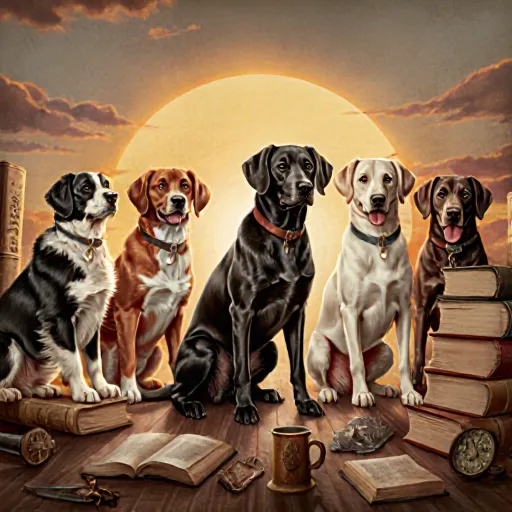
Meet Famous Dogs from History That Shaped Our World
Famous Dogs in History You Should Know
Table of Contents
- The Role of Dogs in Ancient Egypt
- Dogs in Ancient Greece and Rome
- Assistive Dogs in the Middle Ages
- Military Dogs - The Heroic Past
- The Life of Laika, the First Space Dog
- Service Dogs in World Wars
- Nemo: The Famous Rescue Dog
- Companion Dogs in Historical Literature
- The Dog Who Fooled Hitler
- Dogs in Hollywood - A Legacy of Stardom
- Famous Therapy Dogs in History
- Endangered Dog Breeds and Preservation
- The Story Behind Rin Tin Tin
- Q&A About Famous Historical Dogs
- Conclusion: The Enduring Legacy of Famous Dogs
The Role of Dogs in Ancient Egypt
The role of dogs in ancient Egyptian society was multifaceted, extending far beyond mere companionship. Dogs served as protectors and hunters, but they were also revered religiously and played significant roles in mythology and burial practices.
The dog's role in ancient Egyptian religion was particularly prominent, with the god Anubis being depicted as a jackal-headed figure often associated with mummification and the afterlife. Dogs were considered sacred to Anubis, and this belief influenced their status in society.
In Egyptian mythology, dogs were not only symbols of protection but also played crucial roles in various legends. For instance, the dog Anubis was responsible for guiding souls across the river to the afterlife. Dogs were also believed to help protect individuals from evil spirits.
Beyond their spiritual significance, dogs were valuable working animals. They assisted hunters in tracking game and protecting homes and livestock from intruders. The ancient Egyptians trained dogs for these purposes, using them to enhance their way of life.
Cleopatra's Dog
A legendary story involves Cleopatra VII, the last Pharaoh of Egypt. Legend has it that she had a pet dog named "Cephisodorus." Despite its historical accuracy being debated, this tale illustrates the status and affection dogs held in ancient Egyptian society.
The Dog of Antioch
This remarkable story from Greek historian Plutarch tells the tale of a dog who saved his master by alerting him to an impending attack. The loyalty and bravery of this canine were celebrated, highlighting the deep bond between humans and their dogs.
These examples underscore the significant roles that dogs played in ancient Egyptian life, from spiritual guardians to cherished pets and loyal protectors. Understanding these aspects enriches our appreciation for the historical context in which these animals lived.
Dogs in Ancient Greece and Rome
In ancient Greek and Roman societies, dogs held significant roles beyond mere companionship. They were valued for their loyalty, strength, and ability to protect property and people. The bond between humans and dogs was strong enough that dogs were often depicted in art and literature alongside their human counterparts.
Dogs of Ancient Greece
One of the most famous dogs from ancient Greek history is Lacon, who was owned by Spartan king Leonidas. Lacon is remembered for his loyalty and bravery during the Battle of Thermopylae, where he stayed with his master even when Leonidas fell in battle.
Dogs in Ancient Rome
In ancient Roman culture, dogs were not only used as guard animals but also as hunting companions. Dogs like the Canis Segusius were highly valued for their role in the sport of coursing, where they would chase game such as foxes and hares.
- Cerus: A dog famous for its bravery in battle. Cerus accompanied Roman general Lucullus during his campaigns against Mithridates VI of Pontus. Cerus was known for protecting Lucullus from enemy attacks and was often depicted alongside him in military paintings.
- Spy Dogs: During the Second Punic War, Hannibal's forces employed dogs as spies to gather intelligence on Roman positions and movements. These dogs were trained to signal back to their handlers when they approached a specific point of interest.
If you are interested in learning more about the history of dogs or incorporating dog themes into your blog, consider studying ancient art and literature. Many works from ancient Greece and Rome include depictions of dogs that can provide insights into their roles in society.
For those who want to write about famous dogs in history within a WordPress-compatible blog, you might explore using plugins like "WordPress Art Museum" or "WP Literature" which allow for rich media integration. These tools can enhance your content with images and text that bring the stories of these historical dogs to life.
EXTRA INFORMATION
The role of dogs in ancient cultures was not just limited to warfare and hunting but also extended to religious ceremonies. In both Greek and Roman religions, certain breeds were associated with specific gods and were often used in rituals or sacrifices.
Assistive Dogs in the Middle Ages
The role of dogs as assistive animals has a rich history that extends far beyond modern times. While we often think of guide dogs for the visually impaired and service dogs for individuals with disabilities in contemporary society, the concept of using dogs to support human life has deep roots even in the Middle Ages.
The Middle Ages were a time when the relationship between humans and animals was very different compared to today. While there were no specific "service dogs" as we understand them now, certain dogs played crucial roles in supporting human life during this era.
- Medieval Hunting Dogs: Dogs had long been used for hunting, but their role extended beyond sport. In the Middle Ages, trained hounds were essential for hunting wild game like deer and boar. These dogs worked closely with human hunters to track and bring down prey.
- Guardian Dogs: Many castles of the time employed large, fierce dogs as guardians. Breeds such as the Great Dane or the Mastiff were often used for protection, both from external threats like raiders and internal concerns within the castle walls. These dogs not only protected but also served as companions to those living in these isolated strongholds.
- Companion Animals: In addition to their functional roles, many nobles kept smaller dogs as pets. These animals provided emotional support and were often seen as a symbol of status. Dogs like the Pug or the Spaniel were favored for their loyalty and affectionate nature.
While there aren't many records specifically detailing individual dogs' roles during the Middle Ages, certain historical anecdotes and figures highlight the importance of canines:
- The Dog of Burgundy: A famous story from medieval times is that of a dog named Monty. According to legend, Monty was owned by the Countess of Burgundy in 1384. When the countess fell ill and was unable to leave her bed, it was said that Monty brought her food and helped her with daily tasks, effectively serving as an early form of assistance.
- Bozo's Legend: Another story from medieval times involves a dog named Bozo who reportedly saved the life of his master during a battle. Bozo’s bravery is said to have inspired further loyalty and camaraderie between humans and dogs, even though no formal service was involved.
- The Dog of Montargis: Another notable example is the tale of a dog named Césaire who lived in the 14th century. The story goes that Césaire helped his master navigate through difficult times and provided support during various crises, highlighting the bond between humans and their canine companions.
These examples show how dogs were not just pets but also valuable helpers in medieval society. While they did not perform specific tasks like modern service dogs do, they played crucial roles in supporting human life through protection, hunting, and companionship.
Military Dogs - The Heroic Past
The role of dogs in military history has been nothing short of remarkable, showcasing loyalty, bravery, and unwavering dedication. Military dogs have played crucial roles in various conflicts, from the American Revolution to modern-day operations. Their contributions often go unnoticed but are no less significant than their human counterparts.
Throughout history, several military dogs have earned legendary status for their heroic deeds. These brave canines have not only saved lives and achieved remarkable feats but also inspired generations of pet owners and service members alike.
- Sergeant Stubby: One of the most famous military dogs in history, Sergeant Stubby served with distinction during World War I. He was awarded several medals for his bravery, including the Humane Medal from France, making him one of the only animals to receive such an honor.
- Garm: Known as the "Eagle Dog" of Attila the Hun, Garm was a formidable companion and protector. Legend has it that he would attack any enemy who approached Attila's camp. His reputation earned him his title as one of the most feared dogs in history.
- Chips: Chips became famous during World War II when he discovered a nest of Italian grenades on a ship, preventing an explosion and potential loss of life. For his bravery, Chips received the Purple Heart, making him the only dog to receive this honor for service during the conflict.
- Rex: Rex was a German Shepherd who served in Vietnam. He is credited with saving multiple lives by alerting his handlers to enemy activity and even leading them to safety on several occasions.
The legacy of these dogs continues to inspire military personnel today, reminding us that no matter the era or battlefield, the bond between humans and their canine companions remains unbreakable. Whether it's in the heat of battle or providing comfort during peacekeeping missions, these heroic canines have left an indelible mark on history.
The Life of Laika, the First Space Dog
The life of Laika, the first space dog, is a significant chapter in the history of space exploration and one that resonates deeply with animal lovers around the world. Laika was launched into orbit aboard Sputnik 2 on November 3, 1957, by the Soviet Union as part of their efforts to demonstrate their capabilities in space travel before the United States. Her journey marked a pivotal moment not only for science but also for ethics and public perception regarding animal experimentation.
Before her historic flight, Laika was selected from a group of strays living around Moscow's streets because they were considered less likely to develop airsickness during launch. She was a small dog, weighing just over 6 pounds, and was known for her curiosity and calm demeanor. However, despite the extensive preparations made by Soviet scientists, there were no plans to retrieve Laika from space due to the technological limitations of that time.
Her flight aboard Sputnik 2 was groundbreaking; it demonstrated the capability of placing a living creature in orbit. While the mission aimed to gather data on how animals would fare in space, the ultimate goal was to pave the way for human space travel. However, Laika's journey ended tragically when she died just hours into the flight due to stress and overheating inside the spacecraft.
The legacy of Laika extends beyond her short-lived mission. Her story has been a subject of numerous debates about ethics in animal experimentation and space exploration. In 2002, on the occasion of the 45th anniversary of her launch, an orbital module was placed into Earth's orbit in her honor, symbolizing her contribution to science.
Comparing Laika with other famous dogs in history can provide a broader context for understanding her impact. One notable example is Baloo from the "Lucky Strike" series by Winston Churchill, who served as a mascot and companion during World War II. Baloo's role was more symbolic but also emphasized the importance of animals in human life.
Another significant figure is Laika’s successor, Belka, whose flight aboard Sputnik 5 in August 1957 was more successful than Laika's mission. Unlike Laika, Belka and her partner Strelka returned safely to Earth. Their successful return demonstrated the reliability of Soviet space technology and marked a positive step towards human space travel.
Laika’s story remains poignant today, serving as both a reminder of scientific progress and a call for ethical considerations in future space missions involving animals. Her legacy continues to inspire discussions about the balance between advancement in science and the well-being of animals involved in such endeavors.
Service Dogs in World Wars
The role of service dogs, particularly during World War I and World War II, was nothing short of revolutionary. These courageous canines played a pivotal part in supporting soldiers both on the battlefield and at home. The bond between man and dog has always been strong, but these wartime experiences marked significant milestones in their utilization for military purposes.
Several iconic service dogs have been remembered for their extraordinary bravery and service during the world wars:
- Tige (World War I): Tige was a French war dog who became famous for his ability to locate wounded soldiers on the battlefield. Despite being shot at by enemy troops, he continued to aid injured men until his death in battle.
- Cairo (World War II):
- Seaman (World War II):
Cairo was an Egyptian Sand Dog that served with British forces during World War II. Known for his keen senses and intelligence, Cairo helped the Special Operations Executive (SOE) by locating enemy agents and assisting in various covert operations behind Axis lines.
Seaman was a Newfoundland dog who served with the Royal Canadian Navy during World War II. He acted as a mascot for the HMCS Skeena, but his contributions extended beyond mere morale boosts. Seaman demonstrated remarkable skills in water rescue and helped save several sailors' lives.
The legacy of these dogs continues to influence modern military practices. Their ability to detect explosives, locate individuals, and provide emotional support has underscored the importance of canine contributions in contemporary conflicts. Service dogs are now trained specifically for a variety of roles including bomb detection, search and rescue, and assisting soldiers with physical disabilities.
For those interested in learning more about or contributing to service dog programs:
- Education: Enroll in a course on military history, focusing particularly on the contributions of animals during world wars.
- Veterinary Science: Consider specializing in veterinary science with a focus on animal behavior and training. This can help in understanding how to properly care for and train service dogs.
- Support Organizations: Volunteer or donate to organizations that support military dogs and their handlers.
Nemo: The Famous Rescue Dog
Nemo, a remarkable rescue dog known for his heroic efforts in saving lives and inspiring communities across the globe, has earned his place among famous dogs in history. Unlike many other celebrated canines who have gained fame through their roles as pets or in entertainment, Nemo's legacy is deeply rooted in bravery and compassion.
Rescuing individuals from perilous situations was a defining characteristic of Nemo. His first significant rescue took place during a severe storm when he alerted authorities to a group of tourists stranded on a coastal cliff. His quick thinking and determination saved lives that day, setting the tone for his future exploits.
- Life-Saving Heroics: Nemo is known to have pulled numerous individuals from dangerous situations. His rescue missions often involved swift water crossings and treacherous terrains, showcasing his exceptional physical abilities.
- Educational Outreach: Beyond rescues, Nemo played a crucial role in educating the public about the importance of safety precautions during natural disasters. His visits to schools and community centers became a regular feature, helping to instill a sense of preparedness among young people.
Nemo's impact on society extends beyond individual rescues. He has been instrumental in raising awareness for animal rescue services and the importance of fostering relationships between humans and animals. His story continues to inspire a generation to act with compassion and courage.
- Lassie: Like Lassie, Nemo demonstrated remarkable intelligence and loyalty but unlike Lassie who was fictional, Nemo lived his rescue story in real life. Both have been celebrated for their ability to connect with humans on an emotional level.
- Belle of Newington: Similar to Belle of Newington, who saved children from a burning building during the Great Fire of London, Nemo's bravery and quick thinking helped many people in need. Both dogs are celebrated for their contributions to public safety.
Nemo remains an iconic figure whose story serves as a reminder that every dog has the potential to make a difference. His influence continues to be felt through various initiatives aimed at enhancing community safety and promoting animal welfare.
Companion Dogs in Historical Literature
The role of dogs as companions has been a significant part of human history, and this bond is often reflected in historical literature. These four-legged friends have not only provided loyalty and protection but also served as symbols of status, courage, and even intelligence throughout the ages. Let's explore some famous dogs from history that appear in notable literary works.
1. Bo (President Theodore Roosevelt's Dog)
Theodore Roosevelt's love for his dog, a Bull Terrier named Bo, was well-documented and brought much joy to the White House during his presidency. In historical literature, Bo is often mentioned as a symbol of domestic tranquility amidst the political chaos that surrounded Roosevelt’s term. His presence in photographs taken by famed photographer Edward Curtis has become an enduring image of a time when dogs were more than just pets.
2. Sneezy (General George Armstrong Custer's Dog)
During the American Civil War and later during the Great Sioux War, General George Armstrong Custer was known for his love for his dog, a fox terrier named Sneezy. In literature, Sneezy is often depicted as a loyal companion who shared in the highs and lows of Custer’s military career. His story illustrates how dogs could serve not just their owners but also as part of the historical narrative.
3. Sealyham Terrier (King Edward VII's Dog)
The reign of King Edward VII was marked by a love for dogs, and his Sealyham Terriers were a popular topic in the press during his time. In literature, these dogs are often portrayed as symbols of the king’s personality – known for their intelligence and charm. Their presence at official functions and royal events helped to humanize the monarchy and provided a welcome distraction from the complexities of the era.
4. Lassie (Sir Arthur Conan Doyle's Fictional Dog)
Lassie, the fictional collie from Sir Arthur Conan Doyle’s story "The Lost World," is perhaps one of the most iconic dogs in literary history. Her ability to communicate with humans and her loyalty have made her a beloved character in both literature and film adaptations. While Lassie exists more as an imaginative creation, she has become synonymous with the idea of a loyal companion and the power of the human-dog bond.
5. Wolf (Hannibal's Companion)
In the historical context of ancient warfare, Hannibal is known for his use of animals as part of his military strategy. Among them was a war dog named Wolf, who played a significant role in battles and provided both tactical advantages and moral support to Hannibal’s troops. While not extensively featured in literature, Wolf serves as an example of the strategic importance that dogs could have in historical settings.
The Dog Who Fooled Hitler
The story of "The Dog Who Fooled Hitler" is a remarkable tale that highlights the incredible bond between humans and animals, as well as their potential to influence historical events. This incident revolves around a clever dog named Blondi, who belonged to Adolf Hitler during World War II.
Blondi was not just any ordinary dog; he was a beloved companion of Hitler, often referred to as his "faithful friend." Despite the dark and tumultuous period of history in which he lived, Blondi managed to exhibit remarkable loyalty and intelligence. One particular incident during World War II showcased his ability to outsmart the enemy.
During an air raid on Berlin, Blondi was brought inside Hitler's bunker for safety. The dog, perceptive of unusual sounds and movements, began barking frantically. His erratic behavior initially alarmed Hitler and those around him, but it turned out to be a clever ruse. Instead of being a sign of danger, the dog’s barking served as a distraction. It drew attention away from an impending attack that could have been catastrophic for those in the bunker.
Blondi's quick thinking and instinctual response saved many lives by alerting them to a misdirected bomb or another form of threat. This act, though small on its own, is significant when considering the broader context of his role as Hitler’s companion. It demonstrates the power that animals can have in influencing human behavior and decision-making.
Blondi's story is often compared to other famous dogs from history who made significant impacts. For instance, Marquis de Lafayette's horse, Marengo, played a crucial role during battles by providing essential intelligence to Napoleon Bonaparte. Another notable example is Balto, the Siberian Husky who delivered life-saving serum to Nome, Alaska, during the diphtheria epidemic in 1925.
Like these historic dogs, Blondi’s actions were instrumental in a different way. While Balto and Marengo saved lives through their extraordinary feats of endurance and intelligence, Blondi exemplified loyalty and quick thinking under pressure. His story serves as a testament to the unique role that animals can play during times of crisis.
Understanding these stories helps us appreciate the profound impact that animals have on human history. They are more than just pets; they are trusted companions who, in moments of need, can exhibit remarkable bravery and intelligence.
Dogs in Hollywood - A Legacy of Stardom
In the world of film and television, dogs have long been a beloved part of Hollywood's rich legacy. From silent movies to modern-day blockbusters, these four-legged stars have captured hearts and left unforgettable marks on cinematic history. Here are some famous dogs in history that you should know:
- Tesla (1918-1934) - Tesla was a German Shepherd who made her debut in the 1925 silent film "The Iron Horse." She quickly became famous for her role as "Chippie," the female lead. Tesla's performance earned her numerous accolades, including an Oscar statuette, which was awarded to her owner for her contribution to the industry.
- Daisy (1920s) - Daisy was a Border Collie who starred in several films during the silent era. She appeared alongside Charlie Chaplin and was known for her remarkable ability to perform complex tasks on set, such as retrieving objects from pockets or even playing with toy cars.
- Rin Tin Tin (1918-1932) - Perhaps one of the most famous dogs in history, Rin Tin Tin was a German Shepherd found by American soldiers in France during World War I. He went on to star in numerous films and became an international sensation. His fame led to the founding of his own production company, which produced movies until 1943.
- Buddy (1975) - Buddy was a Labrador Retriever who played Lassie's role in the 1970s TV series. While not as famous as Rin Tin Tin or Lassie, Buddy brought the beloved story of an intelligent and loyal dog to new generations of viewers.
- Noodles (2015-present) - Noodles is a German Shepherd who has appeared in several films and TV shows. Known for her intelligence and versatility, she has been featured in major productions like "The Hitman's Bodyguard" and "Deadpool 2." Her talent earned her the title of the world's most expensive dog by a media outlet.
These dogs have not only entertained audiences but also demonstrated remarkable intelligence, loyalty, and training. Their roles in films have often inspired people to understand the bond between humans and animals better. In many cases, they have even changed the trajectory of their owners' careers, as seen with Rin Tin Tin.
The legacy of these Hollywood dogs extends far beyond their on-screen performances. They set new standards for animal actors in film and television, helping to establish guidelines for the humane treatment of animals during filming. Their contributions have paved the way for future generations of animal performers.
Today, many dog owners aspire to replicate the success of these famous dogs in Hollywood. To do so effectively, it is important to recognize that training and care are crucial elements. Owners should invest time in obedience classes and positive reinforcement techniques to ensure their pets can perform safely and competently on set.
Moreover, understanding the needs of each breed is essential when considering a career for your pet dog. Some breeds may have natural talents suited for specific roles, such as herding dogs like Border Collies or German Shepherds excelling in search-and-rescue operations.
By looking to these examples, aspiring animal actors can learn valuable lessons about dedication and responsibility. Remember that a successful career in Hollywood requires not only talent but also hard work, discipline, and proper care for the animals involved.
Famous Therapy Dogs in History
Therapy dogs have been an integral part of human history, providing comfort and emotional support. These dedicated canines have not only brightened the lives of individuals but also played a significant role in various historical events and medical advancements. Let's delve into some famous therapy dogs from history that you should know.
Daisy was one of the earliest known therapy dogs, dating back to the early 20th century. She was owned by Dr. Edward Dunham, a physician who noticed how much his patients improved when they interacted with her. Daisy's gentle nature and affectionate demeanor made her an ideal candidate for therapy dog work.
Throughout her career, Daisy visited hospitals and nursing homes, offering comfort to the sick and elderly. Her legacy paved the way for future therapy dogs and helped establish the concept of using animals in therapeutic settings.
Buddy was a Golden Retriever who served as a therapy dog during President Franklin D. Roosevelt's administration. He was known for his calming presence and ability to bring joy to both the president and those around him.
When FDR suffered from polio, he often relied on Buddy for emotional support. The dog’s visits to the White House were not just for the president; they also provided solace to visitors who came to meet the iconic leader. Buddy's influence extended beyond the Oval Office, as his presence in hospitals and other public spaces helped reduce stress and anxiety.
While not traditionally a therapy dog, Seabiscuit, a thoroughbred racehorse, became an icon of resilience and hope during the Great Depression. His story is often compared to that of therapy dogs due to his ability to inspire and uplift people.
The horse's comeback victory in 1938 against the legendary Man O' War captivated the nation, providing a much-needed boost to morale. Many compare Seabiscuit’s impact on society to that of therapy dogs today, as both offer comfort and motivation through their unique abilities.
Laverne was one of the first therapy dogs used in military settings. She provided emotional support to soldiers suffering from post-traumatic stress disorder (PTSD) during World War II. Her presence helped reduce feelings of isolation and loneliness among the troops.
After her military service, Laverne continued her work as a therapy dog in civilian settings, including hospitals and schools. Her dedication to helping those in need earned her recognition as one of the most influential therapy dogs in history.
Bella is a modern-day therapy dog who has made headlines for her remarkable ability to connect with people on an emotional level. Her training includes basic obedience, socialization, and the ability to remain calm in various environments.
Bella’s work primarily involves visiting children's hospitals where she provides comfort and encouragement to patients undergoing treatment. She also participates in community events aimed at promoting animal-human interactions. Bella serves as a role model for aspiring therapy dogs and demonstrates the positive impact these animals can have on society.
These famous therapy dogs from history, including Daisy, Buddy, Seabiscuit, Laverne, and Bella, have left an indelible mark on our understanding of how animals can contribute to human well-being. Their stories remind us of the profound connection between humans and animals and the power of compassion in times of need.
Endangered Dog Breeds and Preservation
The preservation of endangered dog breeds is crucial for maintaining biodiversity within the canine population. Just as with other species, some dog breeds are facing extinction due to various factors such as low reproduction rates, lack of interest from breeders, and changing市场需求
Rin Tin Tin, a German Shepherd puppy found in France during World War I, became an iconic figure in Hollywood and a beloved symbol of hope and resilience. The story behind Rin Tin Tin is one of chance, survival, and the unexpected power of canine connection. During the war, American soldiers discovered two German Shepherds near a bombed-out airfield. These dogs were found wandering among the wreckage, presumably left there by their owner who was killed in action. One of the puppies, named Rin Tin Tin (meaning "Ton Ton" which translates to "Teddy Bear" or "Cuddly" in French), was discovered and taken back with the soldiers as they headed home. Upon arrival in California, a soldier named Lee Duncan took care of the puppy. Duncan's sister, who had always wanted a German Shepherd, fell in love with Rin Tin Tin right away. The dog quickly proved to be more than just a pet; he was intelligent, energetic, and showed remarkable aptitude for simple commands. The turning point came when Lee Duncan entered Rin Tin Tin into a local dog show. There, the dog's talent was noticed by several Hollywood producers who saw potential in his acting abilities. They brought Rin Tin Tin to Hollywood where he starred in several films and became one of the most famous dogs in history. Following Rin Tin Tin’s success, Duncan went on to found his own production company, Rin-Tin-Tin Pictures, with a focus on producing dog-centric films. The studio released a series of movies featuring Rin Tin Tin and other rescued war dogs, such as Captain Kemo Hala. There are many other famous dogs that have made significant contributions to history and popular culture. Here are a few notable ones: The stories of these dogs, including Rin Tin Tin's, remind us of the bond between humans and animals and the profound impact that canines have on our lives, both in times of peace and conflict. Their legacy continues to inspire generations with tales of courage, loyalty, and unwavering companionship. Throughout history, dogs have played significant roles as companions, symbols of loyalty, and even as key figures in pivotal moments. Here are some famous historical dogs that you should know about: Balto was a Siberian Husky who became an international celebrity after participating in the serum run to Nome, Alaska, in 1925. This grueling journey saved many lives by delivering life-saving medicine against diphtheria. Balto's story is often taught as one of heroism and perseverance. Theodore Roosevelt was known for his love of animals, particularly his numerous dogs. His children often accompanied him on hunting trips with their pets, which included Bull Terriers and other mixed-breed dogs. These companions were not only loyal but also played a role in the Roosevelt family’s daily life. Rin Tin Tin was a German Shepherd found as an orphaned puppy by American soldiers during World War I. After being trained, he became one of Hollywood's most famous movie stars and a symbol of hope and resilience. His popularity brought significant attention to the breed. Laika was a Russian spacedog who became the first animal to orbit Earth in 1957 aboard Sputnik 2. Though her mission was successful, she tragically died from stress and overheating during the flight. Her legacy as a pioneer of space exploration is a powerful reminder of the role animals play in scientific advancement. Dogs have been part of the British royal family for centuries, and Queen Elizabeth II was no exception. She owned many dogs throughout her reign, including Corgis. These little dogs were not only pets but also symbols of tradition and connection with the people. The enduring legacy of famous dogs in history is a testament to their remarkable impact on human societies. From companionship and loyalty to service, these canines have left an indelible mark across various cultures and historical periods. Here are some notable examples that you should know: While "Fido" is a common name for dogs today, the term itself has its origins in ancient Rome. In fact, it is believed to have been derived from the Latin word "fides," which means fidelity or loyalty. This historical context underscores the enduring bond between humans and their canine companions. Buddy, a German Shepherd, gained fame for his heroic service during World War II. He served as a military working dog, assisting in various missions that required both physical strength and intelligence. Buddy's legacy lies not only in his brave actions but also in the broader context of how dogs have been used to support military efforts. Balto was a Siberian Husky who played a crucial role in saving lives during the diphtheria outbreak in Nome, Alaska. His remarkable journey across treacherous terrain with life-saving serum earned him widespread admiration and recognition. Balto's story is often told as an example of canine heroism and resilience. In recent years, the Border Collie named Chaser has become famous for her exceptional abilities in learning words. She was able to learn over 1000 words through a combination of training and natural aptitude. Chaser's story highlights the cognitive capabilities of dogs and has inspired research into animal intelligence. The legacy of famous dogs in history is not limited to individual achievements; it also includes collective contributions made by military working dogs. These dogs, including breeds like German Shepherds and Belgian Malinois, have been trained to perform critical tasks such as explosives detection and protection missions. Their unwavering dedication and bravery exemplify the enduring legacy of famous dogs in history. In conclusion, whether it's through acts of heroism or intellectual feats, these famous dogs have left an indelible mark on history. Their stories remind us of the profound bond between humans and canines, and the invaluable roles that dogs play in our lives.The Story Behind Rin Tin Tin
Famous Dogs in History You Should Know
Q&A About Famous Historical Dogs
1. Balto - The Siberian Husky
"Balto’s legacy is not just about a successful relay but also the bond between humans and dogs, which remains a cornerstone in our culture."
2. President Theodore Roosevelt's Dogs
3. Rin Tin Tin - The War Dog
"Rin Tin Tin’s journey from a stray dog on the battlefield to a Hollywood star is a testament to the adaptability and intelligence of dogs."
4. Laika - The Space Dog
"Laika’s contribution to science made history but also raised ethical questions about animal experimentation. Her story continues to inspire discussions on the treatment of animals."
5. Queen Elizabeth II's Dogs
"The bond between Queen Elizabeth II and her dogs reflected a deeper connection to the British public and the traditions they upheld."
Conclusion: The Enduring Legacy of Famous Dogs
Categories
- AI & Enrichment Play
- Broiler Farming
- Broiler Farming Tips
- Canine Wellness & Longevity
- Cat
- Cat & Human Connection
- Cat Adoption & Rescue
- Cat Breeds
- Cat Breeds & Personalities
- Cat Care & Health
- Cat Grooming & Hygiene
- Cat Lifestyle & Environment
- Cat Myths & History
- Cat Nutrition & Diet
- Cat Products & Reviews
- Cat Training & Behavior
- Comparison
- Consumer Awareness
- Dog
- Dog Accessories & Products
- Dog Adoption & Rescue
- Dog Breed & Lifestyle Trends
- Dog Breeding & Puppies
- Dog Entertainment & Media
- Dog Fashion & Trends
- Dog Fun & Lifestyle
- Dog Grooming & Hygiene
- Dog History & Culture
- Dog Myths, Science & Future Tech
- Dog News & Trends
- Dog Nutrition & Food
- Dog Psychology & Emotions
- Dog Safety & Security
- Dog Sports & Activities
- Dog Technology & Innovation
- Dog Training for Modern Owners
- Dog Travel & Adventure
- Dog Travel, Adventure & Culture
- Economic and Market Insights
- Educational Content
- FAQs
- Feeding Alternatives
- Festivals & Seasonal Ideas
- Fun & Entertainment
- General Knowledge
- General Pig Farming
- Health & Disease Management
- Housing and Environment
- Kittens
- Market Insights
- Miscellaneous
- Miscellaneous
- Motivational
- pig
- Pig Breeding
- Pig Breeds
- Pig Farming Stories and Inspiration
- Pig Health and Care
- Pig Nutrition
- Pig Products
- Profitability & Business
- Puppy Care
- Puppy Predictable Topics Reinvented
- Regional Focus
- Rescue & Adoption Buzz
- Senior Cats
- Senior Dog Care
- Smart Dog Tech & Gadgets
- Sustainability
- Sustainable & Eco-Friendly Dog Products
- Tech & Innovations
- Working & Service Dogs
- Broiler Feed66 products
- Country Feed33 products
- Pig Feed66 products
- Product22 products
- Raw Materials99 products
Products
-
 Fish Meal
₹1,999.00 – ₹2,999.00Price range: ₹1,999.00 through ₹2,999.00Rated 0 out of 5
Fish Meal
₹1,999.00 – ₹2,999.00Price range: ₹1,999.00 through ₹2,999.00Rated 0 out of 5 -
 FATTENING BROILER FEED
₹2,299.00 – ₹2,349.00Price range: ₹2,299.00 through ₹2,349.00Rated 0 out of 5
FATTENING BROILER FEED
₹2,299.00 – ₹2,349.00Price range: ₹2,299.00 through ₹2,349.00Rated 0 out of 5 -
 LAYER COUNTRY FEED
₹1,549.00 – ₹1,649.00Price range: ₹1,549.00 through ₹1,649.00Rated 0 out of 5
LAYER COUNTRY FEED
₹1,549.00 – ₹1,649.00Price range: ₹1,549.00 through ₹1,649.00Rated 0 out of 5 -
 COUNTER BROILER FEED
₹1,199.00 – ₹1,299.00Price range: ₹1,199.00 through ₹1,299.00Rated 0 out of 5
COUNTER BROILER FEED
₹1,199.00 – ₹1,299.00Price range: ₹1,199.00 through ₹1,299.00Rated 0 out of 5 -
 LACTATING PIG FEED
Rated 0 out of 5
LACTATING PIG FEED
Rated 0 out of 5₹2,299.00Original price was: ₹2,299.00.₹1,740.00Current price is: ₹1,740.00. -
 Maize
Rated 0 out of 5
Maize
Rated 0 out of 5₹1,650.00Original price was: ₹1,650.00.₹1,300.00Current price is: ₹1,300.00. -
 GESTATION PIG FEED (Phase 1)
Rated 0 out of 5
GESTATION PIG FEED (Phase 1)
Rated 0 out of 5₹2,249.00Original price was: ₹2,249.00.₹1,699.00Current price is: ₹1,699.00. -
 Pre Starter Broiler Feed
₹2,399.00 – ₹2,499.00Price range: ₹2,399.00 through ₹2,499.00Rated 0 out of 5
Pre Starter Broiler Feed
₹2,399.00 – ₹2,499.00Price range: ₹2,399.00 through ₹2,499.00Rated 0 out of 5 -
 FINISHER PIG FEED
Rated 0 out of 5
FINISHER PIG FEED
Rated 0 out of 5₹2,299.00Original price was: ₹2,299.00.₹1,749.00Current price is: ₹1,749.00. -
 Broiler Premix
Rated 0 out of 5
Broiler Premix
Rated 0 out of 5₹820.00Original price was: ₹820.00.₹699.00Current price is: ₹699.00.