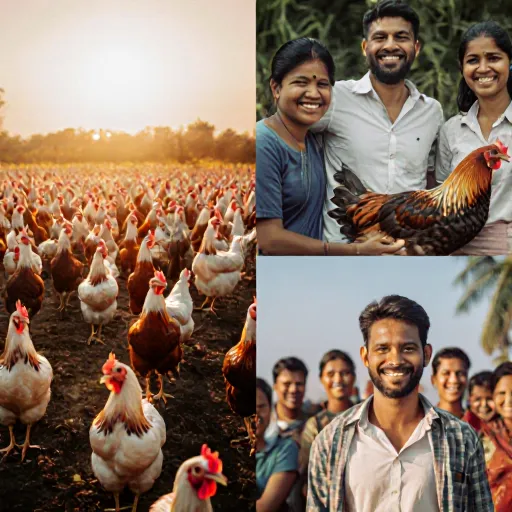
The agricultural sector plays a crucial role in the economic development of many rural communities. Strengthening local agricultural practices can significantly contribute to poverty alleviation by enhancing food security, creating employment opportunities, and generating income for small-scale farmers. One innovative approach that has shown promise in this context is broiler farming.
Enhancing Food Security
Broiler farming not only supports local economies but also addresses critical issues of food insecurity within communities. By increasing the availability and affordability of poultry products, broiler farming ensures that more people have access to essential nutrients such as proteins, vitamins, and minerals. This is particularly beneficial in regions where traditional diets lack sufficient nutritional diversity.
Creating Employment Opportunities
Broiler farming can create multiple employment opportunities across various stages of the production process. From feed preparation and poultry care to marketing and sales, each环节已经结束
Role in Food Security
Broiler farming plays a significant role in enhancing food security while simultaneously contributing to the alleviation of poverty. This agricultural practice not only increases the availability of protein-rich foods but also generates economic opportunities for small-scale farmers, particularly in developing countries.
Enhancing Food Security
Broilers are a vital component of poultry farming and provide an essential source of high-quality proteins. In regions where malnutrition is prevalent, broiler meat can serve as a crucial supplement to the diet, especially for vulnerable populations such as children, pregnant women, and the elderly. The consistent supply of broilers ensures that communities have access to a reliable source of protein.
Furthermore, broiler farming promotes sustainable food production by utilizing resources efficiently. Broilers are raised in controlled environments where feed conversion rates are optimized, leading to higher yields per unit of input. This efficiency makes broiler farming more resilient against fluctuations in global commodity prices and environmental factors.
Economic Impact on Small-Scale Farmers
Broiler farming offers a practical solution for small-scale farmers seeking to improve their livelihoods. The relatively low initial investment required, coupled with the quick turnaround time between feed input and meat production, allows these farmers to generate income rapidly.
For example, in many rural areas of Asia and Africa, broiler farming has been successfully implemented by local farmers who have seen significant increases in their household incomes. By selling excess broilers or eggs at market rates, they are able to reinvest into other productive ventures or meet daily expenses.
Environmental Considerations
Broiler farming can be environmentally friendly if practiced sustainably. Proper management of feed resources and waste can minimize the environmental footprint. Organic broiler farming, in particular, emphasizes the use of natural feeds and humane practices that enhance both food quality and farmer profits.
Adopting sustainable practices also helps reduce greenhouse gas emissions and water usage associated with intensive animal farming methods. By choosing certified organic broilers, consumers can support environmentally responsible agriculture while still benefiting from its economic advantages.
Promoting Community Development
The success of broiler farming extends beyond individual farmers to positively impact entire communities. Successful broiler projects often lead to the development of local infrastructure and services such as veterinary care, processing facilities, and marketing networks.
For instance, in Kenya, a broiler project led to the establishment of community cooperatives that not only provided training for farmers but also facilitated access to credit and market information. These initiatives have empowered rural communities by fostering a sense of ownership and collective responsibility towards food security and economic growth.
Conclusion
In conclusion, broiler farming is an effective tool in the fight against poverty and food insecurity. Its ability to provide nutritious protein-rich foods while generating income for small-scale farmers makes it a cornerstone of sustainable development efforts worldwide. By leveraging these benefits, we can pave the way towards more resilient and prosperous communities.
Support for Veterinary Services and Infrastructure
Beyond the direct economic benefits of broiler farming, supporting veterinary services and infrastructure is crucial for sustainable development. This support not only ensures the health and productivity of farm animals but also contributes significantly to poverty alleviation in rural areas.
Veterinary services play a pivotal role in maintaining animal health, which directly impacts the profitability and sustainability of broiler farming operations. Proper vaccination programs, regular health check-ups, and prompt treatment of diseases can prevent outbreaks that could lead to significant economic losses for farmers. By investing in veterinary infrastructure such as laboratories, quarantine facilities, and skilled personnel, communities are better equipped to handle epidemics and zoonotic diseases.
Broiler farming can help fight poverty by providing a consistent source of income for small-scale farmers who often lack access to other formal employment opportunities. When supported with the right veterinary services and infrastructure, these farms can operate more efficiently, reducing costs associated with disease outbreaks and improving productivity. This, in turn, leads to higher profits which can be reinvested into better living standards for farm families.
Examples of Support
- Vaccination Programs: Implementing widespread vaccination programs against common broiler diseases such as Newcastle Disease and Salmonella. This not only protects the flock but also reduces the risk of these diseases spreading to other livestock, enhancing overall animal health.
- Training for Farmers: Providing training sessions on best practices in poultry management, disease control, and biosecurity measures. These trainings can be conducted by local veterinary officers or extension agents.
- Access to Quality Veterinary Services: Ensuring that farmers have access to affordable and timely veterinary services is key. This could involve establishing mobile veterinary units that travel to rural areas where there are limited resources for animal healthcare.
Practical Advice
For local governments and NGOs supporting broiler farming initiatives, it is essential to work closely with communities to tailor support according to their specific needs. Here are some practical steps:
- Conduct Needs Assessments: Before implementing any veterinary services or infrastructure projects, conduct thorough assessments to understand the specific challenges faced by the community.
- Promote Collaboration: Encourage collaboration between local farmers' associations, government bodies, and private sector partners. This collaborative approach ensures that resources are used effectively and efficiently.
- Ensure Sustainability: Focus on sustainable practices in broiler farming such as waste management, feed efficiency, and water conservation. Sustainable practices not only enhance profitability but also contribute to environmental sustainability.
In conclusion, supporting veterinary services and infrastructure for broiler farming is a critical component of poverty alleviation efforts. By ensuring the health and productivity of the animals, these supports help create sustainable livelihoods that can lift rural communities out of poverty.
Challenges Faced by Broiler Farmers
Broiler farming is a crucial sector that contributes significantly to poverty alleviation and food security. However, it comes with its own set of challenges that farmers often face. Understanding these challenges can help in formulating effective strategies to support broiler farming as a tool for fighting poverty.
Limited Access to Capital
One of the primary challenges faced by broiler farmers is limited access to capital. Many small-scale farmers do not have easy access to credit facilities, which can hinder their ability to invest in necessary infrastructure and equipment. This limitation restricts their capacity to scale up operations and improve efficiency, thus affecting overall profitability.
For example, a farmer might need funds for purchasing broiler chicks, feed, and veterinary services. Without sufficient capital, they may not be able to afford these essentials, leading to lower productivity and reduced income. To address this issue, it is essential to promote financial inclusion by encouraging microfinance institutions and government-backed lending programs.
Market Inaccessibility
The market for broiler products can also pose challenges. Broiler farmers often struggle with finding reliable buyers and securing good prices for their produce. This problem is exacerbated in remote areas where transportation costs are high, making it difficult to reach larger markets.
For instance, a farmer in a rural area might have to travel long distances just to sell his broilers or eggs, leading to increased expenses and reduced profitability. To overcome this challenge, governments and organizations should work towards establishing better infrastructure for transportation and cold storage facilities. Additionally, promoting direct marketing channels such as farmers' markets or online platforms can provide more accessible outlets for broiler products.
Health Risks
Bird flu and other diseases present significant risks to broiler farming. Outbreaks not only affect the immediate flock but also have far-reaching economic impacts on the entire industry. Controlling such diseases requires strict biosecurity measures, which can be costly for small-scale farmers.
For example, a farmer might need to quarantine his entire flock or dispose of birds if an outbreak occurs. This could result in substantial losses and set back months of hard work. To mitigate these risks, there is a need for improved vaccination programs and public awareness campaigns about biosecurity practices. Support from veterinarians and extension services can also play a vital role in ensuring farmers are equipped to handle potential threats effectively.
Climate Change Impacts
The effects of climate change, including fluctuations in temperature and rainfall patterns, pose additional challenges for broiler farming. These changes can impact feed availability, water quality, and even the health of the birds themselves.
For example, extreme weather events like floods or droughts could disrupt supply chains, affect feed quality, or lead to higher mortality rates among broilers. Addressing these issues requires adaptive strategies such as diversifying crop production for alternative feed sources, implementing water conservation measures, and adopting resilient breeds of birds.
Government policies aimed at reducing greenhouse gas emissions and promoting sustainable farming practices can contribute positively to the resilience of broiler farms against climate change impacts.
Promoting Broiler Farming as a Tool for Poverty Alleviation
Despite these challenges, broiler farming remains a viable option for poverty alleviation. By providing employment opportunities and generating income through the sale of broiler products, this sector has the potential to lift many families out of poverty.
To harness this potential fully, it is crucial to address the aforementioned challenges effectively. Supporting small-scale farmers with access to capital, improving market connections, enhancing biosecurity measures, and adapting to climate change can all contribute significantly to sustainable broiler farming practices that fight poverty.
Government Support and Policies
Broiler farming, a crucial aspect of poultry farming, has the potential to significantly contribute to poverty alleviation. Governments across various regions have recognized this and introduced several support policies and initiatives aimed at encouraging broiler farming among small-scale farmers. These programs not only help in generating income but also stimulate local economies by creating employment opportunities.
Financial Assistance Programs
Governments provide financial assistance to small-scale farmers through loans, grants, and subsidies for the purchase of broiler chicks, feed, and veterinary services. For instance, in countries like India, the Government of India's Rashtriya Gramin Vikas Yojana (RGVY) provides funds for rural development projects, which include poultry farming.
Training and Skill Development
To ensure that farmers can maximize the benefits from broiler farming, governments offer training programs. These programs cover various aspects such as best practices in broiler rearing, disease management, feed efficiency, and market access strategies. In Nigeria, for example, the Ministry of Agriculture has launched several training initiatives under its National Livestock Transformation Programme (NLTP), equipping farmers with essential skills to enhance their productivity.
Infrastructure Development
The development of necessary infrastructure is crucial for broiler farming. Governments invest in improving poultry hatcheries, feed mills, and cold storage facilities to ensure the availability of quality products at competitive prices. In Thailand, the government has invested heavily in modernizing the poultry sector by setting up state-of-the-art hatcheries and feed manufacturing plants.
Market Linkages
One of the most significant challenges faced by small-scale farmers is accessing markets for their produce. Governments play a vital role in establishing market linkages, ensuring that broilers reach both local and international markets efficiently. In Vietnam, the Ministry of Agriculture and Rural Development has implemented programs to connect producers with large retailers and exporters, thereby increasing the marketability of broiler products.
Research and Innovation
Governments support research initiatives aimed at improving broiler farming practices. These programs focus on developing new breeds, enhancing disease resistance, and optimizing feed efficiency. In Brazil, the National Institute for Research in Poultry Science (INPA) conducts extensive research to enhance the productivity of broilers, which in turn benefits farmers.
Conclusion
In conclusion, government support policies play a pivotal role in leveraging broiler farming as an effective tool against poverty. By providing financial assistance, training programs, infrastructure development, market linkages, and research initiatives, governments can empower small-scale farmers to improve their livelihoods through broiler farming.
Case Studies of Successful Broiler Farms
The success stories of broiler farming provide a clear path for how this agricultural practice can significantly aid in fighting poverty. By examining real-world examples, we can see the tangible benefits that broiler farming offers to both individual farmers and communities.
Case Study 1: Ahmed from Rural Bangladesh
Ahmed, a small farmer in rural Bangladesh, took up broiler farming as a means to improve his family’s livelihood. He started with just five birds but has now expanded his farm to over 500 broilers.
Through careful management and access to markets, Ahmed was able to sell his broilers at a competitive price. This success not only increased his income but also allowed him to educate his children better and invest in community infrastructure such as roads and schools. His story is a testament to how broiler farming can uplift individuals from poverty.
"Broiler farming gave me the financial stability I needed to provide for my family and contribute positively to our community."
Case Study 2: The Green Valley Farm in Sub-Saharan Africa
The Green Valley Farm, located in a poverty-stricken region of Sub-Saharan Africa, has implemented broiler farming as part of its sustainable development strategy. By integrating broiler farming with other agricultural practices, the farm has created employment opportunities for local residents.
Not only does this increase income among the workforce but also improves food security by providing locally sourced protein. The farm’s success has been recognized nationally and internationally, highlighting how broiler farming can play a crucial role in combating poverty through sustainable agricultural practices.
"Broiler farming is not just about making money; it's about creating opportunities for our community to thrive."
Case Study 3: The Community Chicken Farming Project
The Community Chicken Farming Project in Indonesia is a collaborative effort that involves multiple families working together on broiler farming. This approach not only ensures better resource management but also fosters community cohesion and support.
Each family contributes to the overall success of the project, leading to increased income for everyone involved. The project has seen significant growth in both individual incomes and community wealth, proving that broiler farming can be a powerful tool in poverty alleviation when approached collectively.
"Together we are stronger, and together we have more opportunities."
Conclusion
The case studies above illustrate how broiler farming can serve as an effective tool for poverty reduction. By providing stable incomes, creating job opportunities, and enhancing food security, broiler farming contributes to the broader goals of sustainable development.
To replicate such successes in other regions, it is important to prioritize education on best practices, access to markets, and supportive government policies. Through these efforts, broiler farming can continue to play a vital role in improving lives and fighting poverty globally.
Conclusion
Broiler farming, a crucial sector within agriculture and rural development, plays an essential role in combating poverty. By fostering economic growth, creating employment opportunities, and improving livelihoods, broiler farming can significantly contribute to poverty alleviation efforts.
Empowering Local Communities
The success of broiler farming initiatives often hinges on community involvement and support. By engaging local farmers in training programs and providing them with the necessary resources, communities become more self-sufficient. This not only promotes sustainable practices but also encourages long-term economic stability.
Creating Employment Opportunities
Beyond direct employment within broiler farms, this industry generates numerous indirect job opportunities across various sectors such as feed production, transportation, and veterinary services. For instance, a large-scale broiler farm may require multiple workers for tasks ranging from feeding the chickens to maintaining the facilities.
Enhancing Livelihoods
Farmers who adopt broiler farming practices often see improvements in their income levels and overall quality of life. A successful broiler farm can provide a stable source of income, allowing families to invest in education, healthcare, and other essential services.
Case Studies
In regions like Sub-Saharan Africa and Southeast Asia, where poverty rates are high, broiler farming has demonstrated its potential to uplift communities. For example, a study conducted in Ghana revealed that small-scale broiler farmers experienced significant increases in their household incomes after adopting modern farming techniques.
Policies and Support
To maximize the benefits of broiler farming, governments and international organizations play a vital role by providing support through policies, subsidies, and infrastructure development. For instance, offering low-interest loans or grants for purchasing broiler chicks can encourage more farmers to enter this sector.
Additionally, investing in rural roads and communication networks ensures that farmers have access to markets and information about best practices. By creating a conducive environment for broiler farming, policymakers contribute significantly to poverty reduction efforts.
Farmers' Empowerment
Empowering farmers through education and training is crucial in ensuring their success in the broiler farming industry. Programs that focus on improving management skills, disease prevention techniques, and feed efficiency can help farmers achieve higher yields and better profits.
In summary, broiler farming offers a promising pathway to fight poverty by enhancing economic opportunities, creating employment, and improving livelihoods across various communities. By leveraging the potential of this industry, stakeholders can work towards sustainable development goals and contribute positively to global poverty alleviation efforts.
FAQs
How can broiler farming specifically help fight poverty?
Broiler farming, or chicken farming for meat production, is a vital agricultural activity that plays a significant role in helping to combat poverty. Chickens are relatively easy and inexpensive to raise compared to other livestock, making them an accessible option for small-scale farmers. This accessibility translates into economic opportunities for individuals who might otherwise lack the means to support their families.
Broiler farming can provide income through:
- Sales of Live Chickens and Meat: Selling live chickens or processed meat at local markets, butcher shops, or even online platforms can generate a steady stream of income. This income is crucial for sustaining families and providing resources for education and healthcare.
- Diversification of Income Streams: Small-scale farmers often combine broiler farming with other agricultural activities such as vegetable gardening or raising additional livestock. Broilers provide a reliable source of income that can be used to invest in these complementary ventures, further enhancing overall economic stability.
- Educational Opportunities for Children: The money earned from broiler farming often goes towards ensuring children receive an education. Educated individuals are more likely to find better-paying jobs and break the cycle of poverty.
Besides direct income generation, broiler farming also contributes indirectly by:
- Creating Jobs: Small farms often require additional labor for tasks such as feeding chickens, cleaning coops, and processing meat. This creates employment opportunities for family members or local community members.
- Building Infrastructure: As the farming business grows, there is a need to invest in infrastructure like proper housing facilities, feed storage, and transportation. These investments can stimulate other local businesses such as construction companies and suppliers.
Are broilers suitable for small-scale farmers?
Yes, broilers are highly suitable for small-scale farmers due to their:
- Ease of Care: Broiler chickens have minimal requirements in terms of space and resources. They can be raised in simple structures like sheds or even in backyards.
- Rapid Growth Rate: Broilers grow quickly, typically reaching maturity within 6 to 8 weeks. This short growing period allows farmers to recoup their investments relatively fast.
- Limited Resources Needed: The cost of feed and other resources is relatively low compared to other livestock like cattle or pigs. Small-scale farmers can easily afford the necessary inputs for broiler farming.
What challenges do small-scale broiler farmers face?
While broiler farming offers numerous benefits, small-scale farmers often encounter several challenges. These include:
- Market Access: Small farmers may struggle to find reliable buyers or access to profitable markets. Establishing relationships with local retailers or participating in farmer’s markets can help overcome this challenge.
- Disease Management: Ensuring the health and hygiene of chickens is crucial to prevent widespread disease outbreaks that could decimate entire flocks. Investing in proper vaccination programs and maintaining clean environments is essential.
- Economic Volatility: Fluctuations in feed prices or unpredictable market conditions can affect profitability. Diversifying income sources through multiple agricultural activities helps mitigate these risks.
How can government and non-governmental organizations (NGOs) support broiler farming?
Government and NGOs play a crucial role in supporting broiler farming initiatives that aim to reduce poverty:
- Provide Training and Education: Offering training programs on best practices for broiler farming can significantly improve the productivity and success rates of small farmers.
- Promote Market Access: Establishing partnerships with local supermarkets, restaurants, or exporting companies can help farmers connect to reliable buyers. This also ensures fair market prices for their produce.
- Funding and Grants: Providing financial assistance in the form of grants or low-interest loans can assist small-scale farmers in purchasing necessary equipment and feed.