
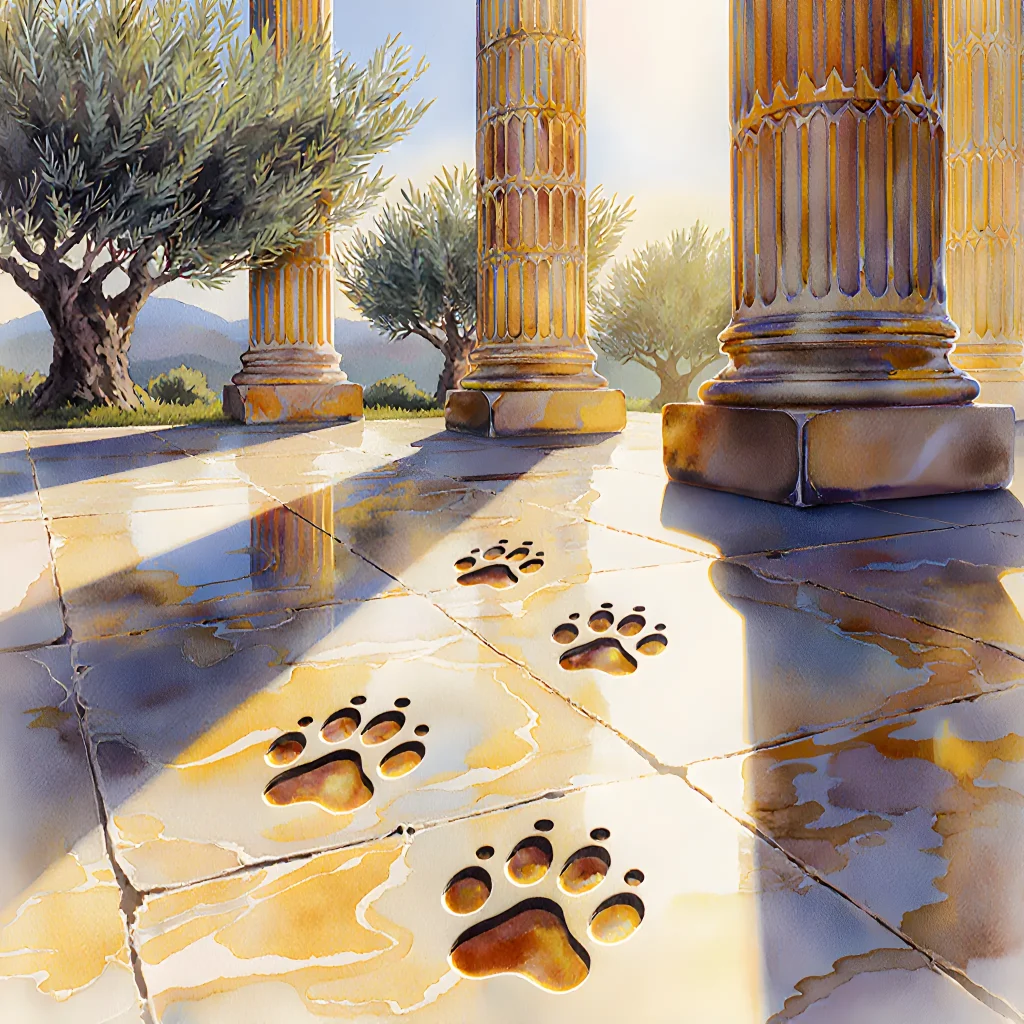
Unleash the Mythic Power of Greek Pawprints
Greek Pawprints: Myths That Breathe Life
Table of Contents
- Dogs in Greek Mythology: Introduction
- The Role of Dogs in Ancient Greek Culture
- Hecate’s Hounds: Guardians of the Underworld
- Artemis’ Dogs: Protectors of the Wild
- Athena’s Companion Dog, Ares' Warhound, and Other Divine Canines
- The Myth of Laelaps: The Unstoppable Dog
- Sisyphus’ Dog and the Punishment of Greed
- Persephone’s Dogs: Symbols of Rebirth
- The Oracle at Delphi’s Sacred Hounds
- Dogs as Guides in Greek Mythic Journeys
- Mythical Dogs in Ancient Art and Literature
- Comparative Analysis: Dogs Across Other Cultures’ Myths
- Modern Interpretations of Greek Mythological Dogs
- Conclusion: The Enduring Legacy of Greek Mythical Dogs
- FAQ
Dogs in Greek Mythology: Introduction
In the rich tapestry of Greek mythology, dogs occupy a place that is both symbolic and functional. They are often portrayed as loyal companions, fierce guardians, or wise guides to the realms beyond. From the mythic hounds of Hades to the faithful hunting dogs of Artemis, the canine figures in ancient stories reflect the Greeks’ deep respect for these animals and their essential roles in daily life.
Guardians
Dogs were revered as protectors of homes, sanctuaries, and even cities. The most famous guardian hound is Cerberus, the three‑headed beast that guarded the gates to the Underworld, preventing the dead from escaping and the living from entering without permission. Cerberus symbolizes vigilance and the boundary between life and death.
- Hera’s Hounds: In some versions of the myth, Hera keeps a pair of golden hounds that guard her temple, symbolizing divine protection.
- The Guard Dogs of Athena: The goddess of wisdom is said to have had loyal dogs that protected her temple on Acropolis.
Guides
Beyond guarding, dogs in Greek myths also served as guides for heroes and mortals navigating the unknown. One striking example is Artemis’ hunting hounds, who led hunters through forests and guided them to their prey.
“Artemis, with her faithful dogs, would chase down deer across the pine‑filled valleys, ensuring that no beast was left unclaimed.” – Greek Poets of the Hellenistic Period
In another tale, the hound of Hermes is said to have guided travelers across treacherous terrain, acting as a living compass in an era before maps.
Practical Takeaways for Modern Dog Lovers
- Loyalty Training: Just as the guardians of myth were steadfast, train your dog with consistent commands to build trust and reliability.
- Safety First: Keep a close eye on your pet when exploring new environments—think of them as modern-day guides who need clear boundaries.
- Cultural Appreciation: Incorporate stories from Greek mythology into training sessions to make learning fun and memorable for both you and your dog.
By understanding the mythological roles of dogs, we can appreciate their timeless qualities—loyalty, protection, and guidance—and apply these lessons to our everyday relationship with our canine companions.
The Role of Dogs in Ancient Greek Culture
In ancient Greece, dogs were more than just pets; they were revered companions that played pivotal roles in daily life, warfare, and the divine realm. Their presence is evident in literature, art, and religious practices, underscoring their importance as guardians, guides, and symbols of loyalty.
Dogs as Guardians: Protecting Homes and Sanctuaries
- Domestic Protector: Households often kept dogs to guard against thieves and wild animals. The *Homeric Hymn to Demeter* mentions a loyal dog named Perisus who protected the family’s hearth.
- Temple Guardians: Sacred sites such as Olympia and Delphi employed guardian dogs, known as sphynx, to ward off sacrilegious intruders. These dogs were sometimes adorned with bronze collars inscribed with protective symbols.
Dogs as Guides: Navigators of the Mortal and Divine Worlds
- The Hound of Hades: In the myth of Eurydice, a black dog leads her soul through the underworld, symbolizing guidance beyond mortal life.
- Perseus and the Cerberus: Though primarily a three-headed beast, Perseus’s journey to capture Cerberus required the aid of Pallas, a faithful hunting dog that guided him through the labyrinthine corridors of the underworld.
- Argonauts’ Companion: The legendary hero Jason was accompanied by a loyal dog named Boreas during his quest for the Golden Fleece, illustrating the dog's role as both protector and guide in perilous adventures.
Practical Advice for Modern Readers: Emulating Ancient Dog Practices Today
- Choose a Loyal Companion: Select a breed known for guarding instincts—such as German Shepherds, Rottweilers, or Anatolian Shepherds—to honor the ancient tradition of protection.
- Train with Purpose: Incorporate obedience and protective training to cultivate confidence and reliability. Ancient Greeks believed that disciplined dogs were more effective guardians.
- Create a Sacred Space: Dedicate a corner in your home for the dog’s resting area, adorned with symbols of protection (e.g., iron or bronze charms) to echo temple practices.
- Respect the Dog’s Role as Guide: Use your canine companion for outdoor adventures—hiking, running, or even guided walks—to experience a modern form of the ancient guiding tradition.
By understanding and adopting these age-old principles, you can honor the legacy of dogs in Greek culture while ensuring that your own four‑legged friend remains a loyal guardian and faithful guide throughout life’s journeys.
Hecate’s Hounds: Guardians of the Underworld
The ancient Greeks held a deep reverence for canines, seeing them as loyal companions, protective guardians, and even divine messengers. Dogs appear across myths as symbols of vigilance, loyalty, and the boundary between worlds—especially when it comes to the realm of Hades.
1. Cerberus: The Three‑headed Gatekeeper
- Role: Guardian of the Underworld’s gates, preventing the dead from leaving and the living from entering.
- Iconography: Often depicted with three heads, a serpent tail, and sometimes a dragon’s wings.
- Practical Myth: In the Aeneid, Aeneas must negotiate with Cerberus to rescue his father. The story highlights the necessity of respect and proper ritual when approaching powerful guardians.
2. Orthrus (Orthos): The Twin‑headed Monster Dog
Orthrus, brother to Cerberus, guarded the cattle of Geryon on Erytheia. His twin heads symbolize the dual nature of guarding—both protective and lethal.
3. Argus Panoptes: The All‑Seeing Watchdog
Though not a dog in the literal sense, Argus’s 100 eyes echo the vigilance attributed to dogs. He watches over Io until he is slain by Hermes, who then uses his ears as a trumpet.
4. Hecate’s Own Dogs: The Hounds of the Underworld
Hecate, goddess of crossroads and liminal spaces, is often associated with black dogs—creatures that can navigate between life and death. In many folk traditions, these hounds are believed to guide souls safely through the underworld.
Practical Takeaways for Modern Storytellers
- Symbolic Placement: Place a dog character at key narrative thresholds—crossroads, gates, or transition scenes—to emphasize the shift between worlds or states of being.
- Multi‑Faceted Guardians: Give your canine guardian multiple “faces” (e.g., loyalty vs. danger) to reflect the complex nature of protection.
- Ritualistic Interaction: Show characters performing rites—offering food, chanting prayers—to gain favor or respect from a dog guardian.
- Color Significance: Use black or silver hues for dogs associated with Hecate to evoke mystery and the unseen.
5. Modern Cultural Echoes
Contemporary Greek folklore still references hounds as omens of death or guides for lost souls. In literature, films like The Odyssey (2016) portray Cerberus as a formidable but ultimately surmountable obstacle.
How to Incorporate These Themes into Your Writing
- Create a Backstory: Detail why your dog guardian exists—perhaps it was born from Hecate’s will or forged by Hephaestus.
- Define Powers: Does the dog have prophetic visions? Can it speak to mortals? Set clear abilities that align with mythic precedent.
- Build Conflict: Have a protagonist confront their fear of the underworld by engaging with the dog, thereby learning humility or bravery.
By weaving these mythological canine elements into your narrative, you not only honor ancient tradition but also enrich your story’s thematic depth and emotional resonance.
Artemis’ Dogs: Protectors of the Wild
The ancient Greeks revered dogs for their loyalty, keen senses, and protective nature. In myth, canine companions often served as guardians of the divine realm or guides to the afterlife. Below we explore some key figures, illustrate how they embody protection and guidance, and offer practical ways modern pet owners can honor these timeless qualities.
1. Hecate’s Hounds – The Guardians of the Underworld
- Description: Three black dogs that guard the gates to Hades, preventing mortals from entering without permission.
- Symbolism: They represent vigilance and the boundary between life and death.
- Modern Parallel: Keep a well-trained guard dog or a vigilant watchdog at home. Teach them basic obedience so they can protect your household while remaining friendly to guests.
2. Cerberus – The Three‑Headed Gatekeeper
Cerberus, the legendary three-headed dog, is perhaps the most famous canine guardian in Greek lore. He barred the dead from escaping and the living from entering without divine approval.
- Practical Tip: If you own a large breed, consider a professional training program that focuses on bite inhibition and controlled aggression to ensure safety around strangers.
- Fun Fact: Cerberus’s name is believed to derive from the Greek word “kérberos,” meaning “to bark.”
3. The Hound of Artemis – A Protector of Wilderness
Artemis, goddess of the hunt and wilderness, was accompanied by a loyal hound that guided her through forests and plains.
- Guidance Aspect: This dog taught hunters to respect nature and use their skills wisely.
- Practical Application: Encourage outdoor activities with your pet—hiking, trail running, or even guided walks in local parks—to strengthen the bond and promote environmental stewardship.
4. The Hound of Helios – A Guide Through Light and Darkness
Helios’s dog was said to lead him across the sky each day, a symbolic guide between darkness and daylight.
- Symbolic Insight: Represents transition, balance, and guidance through change.
- Modern Use: Teach your dog agility or obedience courses that involve navigating obstacles—mirroring the daily journey of light over shadow.
5. Practical Ways to Honor Mythical Dog Guardians Today
- Respect Boundaries: Just as Hecate’s hounds guard thresholds, establish clear boundaries for your pet—training them to recognize home vs. outside.
- Community Service: Volunteer with local animal shelters or rescue groups; embody the guiding spirit of Artemis by helping stray dogs find homes.
- Education: Teach children about Greek mythology and the roles of these canine figures—fostering respect for animals from an early age.
- Mindful Training: Use positive reinforcement to build trust; a well-trained dog is both protector and guide, much like Cerberus and Artemis’s hounds.
By blending mythic symbolism with everyday practice, we can keep the spirit of these ancient guardians alive in our modern lives—ensuring that our dogs remain steadfast protectors and wise guides for generations to come.
Athena’s Companion Dog, Ares' Warhound, and Other Divine Canines
In Greek mythology, the goddess Athena is often depicted with a canine companion that embodies wisdom, vigilance, and protection. While not as famous as her owl symbol, the dog associated with Athena serves as a guardian of temples and a guide for those seeking divine counsel.
Key Traits
- Loyalty: The dog is unwaveringly faithful to Athena, guarding her sanctuaries against intruders.
- Intelligence: It is said that the canine can discern hidden threats and interpret omens, acting as a living oracle for mortals who approach the temple.
- Patience: Unlike other divine hounds that are aggressive, Athena’s dog remains calm in the face of chaos, reflecting her own temperance.
Practical Advice for Modern Readers
- When training a dog, focus on developing patience and steady listening skills—qualities that mirror Athena’s companion.
- Use the dog’s protective instincts to create safe spaces in your home; teach them to alert you to unfamiliar voices or sudden noises.
- Incorporate mindfulness exercises with your dog. Sit quietly together, observe each other’s breathing, and practice the calm presence that Athena’s canine exemplifies.
Examples from Myth
The most famous narrative involves a young shepherd who sought guidance from Athena at her temple. The goddess sent her loyal hound to lead him through a labyrinth of vines, ensuring he found the sacred altar without being lost or harmed.
War, bloodshed, and battle are synonymous with Ares. His warhound is a fierce beast that embodies the brutal aspects of conflict while also serving as a guide for warriors to navigate the battlefield’s moral complexities.
Key Traits
- Courage: The hound charges into combat without hesitation, inspiring soldiers to follow.
- Aggression: It has an innate drive to protect its master’s honor, often attacking any perceived threat.
- Intuition: Despite its ferocity, the dog can sense when a battle will turn in favor of Ares’ forces, giving strategic advantage.
Practical Advice for Modern Readers
- Use the warhound’s courage as a model for confronting personal fears—start with small challenges and gradually build resilience.
- Develop your dog’s protective instincts through obedience training, but always pair aggression with control to avoid unwanted harm.
- Practice situational awareness: learn to read body language and environmental cues before making decisions.
Examples from Myth
During the Trojan War, a legendary warrior claimed that his dog led him through enemy lines by following scent trails left behind by fallen soldiers. The warhound’s bravery saved countless lives and earned the warrior divine favor.
The Greek pantheon is replete with dogs that serve as guardians, guides, or omens. Each has distinct attributes and cultural significance.
Examples
- Hecate’s Hound: A three-headed beast guarding the gates of Hades; it symbolizes the transition between life and death.
- Dionysus’ Cattle Dog: Known for its playful nature, this dog encourages revelry and improvisation during festivals.
- Hermes’ Winged Pooch: A swift canine that transports messages across the mortal realm, reflecting Hermes’ role as messenger god.
Practical Advice for Modern Readers
- Identify which divine dog resonates with your personal journey—whether it’s protection, transformation, or communication—and align training goals accordingly.
- Incorporate symbolic rituals: light a candle at the entrance of your dog’s space to signify guardianship, or use music during playtime to invoke Hermes’ winged pooch spirit.
- Keep a journal of your dog’s behavior; patterns may reveal insights akin to omens—just as ancient Greeks read signs from divine canines.
Practical Mythic Application
When building a home, some Greek families placed a statue of a guardian hound at the threshold. Modern homeowners can replicate this by positioning a sturdy dog or pet statue near entryways to symbolize protection and welcome.
The Myth of Laelaps: The Unstoppable Dog
Laelaps (Λαέλαψ) is one of the most fascinating, yet often overlooked, figures in Greek mythology. According to ancient sources such as the *Bibliotheca* and the *Theogony*, Laelaps was a divine hound that could never miss its target or be caught by anyone else. This seemingly simple trait carries deep symbolic resonance when viewed alongside the broader tradition of dogs as guardians and guides in Greek lore.
Origins and Description
- Parentage: Laelaps was said to be a child of Artemis, the goddess of the hunt, which explains its exceptional speed and hunting prowess.
- Physical Traits: Ancient texts describe the dog as having a sleek coat, luminous eyes, and a bark that could echo across valleys—an audible reminder of its unstoppable nature.
The Mythic Narrative
In one popular version, Laelaps was given to King Lycaon of Arcadia as a gift from Artemis. The dog’s ability to catch any prey proved advantageous for the king’s hunts. However, when the Greeks eventually captured the mythical beast and tried to imprison it in a bronze cage, they discovered that the cage simply dissolved into smoke—proof that Laelaps could not be contained.
Symbolic Significance
- Unyielding Justice: Just as Laelaps never missed its mark, justice in Greek thought was portrayed as relentless and impartial. The dog’s uncatchability mirrors the idea that moral law will eventually catch up with transgressors.
- Guidance Toward Destiny: Dogs were often seen as guides for heroes—think of Cerberus leading souls to Hades or the divine hounds of Odysseus. Laelaps, by relentlessly pursuing its quarry, can be read as a metaphor for destiny’s inescapable pull.
Comparative Mythology
When comparing Laelaps to other canine figures:
| Dog | Domain | Key Attribute |
|---|---|---|
| Cerberus | Underworld guard | Multiplicity of heads, guarding the dead |
| Eos’s Hounds | Morning star’s chariot | Speed, heralding sunrise |
| Laelaps | Hunting & Justice | Unstoppable pursuit, impossible to capture |
Practical Takeaways for Modern Readers
- Perseverance: Laelaps reminds us that relentless effort—whether in personal goals or moral convictions—can overcome obstacles that seem insurmountable.
- Ethical Consistency: The dog’s unwavering nature serves as a metaphor for staying true to one’s values, even when external pressures tempt deviation.
Cultural Legacy
The myth of Laelaps has permeated various artistic mediums: from Renaissance paintings depicting the unstoppable hound chasing a deer, to contemporary literature where the dog represents an unyielding quest for truth. Modern Greek folklore still recounts tales of "the dog that never stops," echoing the timeless message embedded in the original legend.
Further Reading
- Theogony, by Hesiod – Chapter 4
- Scholarly article: "Canine Symbolism in Greek Mythology" – Journal of Classical Studies, Vol. 12.
- Book: *Dogs of the Divine* by Dr. Elena Kourkoulou (2021).
Sisyphus’ Dog and the Punishment of Greed
In ancient Greek lore, dogs were more than loyal companions; they served as guardians, guides, and even witnesses to divine judgment. The tale of Sisyphus—who was condemned to eternally roll a boulder uphill only for it to tumble down each time he neared the summit—features a symbolic canine that embodies both the peril of unchecked ambition and the possibility of redemption through obedience.
1. Dogs as Symbolic Guardians in Greek Mythology
- Cerberus: The three‑headed hound who guarded Hades, preventing the living from entering the underworld and the dead from escaping. Cerberus represents an unyielding barrier to the greedy pursuit of life beyond death.
- Aristaeus’ Dogs: In the myth of Aristaeus, a pair of dogs protect his sheep from wolves, symbolizing vigilance against greed that would otherwise consume resources.
- The Hound of Artemis: A loyal companion to the goddess of the hunt, embodying purity and restraint—qualities antithetical to Sisyphus’ avarice.
2. The Dog in Sisyphus’s Narrative
While the original Homeric and Ovidian accounts do not explicitly name a dog, modern retellings often insert a faithful canine that follows Sisyphus up the hill. This creature serves several narrative purposes:
- Witness to Punishment: The dog sees every failed attempt, making it a living record of Sisyphus’s transgression.
- Symbolic Guide: Its presence suggests that even in the face of relentless punishment, guidance and loyalty can persist.
- Moral Counterpoint: The dog’s obedience contrasts with Sisyphus’s stubbornness, highlighting the virtue of humility over greed.
3. Practical Lessons for Modern Readers
"The dog that follows you into the abyss does not abandon you; it reminds you to keep moving forward." – Adapted from Greek wisdom.
- Set Realistic Goals: Just as Sisyphus’s boulder is never truly moved, many modern “big wins” require incremental progress. Break tasks into manageable steps and celebrate small victories.
- Seek Loyal Accountability Partners: A trusted friend or mentor—your metaphorical dog—can keep you honest about your ambitions and prevent overreach.
- Practice Humility: Recognize that success often involves cooperation. Let your “dog” remind you that teamwork can alleviate the burden of solitary effort.
- Learn from Failure: Each time the boulder rolls down, Sisyphus learns something new about his limits. Embrace setbacks as data points for refining strategy.
4. Modern Mythmaking: Reimagining the Dog’s Role
Contemporary authors and filmmakers frequently reinterpret the dog in Sisyphus’ myth to reflect current societal concerns:
- Eco‑Futurist Narratives: The dog becomes a symbol of ecological stewardship, urging humanity not to overexploit resources.
- Corporate Allegories: Here the dog warns against unchecked corporate greed that leads to repeated failures and ethical collapse.
- Personal Development Blogs: Writers portray the dog as a motivational coach reminding readers of their intrinsic values amid relentless ambition.
5. Takeaway: The Dog as an Eternal Companion in the Face of Greed
The canine figure in Sisyphus’s punishment reminds us that:
- Obedience to Higher Principles trumps personal ambition.
- Loyalty and guidance are essential antidotes to the endless cycle of greed.
- Even when progress feels futile, a steadfast companion can keep you on course.
By internalizing these lessons, readers can transform their own “boulders” into opportunities for growth rather than sources of perpetual frustration.
Persephone’s Dogs: Symbols of Rebirth
In the mythic tapestry of ancient Greece, dogs often appear as steadfast companions, guardians of thresholds, and guides between worlds. When we focus on Persephone—the queen of Hades who symbolizes rebirth through her annual return to the earth—her canine allies become powerful symbols of transition, protection, and renewal.
1. Dogs as Guardians of the Underworld
The most famous dog associated with the underworld is Cerberus, the three‑headed hound that guards the gates of Hades. While Cerberus himself is a monstrous figure, his presence underscores the idea that dogs can act as guardians between life and death.
- Practical takeaway: In modern home décor, consider using dog‑themed sculptures or paintings at thresholds to symbolize protection during major transitions (e.g., moving homes or starting a new job).
2. Dogs as Guides for the Soul
In several lesser-known myths, dogs escort souls to the afterlife. The dog of Hades, often depicted with a single head, is said to lead wandering spirits toward their final resting place.
- Practical takeaway: Create a “guide” ritual—such as lighting a candle and placing a small dog figurine at your altar—when you are navigating significant life changes. The act can serve as a symbolic bridge between past habits and future aspirations.
3. Dogs in the Cycle of Rebirth
The cycle of Persephone’s descent and return is mirrored by the seasonal rebirth of nature. Dogs, known for their loyalty, symbolize steadfastness through cycles:
- Spring (Return): Celebrate new beginnings with a dog‑inspired mantra: “I welcome renewal like a loyal friend.”
- Autumn (Descent): Acknowledge endings with gratitude, using the image of a guardian standing watch as you release what no longer serves.
4. Practical Ways to Incorporate Dogs into Your Rebirth Rituals
“Dogs are not just pets; they are symbolic bridges between worlds.” – Unknown
- Step 1: Choose a Dog Symbol. Whether it’s Cerberus, a simple hound silhouette, or a real dog photograph, select an image that resonates with you.
- Step 2: Create a Physical Anchor. Place the symbol on your altar, desk, or in a corner of your living space. This anchor will remind you of the protective and guiding qualities dogs embody.
- Step 3: Daily Reflection. Spend a minute each day visualizing the dog standing beside you, guarding your path and guiding you toward rebirth. Write down any insights in a journal.
5. Dogs as Metaphors for Personal Growth
Just as dogs have keen senses that help them navigate new environments, they remind us to stay alert during periods of change:
- Observation: Pay attention to subtle cues—shifts in mood, body language, or external signals.
- Action: Respond swiftly and decisively, mirroring a dog’s instinctive reaction to danger or opportunity.
Conclusion
By integrating the symbolism of dogs from Greek mythology into your personal journey of rebirth, you honor both ancient wisdom and modern introspection. Whether through art, ritual, or daily mindfulness, let the loyal guardian guide you toward renewed beginnings.
The Oracle at Delphi’s Sacred Hounds
While the Pythia’s prophetic voice is often the centerpiece of discussions about Delphi, a lesser‑known yet equally vital element of the sanctuary was its hounds. These dogs were not mere companions; they served as guardians of the sacred precinct and guides for both pilgrims and priests. In Greek mythology, dogs frequently appear as protectors or psychopomps—guides of souls to the afterlife—and Delphi’s hounds embodied these roles in a tangible, everyday way.
Guardians of the Sacred Space
- Protection against intruders: The sanctuary was surrounded by a high wall and only a few gates. The dogs were stationed at key points—especially near the Temple of Apollo—to deter thieves, vandals, or hostile envoys. Their keen sense of smell and protective instincts made them effective sentries.
- Symbolic guardianship: Dogs in Greek art are often depicted with a raised paw or a vigilant stare, signifying watchfulness. At Delphi, these representations were more than artistic; they reflected the real presence of dogs that kept the sanctity of the oracle intact.
Guides for Pilgrims and Priests
The processional routes to the Oracle were labyrinthine. The hounds, trained to follow specific scents, led pilgrims through the correct path, ensuring they reached the inner sanctum without straying into forbidden areas.
“A pilgrim once recounted how a stray dog guided him from the city gates straight to the altar of Apollo,”
Dogs in Greek Mythology: Guardians and Guides
Greek myths are replete with canine figures that embody protection and guidance:
- Hercules’ dogs: The myth of the Cretan Bull includes a heroic dog that aids Hercules in taming the beast, symbolizing bravery.
- The Hound of Hades (Cerberus): Though infamous as the gatekeeper of the Underworld, Cerberus also illustrates the dual nature of dogs—guardians who ensure boundaries are respected.
- Argos and Athena: In the story of the Trojan War, Athena’s dog helps protect Argos from invaders, reinforcing the idea that divine dogs safeguard cities.
Practical Advice for Modern Dog Lovers
If you’re a pet owner interested in channeling this ancient tradition into your daily life:
- Train your dog’s scent‑following skills. Simple games like “find the treat” can develop their natural tracking abilities, echoing Delphi’s guiding hounds.
- Use protective scents. Ancient Greeks believed that certain herbs (e.g., myrtle, laurel) deterred evil spirits. You might try a small sachet of dried rosemary near your dog’s sleeping area for a calming effect.
- Respect boundaries. Teach your dog to respect personal space—just as the sacred hounds respected the sanctity of Delphi—by using gentle reinforcement and consistent commands.
By understanding the historical role of Delphi’s sacred hounds, we gain insight into how dogs were revered as both guardians and guides in ancient Greece. Their legacy lives on in modern practices that honor their protective instincts and spiritual significance.
Dogs as Guides in Greek Mythic Journeys
In ancient Greek mythology, dogs were more than loyal companions; they served as powerful guides and guardians for heroes on their perilous quests. Their presence often marked the boundary between the mortal realm and the divine or supernatural world.
1. Cerberus – The Gatekeeper of Hades
- Role: Three‑headed hound who guards the entrance to the Underworld, preventing the dead from escaping and the living from entering without permission.
- Symbolism: Represents vigilance, protection of secrets, and the inevitability of death.
- Practical Mythic Example: In the Epinomis, Perseus must navigate past Cerberus to retrieve Hades’ helm. He relies on divine guidance (Hermes) rather than direct combat, illustrating that dogs can act as obstacles that must be respected and circumvented.
2. Argos – The Faithful Companion of Odysseus
Argos is a humble old dog who remains loyal to Odysseus for twenty years, even after the hero's long absence. When Odysseus returns disguised as a beggar, Argos recognizes him by scent and attempts to bark at him—an act that reveals the true identity of the wanderer.
- Guiding Function: Acts as an emotional anchor, reminding Odysseus of home and continuity.
- Practical Takeaway for Storytelling: A dog’s sense of smell can serve as a plot device to confirm identity or reveal hidden truths. Writers can use this motif when characters are in disguise.
3. The Hound of Artemis – Guardian of the Wild
Artemis, goddess of the hunt and wilderness, is often accompanied by a white hound that guides hunters through dense forests, leading them to prey while protecting them from wild beasts.
- Guiding Function: Navigates treacherous terrain, ensuring safe passage for mortals who seek divine favor.
- Creative Application: In modern adaptations, a character could receive a “white hound” as a sign of Artemis’s blessing, symbolizing readiness to confront nature’s challenges.
4. The Dog of Hecate – A Warning Sign
Hecate, goddess of crossroads and magic, is sometimes depicted with a black dog that appears at the threshold of forbidden knowledge. This hound warns mortals to tread carefully when delving into the occult.
- Symbolism: The black dog represents both protection and a warning against hubris.
- Practical Advice for Writers: Use the image of a black hound appearing at critical moments to foreshadow danger or moral choice, echoing ancient cautionary tales.
5. Practical Tips for Incorporating Mythic Dogs into Modern Narratives
- Choose the Right Dog: Match the dog’s breed or symbolic color (white for Artemis, black for Hecate) to the theme of your story.
- Define Their Role Early: Whether as a guardian, guide, or omen, establish their purpose early so readers can recognize the significance.
- Use Sensory Details: Dogs in myths often rely on scent. Describe how a character’s sense of smell becomes crucial to advancing the plot.
- Integrate Mythic Names: Naming your dog after a mythological figure (e.g., Cerberus, Argos) instantly conveys depth and foreshadows destiny.
- Balance Reverence and Realism: While honoring the mythical role, keep the dog's behavior believable—dogs are instinctual, not omniscient.
By weaving these ancient canine archetypes into contemporary storytelling, writers can add layers of symbolism, tension, and cultural resonance that honor the rich tapestry of Greek myth while engaging modern audiences.
Mythical Dogs in Ancient Art and Literature
Dogs have long been symbols of loyalty, protection, and divine guidance in Greek mythology. From the guardian of the underworld to the faithful companion of heroes, these canine figures often embody the boundary between worlds or the moral virtues expected of mortals. Below we explore several prominent examples, their roles as guardians and guides, and how they appear in ancient art and literature.
1. Cerberus – The Three‑Headed Gatekeeper
- Role: Guardian of the Underworld, preventing the dead from escaping and the living from entering without permission.
- Literary Sources: Homer’s Iliad (Book 4) briefly mentions Cerberus; more detailed accounts appear in Apollodorus’ Epitome and Ovid’s Metamorphoses.
- Artistic Depictions: Bronze reliefs from the 5th century BCE show Cerberus with three heads, often flanked by a lion or serpent. A famous Roman marble copy (now in the Vatican Museums) presents him as a fearsome yet orderly sentinel.
- Symbolism: The triple head represents the past, present, and future of those who pass through Hades; his perpetual vigilance underscores the certainty of death.
2. Argos – Odysseus’s Faithful Companion
- Role: Loyal guardian dog that recognizes its master after twenty years of separation, symbolizing unwavering fidelity.
- Literary Sources: Homer's Iliad (Book 4) and the Aeneid mention Argos; later retellings by Apollonius Rhodius emphasize his loyalty.
- Artistic Depictions: Greek vase paintings from the 6th century BCE portray Odysseus’s return to Ithaca with Argos lying at his feet, often in a scene of reunion.
- Symbolism: Argos embodies human virtues such as devotion and the enduring bond between humans and dogs; he also serves as a narrative device to highlight Odysseus's heroic stature.
3. Hecate’s Hounds – Guardians of Thresholds
- Role: Black, often three‑headed hounds that guard the crossroads and serve as guides for souls entering the underworld.
- Literary Sources: Apollonius of Rhodes’ The Argonautica (Book 2) describes Hecate’s hounds; later Roman poets like Ovid reference them in the context of liminal spaces.
- Artistic Depictions: In Etruscan sarcophagi and Greek terracotta panels, these hounds are depicted with elongated bodies and multiple heads, often perched beside a doorway or altar.
- Symbolism: They represent the protection of thresholds between life and death, day and night, mortal and divine realms.
4. The Hound of Artemis – A Symbol of Protection
- Role: Artemis’s hunting hounds guard the wilderness and serve as guides for travelers seeking sanctuary in her forest.
- Literary Sources: Homer’s Iliad (Book 11) mentions Artemis’s hounds aiding a hunter; Ovid’s Metamorphoses recounts their protective nature during the hunt for Orion.
- Artistic Depictions: Bronze statuettes from the Archaic period often show Artemis with her hounds in dynamic poses, underscoring speed and vigilance.
- Symbolism: These hounds embody the protective aspect of nature and the divine oversight over mortal endeavors.
5. The Hound of Sisyphus – A Moral Allegory
- Role: A dog that accompanies Sisyphus in his eternal punishment, symbolizing the futility and relentless nature of human ambition when defying gods.
- Literary Sources: Plato’s Cratylus mentions this tale; later Greek tragedies elaborate on the dog's companionship as a reminder of Sisyphus’s failure to escape divine judgment.
- Artistic Depictions: Reliefs from the 4th century BCE show Sisyphus pushing his boulder with a dog trailing, highlighting the bleakness of his task.
- Symbolism: The dog’s presence serves as an ever‑present reminder that human pride will ultimately be met by divine guardianship and punishment.
Practical Takeaways for Writers & Artists
- Use Dogs as Narrative Anchors: A loyal canine can act as a subtle guide, revealing character traits or foreshadowing events.
- Symbolic Layering: Combine multiple dog archetypes (guardian vs. companion) to enrich thematic depth.
- Visual Consistency: Refer to ancient iconography—such as the triple‑headed Cerberus or Hecate’s hounds—to lend authenticity to modern depictions.
- Cultural Context: Remember that in Greek mythology, dogs often bridge mortal and divine realms; use this duality to explore liminal spaces in your work.
By integrating these mythological dog figures thoughtfully into literature or visual art, creators can tap into a rich tradition of symbolism—one that speaks to guardianship, loyalty, and the guiding hand of destiny itself.
Comparative Analysis: Dogs Across Other Cultures’ Myths
The figure of the dog is a recurring motif in mythologies worldwide, often embodying qualities such as loyalty, protection, and transition between realms. While Greek mythology famously venerates Argus Panoptes, Hecate's hounds, and the psychopomp Erebus, other cultures present a rich tapestry of canine symbolism that can be compared and contrasted to highlight universal themes and unique cultural nuances.
1. Egyptian Mythology: Anubis – The Guardian of the Dead
- Iconography: Typically depicted as a jackal or a man with a jackal head, Anubis is associated with mummification and the afterlife.
- Symbolic Role: Acts as a guide for souls to the underworld, similar to Greek Erebus, but with a more pronounced funerary context.
- Practical Insight: In modern Egyptian folklore, people still leave small dogs or terrier-like breeds in cemeteries as offerings, believing they help protect the graves from pests.
2. Norse Mythology: Garm – The Watchdog of Hel
- Iconography: Garm is described as a massive hound that guards the entrance to Hel, the realm of the dead.
- Symbolic Role: Unlike Greek guardians who are often benevolent, Garm represents an obstacle that heroes must confront, echoing the perilous nature of the underworld in many myths.
- Practical Insight: Contemporary Scandinavian stories sometimes personify stray dogs as “Garm” to explain why they wander near old burial sites.
3. Chinese Mythology: Xiong Ji – The Dog Who Protects the Spirit World
- Iconography: Depicted as a large, loyal canine with golden fur, Xiong Ji guards the gates of the underworld.
- Symbolic Role: He is an intermediary between the living and spirits, similar to Greek Erebus, but his role extends to ensuring ancestral spirits return home during festivals like Qingming.
- Practical Insight: Many Chinese families keep small terriers or Shih Tzus as “guardian dogs,” believing they ward off malevolent spirits, especially during the Lunar New Year.
4. Indigenous Australian Mythology: The Woomera Dog – A Spiritual Guide
- Iconography: Though not a physical dog, the “Woomera Dog” is a spirit that guides travelers through harsh terrains.
- Symbolic Role: Represents protection and guidance in a landscape where dogs are scarce; parallels Greek guardians but with an emphasis on environmental adaptation.
- Practical Insight: Modern Aboriginal communities use dog imagery in storytelling to teach children about navigation and respect for the land.
5. Comparative Themes Across Cultures
- Loyalty & Protection: All cultures view dogs as protectors, whether of households, graves, or spiritual realms.
- Guardianship vs. Obstacle: Greek myths often portray dogs as benevolent guides (e.g., Erebus), whereas Norse myths depict them as formidable barriers (Garm).
- Transition Between Realms: Dogs frequently serve as psychopomps, bridging the living and the dead.
Practical Applications for Modern Writers & Educators
- Cultural Sensitivity: When referencing dogs in mythic contexts, clarify whether the dog is a guardian or an adversary to avoid misinterpretation.
- Integrating Myth into Narrative: Use dog symbolism to foreshadow transitions—e.g., a stray hound appearing before a character’s death mirrors Greek Erebus.
- Interactive Learning: Create comparative charts for students, pairing Greek myths with their counterparts in Egyptian or Norse lore to highlight thematic similarities.
By examining these cross-cultural representations, we gain a deeper appreciation of how the humble dog has been elevated into powerful mythic archetypes that continue to resonate across time and geography.
Modern Interpretations of Greek Mythological Dogs
The ancient Greeks revered dogs not only as loyal companions but also as powerful mythic symbols. In contemporary literature, film, and popular culture, these canine figures are reimagined to explore themes such as identity, loyalty, and the human–animal bond.
1. The “Guardians” Archetype in Contemporary Fiction
- “The Hound of Baskervilles” (Arthur Conan Doyle, 1902) – Though not Greek, this novel borrows the image of a spectral dog guarding a family’s legacy. Modern readers see parallels to Argos, Odysseus’ faithful dog that protects his home while he is away.
- “Percy Jackson & the Olympians” (Rick Riordan) – The demigod Percy encounters Hippolytus, a half‑dog, half‑human creature who acts as a guardian of the Underworld. Riordan’s portrayal emphasizes loyalty and sacrifice.
- “The Last Unicorn” (Peter S. Beagle) – A mystical dog named “Grey” guards the protagonist through a perilous journey, echoing Athena’s canine companions that watch over heroes.
2. Dogs as Spiritual Guides in Modern Myth‑Based Media
- “Clash of the Titans” (2010 film) – The hero Perseus is guided by a talking dog named “Sphinx.” While not historically accurate, the character reflects Hermes’ messenger role and Athena’s protective instincts.
- “Dungeons & Dragons: Honor Among Thieves” (2023 film) – A griffin‑dog hybrid serves as a guide for the adventurers, symbolizing the intersection of divine guardianship and mortal agency.
3. Visual Art and Design
Modern artists reinterpret Greek canine myths through mixed media:
- “Psyche’s Companion” (2021, Digital Installation) – A holographic dog that follows the viewer around a gallery space, representing Psyche’s journey towards self‑discovery.
- “Argos Reborn” (2019 Sculpture) – A bronze sculpture of a muscular dog with eyes made from recycled glass, symbolizing vigilance and renewal.
4. Practical Advice for Writers and Creators
- Ground the Myth in Human Emotion: Even when using mythical dogs, focus on how they reflect human qualities—loyalty, fearlessness, or compassion.
- Blend Cultural References: Mix Greek mythic elements with contemporary folklore to create a richer narrative tapestry.
- Use Symbolic Detail: Include small details (e.g., a dog’s paw prints in the sand) that echo ancient symbolism, such as the protective “dog‑foot” motif found on Greek pottery.
- Respect Source Material: Acknowledge original myths through footnotes or a bibliography if your work is scholarly; for fiction, maintain respectful nods rather than direct appropriation.
By weaving ancient canine motifs into modern storytelling, creators can tap into timeless themes while engaging contemporary audiences with fresh perspectives on loyalty, protection, and guidance.
Conclusion: The Enduring Legacy of Greek Mythical Dogs
Greek myths have long celebrated the extraordinary roles that dogs played—whether as fierce guardians, loyal companions, or divine messengers. Their presence in stories such as the heroic Aeneid, the tragic saga of Bellerophon, and the cosmic journey of Persephone underscores a cultural reverence for these animals that persists to this day.
Guardians: The Eternal Protectors
- Eryx – A half‑human, half‑dog hero who defended the city of Corinth against invaders. His tale is often invoked in modern security literature as a symbol of unwavering vigilance.
- Argus Panoptes’s canine offspring – Though not named individually, these dogs are said to have inherited Argus’s all‑seeing eyes, inspiring contemporary watchdog training programs that emphasize heightened awareness and early detection.
Guides: The Celestial Companions
The most iconic guide is the Canis Major, whose bright star Sirius has guided sailors for millennia. In contemporary navigation apps, this ancient reference is echoed in the use of “Sirius” as a metaphor for reliable direction.
Practical Takeaway: Incorporating Mythic Wisdom into Modern Dog Care
- Training with Purpose: Just as Greek dogs were trained to guard temples, modern owners can use structured obedience classes that emphasize protective instincts in a controlled environment.
- Mindful Storytelling: Share tales of heroic canine figures during family time. This not only strengthens the bond but also teaches children about responsibility and courage.
- Environmental Enrichment: Provide puzzles that mimic the “all‑seeing” traits of Argus’s lineage—objects hidden in varied textures to stimulate scent tracking and problem‑solving.
In sum, the Greek mythological legacy of dogs as guardians and guides continues to shape how we view our own companions. By drawing on these timeless narratives, we can enrich our relationships with dogs, ensuring that their ancient virtues are honored in contemporary life.
FAQ
- What roles did dogs play in ancient Greek myths?
-
In Greek mythology, dogs were often portrayed as loyal companions and powerful guardians. They served as:
- Protectors of the gods – e.g., Cerberus guarding Hades’ realm.
- Guides for heroes – such as the dog that guided Odysseus back to Ithaca.
- Symbols of fidelity and courage – exemplified by the faithful dogs of Achilles.
- Who are the most famous mythological dogs?
-
Some iconic canine figures include:
- Cerberus – The three‑headed hound that guards the entrance to the Underworld.
- Aristaeus’s dog (Erymanthus) – A loyal beast that helped Aristaeus retrieve a stolen goat.
- The Hecatean dogs – Dark, spectral hounds associated with witchcraft and the goddess Hecate.
- How were dogs used symbolically in Greek art and literature?
-
Artists often depicted dogs to convey themes such as:
- Loyalty – a dog standing beside its master.
- Guardianship – a hound on the threshold of a temple or tomb.
- Death and transition – dogs leading souls to the afterlife.
Literary references, such as Homer’s Iliad, describe Achilles’ dog as “the best of all dogs,” highlighting its symbolic value.
- What practical advice can we draw from these myths for modern pet owners?
-
- Training as guardians – Teach your dog basic obedience to emulate the protective nature of Cerberus.
- Building loyalty – Spend quality time, provide consistent care, and reward positive behavior, mirroring the devotion seen in mythic dogs.
- Safety first – Just as Greek heroes relied on their canine guides, ensure your pet has proper identification (microchip, collar) to help them return safely if lost.
- Can I incorporate Greek mythology into my dog training or enrichment programs?
-
Absolutely! Here are a few creative ideas:
- The “Cerberus Challenge” – A scent‑tracking game where the dog must locate hidden treats, symbolizing a guardian’s vigilance.
- “Hecate’s Hunt” – An agility course set in low light to simulate a mystical quest.
- Storytime Sessions – Read simplified versions of myths aloud while your dog listens, fostering a calm bonding environment.
Remember: While Greek mythology offers rich symbolism, always prioritize your dog’s health and well‑being in training and care practices.
Categories
- AI & Enrichment Play
- Broiler Farming
- Broiler Farming Tips
- Canine Wellness & Longevity
- Cat
- Cat & Human Connection
- Cat Adoption & Rescue
- Cat Breeds
- Cat Breeds & Personalities
- Cat Care & Health
- Cat Grooming & Hygiene
- Cat Lifestyle & Environment
- Cat Myths & History
- Cat Nutrition & Diet
- Cat Products & Reviews
- Cat Training & Behavior
- Comparison
- Consumer Awareness
- Dog
- Dog Accessories & Products
- Dog Adoption & Rescue
- Dog Breed & Lifestyle Trends
- Dog Breeding & Puppies
- Dog Entertainment & Media
- Dog Fashion & Trends
- Dog Fun & Lifestyle
- Dog Grooming & Hygiene
- Dog History & Culture
- Dog Myths, Science & Future Tech
- Dog News & Trends
- Dog Nutrition & Food
- Dog Psychology & Emotions
- Dog Safety & Security
- Dog Sports & Activities
- Dog Technology & Innovation
- Dog Training for Modern Owners
- Dog Travel & Adventure
- Dog Travel, Adventure & Culture
- Economic and Market Insights
- Educational Content
- FAQs
- Feeding Alternatives
- Festivals & Seasonal Ideas
- Fun & Entertainment
- General Knowledge
- General Pig Farming
- Health & Disease Management
- Housing and Environment
- Kittens
- Market Insights
- Miscellaneous
- Miscellaneous
- Motivational
- pig
- Pig Breeding
- Pig Breeds
- Pig Farming Stories and Inspiration
- Pig Health and Care
- Pig Nutrition
- Pig Products
- Profitability & Business
- Puppy Care
- Puppy Predictable Topics Reinvented
- Regional Focus
- Rescue & Adoption Buzz
- Senior Cats
- Senior Dog Care
- Smart Dog Tech & Gadgets
- Sustainability
- Sustainable & Eco-Friendly Dog Products
- Tech & Innovations
- Working & Service Dogs
- Broiler Feed66 products
- Country Feed33 products
- Pig Feed66 products
- Product22 products
- Raw Materials99 products
Products
-
 FATTENING BROILER FEED
₹2,299.00 – ₹2,349.00Price range: ₹2,299.00 through ₹2,349.00Rated 0 out of 5
FATTENING BROILER FEED
₹2,299.00 – ₹2,349.00Price range: ₹2,299.00 through ₹2,349.00Rated 0 out of 5 -
 GESTATION PIG FEED (Phase 1)
Rated 0 out of 5
GESTATION PIG FEED (Phase 1)
Rated 0 out of 5₹2,249.00Original price was: ₹2,249.00.₹1,699.00Current price is: ₹1,699.00. -
 Pre Starter Broiler Feed
₹2,399.00 – ₹2,499.00Price range: ₹2,399.00 through ₹2,499.00Rated 0 out of 5
Pre Starter Broiler Feed
₹2,399.00 – ₹2,499.00Price range: ₹2,399.00 through ₹2,499.00Rated 0 out of 5 -
 FINISHER COUNTRY FEED
₹1,599.00 – ₹1,699.00Price range: ₹1,599.00 through ₹1,699.00Rated 0 out of 5
FINISHER COUNTRY FEED
₹1,599.00 – ₹1,699.00Price range: ₹1,599.00 through ₹1,699.00Rated 0 out of 5 -
 FINISHER BROILER FEED
₹2,199.00 – ₹2,299.00Price range: ₹2,199.00 through ₹2,299.00Rated 0 out of 5
FINISHER BROILER FEED
₹2,199.00 – ₹2,299.00Price range: ₹2,199.00 through ₹2,299.00Rated 0 out of 5 -
 COUNTER BROILER FEED
₹1,199.00 – ₹1,299.00Price range: ₹1,199.00 through ₹1,299.00Rated 0 out of 5
COUNTER BROILER FEED
₹1,199.00 – ₹1,299.00Price range: ₹1,199.00 through ₹1,299.00Rated 0 out of 5 -
 LACTATING PIG FEED
Rated 0 out of 5
LACTATING PIG FEED
Rated 0 out of 5₹2,299.00Original price was: ₹2,299.00.₹1,740.00Current price is: ₹1,740.00. -
 Fish Meal
₹1,999.00 – ₹2,999.00Price range: ₹1,999.00 through ₹2,999.00Rated 0 out of 5
Fish Meal
₹1,999.00 – ₹2,999.00Price range: ₹1,999.00 through ₹2,999.00Rated 0 out of 5 -
 Farm Fresh Eggs
₹10.00 – ₹15.00Price range: ₹10.00 through ₹15.00Rated 0 out of 5
Farm Fresh Eggs
₹10.00 – ₹15.00Price range: ₹10.00 through ₹15.00Rated 0 out of 5 -
 LAYER COUNTRY FEED
₹1,549.00 – ₹1,649.00Price range: ₹1,549.00 through ₹1,649.00Rated 0 out of 5
LAYER COUNTRY FEED
₹1,549.00 – ₹1,649.00Price range: ₹1,549.00 through ₹1,649.00Rated 0 out of 5