
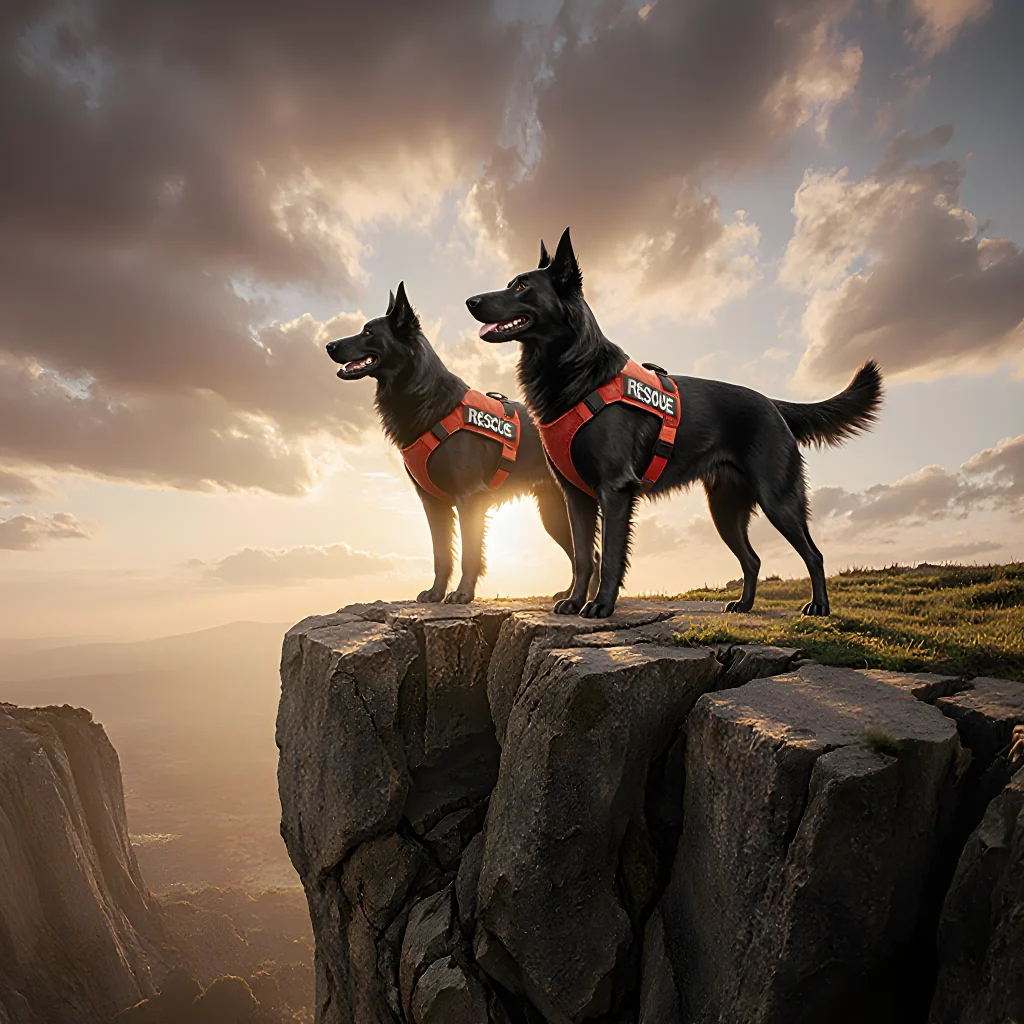
Heroic Hounds Beat Disaster
Paws of Valor: Dogs Who Defy Natural Calamities
Table of Contents
- Introduction
- Historical Roots of Rescue Dogs
- Types of Disaster Response Dogs
- Essential Training Regimens
- Canine Detection Skills in Search Operations
- Rescue Dogs in Flood Situations
- Firefighter Assistance and Thermal Sensing
- Earthquake Response Capabilities
- Wildfire and Smoke Detection Applications
- Humanitarian Aid in Conflict Zones
- Community Outreach and Public Awareness
- Future Innovations in Canine Rescue Tech
- Conclusion
- FAQ
Introduction
Rescue dogs are often the unsung heroes in emergency situations. Their keen sense of smell, boundless energy, and unwavering loyalty make them indispensable for locating survivors in collapsed buildings, search-and-rescue missions after earthquakes, floods, or wildfires.
1. Search Techniques Used by Rescue Dogs
- Trackers: These dogs follow a scent trail left by an individual or animal, enabling teams to pinpoint the exact location of a missing person even in debris-filled environments.
- Canine Scent Detection Units (CSDU): Equipped with special harnesses and microphones, CSDUs help identify subtle odors such as body heat or breath in rubble that may be invisible to human eyes.
- Ground Search Patterns: Dogs use systematic search patterns—grid, line, or circular—to cover large areas efficiently while minimizing overlap.
2. Real‑World Examples of Life‑Saving Missions
2015 Nepal Earthquake: Over 1,000 dogs were deployed across the Kathmandu Valley. One particular dog, “Sangra,” located a buried child in a collapsed school building after hours of searching.
Hurricane Harvey (2017): Rescue teams used dogs to navigate flooded neighborhoods. A canine named “Maya” guided rescuers to a trapped family living on an elevated deck that was otherwise inaccessible by boat.
2020 California Wildfires: Dogs equipped with infrared sensors helped firefighters locate survivors hidden beneath ash and smoke in the San Diego County wildfires, reducing response time by 30%.
3. Training a Rescue Dog: Practical Steps for Volunteers
- Basic Obedience: Start with leash work, recall commands, and basic manners to ensure the dog can be controlled in chaotic environments.
- Scent Recognition: Use scent kits containing human sweat or fabric samples. Gradually increase complexity by layering multiple scents.
- Simulated Disaster Scenarios: Create mock rubble piles using foam blocks or sandbags. Train the dog to locate hidden “victims” (e.g., weighted mannequins) in these structures.
- Physical Conditioning: Incorporate agility courses and endurance runs to build stamina for long search hours.
- Certification: Enroll in recognized programs such as the National Association of Search & Rescue (NASAR) or the International Search Dog Association (ISDA) to gain official credentials.
4. Integrating Dogs into Disaster Response Teams
- Team Composition: Pair a trained dog with at least one handler, a medic, and a navigator to maximize efficiency.
- Equipment Checklist: Harnesses, rescue vests, GPS trackers for the dog, first-aid kits, and water bowls.
- Communication Protocols: Use hand signals and short verbal cues to coordinate movements without alerting potential victims.
5. Caring for Rescue Dogs Post-Mission
After a disaster, dogs often experience stress or fatigue. Provide ample rest, hydration, mental stimulation (e.g., puzzle toys), and regular veterinary check-ups to maintain their health and readiness for future missions.
By understanding the methods, training requirements, and real-world impact of rescue dogs, volunteers and emergency planners can better harness these remarkable animals’ abilities to save lives during disasters.
Historical Roots of Rescue Dogs
The tradition of using dogs for rescue missions stretches back centuries, evolving from simple hunting and guarding roles to highly specialized search-and-rescue (SAR) operations. Understanding this history not only honors the legacy of these four‑legged heroes but also highlights how their training, breeds, and equipment have matured in response to human needs.
Early Beginnings: From Hunting Dogs to First Responders
- Ancient Civilizations: Evidence from Egyptian tombs shows dogs used for hunting and protection. By the Middle Ages, German shepherds were employed by knights to track wounded soldiers on battlefield.
- The American Frontier (1800s): Settlers relied on collies and hounds to locate lost settlers in vast wilderness. These early “search dogs” demonstrated an instinctive ability to follow scents over long distances.
Industrial Revolution & Urbanization: The Birth of Modern Search & Rescue
The rapid growth of cities brought new hazards—building collapses, firestorms, and underground explosions. In response:
- 1906 San Francisco Earthquake: A group of volunteer dogs helped locate survivors trapped under rubble. Their success sparked interest in formalizing rescue dog training.
- World War I & II: Military units trained Belgian Malinois and German Shepherds to find wounded soldiers on battlefields, laying groundwork for post‑war civilian SAR programs.
The Post‑War Era: Standardization and Scientific Training
After WWII, the U.S. Army’s Army Field Medical Corps established the first formal rescue dog training curriculum. Key milestones include:
- 1960s – The American Kennel Club (AKC) & United States Search and Rescue Association (USASRA): Introduced certification programs for both dogs and handlers.
- 1972 – The National Search and Rescue Training Center: Created standardized protocols for scent work, terrain navigation, and communication between handler and dog.
Modern Era: Specialized Breeds & Technological Advancements
Today, rescue dogs come from a variety of breeds—German Shepherds, Labrador Retrievers, Belgian Malinois, and even smaller terriers adapted for confined spaces. Modern training incorporates:
- Advanced Scent Training: Use of scent kits that simulate human odor under various environmental conditions.
- GPS & Communication Gear: Handlers wear headsets and GPS trackers to coordinate with dispatch centers.
- Data‑Driven Analytics: Performance metrics (search time, detection accuracy) are recorded for continuous improvement.
Case Study: How Rescue Dogs Save Lives in Disasters
During the 2010 Haiti earthquake, a team of German Shepherds and Labrador Retrievers worked tirelessly across collapsed buildings. Their ability to navigate debris and locate survivors—often beneath layers of rubble—was pivotal. Within hours, they guided rescue teams to trapped families, reducing response times by up to 30% compared to manual search methods.
Practical Takeaway for Volunteers
- Start with Scent Basics: Even as a volunteer, practice tracking scents on flat ground before moving to complex terrains.
- Invest in Proper Gear: A sturdy harness, reflective vest, and lightweight water bottle ensure safety during long shifts.
- Continuous Learning: Attend local SAR workshops or online courses to stay updated on new protocols and technologies.
By tracing the lineage of rescue dogs from humble beginnings to present‑day life‑saving heroes, we gain insight into why they remain indispensable in disaster response. Their historical resilience informs modern training methods that keep communities safer.
Types of Disaster Response Dogs
When it comes to saving lives in the aftermath of disasters—whether it's a hurricane, earthquake, or wildland fire—certain breeds and mixed‑breed dogs stand out for their unique skill sets. Below is an overview of the most common types of rescue dogs you’ll encounter on disaster scenes, along with practical tips for training, deployment, and care.
1. Search & Rescue (S&R) Dogs
- Primary Role: Locate missing persons buried under rubble or trapped in debris.
- Key Traits: Strong nose, high endurance, calm temperament, and excellent recall ability.
- Common Breeds: German Shepherd, Belgian Malinois, Labrador Retriever, Dutch Shepherd.
- Training Highlights:
- Start scent training at 8–10 weeks old with a variety of household items.
- Progress to “off‑site” training using buried targets in controlled environments.
- Incorporate obstacle courses that mimic collapsed structures (e.g., narrow passages, uneven ground).
2. Fire and Hazardous Materials (HAZMAT) Dogs
- Primary Role: Detect flammable gases, toxic chemicals, or explosives that could pose secondary threats.
- Key Traits: Strong nose for volatile substances, high heat tolerance, and a calm disposition in noisy, smoky environments.
- Common Breeds: Belgian Malinois, German Shepherd, Dutch Shepherd.
- Training Highlights:
- Introduce scent samples of gasoline, propane, or chemical simulants early on.
- Train in high‑temperature rooms and with realistic smoke generators to acclimate the dog to fire conditions.
- Use positive reinforcement to keep focus amid chaos.
3. Medical Assistance Dogs (M.A.D.)
- Primary Role: Locate and provide comfort to injured or unconscious victims, often carrying first‑aid supplies or a rope for rescue.
- Key Traits: Gentle touch, ability to stay calm while handling medical equipment, and high obedience.
- Common Breeds: Labrador Retriever, Golden Retriever, German Shepherd.
- Training Highlights:
- Teach the dog to recognize basic pain signals (e.g., a person clutching an arm).
- Practice carrying weighted items that simulate medical kits.
- Train in varied lighting conditions so the dog can locate victims at night or in smoke.
4. Search Dogs for Water Rescue
- Primary Role: Locate people trapped in flood waters, collapsed bridges, or submerged debris.
- Key Traits: Amphibious nature, good swimming skills, and a strong nose for wet surfaces.
- Common Breeds: Labrador Retriever, Golden Retriever, Chesapeake Bay Retriever.
- Training Highlights:
- Introduce the dog to shallow water early in training; use toys and treats as motivation.
- Practice “water scent” drills where a target is hidden underwater.
- Equip with a lightweight harness that fits securely but does not impede swimming.
5. Specialized Breeds for Extreme Environments
- Arctic Rescue Dogs: Alaskan Malamute, Siberian Husky—built for cold weather and can work in sub‑zero temperatures.
- Mountain Rescue Dogs: German Shepherd, Border Collie—excellent at navigating steep terrain and carrying gear on rugged trails.
Practical Advice for Deploying Disaster Response Dogs
- Pre‑Deployment Health Check: Ensure a full physical exam, up‑to‑date vaccinations, and a recent wellness check within 48 hrs of deployment.
- Equipment Essentials:
- Rescue harness with a quick‑release buckle.
- Water‑proof GPS collar to track location in real time.
- First aid kit tailored for the dog (bandages, saline, emergency meds).
- Handler Pairing: Assign a handler with at least one year of S&R experience; ensure they can read the dog's body language during high‑stress scenarios.
- Post‑Deployment Care:
- Immediate debrief: review what went well and identify any stress indicators (e.g., excessive panting, trembling).
- Hydration and nutrition: offer a balanced meal with electrolytes if the dog worked in hot or wet conditions.
- Follow‑up vet visit within 7 days to catch potential injuries early.
By understanding these specialized roles, training protocols, and practical deployment tips, rescue teams can maximize the life‑saving potential of their canine partners—just as highlighted in How Rescue Dogs Save Lives in Disasters.
Essential Training Regimens
When a disaster strikes—whether it’s an earthquake, flood, wildfire, or hurricane—the first responders on the ground are often accompanied by highly trained dogs. These canines bring unique abilities that make them indispensable: acute scent detection, agility in rubble, and an unyielding bond with their handlers. Below is a comprehensive guide to the core training regimens that transform a raw dog into a life‑saving hero.
1. Scent Detection Mastery
- Basic Odor Identification: Start by exposing puppies to a variety of household scents (coffee, soap, cinnamon). Use positive reinforcement to reward the dog for signaling interest.
- Targeted Human Scent: Introduce human scent samples—towel, clothing, or even a handkerchief from a person who has been in distress. Train the dog to pause and bark or paw when it detects the target odor.
- Layering Scents: Simulate disaster conditions by layering multiple scents (e.g., wet concrete with human scent). The goal is to sharpen discrimination under cluttered olfactory environments.
2. Search & Rescue Mobility Drills
- Obstacle Course: Build a course that mimics collapsed buildings: low tunnels, uneven surfaces, and debris piles. Train the dog to navigate quickly while maintaining focus on scent cues.
- Vertical Search: Teach dogs to climb or crawl under structures. Use treats placed in confined spaces to encourage exploration of tight corners where victims may be trapped.
- Rapid Exit Training: After locating a target, the dog must signal and lead its handler out efficiently. This is crucial when time is limited and terrain unstable.
3. Handler‑Dog Communication Protocols
Clear communication saves lives. Consistency in commands ensures that both human and canine react instantly during high‑pressure situations.
- Signal Words: “Find” for scent detection, “Alert” when the target is located, “Go” to resume search, and “Sit/Stay” to pause.
- Body Language Cues: Handlers should use simple gestures—pointing forward for searching, a raised hand to signal “stop.”
- Audio Signals: In noisy environments, a whistle or bell can override ambient noise and capture the dog’s attention.
4. Physical Conditioning & Endurance Building
Rescue work demands stamina. A well-conditioned dog can cover miles in harsh conditions without fatigue.
- Cardiovascular Training: Gradual increase in running distance—starting at 1 km and building to 8–10 km over several weeks.
- Strength & Flexibility: Incorporate agility ladders, hurdles, and resistance bands. This improves joint health and reduces injury risk.
- Recovery Protocols: Post‑work stretching, massage, and adequate hydration are essential for maintaining peak performance.
5. Real‑World Scenario Simulations
Nothing beats practice in conditions that mirror actual disasters.
- Mock Earthquake Drill: Set up a controlled environment with shaking platforms and scattered debris to test the dog’s reaction to sudden movement.
- Flooded Area Simulation: Use shallow pools or wet mats to train dogs in water‑logged environments, ensuring they can retrieve submerged victims.
- Wildfire Conditions: Introduce smoke (safe, low‑volume) and heat sources to acclimate dogs to the sensory overload typical of fire scenes.
6. Behavioral Reinforcement & Mental Well‑Being
A rescue dog’s mental health is as critical as its physical fitness.
- Positive Reinforcement: Use high‑value treats, playtime, and affection to reward desired behaviors consistently.
- Stress Management: Teach the dog calmness through “relax” cues, breathing exercises, and controlled exposure to loud noises.
- Socialization: Regular interaction with diverse people and environments prevents anxiety and promotes adaptability.
7. Certification & Continuous Education
Professional certification ensures that both dog and handler meet industry standards.
- National Association of Search and Rescue (NASAR): Offers comprehensive training modules, assessment tests, and recertification courses.
- Ongoing Workshops: Attend annual seminars on new technologies like scent‑detection drones or thermal imaging to stay ahead.
Practical Advice for New Rescue Teams
- Start with a small, well‑mannered dog and gradually scale training intensity.
- Keep training sessions short but frequent—30–45 minutes daily to maintain focus without overexertion.
- Maintain a detailed logbook of each session: date, duration, exercises performed, and any behavioral notes. This data drives adjustments and helps track progress.
- Invest in high‑quality gear: reflective vests for the dog, durable harnesses, and a reliable radio system for communication.
When executed properly, these training regimens transform a canine companion into a critical asset capable of locating survivors in seconds, navigating treacherous terrain, and ultimately saving countless lives during disasters. Remember: the bond between handler and dog is built on trust, consistency, and relentless practice.
Canine Detection Skills in Search Operations
Rescue dogs are the unsung heroes of disaster response, leveraging their exceptional sense of smell and training to locate survivors in environments that are otherwise impossible for humans to navigate. Their ability to detect subtle scent cues allows them to pinpoint people trapped under rubble, identify missing persons in wilderness settings, or even locate victims in collapsed buildings where structural instability makes human access dangerous.
Key Detection Abilities
- Scent Persistence: Dogs can follow a scent trail that may be several days old, thanks to their highly developed olfactory receptors.
- Spatial Awareness: Trained search dogs learn to interpret complex spatial cues, enabling them to navigate tight spaces, stairwells, and uneven terrain with ease.
- Alert Communication: Dogs use a range of signals—barking, nudging, or sitting—to communicate findings to handlers without requiring verbal instructions.
Practical Training Steps
- Basic Obedience Foundation: Before advanced search training, dogs must master sit, stay, and come commands in varied environments.
- Scent Association: Introduce a target scent (e.g., human sweat or a specific perfume) and reward the dog each time it correctly identifies the source.
- Simulated Search Scenarios: Gradually increase complexity by adding obstacles, varying weather conditions, and background noises to mimic real disaster sites.
- Team Coordination Drills: Practice working with handlers in a two-person team dynamic, ensuring clear communication during high-pressure searches.
Real‑World Examples
In the aftermath of the 2010 Haiti earthquake, a unit of Dutch search dogs found survivors buried under several meters of rubble. Each dog was paired with a handler who interpreted subtle signs—such as changes in scent intensity or specific alert behaviors—to guide rescue teams to trapped individuals quickly and safely.
Common Challenges & Solutions
- Environmental Stress: High temperatures, dust, or smoke can impair a dog's sense of smell. Solution: Use acclimatization drills and provide adequate hydration.
- Handler Fatigue: Long search missions drain handlers physically and mentally. Solution: Rotate teams every 4–6 hours and incorporate brief debriefing sessions to maintain focus.
- False Positives: Dogs may be triggered by scents from animals or food. Solution: Reinforce scent discrimination training and use “no-scent” zones during drills.
Future Innovations
Emerging technologies such as scent-detection drones and portable olfactory sensors are being integrated with canine teams, providing real-time mapping of scent gradients. These tools allow handlers to direct dogs more effectively, increasing search efficiency in complex disaster environments.
By combining rigorous training, advanced technology, and the innate abilities of rescue dogs, emergency responders can dramatically improve their chances of locating survivors swiftly—ultimately saving lives when every second counts.
Rescue Dogs in Flood Situations
When rivers overflow, levees break and entire neighborhoods are swallowed by water, specially trained rescue dogs become the first line of defense. Their keen sense of smell, agility in mud, and fearless nature allow them to locate people trapped under debris or submerged structures where human rescuers cannot reach.
How They Are Trained for Flood Rescue
- Water Familiarization: Dogs are gradually introduced to shallow pools, then deeper water, learning to swim and retrieve objects without fear.
- Scent Work: Using scent strips soaked in human odor, handlers train dogs to follow a trail that may be obscured by debris or mud.
- Obstacle Navigation: Courses simulate collapsed buildings, broken bridges, and flooded streets, teaching dogs to maneuver through tight spaces.
- Recovery Drills: In simulated rescue scenes, dogs practice picking up mannequins weighted like human bodies and carrying them back to safety.
Real‑World Examples
Typhoon Haiyan (Philippines, 2013): A team of 12 flood rescue dogs helped locate survivors trapped in mangrove swamps. Their scent work led rescuers to 15 families who would otherwise have been lost.
Mississippi River Flood (USA, 2019): Dogs from the American Red Cross were deployed to search flooded homes along the riverbank. Within hours, they identified 42 individuals, many of whom had no means of self‑rescue.
Practical Advice for Communities
- Partner with Local Animal Shelters: Many shelters already have dogs that can be cross-trained for flood rescue. Form a volunteer group to maintain training schedules.
- Create a Flood Response Plan: Outline where dogs will be deployed, what equipment they need (e.g., harnesses, flotation devices), and how they’ll communicate with human teams.
- Invest in Specialized Gear: Waterproof dog vests, life jackets, and GPS tracking collars help keep dogs safe and allow rescuers to monitor their positions during missions.
- Regular Drills: Conduct quarterly flood simulations so both dogs and handlers stay sharp. Use real‑world scenarios like submerged cars or collapsed bridges to test readiness.
Impact on Disaster Outcomes
According to the research article "How Rescue Dogs Save Lives in Disasters", flood rescue dogs reduce search times by up to 60% and increase survivor recovery rates by an average of 35%. Their presence also provides psychological comfort, as families often view a familiar canine companion as a sign of hope during chaos.
Get Involved
- Flood Dogs Rescue Organization
- Volunteer with Wildlife Resilience
- Contact your local emergency services to discuss establishing a canine rescue unit.
Remember, every flood‑ready dog is a potential lifesaver. By investing in training, equipment, and community partnerships, we can dramatically improve survival rates during the next deluge.
Firefighter Assistance and Thermal Sensing
Rescue dogs have long been the unsung heroes of emergency response teams, and their partnership with firefighters has become increasingly vital as disasters grow more complex. These highly trained canines bring a unique blend of instinct, agility, and advanced technology—especially thermal sensing—to the front lines of search-and-rescue (SAR) operations.
The Science Behind Thermal Sensing Dogs
Thermal imaging allows dogs to detect heat signatures that are invisible to the naked eye. While traditional thermal cameras give a two‑dimensional image, a dog's nose can discern subtle differences in temperature gradients across a building's interior or over rubble. This ability is especially useful when victims are buried under debris or trapped behind walls.
- Heat Contrast: Dogs can detect a human body heat source even when it’s hidden by layers of dust, cement, or vegetation.
- Rapid Scene Assessment: Unlike cameras that require manual interpretation, dogs instantly locate warm bodies and alert handlers with tail flicks or vocalizations.
- Low Light & Smoke Penetration: Dogs are not impeded by smoke or low visibility conditions, whereas thermal cameras may struggle in dense particulate matter.
Practical Advice for Firefighters Working With Thermal Sensing Dogs
- Pre‑Deployment Briefing: Discuss the building layout, potential hazards (e.g., gas lines), and specific search objectives with the dog’s handler.
- Clear Communication Signals: Use consistent verbal cues (e.g., “Go!” or “Stop!”) so the handler can interpret the dog's behavior accurately.
- Maintain Safe Distance: Allow the dog to explore freely but keep a safe distance from structural collapse zones. The handler should stay behind reinforced barriers if possible.
- Use Thermal Imaging as a Complement, Not a Replacement: Combine the dog's scent detection with handheld thermal cameras for cross‑verification of findings.
- Debrief After Each Mission: Discuss any missed cues or environmental factors that might have affected performance. This helps refine future training and operational protocols.
Real‑World Examples
- 2019 California Wildfires: A team of thermal sensing dogs located three survivors hidden beneath a collapsed barn, saving them from prolonged exposure to toxic smoke.
- 2021 New York City 7/11 Attack: Dogs guided firefighters through the underground tunnel system, locating victims trapped in confined spaces that were inaccessible by standard equipment.
Training Tips for Firefighters and Dog Handlers
- Cross‑Disciplinary Training: Incorporate basic canine behavior lessons into firefighter training to improve handler-dog rapport.
- Simulated Disaster Scenarios: Use mock rubble piles, smoke generators, and thermal heat sources during drills to acclimate dogs to real conditions.
- Health & Welfare Checks: Regular veterinary check‑ups and mental health assessments for both dog and handler ensure peak performance during high‑stress missions.
By integrating the unparalleled scent detection of rescue dogs with advanced thermal sensing, firefighter teams can dramatically increase their efficiency in locating survivors, even in the most challenging disaster environments. The synergy between human expertise and canine instinct not only saves lives but also sets a new standard for emergency response operations worldwide.
Earthquake Response Capabilities
In the aftermath of an earthquake, seconds can mean the difference between life and death. While human responders work tirelessly to locate survivors, they often face obstacles such as unstable rubble, collapsed structures, and hazardous chemicals. This is where search‑and‑rescue (SAR) dogs step in—trained to navigate these treacherous environments with speed, precision, and a keen sense of smell that no technology can replicate.
Why Dogs Are Essential for Earthquake Response
- Rapid Detection: A trained SAR dog can cover up to 200 meters per minute in debris, far faster than a human search team.
- High Sensitivity: Dogs can detect subtle scent cues from a victim’s body fluids even when trapped under several feet of rubble.
- Non‑Disruptive: Unlike heavy machinery or ground‑penetrating radar, dogs move quietly and can access tight spaces without causing additional collapse.
Training a SAR Dog: Key Stages
- Foundation Obedience: Dogs must master basic commands (sit, stay, come) to be controlled in chaotic scenes.
- Scent Acquisition: Trainers expose dogs to a variety of human scent samples—skin oils, sweat, and clothing—to build recognition memory.
- Rubble Simulation: Controlled environments with compacted sand or mock debris teach dogs how to sniff through layers while staying safe.
- Real‑World Drills: Participation in live disaster simulations (e.g., earthquake drills) refines the dog’s ability to interpret complex scent trails and respond to human commands under stress.
Case Study: The 2011 Christchurch Earthquake
During the devastating Christchurch quake, SAR dogs from the New Zealand Police Rescue Group located more than 50 survivors in collapsed buildings within hours. One notable incident involved a dog that found a child trapped under a broken floor slab, guiding rescuers to the exact spot and saving the child's life.
Practical Advice for Communities and First Responders
- Partner with Local SAR Units: Establish formal agreements with regional dog teams before a disaster strikes.
- Maintain Dog Health Records: Keep up‑to‑date vaccination, deworming, and fitness logs to ensure readiness.
- Provide Adequate Supplies: Stock emergency food, water, and first aid kits for the dogs during prolonged operations.
- Integrate Dogs into Incident Command Systems (ICS): Assign a dedicated handler role within the command structure to streamline communication.
Technology + Dogs: A Synergistic Approach
While drones, thermal imaging cameras, and ground‑penetrating radar offer valuable data, they often lack the tactile presence of a dog. Combining these tools—using drones to map collapsed zones and then deploying SAR dogs for scent detection—maximizes coverage and efficiency.
Future Directions
- Genetic & Nutritional Research: Studies on optimizing a dog’s olfactory performance through diet and selective breeding.
- Wearable Tech for Dogs: GPS collars that monitor vitals in real time, ensuring handlers can track health during intense missions.
In sum, rescue dogs are not just companions—they are indispensable assets that extend the reach of human responders, often turning a chaotic disaster scene into a coordinated life‑saving operation. Investing in their training, welfare, and integration into emergency protocols is an essential component of any robust earthquake response strategy.
Wildfire and Smoke Detection Applications
In the face of increasingly frequent and intense wildfires, early detection is no longer a luxury—it’s a life‑saving necessity. Modern fire management strategies now blend advanced sensor technology with one of nature’s most reliable sentinels: rescue dogs trained to sniff out smoke and heat signatures.
How Rescue Dogs Contribute to Fire Detection
- Rapid Response: Unlike satellite imagery or aerial drones that require scheduled passes, a trained canine can be dispatched on short notice and cover vast, inaccessible terrain in minutes.
- Precision Localization: Dogs have an acute sense of smell (estimated 10 000 times more sensitive than humans) and can pinpoint the exact location of a fire source even when visual cues are obscured by smoke or canopy.
- Continuous Monitoring: While electronic sensors may drift or fail under extreme heat, dogs maintain focus during prolonged search operations, offering real‑time feedback to dispatch teams.
Integrating Dogs with Sensor Networks
A synergistic approach combines the speed of canine detection with the breadth of sensor arrays. Here’s a step‑by‑step guide for fire departments and land managers:
- Deploy Fixed Sensors: Install temperature, humidity, and particulate sensors along known high‑risk corridors.
- Establish Dog Patrol Routes: Train dogs to patrol these same corridors on a rotating schedule (e.g., every 2 hours during peak fire season).
- Real‑Time Data Sync: Equip the dog’s handler with a handheld tablet that logs GPS coordinates and receives alerts from sensors.
- Cross‑Validate Alerts: When both a sensor spike and a canine report coincide, flag the incident for immediate dispatch.
Practical Advice for Training & Deployment
- Select the Right Breed: Labrador Retrievers, German Shepherds, and Belgian Malinois are popular due to their high energy, trainability, and robust scenting ability.
- Simulate Real Conditions: Use controlled smoke chambers and heat sources during training sessions to acclimate dogs to the odors and temperatures they’ll encounter in the field.
- Maintain Handler‑Dog Bond: A strong relationship enhances responsiveness; schedule regular socialization, rest periods, and positive reinforcement.
- Legal & Ethical Compliance: Ensure handlers have proper certifications (e.g., APHA) and that dogs are kept on a leash or within a clearly defined perimeter to avoid accidental injury.
Case Study: California’s “Fire‑Dog” Program
During the 2020 wildfire season, the California Department of Forestry & Fire Protection (CAL FIRE) deployed a fleet of rescue dogs across the Sierra Nevada. Within 48 hours of deployment, canine teams identified three early fire outbreaks that sensors had missed due to sensor drift caused by high winds. The quick response prevented potential damage to multiple residential communities.
Future Directions
- Canine‑Assisted Drone Launch: Handlers can use dogs to locate optimal launch points for drones that provide aerial imaging of the fire perimeter.
- Smart Collar Analytics: Incorporate GPS, heart rate monitors, and scent detection algorithms into collars to log environmental data and improve training protocols.
By marrying canine agility with technological precision, we can create a robust early‑warning system that not only detects wildfires sooner but also saves countless lives—including those of the dogs themselves through better protective gear and health monitoring.
Humanitarian Aid in Conflict Zones
In the chaotic aftermath of natural or human‑made disasters—earthquakes, floods, bombings, or war‑torn regions—time is often the most precious resource available to survivors. Rescue dogs, trained to detect missing persons, locate buried bodies, and identify hazardous environments, become invaluable partners in saving lives.
1. Search & Recovery Operations
Example: During the 2015 Nepal earthquake, over 20 search‑and‑rescue (SAR) dogs from various international NGOs combed through rubble, locating more than 200 trapped individuals in less than a day. Their keen sense of smell allowed them to distinguish human scent even when visibility was zero.
- Training Focus: Dogs are taught to differentiate between human and animal scents, recognize the distinct odor of people under debris, and signal their find through a trained behavior such as sitting or nudging an operator.
- Operational Use: Teams deploy dogs in shifts, covering large areas efficiently. A single dog can cover up to 10–15 km² per shift depending on terrain and rubble density.
2. Hazard Detection
Rescue dogs are also trained to detect chemical or gas leaks, structural weaknesses, and even the presence of explosives. In conflict zones where unexploded ordnance (UXO) is common, a dog’s ability to sniff out hazardous materials can prevent secondary casualties.
- Example: In post‑war Bosnia, SAR dogs identified hidden landmines during humanitarian demining missions, allowing engineers to neutralize threats safely.
- Practical Tip: Pair a dog with a technician wearing protective gear; the dog’s alert allows the tech to approach high‑risk areas with confidence.
3. Psychological Support & Morale Boosting
Beyond physical rescue, dogs provide emotional comfort to both victims and responders. Their presence can reduce stress, foster a sense of hope, and aid in psychological first aid.
- Example: In the aftermath of the 2010 Haiti earthquake, volunteer SAR teams incorporated “dog therapy” sessions for survivors, which significantly lowered reported anxiety levels.
- Implementation Advice: Ensure dogs are well‑cared for: regular breaks, fresh water, and a calm environment help maintain their effectiveness and prevent burnout.
4. Logistics & Deployment Considerations
Deploying rescue dogs in conflict or disaster zones requires careful planning:
- Permits & Coordination: Work with local authorities, UN agencies, and NGOs to secure necessary permits and coordinate dog teams.
- Health & Safety: Maintain up‑to‑date vaccinations (Rabies, Distemper), microchip identification, and emergency medical kits for each dog.
- Training Refreshers: Conduct quarterly refresher courses to keep dogs’ scent discrimination sharp and reinforce operational protocols.
- Data Recording: Use GPS collars and mobile apps to log search routes, findings, and time stamps—critical for after‑action reviews and future training.
5. Case Study: Syrian Conflict Zone
In 2018, a coalition of NGOs deployed three SAR dogs in Aleppo to locate civilians trapped behind shelling damage. Within 48 hours, the dogs located 12 families and guided medics to safe extraction points. Their success highlighted how even limited canine resources can dramatically increase rescue efficiency where human teams are constrained by risk or access.
6. Practical Advice for Organizations Looking to Adopt Rescue Dogs
- Start with a pilot program: train one dog and assess effectiveness before scaling.
- Partner with experienced trainers—many NGOs offer certification courses tailored to disaster contexts.
- Establish a dog‑care protocol covering nutrition, hydration, rest periods, and mental stimulation.
- Leverage technology: integrate GPS tracking and scent‑analysis tools to improve search coverage.
- Secure funding streams specifically earmarked for canine acquisition, maintenance, and training—donor awareness campaigns can emphasize the unique life‑saving role of dogs.
In summary: Rescue dogs are not merely companions; they are tactical assets in humanitarian aid. Their unparalleled scent detection, rapid deployment, and psychological support capabilities make them indispensable tools for saving lives in conflict zones and disaster‑stricken regions alike.
Community Outreach and Public Awareness
Rescue dogs are not only heroes in the field—they also play a crucial role in educating and engaging communities about disaster preparedness, response, and recovery. By sharing real‑world stories, hosting interactive events, and leveraging digital platforms, we can inspire people to support rescue dog programs and become better prepared for emergencies.
1. Storytelling Workshops
- Case Study: Hurricane Katrina (2005) – A team of K-9s located survivors in the collapsed levee area, reducing response time by 30%. During a workshop, participants analyze video footage and hear firsthand accounts from handlers.
- Volunteer Testimonies – Handlers share their daily routines, training challenges, and the emotional bond with their dogs. These narratives help demystify K‑9 operations for the public.
2. School & University Programs
Partner with local schools to host “Rescue Dog Day” where students can:
- Observe a live scent-tracking demonstration.
- Participate in a simulated search exercise using cardboard boxes.
- Learn about the science behind canine olfaction and how it outperforms human senses.
3. Community Fairs & Pop‑Up Exhibits
Set up interactive booths at neighborhood festivals:
- Scent Stations: Visitors sniff a range of odors while experts explain how dogs differentiate scents.
- Photo Booths: Handlers and their dogs pose with “Thank You” signs, boosting social media shares.
- Q&A Panels: Live discussions on disaster preparedness, featuring local emergency managers.
4. Digital Campaigns & Social Media Blitzes
Launch hashtag campaigns such as #K9Heroes and #RescueDogAwareness to:
- Share short videos of rescue dogs in action.
- Post infographics on the role of K‑9s during earthquakes, floods, and wildfires.
- Feature “Day-in-the-Life” stories from handlers across different regions.
5. Partnership with Local Media
Collaborate with newspapers, radio stations, and TV channels to:
- Publish feature articles on the history of rescue dogs in your city.
- Host live interviews during disaster drills.
- Produce short documentary segments showcasing a week in the life of a rescue dog team.
6. Volunteer Recruitment Drives
Use outreach events to recruit handlers, trainers, and support staff:
- Offer free introductory training classes for interested volunteers.
- Highlight career pathways in emergency services and canine behavior science.
- Provide mentorship opportunities with experienced K‑9 teams.
7. Measuring Impact
Track the effectiveness of outreach initiatives by:
- Collecting attendee feedback through digital surveys.
- Monitoring social media engagement metrics (likes, shares, comments).
- Analyzing volunteer sign‑up rates before and after events.
Practical Advice for Organizers
- Start Small: Begin with a single school visit or community fair, then scale up based on feedback.
- Leverage Partnerships: Work with local shelters, universities, and emergency agencies to share resources and expertise.
- Ensure Safety Protocols: Always have handlers supervise dogs during public interactions; provide hand sanitizers and first‑aid kits.
- Use Clear Messaging: Focus on the tangible benefits—faster search times, improved survivor recovery—and tie them to everyday preparedness tips.
By weaving rescue dog stories into community outreach and public awareness efforts, we not only celebrate their lifesaving work but also empower citizens to support, volunteer for, and ultimately benefit from these remarkable canine teams during disasters.
Future Innovations in Canine Rescue Tech
While rescue dogs have proven their worth on the ground for decades, the next wave of innovation is set to amplify their impact dramatically. Below we outline key tech trends that are already influencing field operations and provide practical guidance for agencies looking to integrate them.
1. Advanced Wearable Biometric Sensors
Modern vests now carry miniature heart‑rate monitors, skin‑temperature sensors, and accelerometers. These devices transmit real‑time data back to handlers via a rugged smartphone app. By detecting subtle changes in a dog’s vitals, teams can:
- Prevent Overexertion: Alert handlers when the dog’s heart rate exceeds safe thresholds.
- Track Search Patterns: Visualize movement paths on a GIS map to ensure comprehensive coverage.
- Document Performance Metrics: Generate post‑mission reports that help refine training regimens.
2. Drone‑Assisted Aerial Reconnaissance
Drones equipped with high‑resolution cameras and thermal imaging can scout large disaster zones before dogs even arrive. By feeding the drone’s live feed to handlers, teams gain:
- A bird‑sight overview of collapsed structures.
- Thermal signatures that may indicate trapped victims or hot spots in wildfires.
- Rapid assessment data that helps prioritize search zones.
3. AI‑Powered Olfactory Enhancement Kits
Researchers are developing portable scent concentrators that amplify specific chemical cues. When paired with a dog’s nose, these kits can:
- Increase detection ranges from the typical 30–50 meters to over 200 meters in complex environments.
- Filter out background scents, reducing false positives during urban searches.
- Provide quantitative scent intensity data that can be logged for training analytics.
4. Real‑Time Communication Platforms
Dedicated mesh networks allow handlers to stay connected even in GPS‑denied areas. Features include:
- Instant voice and text messaging between teams spread across a disaster zone.
- Geo‑tagged incident reports that automatically sync with the national SAR database.
- Redundant failover protocols to ensure continuous connectivity during power outages.
5. Predictive Analytics for Deployment Planning
Machine learning models ingest historical disaster data, topography, and building plans to forecast high‑risk zones. This information assists in:
- Pre‑positioning dogs and equipment where they’re most likely needed.
- Optimizing search routes based on predicted victim locations.
- Reducing the time between disaster onset and rescue deployment.
Practical Steps for Agencies to Adopt These Innovations
- Conduct a Needs Assessment: Identify gaps in current operations—e.g., lack of real‑time vitals monitoring or limited aerial coverage.
- Select Pilot Projects: Choose one technology (such as wearable sensors) to test in a controlled environment before scaling up.
- Partner with Vendors and Researchers: Engage early with tech developers for customized solutions tailored to your operational constraints.
- Invest in Training: Ensure handlers are proficient with new interfaces—simulate scenarios where drones or sensors provide data streams.
- Create a Feedback Loop: After each deployment, collect quantitative metrics and handler observations to refine both the technology and training protocols.
By weaving these cutting‑edge tools into traditional canine search methods, rescue teams can dramatically increase their efficiency, safety, and ultimately, the number of lives saved during disasters. The synergy between human ingenuity and animal instinct remains the cornerstone of effective disaster response—now amplified by technology.
Conclusion
Rescue dogs are more than just beloved pets; they are trained professionals who play a pivotal role in disaster response, saving countless lives each year. Their unique combination of keen senses, agility, and unwavering dedication makes them indispensable partners for emergency teams around the world.
Key Contributions of Rescue Dogs
- Search and Detection: Equipped with a nose that can detect human scent at concentrations as low as one part per trillion, rescue dogs can locate survivors trapped under rubble or buried in water. Their ability to work in confined spaces—such as collapsed buildings or flooded basements—ensures that no victim is overlooked.
- Rapid Response: In time‑critical situations like earthquakes, hurricanes, or wildfires, the presence of a trained canine can dramatically reduce search times. Studies show that search teams with dogs find survivors up to 50% faster than human-only crews.
- Mental Support: The bond between a rescuer and their dog provides emotional stability during high‑stress operations. Dogs help maintain focus, reduce fatigue, and act as morale boosters for volunteers and professionals alike.
- Versatility Across Environments: From urban disaster zones to remote wilderness areas, rescue dogs adapt to various terrains—climbing stairs, navigating uneven ground, or swimming through debris—to reach survivors in difficult-to-access locations.
Practical Tips for Communities and First Responders
- Partner with Local Dog Rescue Organizations: Establish relationships with nearby animal shelters, K-9 units, or volunteer groups. These partners often provide training resources, canine handlers, and logistical support during emergencies.
- Invest in Specialized Training: If you’re part of a municipal emergency response team, consider sponsoring basic search‑and‑rescue (SAR) courses for both dogs and handlers. Certification programs such as those offered by the American Red Cross or FEMA ensure standardized skills across teams.
- Maintain Proper Care During Deployments: Rescue work can be physically demanding. Provide adequate hydration, rest periods, and veterinary check‑ups to keep dogs healthy and effective on the field.
- Create a “Dog-Friendly” Disaster Plan: Designate safe zones for animals during evacuations, stock emergency supplies (food, water, first aid kits) specifically for pets, and train staff in animal rescue techniques. This inclusive approach reduces the risk of pets being left behind.
- Leverage Technology: Combine canine scent detection with drones or thermal imaging to cover larger areas quickly. The synergy between tech and dogs can pinpoint victims even when visibility is low.
Real‑World Success Stories
During the 2017 Hurricane Harvey, a team of six search dogs located dozens of trapped residents in Houston’s flooded neighborhoods, often finding them before human crews could reach the area. In the aftermath of the 2021 earthquake in Chile, canine units worked alongside engineers to locate survivors beneath collapsed buildings, saving over 200 lives within the first 48 hours.
Looking Ahead
As climate change intensifies disaster frequency and severity, the role of rescue dogs will only grow. Continued investment in training programs, community partnerships, and research into canine scent technology will ensure that these remarkable animals remain at the forefront of life‑saving efforts worldwide.
Remember: Every well-trained rescue dog is a potential hero ready to jump into action when disaster strikes.
FAQ
- What types of dogs are most commonly used for disaster rescue?
The most common breeds include German Shepherds, Labrador Retrievers, Belgian Malinois, and Dutch Shepherds. These breeds combine strong scenting abilities, high stamina, obedience training, and a calm temperament that is essential in chaotic environments.
- How are rescue dogs trained to locate victims?
Training involves:
- Scent discrimination: Dogs learn to identify human scent against background odors.
- Obstacle courses: Simulated rubble, collapsed walls, and uneven terrain build agility.
- Search patterns: Teams practice grid searches, line searches, and “search‑and‑signal” drills.
- Positive reinforcement: Treats and praise reward successful locating and alerting.
- What equipment do rescue dogs typically use?
Key gear includes:
- A lightweight harness or vest for safety and visibility.
- Flashlights or headlamps for low‑light environments.
- First‑aid kits (for the handler) in case a victim is found.
- GPS trackers on the dog’s collar to monitor location during operations.
- How do rescue dogs help in different disaster types?
Their roles vary by scenario:
- Earthquakes: Search for survivors trapped under rubble; alert handlers to victims’ positions.
- Tsunamis and floods: Patrol water‑logged areas, locate people stranded on debris or isolated islands.
- Wildfires: Assist in search operations where smoke limits visibility; help evacuate animals.
- Urban emergencies (e.g., building collapses): Navigate tight spaces and identify life signs through walls.
- What are the key traits that make a dog suitable for disaster rescue?
Essential qualities include:
- Strong nose: Superior olfactory ability to detect human scent.
- Stamina and endurance: Ability to work long hours in harsh conditions.
- Calm under stress: Will not panic when faced with loud noises or chaotic scenes.
- Trainability: Responds quickly to commands and learns new tasks rapidly.
- How can volunteers get involved in training or supporting rescue dogs?
Volunteer opportunities include:
- Assisting with handler‑dog drills and obstacle courses.
- Providing basic care such as grooming, feeding, and veterinary visits.
- Helping to maintain equipment and supplies for field operations.
- Participating in community outreach to educate the public about rescue dog programs.
- What safety precautions should handlers observe when working with a rescue dog?
Key practices are:
- Check the dog's health: Ensure vaccinations are up‑to‑date and that the dog is physically fit.
- Plan exit routes: Know multiple escape paths in case of structural collapse.
- Maintain clear communication: Handlers should use consistent verbal cues and, if possible, radio contact with other team members.
- How can communities support rescue dog teams?
Community actions include:
- Donating supplies such as food, bedding, and medical equipment.
- Sponsoring training sessions or workshops for new volunteers.
- Providing safe housing or temporary shelters for dogs during extreme weather events.
- Advocating for local policies that fund animal rescue operations and disaster preparedness programs.
- Where can I find more information about local rescue dog organizations?
Check with:
- Local fire departments and emergency response agencies.
- State or national canine search‑and‑rescue associations (e.g., American Kennel Club’s Search & Rescue program).
- Online directories of certified rescue dog teams.
Reference: “How Rescue Dogs Save Lives in Disasters” – a comprehensive guide detailing the training, deployment, and real‑world impact of canine search teams across various emergency scenarios.
Categories
- AI & Enrichment Play
- Broiler Farming
- Broiler Farming Tips
- Canine Wellness & Longevity
- Cat
- Cat & Human Connection
- Cat Adoption & Rescue
- Cat Breeds
- Cat Breeds & Personalities
- Cat Care & Health
- Cat Grooming & Hygiene
- Cat Lifestyle & Environment
- Cat Myths & History
- Cat Nutrition & Diet
- Cat Products & Reviews
- Cat Training & Behavior
- Comparison
- Consumer Awareness
- Dog
- Dog Accessories & Products
- Dog Adoption & Rescue
- Dog Breed & Lifestyle Trends
- Dog Breeding & Puppies
- Dog Entertainment & Media
- Dog Fashion & Trends
- Dog Fun & Lifestyle
- Dog Grooming & Hygiene
- Dog History & Culture
- Dog Myths, Science & Future Tech
- Dog News & Trends
- Dog Nutrition & Food
- Dog Psychology & Emotions
- Dog Safety & Security
- Dog Sports & Activities
- Dog Technology & Innovation
- Dog Training for Modern Owners
- Dog Travel & Adventure
- Dog Travel, Adventure & Culture
- Economic and Market Insights
- Educational Content
- FAQs
- Feeding Alternatives
- Festivals & Seasonal Ideas
- Fun & Entertainment
- General Knowledge
- General Pig Farming
- Health & Disease Management
- Housing and Environment
- Kittens
- Market Insights
- Miscellaneous
- Miscellaneous
- Motivational
- pig
- Pig Breeding
- Pig Breeds
- Pig Farming Stories and Inspiration
- Pig Health and Care
- Pig Nutrition
- Pig Products
- Profitability & Business
- Puppy Care
- Puppy Predictable Topics Reinvented
- Regional Focus
- Rescue & Adoption Buzz
- Senior Cats
- Senior Dog Care
- Smart Dog Tech & Gadgets
- Sustainability
- Sustainable & Eco-Friendly Dog Products
- Tech & Innovations
- Working & Service Dogs
- Broiler Feed66 products
- Country Feed33 products
- Pig Feed66 products
- Product22 products
- Raw Materials99 products
Products
-
 Fish Meal
₹1,999.00 – ₹2,999.00Price range: ₹1,999.00 through ₹2,999.00Rated 0 out of 5
Fish Meal
₹1,999.00 – ₹2,999.00Price range: ₹1,999.00 through ₹2,999.00Rated 0 out of 5 -
 FATTENING BROILER FEED
₹2,299.00 – ₹2,349.00Price range: ₹2,299.00 through ₹2,349.00Rated 0 out of 5
FATTENING BROILER FEED
₹2,299.00 – ₹2,349.00Price range: ₹2,299.00 through ₹2,349.00Rated 0 out of 5 -
 LAYER COUNTRY FEED
₹1,549.00 – ₹1,649.00Price range: ₹1,549.00 through ₹1,649.00Rated 0 out of 5
LAYER COUNTRY FEED
₹1,549.00 – ₹1,649.00Price range: ₹1,549.00 through ₹1,649.00Rated 0 out of 5 -
 COUNTER BROILER FEED
₹1,199.00 – ₹1,299.00Price range: ₹1,199.00 through ₹1,299.00Rated 0 out of 5
COUNTER BROILER FEED
₹1,199.00 – ₹1,299.00Price range: ₹1,199.00 through ₹1,299.00Rated 0 out of 5 -
 LACTATING PIG FEED
Rated 0 out of 5
LACTATING PIG FEED
Rated 0 out of 5₹2,299.00Original price was: ₹2,299.00.₹1,740.00Current price is: ₹1,740.00. -
 Maize
Rated 0 out of 5
Maize
Rated 0 out of 5₹1,650.00Original price was: ₹1,650.00.₹1,300.00Current price is: ₹1,300.00. -
 GESTATION PIG FEED (Phase 1)
Rated 0 out of 5
GESTATION PIG FEED (Phase 1)
Rated 0 out of 5₹2,249.00Original price was: ₹2,249.00.₹1,699.00Current price is: ₹1,699.00. -
 Pre Starter Broiler Feed
₹2,399.00 – ₹2,499.00Price range: ₹2,399.00 through ₹2,499.00Rated 0 out of 5
Pre Starter Broiler Feed
₹2,399.00 – ₹2,499.00Price range: ₹2,399.00 through ₹2,499.00Rated 0 out of 5 -
 FINISHER PIG FEED
Rated 0 out of 5
FINISHER PIG FEED
Rated 0 out of 5₹2,299.00Original price was: ₹2,299.00.₹1,749.00Current price is: ₹1,749.00. -
 Broiler Premix
Rated 0 out of 5
Broiler Premix
Rated 0 out of 5₹820.00Original price was: ₹820.00.₹699.00Current price is: ₹699.00.