
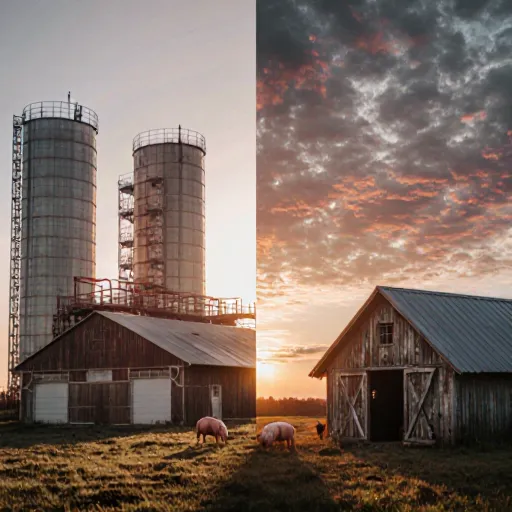
Compare Success Strategies for Large & Small Pig Farms
Differences Between Commercial and Small-Scale Pig Farming
Introduction
Pig farming is an essential aspect of agriculture, providing meat products for consumers around the world. When it comes to pig farming, there are two primary approaches: commercial pig farming and small-scale pig farming. These methods differ significantly in terms of size, operations, costs, and outputs.
In this blog post, we will explore the differences between commercial and small-scale pig farming. We will delve into the advantages and disadvantages of each approach, helping you understand which one might be best suited for your goals, resources, and the local market. Additionally, we will discuss the production systems, costs, profitability, and sustainability of both methods, providing a comprehensive comparison of the two.
Placeholder for Image 1
1. Overview of Commercial Pig Farming
Commercial pig farming refers to large-scale operations that raise pigs for mass production and sale. These operations are typically industrialized and focus on maximizing efficiency and profit. Commercial pig farms are usually characterized by high-tech facilities, advanced machinery, and large numbers of pigs raised for meat production.
Characteristics of Commercial Pig Farming
- Scale: Commercial pig farming typically involves hundreds to thousands of pigs, making it a large-scale operation.
- Automation: Commercial pig farms often use automated systems for feeding, waste management, and monitoring pig health.
- Profit Focus: The primary goal is to produce pork at a large scale to meet the demands of the global market while maintaining profitability.
- Production Systems: Commercial farms use controlled environments and advanced farming techniques to optimize growth rates, feed conversion, and health management.
While commercial pig farming is highly efficient and profitable, it comes with challenges such as managing animal welfare, environmental concerns, and regulatory compliance.
2. Overview of Small-Scale Pig Farming
Small-scale pig farming, also known as backyard pig farming, involves raising a smaller number of pigs for personal use, local sales, or niche markets. This approach is typically less automated and requires more hands-on involvement from the farmer.
Characteristics of Small-Scale Pig Farming
- Scale: Small-scale farms usually raise fewer pigs, ranging from just a few to a couple dozen pigs.
- Personalized Care: Farmers often provide more personalized care to each pig, which can improve the overall health and welfare of the animals.
- Local Focus: Small-scale pig farming is typically focused on serving local or niche markets, such as local butcher shops or farmers' markets.
- Lower Automation: These farms generally have fewer automated systems and rely more on manual labor for feeding, cleaning, and general care.
Small-scale pig farming allows for greater flexibility, sustainability, and a closer relationship with the animals, but it may not achieve the same economies of scale as commercial farming.
3. Key Differences Between Commercial and Small-Scale Pig Farming
| Aspect | Commercial Pig Farming | Small-Scale Pig Farming |
|---|---|---|
| Scale | Large-scale, hundreds to thousands of pigs | Small-scale, fewer pigs (a few to dozens) |
| Automation | Highly automated, uses technology | Minimal automation, more manual labor |
| Production System | Controlled environments for high efficiency | Less controlled, often outdoor or semi-open systems |
| Profit Focus | Profit maximization through large-scale production | More focused on sustainability and local markets |
| Animal Welfare | Can face challenges with animal welfare in large systems | Personalized care for pigs, often in smaller groups |
| Market | Global and large-scale distribution | Local or niche markets, often for specialized products |
As the table shows, the key differences between commercial and small-scale pig farming lie in the scale of operations, automation, market focus, and the level of care provided to the pigs. Both methods have their own benefits and challenges, depending on the farmer's goals and resources.
4. Production Systems: Commercial vs. Small-Scale
The production systems used in commercial and small-scale pig farming vary significantly. Commercial pig farms typically use intensive farming methods, relying on controlled environments such as climate-controlled barns and automated feeding systems. In contrast, small-scale pig farms may rely on more traditional, less intensive farming methods.
Commercial Pig Farming Production Systems
- Intensive Systems: Pigs are kept in confined spaces, often indoors, to optimize space and productivity.
- Automated Feeding: Pigs are typically fed through automated systems, reducing labor costs and increasing efficiency.
- Health Management: Commercial farms use advanced veterinary care and medication to maintain pig health.
Small-Scale Pig Farming Production Systems
- Extensive Systems: Pigs may be raised outdoors or in smaller, less confined spaces.
- Manual Feeding: Feeding is often done manually, allowing farmers to provide more personalized care to each pig.
- Natural Health Management: Small-scale farmers may focus on holistic approaches to pig health, reducing the need for medications.
While commercial farming systems focus on maximizing output and minimizing labor costs, small-scale systems prioritize animal welfare and sustainable farming practices.
5. Costs and Financial Aspects
The costs of starting and running a pig farm can vary greatly depending on the scale and type of operation. Commercial pig farming typically requires a large upfront investment in infrastructure, equipment, and livestock. Small-scale pig farming, on the other hand, may have lower startup costs but can face challenges in terms of profitability due to lower economies of scale.
Commercial Pig Farming Costs
- Infrastructure: Commercial farms require large buildings, climate control systems, and automated equipment.
- Feed Costs: The cost of feed is a significant expense in commercial pig farming, as large numbers of pigs must be fed regularly.
- Labor Costs: Although automation reduces labor needs, commercial farms still require workers for maintenance, health management, and operations.
Small-Scale Pig Farming Costs
- Infrastructure: Small-scale farms require minimal infrastructure, often using simple pens or sheds.
- Feed Costs: Feed costs may be lower due to smaller numbers of pigs and more opportunities for self-sufficiency.
- Labor Costs: Small-scale pig farms require more hands-on labor from the farmer.
While small-scale farms may have lower initial costs, commercial farms benefit from economies of scale and may achieve higher profitability in the long run.
6. Labor Requirements in Both Systems
Labor is a crucial aspect of both commercial and small-scale pig farming. However, the amount of labor required can differ significantly between the two systems.
Commercial Pig Farming Labor
- Automation: Much of the labor in commercial pig farms is automated, reducing the need for human workers.
- Skilled Labor: Some specialized skills are required for managing automated systems and ensuring animal health.
- Seasonal Labor: Additional labor may be needed during peak seasons, such as breeding or slaughtering times.
Small-Scale Pig Farming Labor
- Manual Labor: Small-scale pig farming requires more manual labor, including feeding, cleaning, and maintaining pens.
- Flexible Labor: The farmer can perform tasks based on their schedule and available resources.
- Minimal Outsourcing: Most labor is performed by the farmer, reducing the need for hired help.
Commercial farms can rely more on technology to reduce labor requirements, while small-scale farms require more direct involvement from the farmer.
7. Profitability: Which Is More Profitable?
Profitability in pig farming depends on numerous factors, including scale, production methods, and market demand. While commercial pig farms have the advantage of economies of scale, small-scale farms may benefit from niche markets and more personalized products.
Commercial Pig Farming Profitability
- Large Volume: Commercial farms produce large volumes of pork, which can generate substantial revenue.
- Economies of Scale: The larger the operation, the lower the cost per unit, leading to higher profit margins.
- Market Access: Commercial farms often have better access to national and international markets.
Small-Scale Pig Farming Profitability
- Premium Products: Small-scale farms can sell higher-quality, locally produced pork at premium prices.
- Lower Overheads: Smaller operations have fewer expenses and may operate more efficiently.
- Market Niche: Small-scale pig farmers can capitalize on niche markets, such as organic or heritage pork products.
While commercial farms often have higher total profits, small-scale farms can be profitable by targeting specific market segments and reducing overhead costs.
8. Sustainability in Pig Farming
Sustainability is a growing concern in all forms of farming, including pig farming. Both commercial and small-scale farms can adopt sustainable practices, but their approaches may differ.
Commercial Pig Farming Sustainability
- Waste Management: Commercial farms must have systems in place to manage the waste produced by large numbers of pigs.
- Energy Efficiency: Many commercial farms are investing in renewable energy sources, such as solar or wind power, to reduce their carbon footprint.
- Resource Use: Efficient use of water and feed is crucial in reducing the environmental impact of commercial pig farming.
Small-Scale Pig Farming Sustainability
- Lower Environmental Impact: Small-scale farms often have a smaller environmental footprint, using fewer resources and producing less waste.
- Integrated Systems: Small-scale pig farmers may integrate their operations with other farming systems, such as crop production, to create a more sustainable ecosystem.
- Organic Practices: Many small-scale farms adopt organic farming practices, which can reduce the environmental impact and promote sustainability.
Both systems can be sustainable with the right practices, but small-scale farms tend to have a more immediate and visible impact on their local environments.
9. Regulations and Legal Considerations
Pig farming is regulated by government bodies in many countries, with different rules for commercial and small-scale farms.
Commercial Pig Farming Regulations
- Health and Safety Standards: Commercial farms must adhere to strict health, safety, and environmental regulations.
- Licensing and Permits: Commercial farms may need various permits to operate legally, especially for large-scale production and processing.
- Animal Welfare: Commercial farms are required to meet animal welfare standards, particularly in terms of housing, feeding, and veterinary care.
Small-Scale Pig Farming Regulations
- Fewer Restrictions: Small-scale farms may face fewer regulatory requirements, depending on their size and scope.
- Local Laws: Small-scale farmers should be aware of local zoning laws and regulations regarding animal welfare, waste disposal, and slaughtering.
- Organic Certifications: If small-scale farmers wish to sell organic products, they must adhere to organic certification standards.
Understanding the regulations governing both types of pig farming is essential for ensuring compliance and success in the industry.
FAQs
1. Which type of pig farming is better?
The choice between commercial and small-scale pig farming depends on your goals, available resources, and market preferences. Commercial farming offers larger profits but requires significant investment, while small-scale farming offers more flexibility and personalized care for pigs.
2. Can small-scale pig farming be profitable?
Yes, small-scale pig farming can be profitable, especially if farmers target niche markets, sell high-quality products, and operate efficiently.
3. What are the environmental impacts of pig farming?
Both commercial and small-scale pig farming can have environmental impacts, but small-scale farms tend to have a smaller ecological footprint. Proper waste management, water conservation, and feed efficiency are crucial for sustainability.
Conclusion
Both commercial and small-scale pig farming offer unique opportunities and challenges. Commercial pig farming focuses on large-scale production and profitability, while small-scale pig farming emphasizes sustainability, animal welfare, and local markets. The decision between the two largely depends on individual preferences, resources, and goals. With careful planning and effective management, both types of farming can be successful and profitable.
Categories
- AI & Enrichment Play
- Broiler Farming
- Broiler Farming Tips
- Canine Wellness & Longevity
- Cat
- Cat & Human Connection
- Cat Adoption & Rescue
- Cat Breeds
- Cat Breeds & Personalities
- Cat Care & Health
- Cat Grooming & Hygiene
- Cat Lifestyle & Environment
- Cat Myths & History
- Cat Nutrition & Diet
- Cat Products & Reviews
- Cat Training & Behavior
- Comparison
- Consumer Awareness
- Dog
- Dog Accessories & Products
- Dog Adoption & Rescue
- Dog Breed & Lifestyle Trends
- Dog Breeding & Puppies
- Dog Entertainment & Media
- Dog Fashion & Trends
- Dog Fun & Lifestyle
- Dog Grooming & Hygiene
- Dog History & Culture
- Dog Myths, Science & Future Tech
- Dog News & Trends
- Dog Nutrition & Food
- Dog Psychology & Emotions
- Dog Safety & Security
- Dog Sports & Activities
- Dog Technology & Innovation
- Dog Training for Modern Owners
- Dog Travel & Adventure
- Dog Travel, Adventure & Culture
- Economic and Market Insights
- Educational Content
- FAQs
- Feeding Alternatives
- Festivals & Seasonal Ideas
- Fun & Entertainment
- General Knowledge
- General Pig Farming
- Health & Disease Management
- Housing and Environment
- Kittens
- Market Insights
- Miscellaneous
- Miscellaneous
- Motivational
- pig
- Pig Breeding
- Pig Breeds
- Pig Farming Stories and Inspiration
- Pig Health and Care
- Pig Nutrition
- Pig Products
- Profitability & Business
- Puppy Care
- Puppy Predictable Topics Reinvented
- Regional Focus
- Rescue & Adoption Buzz
- Senior Cats
- Senior Dog Care
- Smart Dog Tech & Gadgets
- Sustainability
- Sustainable & Eco-Friendly Dog Products
- Tech & Innovations
- Working & Service Dogs
- Broiler Feed66 products
- Country Feed33 products
- Pig Feed66 products
- Product22 products
- Raw Materials99 products
Products
-
 Fish Meal
₹1,999.00 – ₹2,999.00Price range: ₹1,999.00 through ₹2,999.00Rated 0 out of 5
Fish Meal
₹1,999.00 – ₹2,999.00Price range: ₹1,999.00 through ₹2,999.00Rated 0 out of 5 -
 FATTENING BROILER FEED
₹2,299.00 – ₹2,349.00Price range: ₹2,299.00 through ₹2,349.00Rated 0 out of 5
FATTENING BROILER FEED
₹2,299.00 – ₹2,349.00Price range: ₹2,299.00 through ₹2,349.00Rated 0 out of 5 -
 LAYER COUNTRY FEED
₹1,549.00 – ₹1,649.00Price range: ₹1,549.00 through ₹1,649.00Rated 0 out of 5
LAYER COUNTRY FEED
₹1,549.00 – ₹1,649.00Price range: ₹1,549.00 through ₹1,649.00Rated 0 out of 5 -
 COUNTER BROILER FEED
₹1,199.00 – ₹1,299.00Price range: ₹1,199.00 through ₹1,299.00Rated 0 out of 5
COUNTER BROILER FEED
₹1,199.00 – ₹1,299.00Price range: ₹1,199.00 through ₹1,299.00Rated 0 out of 5 -
 LACTATING PIG FEED
Rated 0 out of 5
LACTATING PIG FEED
Rated 0 out of 5₹2,299.00Original price was: ₹2,299.00.₹1,740.00Current price is: ₹1,740.00. -
 Maize
Rated 0 out of 5
Maize
Rated 0 out of 5₹1,650.00Original price was: ₹1,650.00.₹1,300.00Current price is: ₹1,300.00. -
 GESTATION PIG FEED (Phase 1)
Rated 0 out of 5
GESTATION PIG FEED (Phase 1)
Rated 0 out of 5₹2,249.00Original price was: ₹2,249.00.₹1,699.00Current price is: ₹1,699.00. -
 Pre Starter Broiler Feed
₹2,399.00 – ₹2,499.00Price range: ₹2,399.00 through ₹2,499.00Rated 0 out of 5
Pre Starter Broiler Feed
₹2,399.00 – ₹2,499.00Price range: ₹2,399.00 through ₹2,499.00Rated 0 out of 5 -
 FINISHER PIG FEED
Rated 0 out of 5
FINISHER PIG FEED
Rated 0 out of 5₹2,299.00Original price was: ₹2,299.00.₹1,749.00Current price is: ₹1,749.00. -
 Broiler Premix
Rated 0 out of 5
Broiler Premix
Rated 0 out of 5₹820.00Original price was: ₹820.00.₹699.00Current price is: ₹699.00.